

Illustrative patient discussing smile planning with a dental clinician at a consultation desk
Cosmetic Dentistry

Digital Smile Design in Halton Hills

Many people want an improvement that still looks like them, not a smile borrowed from a magazine. Digital smile design for Halton Hills lets you see a proposed change, decide which quirks to keep, and check it against your exam and what the work would require.

Change without losing yourself

Will it still look like me?

It's a common worry. A slightly crooked tooth or a small gap can be part of how friends recognise your smile, and plenty of people want to soften a feature rather than erase it. Digital smile design uses clinical photographs, other suitable records and software to show a proposed change in shape or proportion, so you can judge how far is far enough.

Judging the look is only half the task. A proposal can't tell anyone whether the gums, bite or remaining tooth would support the change, and it doesn't lock in the finished appearance. Those points depend on an examination and on an honest description of the procedures, preparation and maintenance behind the image.

From Georgetown, Acton, Glen Williams or elsewhere in Halton Hills, you're welcome to start with a simple list: what you'd change, and what you'd keep at all costs. We'll talk about which planning steps would be useful for you and explain what the consultation covers.

Talk about a subtle, personal change
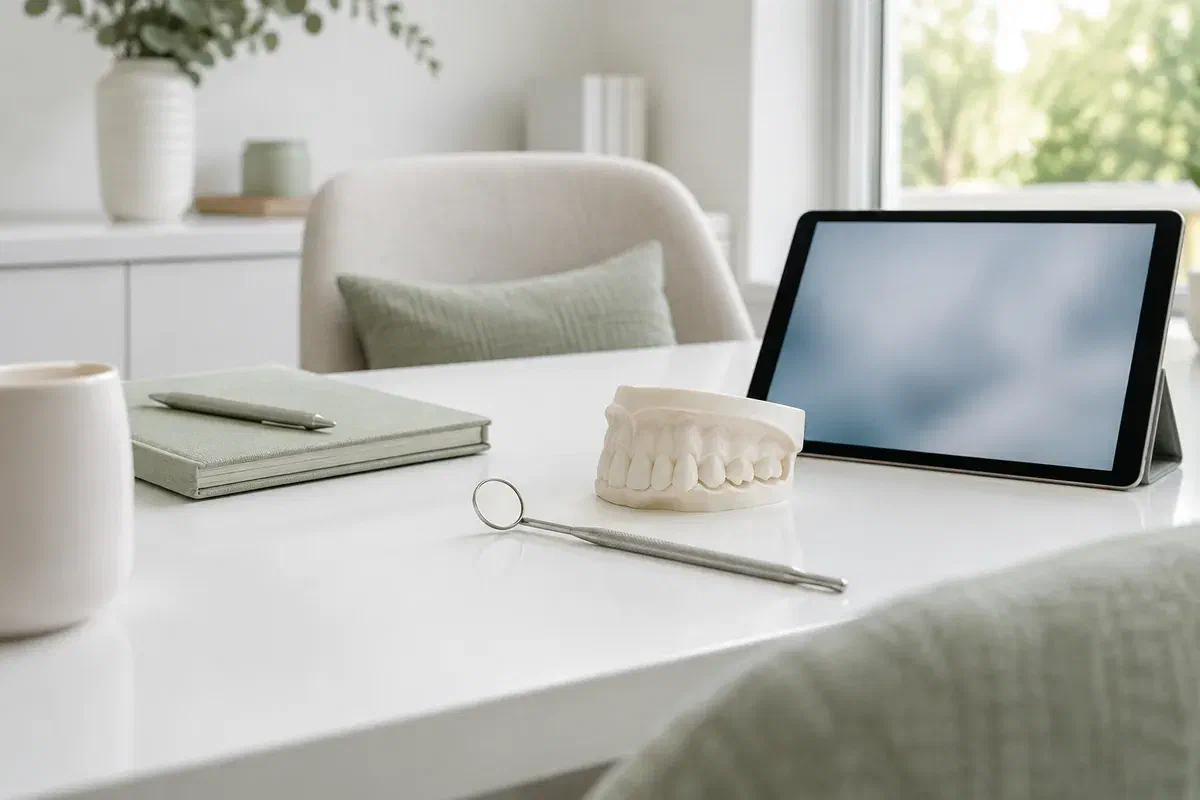
Illustrative dental planning desk with a teaching model, mirror, and tablet
Deciding how much is enough

A little softer, or a lot different?

Tell us the feature that bothers you and the ones that feel like yours. A good design discussion respects both, and may conclude that some differences are best left as they are.

One tooth that draws the eye

Often a single tooth that is longer, broader or set forward is what you notice. A proposal can show a gentler version of it beside the original. Ask whether that version would involve adding material, light reshaping, or moving the tooth.

Treatment that might change more than you want

Some routes to a new shape alter several teeth, while others focus on one. Ask what each option would change and what it would leave alone. A preview can look modest even when the work behind it is extensive, so get the details.

Small goals that still need an order

Even a subtle change can depend on gum health, shade or tooth position being addressed first. Ask how the steps connect. A thoughtful proposal explains the sequence instead of letting a neat image suggest everything is decided.

Think of the preview as a sketch of one possibility. It isn't a diagnosis or a promise, so ask what has been confirmed clinically and what still needs checking.

The value of seeing it first

Test a change before you commit to it.

Seeing a proposal makes it easier to say exactly where your comfort zone ends. You can point to an edge you'd like smoother or a gap you'd rather keep, and the clinician can show how the proposal would respond.

A preview helps most when you treat it as a draft. Question it, ask what it leaves out, and compare it with lighter options. A pleasing image should never make you feel that a larger change is the expected choice.

Patient information: Research — smile documentation and digital planning · Clinical study — digital and conventional smile design

Room for your natural features

Uniform teeth are not a requirement for a healthy, attractive smile. Reacting to a proposal helps you say which variations to preserve. Those preferences belong in the plan, sitting alongside the clinical findings.

A consistent brief if others help

Where a specialist or laboratory is involved, shared records help keep a subtle goal from drifting toward a generic one. Ask how your preferences will be passed on and who will explain any change in approach.

Seeing what each degree of change costs

Ask what the proposal would require in preparation, visits, fees and future care. Comparing a subtle version with a bolder one often makes the right level clearer, and smaller is a perfectly valid answer.

Building a proposal that fits you

Listen, record, propose, decide

Which records and tools are used depends on the case. Ask what is suggested, what each part costs, and whether another clinician's input might be advised.

  1. Tell us what to keep

    Along with your goals, history, symptoms and any past cosmetic care, describe the features you value. The clinician then examines your teeth, gums and bite. Mention any timing that matters to you.

  2. Records that capture your real smile

    Clinical photographs and other appropriate records may be recommended so the proposal reflects your face and teeth accurately. Ask what each one adds. A careful record is the best protection against an off-the-shelf result.

  3. Review a proposal, or two

    You may see one proposal or a gentler alternative, discussed together with the procedures each would need. Ask about limits and whether a trial in the mouth or further checks would help. Note what remains provisional.

  4. Adjust or go ahead

    You can ask for changes, take more time, or choose treatment. Before going further, confirm the scope, estimate and next stage. Seeing a design never commits you to all of it.

Thinking it over

Look again with fresh eyes.

After a planning review, many people want a few days before deciding. Revisit both the image and the explanation, and ask follow-up questions before agreeing to anything permanent.

Check the procedures behind the look

List which teeth would be treated and how. Ask whether an even lighter approach could reach a similar effect. Keep any unanswered questions about preparation, referrals or records for your next conversation.

Remember how teeth look in real life

On a screen, teeth are seen from fixed angles and in fixed light. In daily life they move with your lips and change with the light. Ask how comfort, bite and appearance will be checked in person, and what any mock-up can't show.

Keep regular dental care going

Routine checkups and treatment for any active problem continue while you consider the plan. Tell the team about new symptoms or work elsewhere. Changes to your teeth may mean the proposal needs updating.

Matching planning to the change

A light touch may need only light planning.

Digital design is one planning approach. Whether it helps depends on how much you want to change and what information a careful decision needs.

Helpful for comparing subtle and bolder versions

A digital proposal

A visual can be useful for weighing degrees of change across several teeth. Ask what records it rests on and what it is meant to show. A clinician still needs to explain what is achievable and what maintenance would follow.

Helpful when you want to see it in your own mouth

A trial smile, models or more records

A temporary mock-up, study models or extra records may add information a screen can't, where suitable. Ask what each shows and what stays uncertain. None of them replaces the exam or confirms every detail.

Helpful when only a small tweak is in mind

A simple consultation

Smoothing one edge or closing a tiny gap may not need a full design process. Start with an assessment and decide whether more planning is worth it. Ask about scope and fees before agreeing to additional records.

Halton Hills smile-design questions

Keeping your smile your own

These questions focus on subtle change and on what a proposal really means. Bring your own to the visit.

(905) 876-4488
Can a smile design keep a small gap or slight overlap I like?
Yes. Tell the clinician which features feel like part of you. The proposal can be adjusted around them within clinical limits, and a healthy, pleasing smile doesn’t have to be perfectly uniform. It also helps to say early on, before records are taken, that keeping character matters to you.
What is the most conservative way to change one tooth's shape?
That depends on the tooth, your bite and what is causing the shape you notice. Options might range from minor reshaping or bonding to orthodontic movement. Ask what each would involve and what it would leave unchanged.
Can I see more than one version of a proposal?
Ask whether an alternative version is possible for your case and whether it carries an extra fee. Comparing a subtle option with a more noticeable one can make your preference much clearer.
Does liking the preview mean I've agreed to the treatment?
No. A preference about appearance is separate from consent to treatment. The procedures, risks, costs and alternatives should be explained, and you can agree to all, part or none of the plan.
Will people notice that I've had work done?
It varies with the change and the materials used, and no outcome can be promised. Ask how the proposed result relates to your neighbouring teeth and what is realistic for blending in.
Can I arrange planning visits from Halton Hills around a busy week?
The clinic is open Monday to Thursday from 11am to 7pm, with weekend and Friday times by appointment only. Call (905) 876-4488 to ask what suits you and what the first visit includes.
Smile planning for Halton Hills

Keep what's yours. Refine what isn't.

Visit our team on Bronte Street to discuss the change you're considering and how much of your natural smile to keep. We'll explain what planning would involve and how a proposal could help you settle on the right degree of change.

Planning is tailored to individual needs. A design on screen is not a guaranteed outcome and is no replacement for an exam and informed consent.

Visit Milton Dental Clinic
Unit 1, 342 Bronte St. S, Milton, ON L9T 5B7
Get directions Clinic hours
Monday–Thursday
11am–7pm
Friday–Sunday
By appointment only

Areas we serve

  • Milton
  • Oakville
  • Mississauga
  • Georgetown
  • Halton Hills
  • Acton
  • Campbellville
  • Brampton
  • Burlington
  • Puslinch
  • Rockwood
  • Erin
  • Caledon
  • Etobicoke
  • Old Milton
  • Bronte Meadows
  • Timberlea
  • Dorset Park
  • Dempsey
  • Clarke
  • Beaty
  • Coates
  • Harrison
  • Scott
  • Willmott
  • Ford
  • Bowes
  • Cobden
  • Walker
  • Mountain View
  • Milton Heights
  • Hawthorne Village
  • Valley View
  • Fallingbrook
  • Nassagaweya
  • Trafalgar
  • Esquesing
  • Nelson
  • Brookville
  • Moffat
  • Glen Williams
  • Norval
  • Limehouse
  • Stewarttown
  • Ashgrove
  • Hornby
  • Silver Creek
  • Speyside
  • Scotch Block
  • North Oakville
  • River Oaks
  • Glen Abbey
  • West Oak Trails
  • Palermo
  • Bronte Creek
  • College Park
  • Joshua Creek
  • Uptown Core
  • Preserve
  • Iroquois Ridge
  • Lisgar
  • Meadowvale
  • Meadowvale Village
  • Churchill Meadows
  • Erin Mills
  • Central Erin Mills
  • Streetsville
  • East Credit
  • Creditview
  • Heartland
  • Sheridan
  • Mount Pleasant
  • Credit Valley
  • Huttonville
  • Churchville
  • Springbrook
  • Northwest Brampton
  • Bram West
  • Fletcher's Meadow
  • Fletcher's Creek South
  • Alton Village
  • Orchard
  • Millcroft
  • Headon Forest
  • Tansley
  • Brant Hills
  • Tyandaga
  • Kilbride
  • Lowville
  • Aberfoyle
  • Morriston
  • Arkell
  • Hillsburgh
  • Freelton
  • Carlisle
  • Waterdown
  • Flamborough
  • Mountsberg

How can we help?

Milton Dental Clinic

Have a question about your smile? Choose the option that works best for you.

For urgent dental concerns, please call.
Messages are reviewed during clinic hours.