

Illustrative patient discussing smile planning with a dental clinician at a consultation desk
Cosmetic Dentistry

Digital Smile Design in Milton

Words like natural, even or softer can mean something different to everyone in the room. Digital smile design in Milton gives you a picture to point at, so the talk about tooth shape and proportion stays tied to your exam, your options and their real limits.

When the right words are hard to find

Something about your smile bothers you, but saying what is the hard part.

Many people arrive with a feeling rather than a request. A front tooth seems a little long, the line of the teeth looks tilted, or the smile reads as narrow in photos. Digital smile design uses photographs, suitable clinical records and planning software to sketch what a change in shape or proportion might look like against your face.

That sketch is a talking tool, not a verdict. It cannot tell anyone whether your gums, bite or remaining tooth structure would allow the change, and it says nothing certain about the finished result. Those answers come from the examination and from an honest account of the procedures, preparation and upkeep the picture would imply.

For a first visit in Milton, there is no need to bring a finished idea. Start with what catches your eye and what you would hate to lose. From there, we can talk about which planning steps would actually help in your case and what the appointment covers before anything else is added.

Talk through a visual plan for your smile
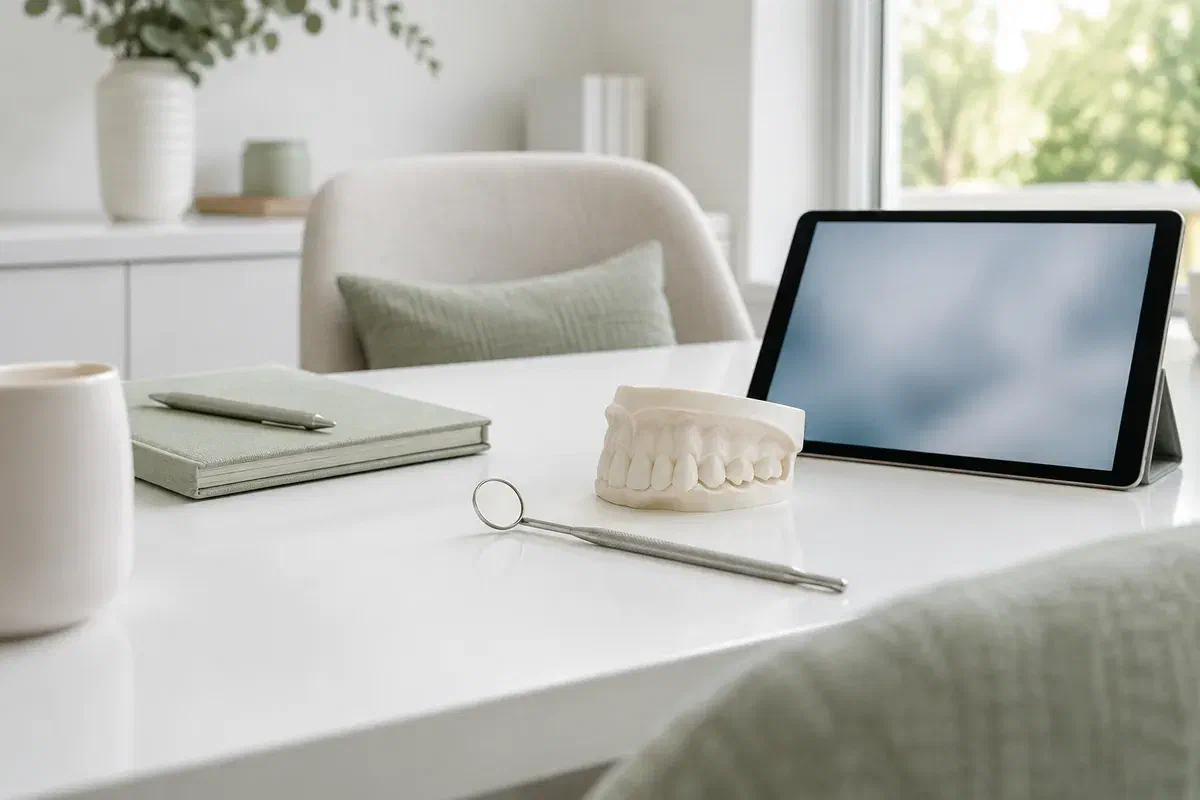
Illustrative dental planning desk with a teaching model, mirror, and tablet
What people usually want to pin down

Name the feature first. The treatment question comes after.

A good design conversation narrows a vague worry into something specific. It should also leave room for the answer that a visible difference does not need any treatment at all.

A tooth that looks out of scale

Length, width and how far a tooth sits forward are hard to judge in a mirror. Seeing a proposed outline beside your current one can show which of those you are reacting to. Then ask whether that outline would mean building a tooth up, reducing it, or shifting its position.

More than one way to reach a similar look

Two previews can look almost the same while standing for very different work. One might rest on bonded material, another on aligners, another on crowns. Have each route spelled out, including what it changes and what it leaves alone, because the image cannot show that difference by itself.

Not knowing what comes first

Gum health, tooth position, shade and existing fillings can all affect the order of care. If several areas are involved, find out how each stage depends on the one before it. A polished slide should make the sequence easier to follow, not paper over decisions that are still open.

Treat any preview as a sketch of a proposal. It is not a diagnosis and not a promise, so ask what has been confirmed clinically and what still needs checking.

What a shared picture adds

Point at the edge you mean instead of describing it.

Talking about a smile in the abstract tends to drift. One person's balanced is another person's too uniform. With an image on the table, you can indicate the exact corner, curve or gap you have in mind, and the clinician can show you how a proposal would treat it.

The benefit is in the conversation, not the picture itself. You should feel free to push back on a proposal, ask what it leaves out, and set it beside other options. A flattering image is a poor reason to feel the decision is already made.

Patient information: Research — smile documentation and digital planning · Clinical study — digital and conventional smile design

Clearer feedback on your own preferences

Some people want every tooth matched; others want a gentle change that still looks like them. Reacting to a concrete proposal makes it easier to say which you are. Your taste matters in the plan, though it sits beside the clinical findings rather than replacing them.

One reference point if others are involved

If a specialist or a dental laboratory takes part, a common set of records helps everyone describe the same goal. Ask how that information will be shared, who handles each stage, and who will explain it to you if the plan has to change.

Seeing the cost of a change before committing

A preview is a good moment to ask what the illustrated result would really require: tooth preparation, the number of visits, fees and long-term maintenance. Knowing that, you may settle on a more modest change that suits your priorities better.

From first question to a proposal

The records come before the refinements.

Which records and tools make sense depends on what you want to change. Ask what is being recommended, what each part costs, and whether another assessment or a referral might be needed.

  1. Talk, then examine

    You describe your goals, any past cosmetic work, symptoms and dental history. The clinician then looks at the teeth, gums and bite involved. Mention timing pressures or practical limits too, and say what you would like to keep exactly as it is.

  2. Take only the records that serve the question

    Photographs and other clinical records may be suggested so the proposal reflects your real starting point. You are entitled to know what each one is for. A design built on proper records is more useful than one sketched over a quick phone snapshot.

  3. Look at the image and the work it implies

    The proposed shapes are reviewed alongside the procedures needed to create them. This is the time to ask about alternatives, limits, and whether a physical mock-up or further checks would help. Be clear which parts are still provisional.

  4. Choose a next step that suits you

    You might ask for a revision, book another discussion, or make a treatment decision. Confirm the scope, the estimate and the following stage in writing. Reviewing a design never obliges you to go ahead with everything on the screen.

Once you have seen the proposal

Give the decision a little room.

Most planning visits end with something to think about rather than a procedure. Go back over the explanation as well as the image, and get answers before agreeing to anything that cannot be undone.

List the teeth, not just the look

Write down which teeth would be treated and what each would undergo. Ask whether the same aim could be approached another way. Keep a note of open questions about preparation, referrals or extra records so they are settled before work begins.

Remember the screen has blind spots

An image cannot tell you how a restoration will feel against your lip or how a material will look in daylight versus indoor light. Ask how bite and comfort will be checked in person. If a trial smile or mock-up is offered, ask what it cannot show either.

Keep up with ordinary dental care

Routine checkups and treatment for any active problem carry on while you decide. Let the team know about new symptoms or work done elsewhere. A proposal may need updating if your teeth or the planned order of care change in the meantime.

How much planning do you need?

Match the tool to the question.

A digital design is one way to plan, not a required step. Whether it helps depends on the change being considered and the information needed for a sound decision.

Useful when seeing a comparison would clarify the aim

A digital proposal on screen

An illustration can help when proportions or several teeth are being considered together. Ask which records it was built from and what it is meant to represent. It still needs a clinical explanation of whether it is achievable and what upkeep would follow.

Useful when a physical view or extra detail would help

Models, a try-in or more records

Certain questions are easier to answer with study models, additional records or a temporary mock-up in the mouth, where suitable. Each method shows some things and not others. None of them stands in for the exam or settles every detail of the final work.

Useful for a small concern or early curiosity

A straightforward consultation

A single chipped edge or a minor question may not need a full design process. You can begin with an assessment and decide later whether more planning is worthwhile. Ask about scope and fees before agreeing to further records.

Common questions in Milton

Before the preview shapes your decision

These questions help separate what an image shows from what treatment would involve. Bring any others to your appointment.

(905) 876-4488
If I like the smile on the screen, have I agreed to the treatment that goes with it?
No. Liking an image and consenting to treatment are separate steps. Make sure the procedures, risks, costs and alternatives have been explained before you agree to anything, so you know exactly what would be done to your teeth.
Can I bring photos of smiles I like to a design appointment?
You can, and they can be a helpful starting point. Expect a conversation about which features would suit your own teeth, face and bite, and which might not be realistic. The aim is a proposal that fits you rather than a copy of someone else.
Does digital smile design only lead to veneers?
No. A proposed shape might be approached with bonding, orthodontic movement, crowns, veneers, or no elective treatment at all. Ask which options apply to your situation and what each would involve for the teeth concerned.
What happens if I don't like the first proposal?
Say so, and be as specific as you can about what feels wrong. A proposal can often be revised, and sometimes the better answer is a smaller change. Ask whether a revision carries extra fees before it is prepared.
Will the design take my existing fillings and crowns into account?
Existing restorations are part of the assessment. Their condition, colour and position can affect what is proposed and the order of care. Ask how they fit into the plan and whether any would need replacing for the change to work.
Is it possible to book a smile-planning visit in Milton outside weekday hours?
The clinic is open Monday to Thursday from 11am to 7pm, with Friday to Sunday available by appointment only. Call (905) 876-4488 to ask which times suit a planning consultation and how long the visit is likely to take.
Plan your smile visit

Bring the question. We'll help you see it clearly.

Book a consultation at our Bronte Street practice to talk about the change you have in mind and which planning methods suit it. We'll explain the information needed and how a visual proposal could help you weigh the next step.

Planning methods vary with individual needs. A digital image is not a guaranteed result and does not replace a clinical exam or a full treatment discussion.

Visit Milton Dental Clinic
Unit 1, 342 Bronte St. S, Milton, ON L9T 5B7
Get directions Clinic hours
Monday–Thursday
11am–7pm
Friday–Sunday
By appointment only

Areas we serve

  • Milton
  • Oakville
  • Mississauga
  • Georgetown
  • Halton Hills
  • Acton
  • Campbellville
  • Brampton
  • Burlington
  • Puslinch
  • Rockwood
  • Erin
  • Caledon
  • Etobicoke
  • Old Milton
  • Bronte Meadows
  • Timberlea
  • Dorset Park
  • Dempsey
  • Clarke
  • Beaty
  • Coates
  • Harrison
  • Scott
  • Willmott
  • Ford
  • Bowes
  • Cobden
  • Walker
  • Mountain View
  • Milton Heights
  • Hawthorne Village
  • Valley View
  • Fallingbrook
  • Nassagaweya
  • Trafalgar
  • Esquesing
  • Nelson
  • Brookville
  • Moffat
  • Glen Williams
  • Norval
  • Limehouse
  • Stewarttown
  • Ashgrove
  • Hornby
  • Silver Creek
  • Speyside
  • Scotch Block
  • North Oakville
  • River Oaks
  • Glen Abbey
  • West Oak Trails
  • Palermo
  • Bronte Creek
  • College Park
  • Joshua Creek
  • Uptown Core
  • Preserve
  • Iroquois Ridge
  • Lisgar
  • Meadowvale
  • Meadowvale Village
  • Churchill Meadows
  • Erin Mills
  • Central Erin Mills
  • Streetsville
  • East Credit
  • Creditview
  • Heartland
  • Sheridan
  • Mount Pleasant
  • Credit Valley
  • Huttonville
  • Churchville
  • Springbrook
  • Northwest Brampton
  • Bram West
  • Fletcher's Meadow
  • Fletcher's Creek South
  • Alton Village
  • Orchard
  • Millcroft
  • Headon Forest
  • Tansley
  • Brant Hills
  • Tyandaga
  • Kilbride
  • Lowville
  • Aberfoyle
  • Morriston
  • Arkell
  • Hillsburgh
  • Freelton
  • Carlisle
  • Waterdown
  • Flamborough
  • Mountsberg

How can we help?

Milton Dental Clinic

Have a question about your smile? Choose the option that works best for you.

For urgent dental concerns, please call.
Messages are reviewed during clinic hours.