

Illustrative patient discussing smile planning with a dental clinician at a consultation desk
Cosmetic Dentistry

Digital Smile Design in Old Milton

Older crowns, worn edges and fillings placed years apart can leave a smile that no longer looks like one set of teeth. Digital smile design for Old Milton gives you a visual proposal to discuss, tied to your exam and to the work it would honestly take.

A smile with some history

Years of repairs, one picture to make sense of them

Teeth that have been looked after for decades often carry a mix of work from different times. A crown might be a shade off, a filling may have darkened, and the biting edges can wear shorter. Digital smile design brings photographs and appropriate records together so a possible change to shape and proportion can be shown, not just described.

Showing a change is different from confirming it. The proposal on screen does not prove that the gums, bite or existing restorations would support it, and it is no promise of how the finished teeth will look. That depends on an examination and a frank talk about preparation, visits and maintenance.

Here in Old Milton, a sensible starting point is often the question of what to leave alone. Tell us which teeth you are happy with, which ones nag at you, and what you would like the consultation to answer. We can then suggest the planning steps that fit, and nothing more.

Ask about planning around existing dental work
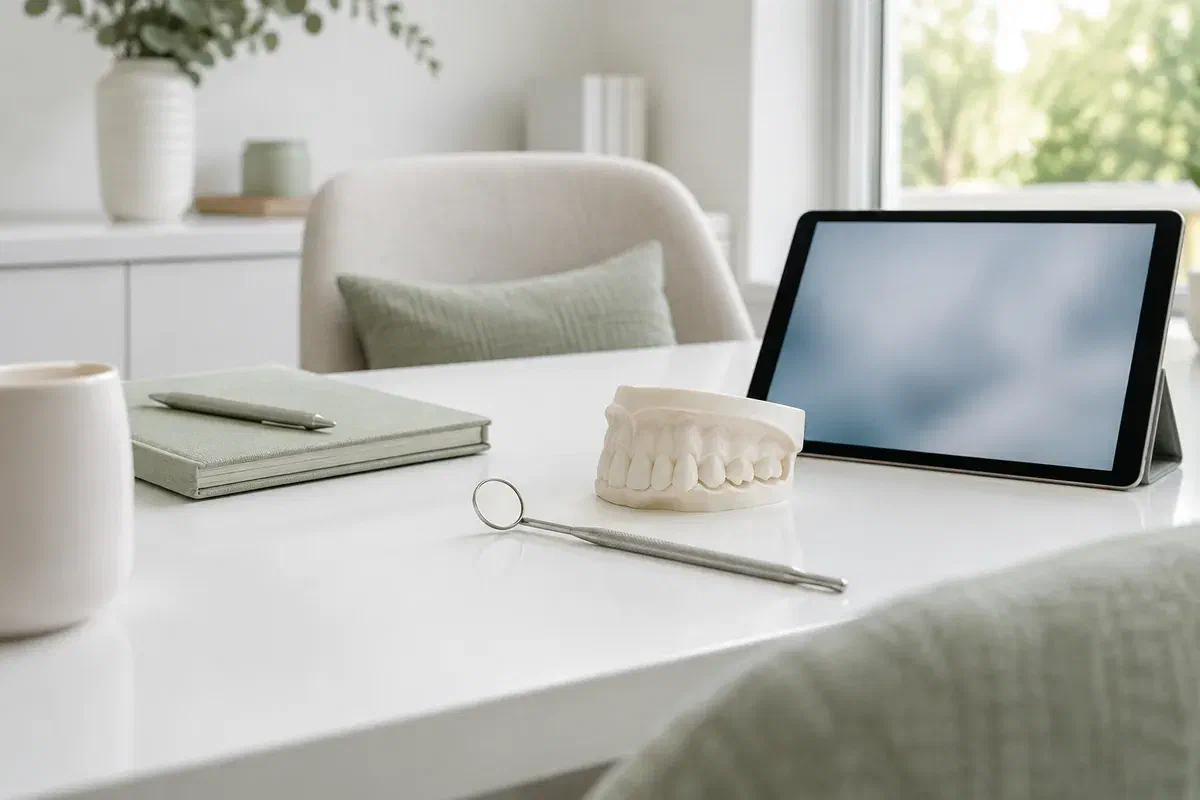
Illustrative dental planning desk with a teaching model, mirror, and tablet
Where older work and new goals meet

Which tooth are you actually reacting to?

With several restorations in view, it helps to separate the one feature that bothers you from the rest. A careful review may also show that some differences are fine as they are.

Edges that have worn or look uneven

Front teeth can look shorter or flatter over time, and one may stand out against its neighbours. A visual comparison helps you see whether length, width or angle is the issue. Ask whether the proposed outline would need added material, some reshaping, or tooth movement.

Older restorations alongside natural teeth

A preview may suggest a matched look, yet getting there could mean replacing one crown, several fillings, or something else entirely. Ask for each route to be explained and what it would leave untouched. A picture alone does not reveal that difference.

Deciding what order things should happen in

Gum health, any planned whitening and the condition of current restorations can shape the sequence. Shade work, for instance, may need to come before new crowns are matched. A clear plan explains these links; it does not hide them behind an attractive image.

A preview illustrates an idea. It is neither a diagnosis nor a guarantee, so ask which parts are clinically confirmed and which still need checking.

Why a picture helps here

It turns a patchwork into something you can discuss.

When teeth have been repaired at different times, it can be hard to explain why the whole smile feels off. An image lets you indicate the specific crown, edge or spacing you mean, and lets the clinician show how a proposal would treat it.

Its worth lies in the questions it allows. You should be able to challenge a proposal, learn its limits and compare it with other paths. A pleasing image should never make an irreversible choice feel already decided.

Patient information: Research — smile documentation and digital planning · Clinical study — digital and conventional smile design

Saying what you want kept

Some people would like their smile refreshed rather than remade. Reacting to a concrete proposal makes it easier to say which teeth and features should stay. Your preferences belong in the plan, alongside the clinical findings rather than instead of them.

A common record if other providers help

If a laboratory or another clinician takes part, shared records help everyone aim at the same result. Ask how the goals will be passed on, who is responsible for each part, and who will explain any change of direction to you.

Knowing the trade-offs ahead of time

Use the proposal to ask what it would really take: preparation of teeth, appointments, fees and future care. After hearing that, a smaller change, or replacing just one older restoration, may suit you better than the full picture.

The steps behind a proposal

Start with what is already in your mouth.

The records needed vary from person to person. You can ask what is recommended, what it costs, and whether another assessment or referral would be part of the picture.

  1. A conversation and an exam

    Share your goals, history of crowns, fillings or cosmetic work, and any symptoms. The clinician checks the teeth, gums and bite, including the state of existing restorations. Mention any date you are working toward and anything you want left as it is.

  2. Records chosen for a reason

    Photographs and other suitable records may be advised so the design reflects how your teeth really are. Feel free to ask what each record is for. A proposal grounded in clinical information is more trustworthy than one drawn over a casual selfie.

  3. Proposal and procedures, side by side

    The illustrated shapes are discussed together with the treatment they would require, including which older work might be replaced. Ask about alternatives, limits, and whether a mock-up or further checks would help. Note anything still provisional.

  4. Revise, pause or proceed

    You may want an adjusted proposal, more time, or a treatment decision. Confirm the scope, estimate and next stage before going further. Seeing a design does not commit you to the procedures it shows.

After the review

Separate the image from the work list

It is common to leave a planning visit with thinking to do rather than treatment booked. Look back at the explanation as well as the picture, and clear up doubts before agreeing to permanent changes.

Go tooth by tooth

Note which teeth would be treated, what would happen to each, and which existing restorations would change. Ask whether there is another way to the same goal. Keep a list of unresolved points so they are settled before anything starts.

Allow for what an image can't show

A screen can't reproduce how a new crown will feel when you bite or how its material will look beside an older one in different light. Ask how comfort and bite will be checked. A trial or mock-up has its own limits, so ask about those as well.

Carry on with regular care

Keep routine visits and any treatment for current problems going while you decide. Tell the team about new symptoms or care you receive elsewhere. If a tooth or an older restoration changes, the proposal may need another look.

Picking a planning approach

Some smiles need a full design. Many don't.

Digital design is one way of planning among several. Whether it is worthwhile depends on the change you are considering and how much information a responsible decision needs.

When seeing options side by side would help

A digital proposal

An illustration can be useful when proportions or several restorations are being reconsidered together. Ask which records it is based on and what it is meant to show. It still needs a clinical explanation of feasibility, preparation and ongoing care.

When a physical look or more detail adds value

Study models, a mock-up or extra records

Some questions are better answered with models, further records or a temporary trial in the mouth, where appropriate. Each method has strengths and gaps. None replaces the examination or settles every detail of the final result.

When only one tooth or restoration is in question

A targeted consultation

Replacing a single darkened crown or smoothing one worn edge may not call for a full design process. You can start with an assessment and decide afterwards whether more planning would help. Ask about scope and fees before extra records are taken.

Planning questions from Old Milton

What to clarify before you act on a design

These questions help keep the picture and the treatment in proportion. Add your own at the appointment.

(905) 876-4488
Would a smile design mean replacing all my older crowns?
Not necessarily. The assessment looks at the condition and appearance of each restoration. Some may be fine to keep, while others might need attention for health or appearance reasons. Ask which ones the proposal assumes would change and why.
Can whitening be part of a digital smile plan?
It can be discussed. Shade is often considered early, because crowns and other restorations do not change colour with whitening. Ask whether whitening is suitable for you and how it would affect the order of any other work.
Is the picture on screen what my teeth will end up looking like?
It is an illustration of a proposal, limited by the records and planning method used. Materials, clinical findings and how treatment goes all affect the physical result. Ask which details are firm goals and which are still open.
My teeth have worn down over the years. Can a design show a longer look?
A proposal can illustrate a change in length, but whether it is suitable depends on your bite and the cause of the wear. Ask what is behind the wear and how the bite would be protected if edges were built up.
Do I have to accept the whole design or can I choose part of it?
You can choose. Many people decide on a smaller change after seeing what a larger proposal involves. Ask how a partial plan would look, what it would require, and whether it limits options later.
I live near Main Street in Old Milton. How many visits does planning usually take?
That depends on the records and steps that suit your case. Some questions are answered in one consultation, while others need a follow-up review. Ask at booking what the first visit includes so you can plan the rest of your week.
Smile planning near Old Milton

Refresh what's there, or rethink it. Start with a conversation.

Visit our Bronte Street practice, close to Milton's historic downtown, to talk about your goals and the planning methods that suit them. We'll explain what information is needed and how a visual proposal could help you compare choices.

Planning approaches depend on each person's needs. A digital image is not a guaranteed outcome and does not replace a clinical assessment or informed consent.

Visit Milton Dental Clinic
Unit 1, 342 Bronte St. S, Milton, ON L9T 5B7
Get directions Clinic hours
Monday–Thursday
11am–7pm
Friday–Sunday
By appointment only

Areas we serve

  • Milton
  • Oakville
  • Mississauga
  • Georgetown
  • Halton Hills
  • Acton
  • Campbellville
  • Brampton
  • Burlington
  • Puslinch
  • Rockwood
  • Erin
  • Caledon
  • Etobicoke
  • Old Milton
  • Bronte Meadows
  • Timberlea
  • Dorset Park
  • Dempsey
  • Clarke
  • Beaty
  • Coates
  • Harrison
  • Scott
  • Willmott
  • Ford
  • Bowes
  • Cobden
  • Walker
  • Mountain View
  • Milton Heights
  • Hawthorne Village
  • Valley View
  • Fallingbrook
  • Nassagaweya
  • Trafalgar
  • Esquesing
  • Nelson
  • Brookville
  • Moffat
  • Glen Williams
  • Norval
  • Limehouse
  • Stewarttown
  • Ashgrove
  • Hornby
  • Silver Creek
  • Speyside
  • Scotch Block
  • North Oakville
  • River Oaks
  • Glen Abbey
  • West Oak Trails
  • Palermo
  • Bronte Creek
  • College Park
  • Joshua Creek
  • Uptown Core
  • Preserve
  • Iroquois Ridge
  • Lisgar
  • Meadowvale
  • Meadowvale Village
  • Churchill Meadows
  • Erin Mills
  • Central Erin Mills
  • Streetsville
  • East Credit
  • Creditview
  • Heartland
  • Sheridan
  • Mount Pleasant
  • Credit Valley
  • Huttonville
  • Churchville
  • Springbrook
  • Northwest Brampton
  • Bram West
  • Fletcher's Meadow
  • Fletcher's Creek South
  • Alton Village
  • Orchard
  • Millcroft
  • Headon Forest
  • Tansley
  • Brant Hills
  • Tyandaga
  • Kilbride
  • Lowville
  • Aberfoyle
  • Morriston
  • Arkell
  • Hillsburgh
  • Freelton
  • Carlisle
  • Waterdown
  • Flamborough
  • Mountsberg

How can we help?

Milton Dental Clinic

Have a question about your smile? Choose the option that works best for you.

For urgent dental concerns, please call.
Messages are reviewed during clinic hours.