

Illustrative patient discussing a tooth-edge concern with a dental clinician
Cosmetic Dentistry

Enamel Recontouring in Brampton

Should a little enamel come off one tooth, or should a little material go onto the tooth beside it? Coming from Brampton, you can have that choice laid out clearly, with your bite and enamel examined first, so any reshaping is small, deliberate and genuinely the better fit.

Brampton · subtract or add

Two ways to even an edge. Only one removes enamel.

When two front teeth don’t quite line up, there are broadly two directions to go. One is enamel recontouring, also called enameloplasty or reshaping, where a very small amount of the outer surface is taken from the longer or pointier tooth. The other is adding tooth-coloured material to the shorter one. Recontouring suits minor, carefully chosen differences; it is not a route to big changes made by shortening healthy teeth again and again.

Which direction makes sense depends on the teeth themselves. Enamel thickness, how the edges meet when you bite, and any past wear all matter, and enamel taken away cannot be put back. Sometimes moving a tooth with orthodontics, or deciding the difference is fine as it is, turns out to be the wiser call.

Before your visit from Brampton, think about which tooth actually bothers you and why. Is it the one that sticks out, or the one that seems to fall short? Telling us helps frame the comparison. Asking about a small difference is reasonable, and the conversation doesn’t oblige you to change anything.

Compare reshaping and adding
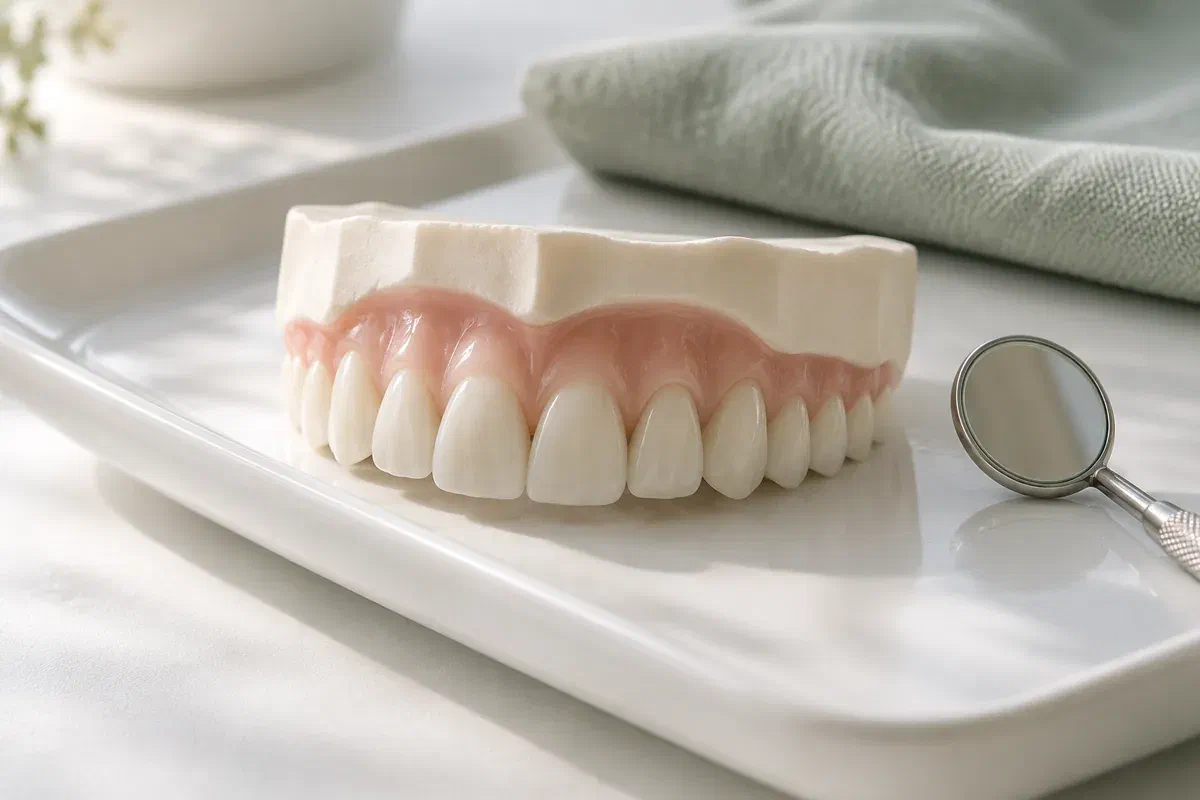
Illustrative upper front-teeth model showing natural edge shapes beside a dental mirror
Which tooth is really uneven?

Sometimes the tooth that bothers you isn’t the one at fault.

An edge may look long because it is, or because its neighbour has worn or chipped. Tell us whether the difference is longstanding, recent, or part of wear on several teeth.

One tooth with a pointier or longer outline

Show the feature you notice and avoid asking for the whole row to be matched. The clinician considers whether a slight change to that tooth is suitable and how it would look beside the others. Teeth naturally differ a little.

A neighbour that has chipped or lost length

If the shorter tooth was knocked, broken or has an old filling at the edge, mention it. Smoothing the longer tooth won’t address damage next door, and the injured tooth deserves its own check before any plan is made.

Sensitivity, grinding or thinning enamel

Describe reactions to cold, night clenching, erosion or past adjustments. These change how much enamel is available and whether removal is wise. Sometimes the findings point clearly toward adding rather than subtracting.

Leave the evening-out to a professional. A nail file or other tool can take away enamel you cannot get back, and the right tooth, amount and position need proper assessment first.

Why compare at all

Removing a little can be enough. Sometimes adding is kinder.

When the longer tooth is a good candidate, a light recontour can soften a minor point or level a small irregularity without any restoration. Nothing new needs maintaining. The trade-off is that sound enamel is gone permanently, so the change needs a clear purpose and an agreed limit.

Adding material leaves the original enamel in place but introduces something that will need care over time. Neither is automatically better. The visit can also end with the decision that the difference is natural and worth keeping, which is a perfectly good answer.

Patient information: Cleveland Clinic — enameloplasty and limited tooth contouring · Clinical report — conservative recontouring and composite alternatives

Clarity about which tooth changes

Before agreeing, ask the clinician to point to the tooth and surface involved. One clearly described feature is a far better basis for consent than a general request to make the teeth even.

A fair side-by-side comparison

Ask how reshaping the longer tooth compares with building up the shorter one, in appearance, effect on the bite and long-term upkeep. The right choice depends on your teeth, not a fixed preference.

Keeping your smile’s natural balance

Think about the smile as a whole. Bringing every tooth down to the shortest one is seldom the right aim. A subtle refinement that keeps your familiar look is a reasonable thing to want.

How the decision is made

Examine, compare, choose, refine

Whether recontouring is appropriate is settled during the examination. Ask how the enamel and bite will be assessed, and how the clinician weighs subtraction against addition for your teeth.

  1. Look at both teeth and the history behind them

    Mention injuries, old fillings, sensitivity, grinding or earlier reshaping on either tooth. The clinician examines them and reviews any records. A recent break is handled differently from a difference that has always been there.

  2. Weigh the options and agree on a limit

    Discuss what each approach would change and what it leaves untouched, along with permanence and possible sensitivity. If recontouring is chosen, its extent is set beforehand and not stretched gradually toward perfection.

  3. Carry out the chosen, limited step

    For an agreed reshape, suitable dental instruments refine only the selected area. Mention discomfort or ask for a break whenever you need. The plan determines how much is done, not how long you can sit through it.

  4. Finish and confirm the teeth meet comfortably

    The surface is polished and the clinician reviews both appearance and bite. Point out anything that still feels uneven or rough. Before leaving, check aftercare, any review appointment and the signs that warrant a call.

Taking care afterwards

Simple care, steady habits

Follow whatever advice was given for your mouth. A reshape on its own adds no filling or veneer, though your tooth keeps depending on good daily care and regular checkups.

Fluoride toothpaste and a soft touch

Brush and clean between your teeth using the method you have been shown. Extra scrubbing on the refined edge won’t polish it further. Ask for guidance if sensitivity makes cleaning harder or you’re unsure about products.

Avoid using teeth as tools

Opening packages, chewing pens or crunching ice can chip an edge. Mention habits that may have played a part in earlier wear. If a guard or more assessment was suggested, keep to that advice alongside the reshaping.

Speak up about lasting discomfort

Contact us if sensitivity continues, worsens or makes eating awkward, or if your bite feels different. Describe what triggers it. The reason should be found before any more adjustment is considered.

Patient information: Cleveland Clinic — tooth enamel and its protection

Your choices

Subtract, add, align, or leave it

Ask how each approach answers your concern and suits the state of your teeth. A good choice is one whose effects, now and later, you clearly understand.

Taking a little from a longer or pointier edge

Carefully limited enamel recontouring

Possible where the tooth and bite can spare a small amount. Discuss what you’ll gain and exactly where it stops. It won’t add length to the shorter tooth or fix crowding by removing extra enamel.

Adding where length or structure is missing

Composite bonding on the shorter tooth

Tooth-coloured material can build up an edge that falls short. Ask what preparation involves, how the shape is formed and how it is maintained. It leaves the enamel in place but needs its own long-term care.

When position or wear explains the difference

Orthodontic advice, further checks, or no change

A tooth that has drifted, continuing wear or an unexplained break may need a different assessment. Two healthy, slightly different teeth can also be left alone. Ask what would be watched over time.

Reshaping or bonding?

Questions about evening out two teeth

Choosing between small options deserves clear answers. Ask about each tooth involved, how much would change and what every alternative would mean.

(905) 876-4488
How do you decide whether to remove enamel or add bonding?
The clinician looks at which tooth is actually out of proportion, the enamel available, your bite and any wear or damage. Those findings guide whether subtraction, addition, alignment or no change is most appropriate.
Does bonding last as long as natural enamel?
Bonding is durable but can chip or stain over time and may need repair or replacement eventually. Natural enamel doesn’t need replacing, but once removed it is gone. Ask how these trade-offs apply to you.
Is it possible to combine a small reshape with a small addition?
In some cases a slight refinement on one tooth and bonding on another can be planned together. Ask whether that suits your teeth and what each part of the plan would involve.
If enamel is taken off, can it ever come back?
No. Enamel does not regrow. Daily care and fluoride help protect what is left, but the removed edge cannot return, so the amount is agreed before any work begins.
Can my shorter tooth be made longer by trimming the others?
Trimming adds nothing to the short tooth; it only lowers its neighbours, which may not be appropriate. Ask whether the short tooth’s condition or position should be addressed directly instead.
What should I tell you about earlier work on these teeth?
Anything you know: previous reshaping, fillings, bonding or injuries, and roughly when. That history affects how much natural structure remains. Past adjustments do not mean more removal is suitable.
Planning a visit from Brampton

Let’s compare the options on your teeth.

Book an assessment at our Bronte Street practice to look at an uneven pair of teeth or a small shape concern. We will check the enamel and bite and walk you through subtraction, addition and other choices before anything is decided.

Each case is assessed individually. Removing enamel is permanent, and some concerns are better addressed with bonding, alignment or no treatment.

Visit Milton Dental Clinic
Unit 1, 342 Bronte St. S, Milton, ON L9T 5B7
Get directions Clinic hours
Monday–Thursday
11am–7pm
Friday–Sunday
By appointment only

Areas we serve

  • Milton
  • Oakville
  • Mississauga
  • Georgetown
  • Halton Hills
  • Acton
  • Campbellville
  • Brampton
  • Burlington
  • Puslinch
  • Rockwood
  • Erin
  • Caledon
  • Etobicoke
  • Old Milton
  • Bronte Meadows
  • Timberlea
  • Dorset Park
  • Dempsey
  • Clarke
  • Beaty
  • Coates
  • Harrison
  • Scott
  • Willmott
  • Ford
  • Bowes
  • Cobden
  • Walker
  • Mountain View
  • Milton Heights
  • Hawthorne Village
  • Valley View
  • Fallingbrook
  • Nassagaweya
  • Trafalgar
  • Esquesing
  • Nelson
  • Brookville
  • Moffat
  • Glen Williams
  • Norval
  • Limehouse
  • Stewarttown
  • Ashgrove
  • Hornby
  • Silver Creek
  • Speyside
  • Scotch Block
  • North Oakville
  • River Oaks
  • Glen Abbey
  • West Oak Trails
  • Palermo
  • Bronte Creek
  • College Park
  • Joshua Creek
  • Uptown Core
  • Preserve
  • Iroquois Ridge
  • Lisgar
  • Meadowvale
  • Meadowvale Village
  • Churchill Meadows
  • Erin Mills
  • Central Erin Mills
  • Streetsville
  • East Credit
  • Creditview
  • Heartland
  • Sheridan
  • Mount Pleasant
  • Credit Valley
  • Huttonville
  • Churchville
  • Springbrook
  • Northwest Brampton
  • Bram West
  • Fletcher's Meadow
  • Fletcher's Creek South
  • Alton Village
  • Orchard
  • Millcroft
  • Headon Forest
  • Tansley
  • Brant Hills
  • Tyandaga
  • Kilbride
  • Lowville
  • Aberfoyle
  • Morriston
  • Arkell
  • Hillsburgh
  • Freelton
  • Carlisle
  • Waterdown
  • Flamborough
  • Mountsberg

How can we help?

Milton Dental Clinic

Have a question about your smile? Choose the option that works best for you.

For urgent dental concerns, please call.
Messages are reviewed during clinic hours.