

Illustrative patient discussing a tooth-edge concern with a dental clinician
Cosmetic Dentistry

Enamel Recontouring in Mississauga

A photo or video call can make one tooth edge suddenly obvious. From Mississauga, you can bring that observation to an assessment where we check the enamel and bite, explain what a cautious reshaping could realistically change, and say so when another option would serve you better.

Seen on camera

Photos exaggerate. An exam doesn’t.

Front cameras, close-ups and harsh lighting can make a slight point or uneven tip look far more noticeable than it does in person. Still, if something keeps catching your eye, it is worth understanding. Enamel recontouring, which you may also see called enameloplasty or reshaping, removes a small amount of outer enamel to refine a suitable edge. It is for minor, selected differences, not for dramatic change through repeated shortening of healthy teeth.

A picture can show you what bothers you; it cannot show how thick the enamel is or how your teeth meet. Those details set the safe limit, and whatever is removed stays removed. In the chair, the clinician can tell whether a tiny adjustment is reasonable, or whether bonding, alignment or no treatment would protect the tooth better.

Feel free to bring the photo along when you visit from Mississauga. It gives the team a clear idea of the angle and detail you have in mind. Wanting to ask is perfectly reasonable, and the answer may well be that the tooth is fine as it is.

Ask about the edge you saw in a photo
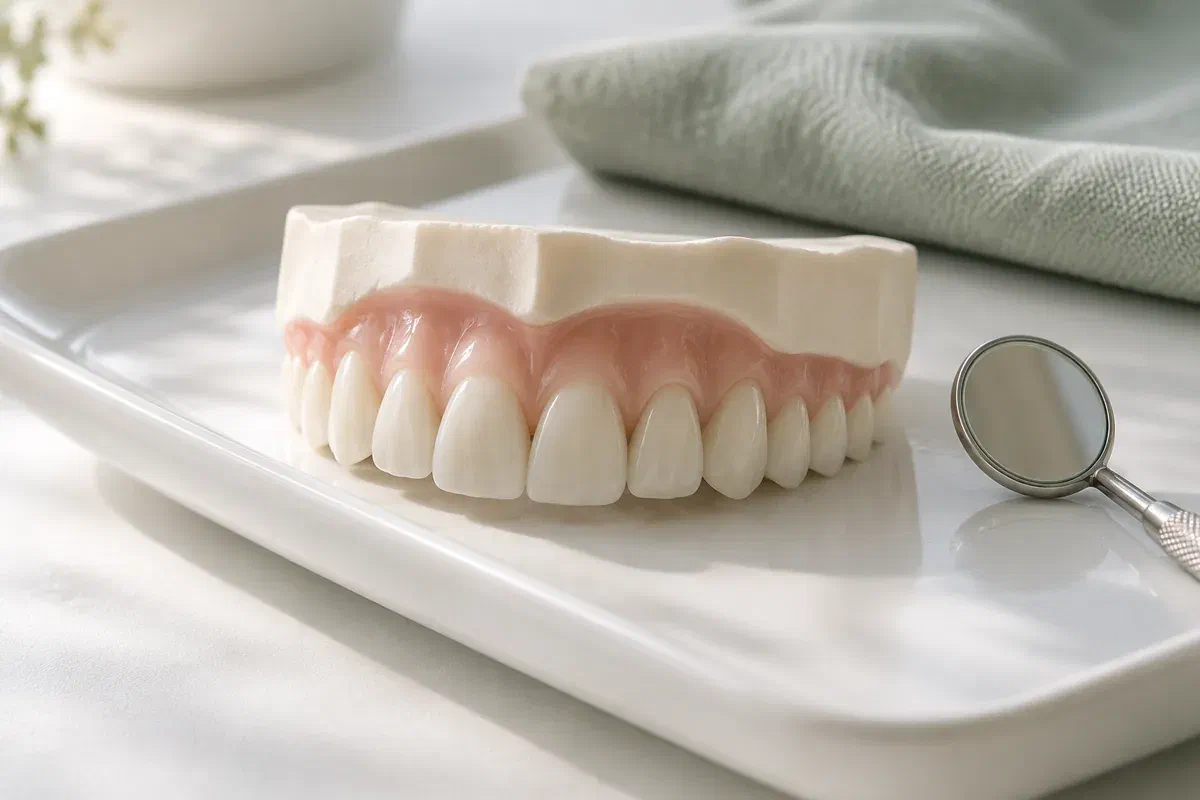
Illustrative upper front-teeth model showing natural edge shapes beside a dental mirror
What the clinician looks for

Is the difference real, recent, or part of a pattern?

Some edges have always been slightly irregular, others changed after an injury, and some reflect wear across several teeth. Tell us which seems closest to your situation.

A slight point or uneven tip

Show the one feature you notice instead of asking for a perfectly level row. The clinician will judge whether a small change is appropriate and how it would sit within your smile. Natural differences between teeth are normal.

An edge that has started to catch

If the spot also feels rough against your lip or tongue, mention when that started and whether a knock or broken filling came first. Comfort matters, but the reason for the change needs identifying before any smoothing.

Sensitivity, grinding or signs of wear

Let us know about cold sensitivity, clenching, erosion or any earlier reshaping. These affect whether more enamel can sensibly be removed. The examination may suggest that protecting what is there comes before changing its shape.

Please don’t try to even out a tooth yourself with a nail file or any other tool. A professional needs to decide where and how much to adjust, because even a tiny change is permanent.

Setting a realistic goal

Aim for a subtle refinement, not a new smile.

In a suitable case, careful recontouring can soften a minor point or neaten an irregular tip without a filling or veneer. The trade-off is that healthy enamel is permanently removed. A conservative plan still needs a clear reason and a limit you agree on first.

It is also a valid outcome to decide nothing should be removed. If the change you imagine from the photo is larger than a modest refinement, another method may preserve more of the tooth. Ask what is realistic, and don’t assume an individual shape is a defect.

Patient information: Cleveland Clinic — enameloplasty and limited tooth contouring · Clinical report — conservative recontouring and composite alternatives

A specific, visible target

Ask the clinician to show you, perhaps in a mirror, exactly which tooth and surface would change. An agreed description of one feature is far more useful than a general wish for symmetry.

Adding versus taking away

A tooth that looks long on camera may simply sit beside a shorter one. Ask whether a small addition to that neighbour would be more suitable than reshaping the first, considering your bite and future care.

Proportions that look natural in person

Talk about how the refined edge would relate to the whole smile, not just how it photographs. Shortening everything to match one tooth is rarely appropriate. Keeping the character of your smile is a reasonable preference.

The appointment

From the photo to a plan you can agree with

The examination determines whether recontouring is suitable. Ask how your enamel and bite will be evaluated, and which alternatives remain if removal isn’t advised.

  1. Share what you noticed and your dental history

    Show the photo if you have one and mention injuries, sensitivity, grinding or earlier reshaping. The clinician examines the teeth and reviews records. A recent fracture or damaged filling needs a different assessment from a long-standing preference.

  2. Confirm the change and its limits

    Ask what will be altered and what will remain. Discuss permanence, possible sensitivity and reasonable alternatives. The extent is agreed in advance, not expanded piece by piece in pursuit of a perfect line.

  3. Refine only the agreed area, if suitable

    The clinician uses appropriate dental instruments to shape the selected spot. Tell the team straight away if you feel discomfort or need a pause. The work stays within the plan, not within what you can tolerate.

  4. Polish, check the bite, and look together

    The surface is finished and polished, and the result and bite are reviewed. Look in the mirror and mention anything that still feels rough or unexpected. Confirm aftercare, follow-up and symptoms that should prompt a call.

After your visit

Protecting what remains

Your clinician’s advice comes first. Since nothing artificial has been added, there is no restoration to look after; what matters is that the reshaped tooth keeps getting good daily cleaning and regular checkups.

Brush gently with fluoride toothpaste

Clean your teeth and between them using the technique recommended to you. Scrubbing the refined edge won’t make it smoother. Ask if sensitivity makes brushing uncomfortable or you are unsure which products to use.

Keep hard objects away from your teeth

Biting pens, ice or packaging to test the edge can cause chips. Mention habits that may have contributed to earlier wear. If protection or further assessment was advised, follow that plan instead of relying on the reshaping alone.

Report persistent sensitivity or a bite that feels off

Contact the team if discomfort lingers, worsens or affects eating. Describe when it happens and whether your teeth meet differently. The cause should be assessed before any further adjustment is discussed.

Patient information: Cleveland Clinic — tooth enamel and its protection

Other ways to approach it

Reshaping isn’t the only answer to what you saw.

Ask how each option relates to your real concern and the condition of your teeth. The aim is a suitable change whose effects you fully understand.

If a minor outline change is suitable

Carefully limited enamel recontouring

A small adjustment may be possible where the tooth and bite allow it. Discuss the benefit and the stopping point. It cannot lengthen a short tooth or correct significant crowding by removing more surface.

If the issue is missing length or structure

Composite bonding or a local repair

Bonding may suit an area that needs building up rather than shortening. Ask about preparation, the final contour and maintenance. It changes the tooth in a different way and should be compared on that basis.

If the shape difference has another cause

Orthodontic advice, investigation, or simply watching

Sometimes the camera is picking up a tooth that sits slightly forward, or wear that is still progressing, and those need their own assessment. A healthy edge that isn’t changing can be left as it is. Ask what, if anything, would be watched.

Your questions

Before you reshape a tooth

A minor change still deserves clear answers. Ask about the specific tooth, the amount of adjustment and the alternatives that apply.

(905) 876-4488
Is it helpful to bring the photo that made me notice the tooth?
Yes. It shows the angle and feature you are concerned about. The clinician will also examine the tooth directly, since lighting and camera lenses can make small differences look larger than they are.
Can recontouring and whitening be combined?
They address different things: one changes shape, the other colour. Ask whether doing both makes sense for your teeth and, if so, how the clinician would suggest sequencing them.
Can removed enamel be rebuilt naturally?
No. Enamel does not regenerate once it is taken away. Fluoride and careful daily cleaning help protect what remains, but the original edge cannot be restored by the body.
Could reshaping my front teeth affect how I bite into food?
Front edges play a role in biting and guiding jaw movement, which is why the bite is checked before and after. Ask how the proposed change would relate to the way your teeth come together.
What if my tooth broke recently and now looks uneven in pictures?
A recent break should be examined before anything else. A small visible chip does not reveal all the effects of an impact. The clinician can advise whether repair, smoothing, testing or follow-up is appropriate.
Can I take time to think it over after the consultation?
Of course. You can weigh the expected improvement against the permanence and the alternatives. Leaving a healthy edge alone is a reasonable choice, and an explanation does not commit you to anything.
From Mississauga

Bring the picture, and your questions.

Reserve a consultation with our Bronte Street team about an uneven tip or other small shape concern. We’ll compare what the photo shows with what the examination finds, then talk through whether a limited adjustment fits.

Suitability depends on the individual tooth. Enamel removal is permanent, and some goals are better met another way or left untreated.

Visit Milton Dental Clinic
Unit 1, 342 Bronte St. S, Milton, ON L9T 5B7
Get directions Clinic hours
Monday–Thursday
11am–7pm
Friday–Sunday
By appointment only

Areas we serve

  • Milton
  • Oakville
  • Mississauga
  • Georgetown
  • Halton Hills
  • Acton
  • Campbellville
  • Brampton
  • Burlington
  • Puslinch
  • Rockwood
  • Erin
  • Caledon
  • Etobicoke
  • Old Milton
  • Bronte Meadows
  • Timberlea
  • Dorset Park
  • Dempsey
  • Clarke
  • Beaty
  • Coates
  • Harrison
  • Scott
  • Willmott
  • Ford
  • Bowes
  • Cobden
  • Walker
  • Mountain View
  • Milton Heights
  • Hawthorne Village
  • Valley View
  • Fallingbrook
  • Nassagaweya
  • Trafalgar
  • Esquesing
  • Nelson
  • Brookville
  • Moffat
  • Glen Williams
  • Norval
  • Limehouse
  • Stewarttown
  • Ashgrove
  • Hornby
  • Silver Creek
  • Speyside
  • Scotch Block
  • North Oakville
  • River Oaks
  • Glen Abbey
  • West Oak Trails
  • Palermo
  • Bronte Creek
  • College Park
  • Joshua Creek
  • Uptown Core
  • Preserve
  • Iroquois Ridge
  • Lisgar
  • Meadowvale
  • Meadowvale Village
  • Churchill Meadows
  • Erin Mills
  • Central Erin Mills
  • Streetsville
  • East Credit
  • Creditview
  • Heartland
  • Sheridan
  • Mount Pleasant
  • Credit Valley
  • Huttonville
  • Churchville
  • Springbrook
  • Northwest Brampton
  • Bram West
  • Fletcher's Meadow
  • Fletcher's Creek South
  • Alton Village
  • Orchard
  • Millcroft
  • Headon Forest
  • Tansley
  • Brant Hills
  • Tyandaga
  • Kilbride
  • Lowville
  • Aberfoyle
  • Morriston
  • Arkell
  • Hillsburgh
  • Freelton
  • Carlisle
  • Waterdown
  • Flamborough
  • Mountsberg

How can we help?

Milton Dental Clinic

Have a question about your smile? Choose the option that works best for you.

For urgent dental concerns, please call.
Messages are reviewed during clinic hours.