

Illustrative patient discussing a tooth-edge concern with a dental clinician
Cosmetic Dentistry

Enamel Recontouring in Oakville

Before deciding to reshape a tooth, it helps to know why the edge looks the way it does. If you’re coming from Oakville, we can examine whether it is natural shape, wear or an old chip, and then talk through whether a limited recontour, bonding or no change at all would suit.

Oakville · understanding the edge

Is it the shape you were born with, or something that changed?

That question shapes everything that follows. An edge that has always been slightly pointed is a very different matter from one that has worn flat or chipped last winter. Enamel recontouring, known too as enameloplasty or reshaping, removes a small amount of outer enamel to refine an outline that suits it. It works for minor, selected differences and is not a way to transform a smile by shortening sound teeth repeatedly.

Once the cause is clearer, the limit becomes clearer too. Every tooth has its own enamel thickness and its own role in your bite, and anything taken away is gone permanently. Sometimes the right answer is a small adjustment. Other times adding material, moving a tooth orthodontically, or leaving a healthy shape alone protects you better.

Making the trip up from Oakville is easier when you arrive with a few details ready: when you first noticed the edge, whether anything happened to the tooth, and what you would like it to look or feel like. Raising a small concern is always reasonable. It does not mean you will need treatment.

Find out what is behind the edge
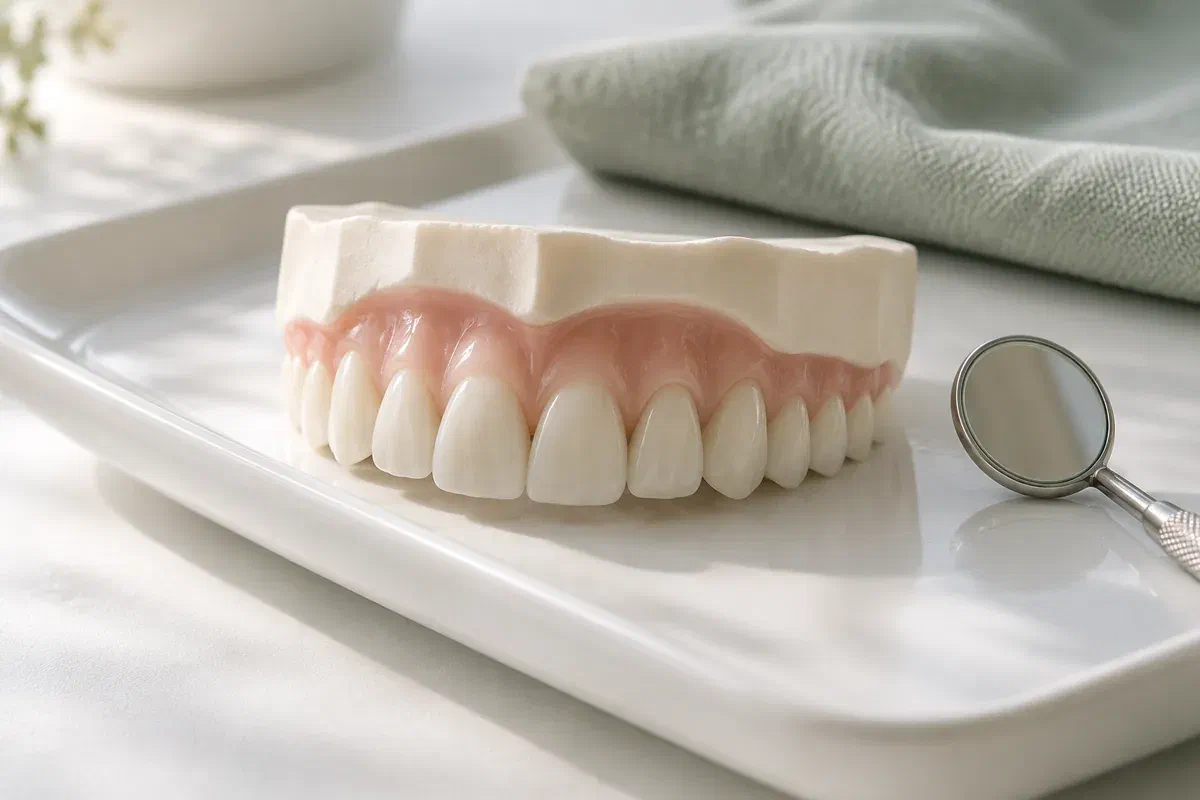
Illustrative upper front-teeth model showing natural edge shapes beside a dental mirror
Sorting out the cause

Three common reasons an edge looks uneven

The same visible shape can come from different places. Mention whether it has been there as long as you can remember, appeared after an injury, or seems to be part of wider wear.

A natural point or small irregularity

Name the particular spot rather than asking for an even row. The clinician will consider whether a minor refinement is reasonable and how it would change the line of your smile. Plenty of natural variation is healthy and attractive just as it is.

Roughness that started after a knock or bite

Say what happened, roughly when, and whether a filling or crown was involved. Wanting the tooth to feel smooth again is understandable, but the damage itself needs assessing first. Polishing away roughness will not deal with a crack beneath it.

Wear from grinding, acid or earlier treatment

Describe any cold sensitivity, clenching, reflux or past reshaping. Wear changes how much enamel is left and whether removing more is wise. Ask whether the examination suggests protection is the real priority here.

A file or emery board can seem harmless, but it is not safe on teeth. The location and amount of any change need professional judgement, because a tiny adjustment is still permanent.

When recontouring helps

Small, targeted, and only where the tooth allows

If the tooth is a good candidate, recontouring may soften a minor point or neaten an irregular outline with no filling or veneer involved. The cost to the tooth is a little healthy enamel, permanently. That is why even a gentle change should have a clear purpose and a limit agreed in advance.

Sometimes the most useful outcome of the visit is learning that no enamel needs removing. When the desired change is larger than a modest refinement, another method may keep more of the tooth intact. Ask what is realistic, and remember that an individual shape is not automatically a flaw.

Patient information: Cleveland Clinic — enameloplasty and limited tooth contouring · Clinical report — conservative recontouring and composite alternatives

One agreed area, clearly identified

Ask the clinician to point out the exact tooth and surface before you give consent. An agreed description of a single feature leads to a better result than a general wish for everything to look the same.

Removal and addition, side by side

A tooth may look too long only because the one next to it is short or worn. Ask whether building up that neighbour would be more suitable than shortening the first, and how each choice affects your bite and maintenance.

Proportions that suit the whole smile

Consider how the new outline would look among the teeth around it. Trimming everything to match the shortest tooth is rarely a good aim. A subtle change that keeps your familiar character is a perfectly valid choice.

What happens at the appointment

Find the cause, set the boundary, then refine.

The examination decides whether recontouring is appropriate. Ask how your enamel and bite will be checked, and what alternatives exist if removal isn’t recommended.

  1. Describe the edge and how it got that way

    Mention injuries, sensitivity, grinding, earlier contouring or any recent change. The clinician examines your teeth and looks at relevant records. A new break or a damaged filling is assessed differently from a shape you have simply always disliked.

  2. Agree on the extent before anything starts

    Ask what will be altered and what will be kept. Discuss permanence, the chance of sensitivity, and the realistic alternatives. The amount of change is decided ahead of time, not extended repeatedly while chasing perfect symmetry.

  3. Carry out the limited refinement if suitable

    With the plan agreed, suitable dental instruments are used to shape just the chosen area. You can ask for a pause at any time or mention discomfort. The work stays inside the assessed plan rather than going as far as you can tolerate.

  4. Polish the surface and check the bite

    The area is finished smoothly and your bite is reviewed. Speak up if an edge still feels rough. Before you leave, confirm aftercare, any follow-up and the symptoms that mean you should contact us.

Looking after the tooth

No new restoration, but the same daily care

Your own instructions take priority. With no filling or veneer placed, upkeep is about the enamel itself: careful cleaning, avoiding the habits that caused wear, and keeping regular dental visits.

Brush softly with a fluoride toothpaste

Clean your teeth and between them using the technique you were shown. Brushing the reshaped area harder will not make it feel smoother. Ask for guidance if sensitivity makes cleaning uncomfortable or you are unsure which products suit you.

Don’t test the edge on hard things

Avoid biting ice, pens or packaging to see whether the tooth feels stronger or more even. Mention any habits linked to earlier wear. If protection or further assessment was suggested, follow it rather than treating the reshaping as the whole answer.

Call about ongoing sensitivity or bite changes

Contact us if discomfort persists, gets worse or interferes with eating. Note when it happens and whether the tooth feels different when you bite. More filing is not the response until the cause has been looked at.

Patient information: Cleveland Clinic — tooth enamel and its protection

Matching the approach to the cause

Different causes, different answers.

Ask how each option relates to what is actually behind the edge and the condition of your teeth. The aim is a suitable change whose consequences you clearly understand.

For a natural minor irregularity

Carefully limited enamel recontouring

A small refinement may be considered where enamel and bite allow it. Discuss what you hope to gain and where the work ends. Recontouring cannot add length to a short tooth or correct substantial crowding by taking off more surface.

For a chip or edge that has lost structure

Composite bonding or local repair

Bonding may suit an area that needs rebuilding rather than shortening. Ask about preparation, the resulting shape and how it is maintained. It alters the tooth differently from recontouring, so compare the two on that basis.

For a difference caused by position or ongoing wear

Orthodontic advice, investigation, or observation

If the cause turns out to be alignment, or erosion and grinding that are still going on, that cause is dealt with first. Where an edge is healthy and not changing, keeping it is a sound plan. Ask how it would be followed at checkups.

Questions we hear

Clear answers about reshaping enamel

A small change still deserves a full explanation. Ask about your specific tooth, how much would be adjusted and which alternatives apply.

(905) 876-4488
How can you tell whether an edge is natural or worn?
The clinician looks at the edge’s shape, the surrounding teeth, your bite and any signs of grinding or erosion, and asks about your history. That picture helps decide whether a small adjustment, protection or simply observation makes sense.
Will reshaping a tooth make it more sensitive?
Some people notice brief sensitivity, while others don’t. The risk depends partly on how much enamel is present to begin with. Ask about it for your tooth, and contact us if sensitivity lingers afterwards.
Does enamel ever regrow once it has been reshaped?
No. Removed enamel is not replaced. Good daily care and fluoride help protect the enamel that remains, but they cannot rebuild the original edge, so the amount is agreed carefully beforehand.
Can recontouring correct one tooth that looks shorter than the rest?
Recontouring removes rather than adds, so it cannot lengthen a tooth. Shortening its neighbours to match may be inappropriate. Ask whether bonding or attention to the short tooth’s position would suit better.
Is one consultation enough if I’m travelling from Oakville?
Often an assessment and, where suitable, a small adjustment can be planned efficiently. Tell us when booking that you’re coming from Oakville so the visit can be organised around what the examination is likely to involve.
Am I obliged to go ahead after the consultation?
Not at all. You can weigh the expected improvement against the permanence and alternatives, and take time to decide. Leaving a healthy edge alone remains a reasonable option.
Visiting from Oakville

Come with your question about the edge.

Set aside time at our Bronte Street practice to find out why an edge looks the way it does. Once the cause is clear, we can weigh a limited reshape against bonding, orthodontic advice or leaving the tooth unchanged.

Suitability is decided individually. Enamel removal is permanent, and some goals are better met with another approach or no treatment.

Visit Milton Dental Clinic
Unit 1, 342 Bronte St. S, Milton, ON L9T 5B7
Get directions Clinic hours
Monday–Thursday
11am–7pm
Friday–Sunday
By appointment only

Areas we serve

  • Milton
  • Oakville
  • Mississauga
  • Georgetown
  • Halton Hills
  • Acton
  • Campbellville
  • Brampton
  • Burlington
  • Puslinch
  • Rockwood
  • Erin
  • Caledon
  • Etobicoke
  • Old Milton
  • Bronte Meadows
  • Timberlea
  • Dorset Park
  • Dempsey
  • Clarke
  • Beaty
  • Coates
  • Harrison
  • Scott
  • Willmott
  • Ford
  • Bowes
  • Cobden
  • Walker
  • Mountain View
  • Milton Heights
  • Hawthorne Village
  • Valley View
  • Fallingbrook
  • Nassagaweya
  • Trafalgar
  • Esquesing
  • Nelson
  • Brookville
  • Moffat
  • Glen Williams
  • Norval
  • Limehouse
  • Stewarttown
  • Ashgrove
  • Hornby
  • Silver Creek
  • Speyside
  • Scotch Block
  • North Oakville
  • River Oaks
  • Glen Abbey
  • West Oak Trails
  • Palermo
  • Bronte Creek
  • College Park
  • Joshua Creek
  • Uptown Core
  • Preserve
  • Iroquois Ridge
  • Lisgar
  • Meadowvale
  • Meadowvale Village
  • Churchill Meadows
  • Erin Mills
  • Central Erin Mills
  • Streetsville
  • East Credit
  • Creditview
  • Heartland
  • Sheridan
  • Mount Pleasant
  • Credit Valley
  • Huttonville
  • Churchville
  • Springbrook
  • Northwest Brampton
  • Bram West
  • Fletcher's Meadow
  • Fletcher's Creek South
  • Alton Village
  • Orchard
  • Millcroft
  • Headon Forest
  • Tansley
  • Brant Hills
  • Tyandaga
  • Kilbride
  • Lowville
  • Aberfoyle
  • Morriston
  • Arkell
  • Hillsburgh
  • Freelton
  • Carlisle
  • Waterdown
  • Flamborough
  • Mountsberg

How can we help?

Milton Dental Clinic

Have a question about your smile? Choose the option that works best for you.

For urgent dental concerns, please call.
Messages are reviewed during clinic hours.