
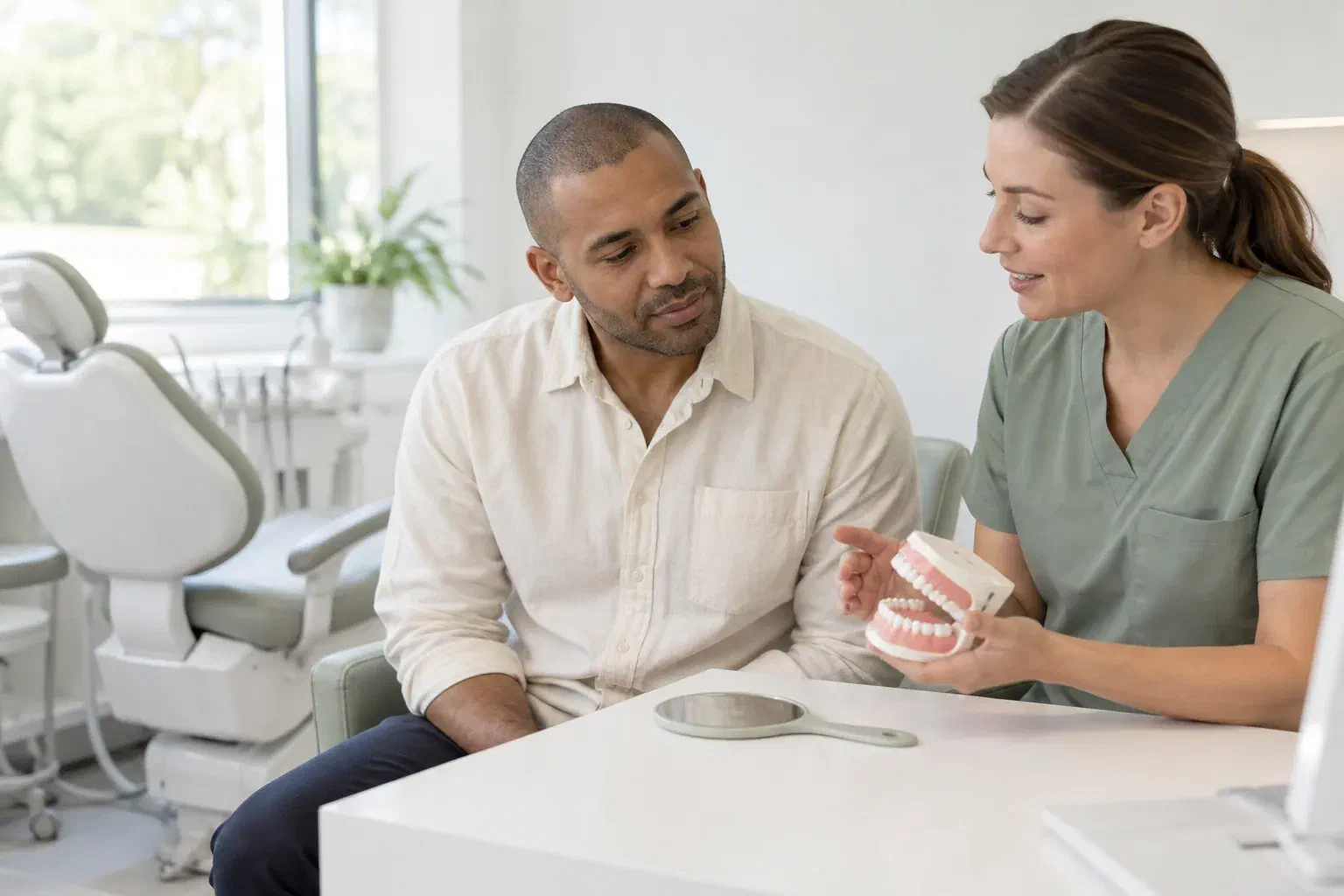
Illustrative patient discussing a tooth-shape question with a dental clinician
Cosmetic Dentistry

Enamel Reshaping in Georgetown

A fork, a water bottle or a hockey stick can leave a tooth with a tiny new chip that your tongue will not leave alone. From Georgetown, you can have the chip checked first, then learn whether smoothing a little enamel, bonding or simply monitoring is the right next step.

Georgetown · a new little chip

Just nicked a tooth? Start with a check, not a file.

Small chips usually happen in ordinary moments. You bite down on a utensil, catch a glass at the wrong angle or take a knock during a game, and suddenly one corner feels rough. Often there is no pain at all, only a sharp spot that your tongue keeps finding.

A recent chip is first a question of damage, and only then a question of appearance. The clinician needs to see whether the break stays in enamel, whether there is a crack, and whether the tooth is sensitive. Enamel reshaping, also called recontouring or enameloplasty, can sometimes smooth a very small rough edge by removing a little enamel. Larger breaks usually need material added instead.

Booking a look soon after the chip gives you clear answers. You will hear whether smoothing would be enough, whether bonding would protect the tooth better, or whether watching it is fine. Pain, swelling or a large piece missing calls for prompt advice rather than a routine appointment.

Get a chipped edge checked
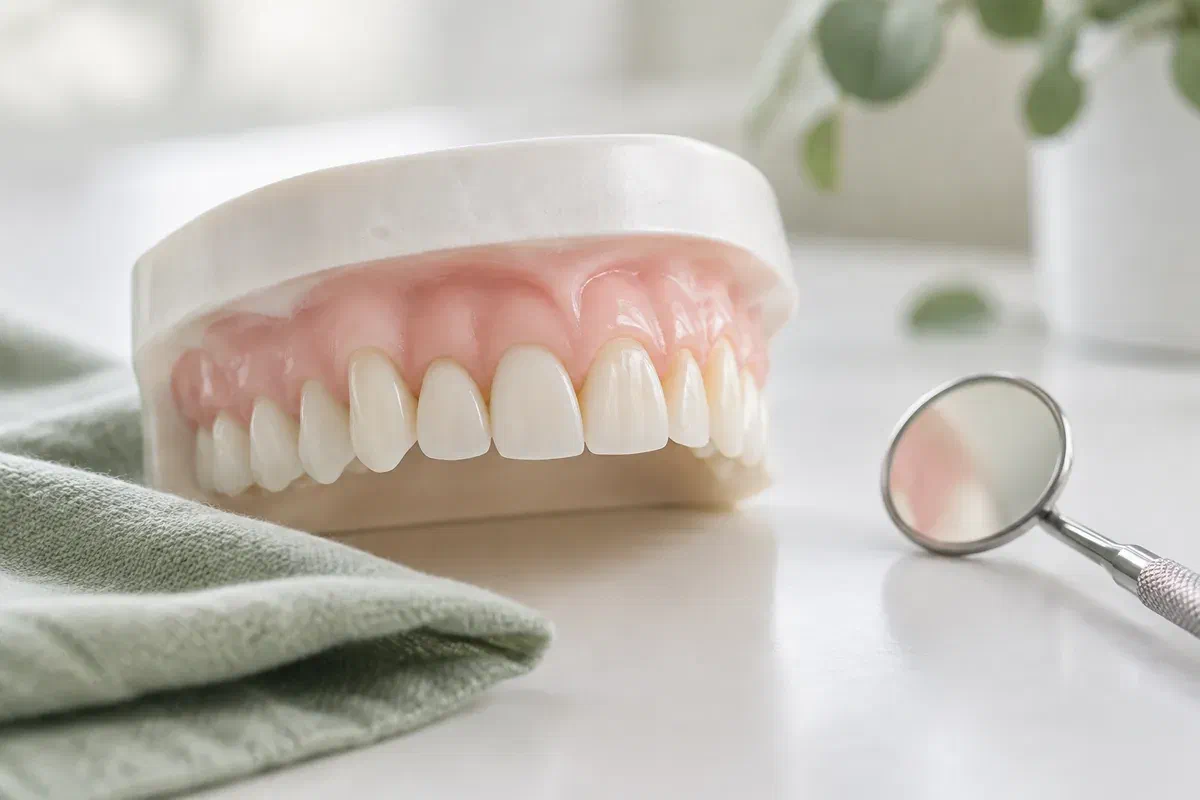
Illustrative upper-teeth teaching model showing modest natural variation in tooth corners
Describing the chip

What happened, and how it feels now

The story of the chip helps the clinician judge how serious it is. Tell us the moment it happened, if you know, and anything that has changed since.

A corner that now looks uneven

Point to it and describe how it looked before. A small irregularity may be smoothed so that it blends with the natural outline, but a noticeable loss of length often looks better rebuilt. Your goal and the size of the chip together guide the choice.

A sharp edge catching your tongue or lip

Mention whether it is getting rougher or staying the same. A chip in enamel, a broken filling and a crack can all feel sharp. The surface has to be identified before anyone decides how to deal with it.

Sensitivity, or a history of chipping

Say if the tooth reacts to cold, sweet or biting, or if chips keep happening. Repeated chipping can point to grinding, a bite issue or weakened enamel. Removing more structure may then be unwise, and the cause needs attention.

Please resist sanding a chipped edge at home. It can widen the damage, increase sensitivity and leave less tooth to work with when it is repaired.

When smoothing is enough

A tiny chip, a tiny fix

For a very small chip confined to enamel, limited reshaping can sometimes blend the edge without any new material, so there is nothing extra to maintain. The change should be specific and modest. It cannot repair a crack, restore lost length or treat decay.

Because the enamel taken away is permanent, the consultation matters as much as the smoothing. You can compare the cosmetic gain with the risk of shortening a tooth that has already lost some structure. Choosing to monitor a tiny, stable chip is a perfectly valid outcome.

Patient information: Cleveland Clinic — enameloplasty · Clinical report — selective enamel reduction and aesthetic planning

Knowing the extent of the damage

Ask how far the chip reaches and whether the tooth beneath looks sound. This tells you whether smoothing, bonding or another step fits. If your main wish is comfort for your tongue, mention it.

A frank answer if bonding suits better

Where the chip is too large for a small adjustment, alternatives should be explained before any enamel is removed. Smoothing a bigger chip away would shorten the tooth more than most people want.

Thinking about sports and night guards

Tell the team if you play contact sports, wear a guard or retainer, or have treatment planned elsewhere. Protecting the tooth from another knock may be part of the plan. Sometimes coordination or a short wait comes first.

At your appointment

Check the damage, then choose the repair

Ask when you book whether the visit can include treatment if the chip is small. The examination may also lead to records, a review in a few weeks or a different procedure.

  1. Assess the chip and the tooth around it

    The clinician examines the break, the tooth, its neighbours and your bite, and asks how it happened. An X-ray or photo might be suggested if it would show whether a crack or deeper damage is present. Mention any home smoothing.

  2. Decide between smoothing, bonding or waiting

    You go over whether a small enamel adjustment would be enough, that it is permanent and what it would look like. Ask about sensitivity and whether adding material would keep the tooth stronger. Treatment waits until you both agree.

  3. Smooth the chipped edge if agreed

    If reshaping is chosen, the rough area is carefully refined with dental instruments. Agree on a hand signal for a pause. Report discomfort rather than assuming it is expected.

  4. Polish and recheck your bite

    The edge is polished and the clinician confirms how your teeth come together. Mention any spot that still feels sharp; there is no need to bite on something hard to find out. You will go home knowing what to watch for and when to call.

The week after

Go easy on that tooth

Follow the advice for your particular treatment. If the chip was bonded instead, or as well, ask about the extra care for that material.

Brush gently and avoid biting hard objects

Keep using fluoride toothpaste, a soft brush and your usual interdental cleaning. Avoid using the front teeth to open packages or bite very hard items. Ask about lingering sensitivity before reaching for stronger products.

Address whatever caused the chip

If grinding, a sport or erosion played a part, the plan for it still matters. A mouthguard or other protection may be suggested. Smoothing the edge does nothing to stop the next chip.

Call if the tooth changes

Let us know if sensitivity increases, the edge chips again or your bite feels different. The tooth may need another look. Asking for more smoothing should not be the reflex.

Patient information: American Dental Association — recognising and managing dental erosion

Choosing a repair

Smooth it, rebuild it, or keep an eye on it

Decide whether the plan should refine healthy enamel, restore missing structure or look into a deeper issue. The size and cause of the chip, not a treatment name, should guide the answer.

Suits a minor chip that stays within enamel

Limited reshaping of the chipped edge

Gentle smoothing may blend a minor irregularity when enamel and bite allow. Ask what will remain and how the edge will look beside its neighbour. The aim is to tidy, not to shorten the tooth step by step.

For a chip that took noticeable length or structure

Bonding or another restoration

Tooth-coloured material can rebuild the missing part and protect the edge. Discuss the size of the chip, the tooth that remains and the upkeep of the material. Repair aims to restore rather than refine.

For possible cracks or repeated chipping

Investigation or monitoring

A crack, a bite concern or a pattern of chips may need further assessment. A tiny, stable chip can simply be watched. Ask how each option addresses your concern and what signs mean you should call.

Chipped-tooth questions from Georgetown

What to know after a small break

General answers about chips, smoothing and repair. The examination will tell you what applies to your tooth.

(905) 876-4488
Is a small chipped tooth an emergency?
Often it is not, especially if it is painless and only enamel is affected. Pain, swelling, a large piece missing or a tooth that feels loose needs prompt advice. When in doubt, call and describe what happened.
Can a chip be smoothed at the same visit it is examined?
Sometimes, if it is small, confined to enamel and you are comfortable going ahead. Ask when booking whether time can be allowed. If the chip is larger or a crack is suspected, other steps come first.
Should I keep the broken piece of tooth?
If you find a sizeable fragment, it is reasonable to keep it in a clean container and bring it along. Whether it can be used depends on the break. Call for advice, particularly if the chip is large.
Would a sports mouthguard help prevent another chip?
For contact sports, a properly fitted mouthguard can help protect teeth. Ask the clinician about options, and whether any planned reshaping or bonding should be finished before a guard is made.
Can the chipped tooth be smoothed and its neighbour bonded at the same time?
In some situations, a combined plan makes sense. Ask which tooth loses enamel, which gains material and why each step is suggested. Aftercare for both should be clear before you begin.
There is a white mark beside the chip. Can reshaping remove it?
Not necessarily. A mark may sit deeper than the surface or relate to the injury, and removing enamel may not help. Ask what the mark is and which approach would preserve healthy tooth.

Patient information: American Dental Association — fluoride and enamel protection

Coming in from Georgetown

Let us look at that chip

Call our Bronte Street practice to book an assessment of a recent chip or rough edge. We will check for deeper damage, explain whether smoothing would be enough and compare it with bonding or monitoring.

Enamel reshaping and recontouring overlap. Whether either suits a chipped tooth is decided individually, and removed enamel does not regrow.

Visit Milton Dental Clinic
Unit 1, 342 Bronte St. S, Milton, ON L9T 5B7
Get directions Clinic hours
Monday–Thursday
11am–7pm
Friday–Sunday
By appointment only

Areas we serve

  • Milton
  • Oakville
  • Mississauga
  • Georgetown
  • Halton Hills
  • Acton
  • Campbellville
  • Brampton
  • Burlington
  • Puslinch
  • Rockwood
  • Erin
  • Caledon
  • Etobicoke
  • Old Milton
  • Bronte Meadows
  • Timberlea
  • Dorset Park
  • Dempsey
  • Clarke
  • Beaty
  • Coates
  • Harrison
  • Scott
  • Willmott
  • Ford
  • Bowes
  • Cobden
  • Walker
  • Mountain View
  • Milton Heights
  • Hawthorne Village
  • Valley View
  • Fallingbrook
  • Nassagaweya
  • Trafalgar
  • Esquesing
  • Nelson
  • Brookville
  • Moffat
  • Glen Williams
  • Norval
  • Limehouse
  • Stewarttown
  • Ashgrove
  • Hornby
  • Silver Creek
  • Speyside
  • Scotch Block
  • North Oakville
  • River Oaks
  • Glen Abbey
  • West Oak Trails
  • Palermo
  • Bronte Creek
  • College Park
  • Joshua Creek
  • Uptown Core
  • Preserve
  • Iroquois Ridge
  • Lisgar
  • Meadowvale
  • Meadowvale Village
  • Churchill Meadows
  • Erin Mills
  • Central Erin Mills
  • Streetsville
  • East Credit
  • Creditview
  • Heartland
  • Sheridan
  • Mount Pleasant
  • Credit Valley
  • Huttonville
  • Churchville
  • Springbrook
  • Northwest Brampton
  • Bram West
  • Fletcher's Meadow
  • Fletcher's Creek South
  • Alton Village
  • Orchard
  • Millcroft
  • Headon Forest
  • Tansley
  • Brant Hills
  • Tyandaga
  • Kilbride
  • Lowville
  • Aberfoyle
  • Morriston
  • Arkell
  • Hillsburgh
  • Freelton
  • Carlisle
  • Waterdown
  • Flamborough
  • Mountsberg

How can we help?

Milton Dental Clinic

Have a question about your smile? Choose the option that works best for you.

For urgent dental concerns, please call.
Messages are reviewed during clinic hours.