

Illustrative patient discussing a tooth-shape question with a dental clinician
Cosmetic Dentistry

Enamel Reshaping in Old Milton

Teeth that have served you for decades often carry a mix of natural enamel, older fillings and gentle wear. For people in Old Milton, we can work out which surface is actually bothering you and whether a small reshaping step, a repair or no change at all is the sensible answer.

Old Milton · tooth or filling?

Is it the enamel, or the work done years ago?

Plenty of mouths tell a long story. A filling placed twenty years ago, a front tooth bonded after a fall, and enamel that has softened at the edges with time can all sit side by side. When one spot starts to feel rough or look uneven, the first job is working out which of those surfaces you are actually noticing.

Enamel reshaping, sometimes called recontouring or enameloplasty, refers specifically to removing a small amount of natural enamel to refine a suitable outline. It adds nothing. Polishing an old restoration, repairing it or replacing it are separate decisions, and enamel that has already thinned may need protecting instead of trimming.

Our Bronte Street practice sits close to Milton’s historic downtown, so a look at the area can fit around an ordinary errand. Expect a plain explanation of what the surface is, how far any change could reasonably go, and what the alternatives involve. There is no need to decide on the day.

Have a rough surface checked
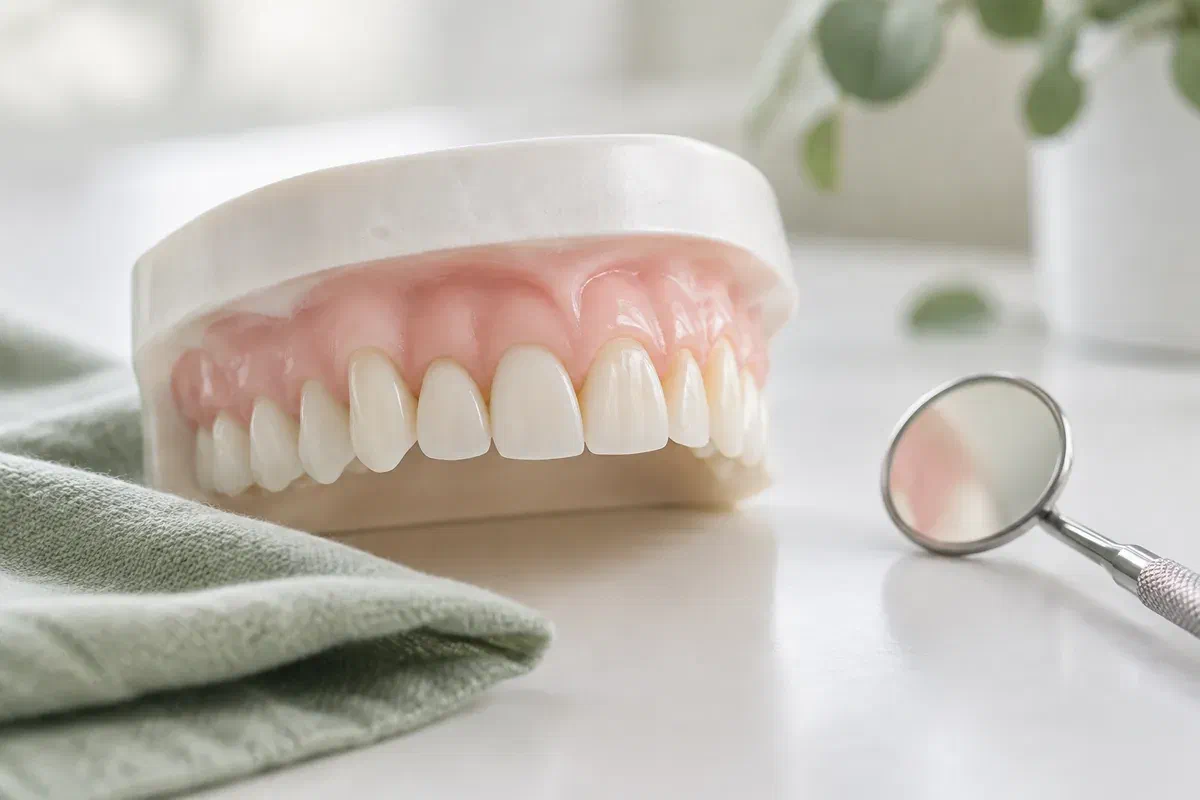
Illustrative upper-teeth teaching model showing modest natural variation in tooth corners
Worth mentioning at an Old Milton visit

Your dental history helps more than you might think

Older work, past injuries and changes you have noticed over the years all help the clinician understand the surface. Share what you remember, even if the details are hazy.

An edge that now looks longer or sharper

Show where it is and how you would like it to look. Neighbouring teeth sometimes wear unevenly, so one edge can seem to stand out more over time. The clinician can explain whether softening it would suit the tooth or whether keeping the outline is better.

A filling or bonding that feels rough

Say roughly when the work was done and whether the texture changed suddenly or slowly. A worn margin or chipped restoration is not the same as natural enamel and may need polishing, repair or replacement rather than reshaping.

Edges worn down, or teeth that twinge

Mention grinding at night, acidic foods or drinks, reflux you have been told about, or chips that keep coming back. Where enamel is already thin, removing more may be the wrong move. Finding and managing the cause might come first.

However tempting, do not smooth a tooth or filling yourself with a file or abrasive. Home attempts can remove enamel unevenly and make a professional repair harder.

Why the careful approach pays off

Refine only what is healthy enough to spare

For a sound tooth with a small, specific feature, limited reshaping can sometimes refine the contour without any new material. The goal should be one you can name. Reshaping will not remove staining, treat a cavity, mend a failing filling or straighten crowded teeth.

Since enamel does not come back, the consultation protects you as much as the procedure does. You hear what is likely to change, what could go wrong, and whether the improvement is worth it to you. Keeping a well-worn but healthy tooth as it is remains a fair choice.

Patient information: Cleveland Clinic — enameloplasty · Clinical report — selective enamel reduction and aesthetic planning

Clarity about the exact surface

Make sure you know whether the plan involves enamel, an existing restoration, or both. That one distinction changes the approach and the aftercare. If your aim is comfort for your tongue rather than a new look, say so.

A frank account of the limits

Ask whether the result you are picturing would take more than a minor adjustment. If it would, other options deserve discussion before anything is removed. An attractive outcome is not a reason to extend a procedure.

Thought given to the whole mouth

Let us know about partial dentures, guards, crowns, bridges and any treatment underway elsewhere. A change to one surface can affect how teeth and appliances meet. Coordination or a short wait is sometimes the better plan.

From first look to final polish

Four steps, with your say at each one

Ask beforehand what the appointment will include and whether treatment could follow straight away. The examination may suggest records, a further assessment, or a different procedure.

  1. Identify each surface involved

    The clinician examines the area, the teeth beside it and your bite, taking account of older work and what you have noticed. Further records may be suggested where they would settle a specific question. Mention any time you tried to file or smooth it.

  2. Agree on scope, or choose another path

    You discuss why an adjustment is being considered, that it is permanent, and what result is realistic. Ask about possible sensitivity and whether a repair or other option would preserve more tooth. Nothing proceeds until you are both clear.

  3. Refine the chosen enamel

    Where reshaping suits and you decide to proceed, the selected surface is adjusted with suitable dental instruments. Settle on a hand signal for pausing. If something feels uncomfortable, say so instead of assuming it must be part of the process.

  4. Smooth, check and explain care

    The area is polished and your bite and contacts are checked. Tell us how it feels, but avoid testing it on hard food. Any particular instructions are covered, along with how to get advice if a concern comes up later.

Afterwards

Ordinary care, plus a little attention

Follow the guidance given for your treatment. If reshaping was combined with polishing or repairing a restoration, ask which extra steps apply to that work.

Clean gently with the tools you already use

Fluoride toothpaste, a soft brush and the interdental cleaning recommended for you are usually enough. A surface that feels different does not need extra scrubbing. If sensitivity lingers or cleaning gets awkward, ask before reaching for something more abrasive.

Keep managing wear if it was found

Where grinding, erosion or another factor was identified, that plan still matters after the cosmetic step. Discuss what comes next and any medical or dental referral. Changing a contour does not stop surface loss that is still going on.

Report a bite or ache that lingers

Note which tooth seems changed and at what point in the day you notice it. The treated surface, a nearby filling or another cause may need checking. Asking for more to be taken off should not be the first response to a new symptom.

Patient information: American Dental Association — recognising and managing dental erosion

Comparing the choices

Three possible answers to one uneven spot

The right response depends on whether you are dealing with healthy enamel, a worn restoration, or something else. Choose based on the cause, not the name of a treatment.

For a minor contour on a sound tooth

Limited reshaping of suitable enamel

A small, agreed reduction can suit a selected feature when the enamel and bite allow it. Ask what will remain and what change to expect. Good planning avoids coming back to remove a little more each time a natural difference shows.

For worn work, chips or missing structure

Bonding or another restoration

An old filling that has roughened or a chipped edge may need repair, replacement or added material instead. Talk about the size of the problem, how much natural tooth remains and how the new material is maintained. Repair and elective refinement serve different purposes.

When reshaping would miss the underlying issue

More investigation, orthodontic advice, or leaving it

A concern caused by tooth position, or a surface change nobody can yet explain, may call for a different assessment. A stable, healthy feature can simply be watched. Ask how each option deals with your concern and what to keep an eye on.

Old Milton questions

What people with older dental work tend to ask

Answers here are general. The clinician can tell you how they apply to your own teeth and any existing restorations.

(905) 876-4488
Can an older filling be smoothed instead of replaced?
Sometimes. A restoration with a slightly rough surface may respond to polishing, while one that is cracked, leaking or badly worn may need repair or replacement. The clinician needs to examine it before suggesting either.
My front teeth have worn unevenly over the years. Can reshaping even them out?
Possibly, in a limited way, if the enamel is thick enough and the bite allows. Where wear is significant, removing more tooth may not be wise, and adding material could suit better. The cause of the wear also needs attention.
Is it safe to reshape a tooth next to a crown or bridge?
It can be, but the plan has to consider how the reshaped tooth meets the crown or bridge and whether contacts change. Tell the clinician about all nearby work so that it can be assessed together.
Do I need freezing to have a small edge reshaped?
A minor enamel adjustment often does not require local anaesthetic, but this depends on the tooth, the procedure and your comfort. Ask what you are likely to feel and how to stop for a moment if needed.
Will reshaping help a discoloured filling blend in?
Not usually. Reshaping alters outline, not colour, and it applies to enamel rather than restoration material. A discoloured filling is more often polished, repaired or replaced, depending on its condition.
Does a reshaped edge grow back if I use a fluoride rinse?
No. Fluoride helps protect the enamel that remains and can support repair of very early mineral loss, but a contour that has been removed is permanent. Make sure that is understood before treatment.

Patient information: American Dental Association — fluoride and enamel protection

Near Milton’s historic downtown

Find out what that surface really is

Call or book with our Bronte Street practice to have an uneven edge or rough spot examined. We will explain whether it is enamel or older work, what reshaping could achieve, and which alternatives deserve a look.

Enamel reshaping and recontouring overlap as terms. Whether either suits you is decided individually, and removed enamel does not regrow.

Visit Milton Dental Clinic
Unit 1, 342 Bronte St. S, Milton, ON L9T 5B7
Get directions Clinic hours
Monday–Thursday
11am–7pm
Friday–Sunday
By appointment only

Areas we serve

  • Milton
  • Oakville
  • Mississauga
  • Georgetown
  • Halton Hills
  • Acton
  • Campbellville
  • Brampton
  • Burlington
  • Puslinch
  • Rockwood
  • Erin
  • Caledon
  • Etobicoke
  • Old Milton
  • Bronte Meadows
  • Timberlea
  • Dorset Park
  • Dempsey
  • Clarke
  • Beaty
  • Coates
  • Harrison
  • Scott
  • Willmott
  • Ford
  • Bowes
  • Cobden
  • Walker
  • Mountain View
  • Milton Heights
  • Hawthorne Village
  • Valley View
  • Fallingbrook
  • Nassagaweya
  • Trafalgar
  • Esquesing
  • Nelson
  • Brookville
  • Moffat
  • Glen Williams
  • Norval
  • Limehouse
  • Stewarttown
  • Ashgrove
  • Hornby
  • Silver Creek
  • Speyside
  • Scotch Block
  • North Oakville
  • River Oaks
  • Glen Abbey
  • West Oak Trails
  • Palermo
  • Bronte Creek
  • College Park
  • Joshua Creek
  • Uptown Core
  • Preserve
  • Iroquois Ridge
  • Lisgar
  • Meadowvale
  • Meadowvale Village
  • Churchill Meadows
  • Erin Mills
  • Central Erin Mills
  • Streetsville
  • East Credit
  • Creditview
  • Heartland
  • Sheridan
  • Mount Pleasant
  • Credit Valley
  • Huttonville
  • Churchville
  • Springbrook
  • Northwest Brampton
  • Bram West
  • Fletcher's Meadow
  • Fletcher's Creek South
  • Alton Village
  • Orchard
  • Millcroft
  • Headon Forest
  • Tansley
  • Brant Hills
  • Tyandaga
  • Kilbride
  • Lowville
  • Aberfoyle
  • Morriston
  • Arkell
  • Hillsburgh
  • Freelton
  • Carlisle
  • Waterdown
  • Flamborough
  • Mountsberg

How can we help?

Milton Dental Clinic

Have a question about your smile? Choose the option that works best for you.

For urgent dental concerns, please call.
Messages are reviewed during clinic hours.