

Illustrative patient discussing the appearance of her gumline with a dental clinician
Cosmetic Dentistry

Gum Contouring in Acton

The braces are off, the teeth are straight, and yet the gums still look a little heavy in places. Before reshaping anything, it is worth checking whether the tissue is still settling, whether it is healthy, and what is really behind the look.

After orthodontics, from Acton

Straight teeth, uneven gums

Finishing orthodontic treatment is a milestone, so it can be disappointing when the gumline does not look as neat as the teeth. During braces, tissue can become puffy where cleaning is harder, and teeth that have moved may now sit with gum at slightly different heights.

Sometimes that tissue improves on its own once cleaning becomes easier. Sometimes it does not, and the question of gum contouring arises. Contouring means a planned reshaping of the gum margin in chosen areas, used where extra tissue or an irregular outline affects the appearance. It only makes sense when the gum, tooth and bone relationship supports it.

If you are coming in from Acton, tell us when your braces or aligners finished and what you have noticed since. We can examine the tissue, explain whether waiting, better home care, reshaping or a periodontist’s input fits, and coordinate with your orthodontist if needed.

Have your post-braces gumline checked
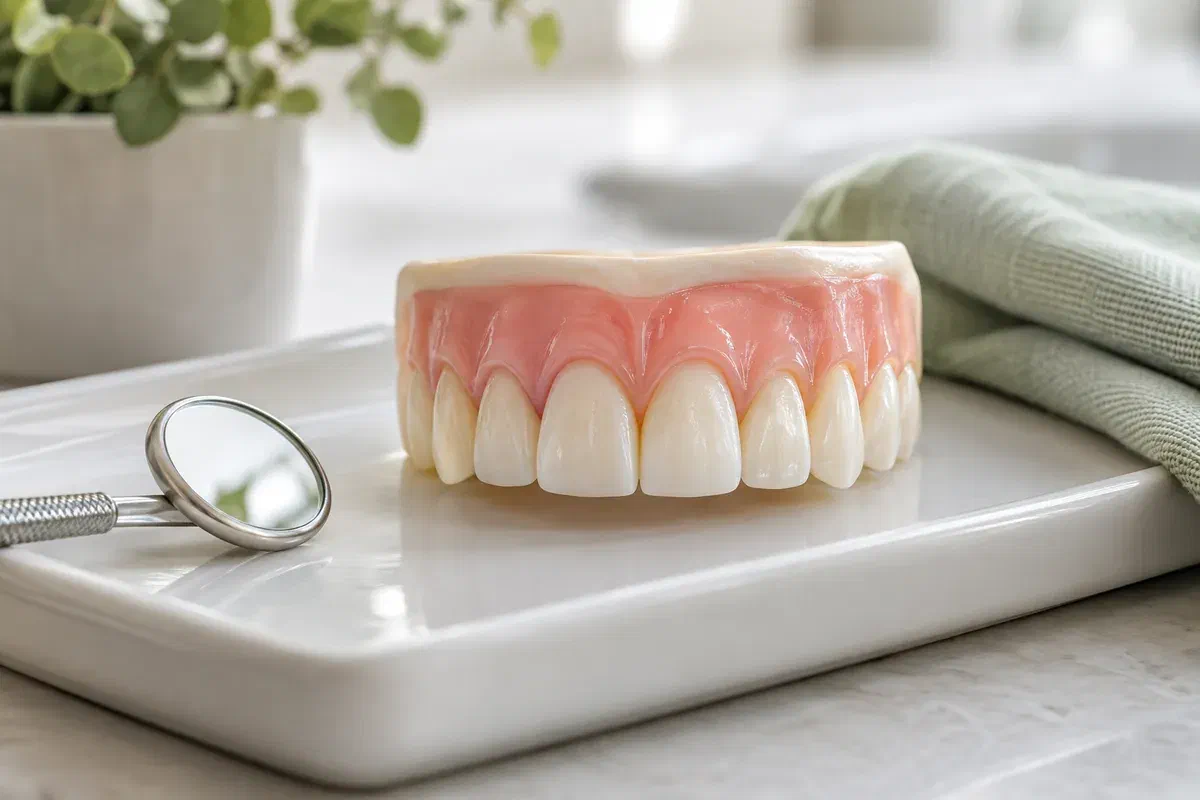
Illustrative front-teeth teaching model showing a gently scalloped gumline
Common after braces

What might still be changing

Let us know about bleeding, tenderness, swelling or any gum that seems to be pulling back, as well as the look that bothers you. Tissue that is inflamed needs a different approach from tissue that is simply shaped in a way you dislike.

Teeth that look shorter than expected

Gum can sit lower on a tooth after orthodontic movement or lingering swelling. The tooth may be a normal length underneath. An examination checks this, because a photo cannot show how much tissue there is or whether it will settle.

Gum heights that no longer match

Moving teeth can change where their gum edges sit relative to each other. Show us the area. Some variation is natural, and you can ask whether a plan would involve one tooth or the overall outline.

Tissue that stayed puffy, or started to recede

Share your home care routine, health changes and medicines. Enlarged tissue may calm with better cleaning or may need treatment. Recession is a different matter from extra gum and should be looked at separately.

Keep taking any prescribed medicine even if you think it could be affecting your gums. Mention it to your dental team and your prescriber so they can review it together.

When reshaping does help

A gumline that finally matches the teeth

For a suitable case, a planned tissue change can reveal more of each tooth or align gum edges that remain uneven after orthodontics. The result has to fit the bone and tissue underneath. Gum visible in your smile is not, on its own, a reason for surgery.

Every procedure has trade-offs. There is a healing period, a chance of complications, and the possibility that tissue shifts during recovery. Bring up how sore it may be, bleeding, infection risk, sensitive teeth, the gum creeping back and whether more treatment might be needed later.

Patient information: Cleveland Clinic — gum contouring, assessment, and recovery · American Academy of Periodontology — cosmetic periodontal procedures

Clear reasons for each tooth involved

You should know which teeth are included and why. Find out whether only soft tissue would be changed or other structures too. Promises of a balanced smile don’t explain that distinction.

A goal tied to your new tooth positions

The planned gum edge should suit your teeth as they now sit, along with your lip line. Your preferences count within healthy limits. Ask which aspects of your concern the procedure would and would not address.

Good communication with your orthodontist

If retainers, further tooth movement or restorations are planned, tell us. The timing of gum work can matter. Ask when the gumline will be reassessed before anyone else plans around it.

How we approach it

Give the tissue a fair chance, then decide

Each stage follows what we find. You can ask at any point who would perform a procedure, whether a specialist would be involved, and what getting ready and healing would look like.

  1. Review your orthodontic history and gum health

    We discuss your treatment, goals, health history and medicines. Each tooth’s gum margin is checked for fit, firmness and any lingering swelling. If swelling looks like it may settle with improved cleaning, that is usually the first step.

  2. Talk through the options openly

    Reshaping is compared with waiting longer or managing inflammation. You will hear whether gum alone would change, or whether the bone beneath would also be reshaped, as with crown lengthening. Risks, costs, healing and referral are explained so you can decide.

  3. Carry out treatment if it is the right call

    When surgery suits the case, it proceeds with the anaesthetic and technique agreed in advance. Before starting, check how you can stop things for a moment and what the appointment will feel like. The method is selected for the tissue.

  4. Healing advice and a follow-up appointment

    Guidance covers cleaning, food, recommended medicines and activity, and your review is booked. You will know how to contact us. Ask when the gum can be evaluated if further cosmetic work is planned.

Looking after the gum afterward

Your retainer and your gums both need care

Recovery depends on the extent and technique of the procedure. Follow the instructions from your treating clinician, and ask how they fit with wearing a retainer.

Clean gently, eat sensibly

You will be shown a gentle way to keep the healing gum clean and told when normal brushing can resume. Choose suggested foods and avoid disturbing healing tissue. Check whether a removable retainer needs any adjustment to your routine during recovery.

Medicines and activity as advised

Use only the medicines and doses recommended for you, with allergies and other treatment in mind. Ask about sport, work, smoking or vaping. Antibiotics and special rinses are not part of every recovery.

Return for the scheduled check

What you see at first may not be the final shape. Keep your review, and say so if tenderness lingers, teeth feel sensitive or the edge doesn’t look the way you expected. Ask when the result can be judged.

Possible next steps

Waiting is sometimes the best first option

Ask what is causing the gumline you see and which approach addresses it. Similar post-braces concerns can lead to different recommendations.

If the tissue is stable and a modest change suits

Limited soft tissue contouring

Selected areas can sometimes be reshaped. Find out what decided the planned outline and how much tissue you would keep. Healthy healing matters more than matching a preview image.

If bone and support need wider assessment

Crown lengthening or periodontal advice

Some situations involve the bone and gum relationship. A periodontist can clarify the need. Ask why that procedure would be more extensive and how it would affect healing and later dental work.

If tissue is inflamed or still settling

Improving gum health, or simply waiting

Puffy tissue after braces may improve with focused home care and professional cleaning. A healthy gumline can also stay as it is. Ask which findings need treatment and which choices are yours.

Patient information: Cleveland Clinic — gingivectomy and crown lengthening distinctions

Post-braces gum questions

What Acton visitors ask after orthodontics

Ask why a procedure is suggested, what it would change and how it fits with your retainer. Answers should reflect your teeth as they are now.

(905) 876-4488
Why do my gums look puffy after my braces came off?
Braces can make cleaning harder, and tissue may become inflamed or enlarged during treatment. Teeth that moved can also change how the gum sits. An exam helps show whether the tissue is likely to settle.
How long should I wait after braces before considering contouring?
There is no fixed rule. The clinician may suggest a period of improved home care first to see how the tissue responds. Ask what changes would suggest the gum has settled and when reassessment makes sense.
Can better brushing and flossing reduce gum swelling on its own?
Often it helps, especially when swelling is linked to plaque. Your dental team can show you techniques for hard-to-clean areas. If tissue remains enlarged despite good care, other options can be discussed.
Should my orthodontist be involved in the decision?
It can help, particularly if any further tooth movement is planned. With your consent, information can be shared so that gum treatment fits around your orthodontic care.
Does contouring ever involve the bone?
Some procedures reshape only soft tissue, while crown lengthening may also reshape supporting bone. The clinician will explain which applies to you and how it affects healing and scope.
Could the gum change again after it heals?
Yes, tissue can shift during healing and over time. Discuss that possibility and the follow-up plan beforehand. A reshaped gumline should not be described as permanent.
Gumline visits for Acton

See whether the gums are settled, or ready

Arrange a visit at our Bronte Street practice to have your gums examined after orthodontic treatment. We will explain what is happening, the sensible options, any need for specialist input and what to decide next.

Suitability depends on gum health, anatomy and how settled the tissue is. Any procedure and recovery plan is confirmed after assessment.

Visit Milton Dental Clinic
Unit 1, 342 Bronte St. S, Milton, ON L9T 5B7
Get directions Clinic hours
Monday–Thursday
11am–7pm
Friday–Sunday
By appointment only

Areas we serve

  • Milton
  • Oakville
  • Mississauga
  • Georgetown
  • Halton Hills
  • Acton
  • Campbellville
  • Brampton
  • Burlington
  • Puslinch
  • Rockwood
  • Erin
  • Caledon
  • Etobicoke
  • Old Milton
  • Bronte Meadows
  • Timberlea
  • Dorset Park
  • Dempsey
  • Clarke
  • Beaty
  • Coates
  • Harrison
  • Scott
  • Willmott
  • Ford
  • Bowes
  • Cobden
  • Walker
  • Mountain View
  • Milton Heights
  • Hawthorne Village
  • Valley View
  • Fallingbrook
  • Nassagaweya
  • Trafalgar
  • Esquesing
  • Nelson
  • Brookville
  • Moffat
  • Glen Williams
  • Norval
  • Limehouse
  • Stewarttown
  • Ashgrove
  • Hornby
  • Silver Creek
  • Speyside
  • Scotch Block
  • North Oakville
  • River Oaks
  • Glen Abbey
  • West Oak Trails
  • Palermo
  • Bronte Creek
  • College Park
  • Joshua Creek
  • Uptown Core
  • Preserve
  • Iroquois Ridge
  • Lisgar
  • Meadowvale
  • Meadowvale Village
  • Churchill Meadows
  • Erin Mills
  • Central Erin Mills
  • Streetsville
  • East Credit
  • Creditview
  • Heartland
  • Sheridan
  • Mount Pleasant
  • Credit Valley
  • Huttonville
  • Churchville
  • Springbrook
  • Northwest Brampton
  • Bram West
  • Fletcher's Meadow
  • Fletcher's Creek South
  • Alton Village
  • Orchard
  • Millcroft
  • Headon Forest
  • Tansley
  • Brant Hills
  • Tyandaga
  • Kilbride
  • Lowville
  • Aberfoyle
  • Morriston
  • Arkell
  • Hillsburgh
  • Freelton
  • Carlisle
  • Waterdown
  • Flamborough
  • Mountsberg

How can we help?

Milton Dental Clinic

Have a question about your smile? Choose the option that works best for you.

For urgent dental concerns, please call.
Messages are reviewed during clinic hours.