

Illustrative patient discussing the appearance of her gumline with a dental clinician
Cosmetic Dentistry

Gum Contouring in Georgetown

Seen ads for a quick “laser gum lift”? The instrument is the least important part of the decision. What matters is whether your tissue is healthy, what is causing the look, and which procedure, if any, actually fits your anatomy.

Beyond the advert

The plan matters more than the tool.

Social media makes gum reshaping look like a ten-second clip: a glowing tip, a tidy new edge, a bright smile. Real treatment starts well before any instrument comes out, with questions about why the gum sits where it does and whether changing it is wise. Those clips rarely show the examination, the healing days or the people who were told they did not need anything at all.

Contouring refers to deliberately reshaping the gum’s edge in selected places, most often where surplus tissue or an uneven outline affects the look of the teeth. It may be done with different techniques. Suitability rests on how the tissue, the tooth and the supporting bone relate, and some smiles that show a lot of gum need no treatment at all.

Georgetown is one of the communities we see people from for this kind of consultation. Tell us what you have read or watched, and what you hope to change. We will explain what an exam shows, which approaches are reasonable, and when a periodontal specialist should give their view.

Ask about gum reshaping
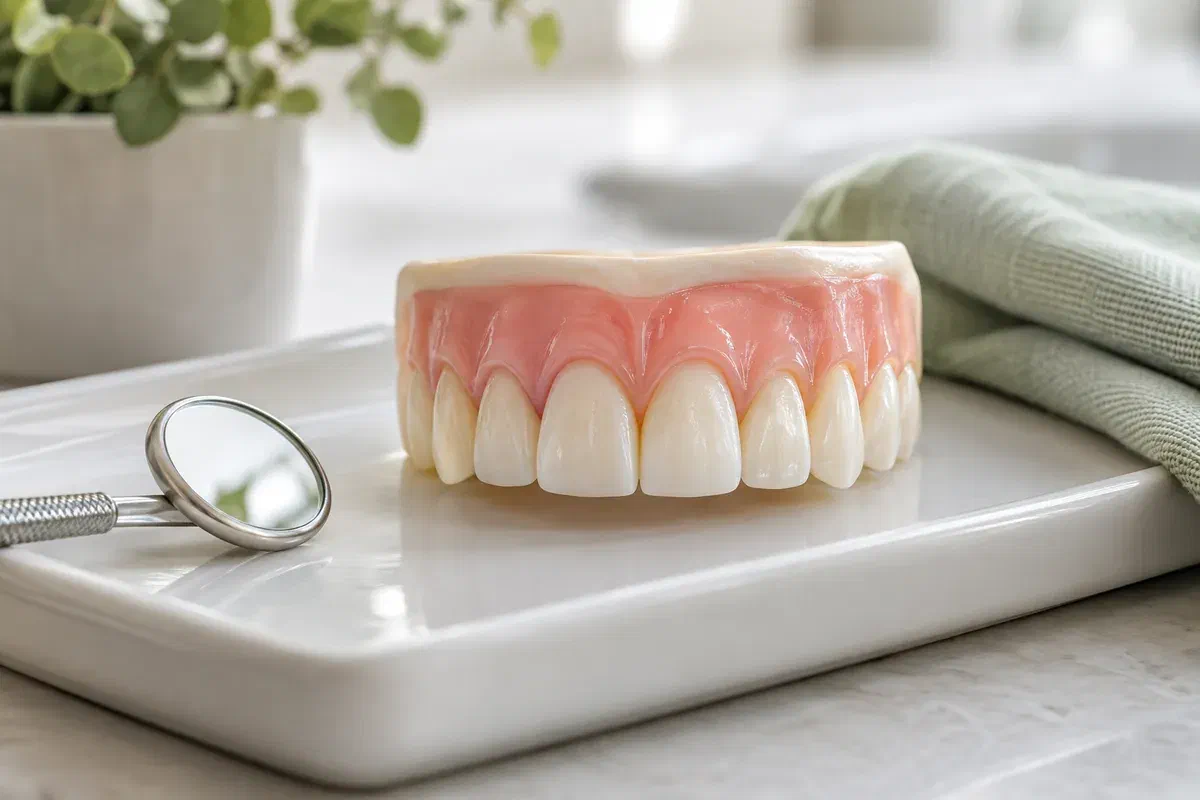
Illustrative front-teeth teaching model showing a gently scalloped gumline
What the clinician checks first

Before technique comes diagnosis

Point out what bothers you and mention bleeding, tenderness, swelling or gum that seems to be receding. Wanting a different look is a different starting point from having a gum condition.

Teeth that look as though gum is covering them

Extra tissue can make a normal tooth look shorter, but so can wear or the tooth’s natural shape. An examination distinguishes these. No video or photo can tell anyone how much gum might safely be removed from your mouth.

Edges that look uneven between teeth

Explain the change you would like. A degree of natural variation is often worth keeping. Ask whether a proposed plan would involve a single tooth or change the proportions across your whole smile.

Tissue that is enlarged, inflamed or receding

Share health changes, medicines and your home care routine. Enlarged gum may need its cause treated before any cosmetic step. Recession is a separate problem from excess tissue, and reshaping is not the answer to it.

If you wonder whether a prescribed medicine is affecting your gums, keep taking it. Talk to us and to the prescribing clinician so that a review, if appropriate, is coordinated.

What good planning gives you

A result designed for your mouth

When the case is suitable, a planned tissue change can uncover more natural tooth or refine part of the outline. It must make sense given the anatomy beneath. A smile showing plenty of gum is not, on its own, a reason to operate.

Any technique is still surgery. Expect a healing period and possible complications, and know that tissue can change shape as it recovers. Ask about tenderness, bleeding, infection, sensitivity, regrowth and whether additional assessment or treatment could be needed.

Patient information: Cleveland Clinic — gum contouring, assessment, and recovery · American Academy of Periodontology — cosmetic periodontal procedures

A defined scope, not a vague promise

The clinician should identify each tooth included and the reason. You should know whether the procedure stays in soft tissue or reaches other structures. A promise of balance does not tell you that.

A design based on your proportions

Discuss how the new edge relates to tooth length and lip position. Your preferences count within healthy limits. Find out which aspects of your concern the procedure would address and which it would not.

Sensible order with other cosmetic work

Let us know if veneers, crowns or orthodontics are planned. Healing affects when they should happen. Ask when the gum will be rechecked before any further work relies on its position.

The real sequence

Diagnosis, decision, technique, recovery

Your findings shape each stage. It is worth asking who would actually carry out the work, whether a specialist might see you instead, and how much getting ready and coming back the procedure would involve.

  1. Examine the gums and understand your goal

    We discuss your aims, health history, medicines and earlier gum care. The clinician examines the tissue and how it relates to the teeth. Measurements or records may be taken, and any condition that needs care first is identified.

  2. Decide on the procedure, not the gadget

    Options are compared, including monitoring. You learn whether only gum would be changed or whether a crown lengthening procedure involving bone is being considered. Risks, fees, healing and any specialist involvement are explained before you consent.

  3. Choose the technique for the case

    If surgery is right for you, the treating clinician selects the method and anaesthetic suited to your tissue and the agreed plan. Ask why that technique was chosen, how to request a pause and what you will feel.

  4. Heal, review and plan any next step

    You receive instructions on cleaning, eating, recommended medicines and activity, with a review booked and a contact for questions. Ask when the gum can be assessed if further cosmetic work is planned.

Healing at home in Georgetown

Every technique still needs healing time

Recovery depends on the amount of tissue treated and the method used. Rely on your treating clinician’s instructions rather than claims about how quickly a particular instrument heals.

Follow the cleaning and diet guidance

Ask how to look after the treated area and when normal brushing can resume. Eat what was suggested and avoid disturbing the site. Resist pulling your lip back to inspect the new edge.

Use medicines exactly as advised

Take only the medicines and doses recommended for you, accounting for allergies and other prescriptions. Check whether work, exercise, smoking or vaping should pause. Not every recovery needs an antibiotic or medicated rinse.

Keep the review, even if things look fine

The early appearance is not necessarily the final one. Attend your follow-up and describe anything that still aches, feels sensitive or looks off to you. Ask when the result can be assessed fairly.

Matching approach to cause

Three routes, chosen by findings

Ask what is producing the appearance and which treatment suits that cause. The same-looking smile can lead to different recommendations.

When the gum relationship supports a modest change

Soft tissue contouring in selected areas

Specific areas may be adjusted by reshaping soft tissue. Find out how the outline was set and how much gum would remain. Health and healing guide the plan, ahead of any promotional image.

When supporting anatomy needs a broader look

Crown lengthening or specialist review

Some smiles involve the bone and gum relationship or another contributor. A periodontal opinion can clarify this. Ask why the procedure would be more extensive and how it affects later dental work.

When health or a different concern takes priority

Treating gum problems, or leaving a healthy smile alone

Inflamed or receding gums need another plan. You may also choose to keep a healthy gumline as it is. Find out which findings need treatment and which choices are optional.

Patient information: Cleveland Clinic — gingivectomy and crown lengthening distinctions

Questions from Georgetown

Lasers, lifts and what really matters

Ask why a procedure is suggested, which tissues it affects and how it heals. Good answers focus on your anatomy, not on equipment.

(905) 876-4488
What is a “gum lift,” and is it the same as contouring?
The term is often used informally for procedures that reshape the gum edge. What it actually involves varies. Ask the clinician to explain exactly which tissues would be changed in your case and why.
Is laser gum treatment better than other methods?
No single method is best for everyone. The treating clinician chooses a technique suited to the procedure and tissue. Ask why a method is recommended and how it affects comfort, healing and aftercare.
Are online before-and-after photos a good guide to my result?
Not really. Other people’s anatomy, healing and goals differ from yours. A personal assessment is the only reliable way to discuss what might be realistic for your teeth and gums.
Will I be awake during gum contouring?
Many gum procedures are done with local anaesthetic. The treating clinician will explain the plan for your case. Ask about comfort options and how to signal if you need a break.
Can contouring correct gums that have pulled away from a tooth?
Recession is tissue loss, not excess, so removing more gum is usually not the answer. Ask whether the issue relates to recession, tooth position or something else, and whether a periodontist could help.
What makes a treatment plan trustworthy?
A clear explanation of the cause, the teeth involved, the structures affected, the risks and alternatives, and the follow-up. You should feel free to take time, ask questions or seek a second opinion.
Gum contouring consults for Georgetown

Get a diagnosis before a technique

Book an appointment at our Bronte Street practice to have your gums examined and your questions answered. We will explain suitable options, whether specialist input is needed, and what to settle before treatment.

Suitability depends on gum health and anatomy, not on the instrument. The procedure, provider and recovery plan follow from the assessment.

Visit Milton Dental Clinic
Unit 1, 342 Bronte St. S, Milton, ON L9T 5B7
Get directions Clinic hours
Monday–Thursday
11am–7pm
Friday–Sunday
By appointment only

Areas we serve

  • Milton
  • Oakville
  • Mississauga
  • Georgetown
  • Halton Hills
  • Acton
  • Campbellville
  • Brampton
  • Burlington
  • Puslinch
  • Rockwood
  • Erin
  • Caledon
  • Etobicoke
  • Old Milton
  • Bronte Meadows
  • Timberlea
  • Dorset Park
  • Dempsey
  • Clarke
  • Beaty
  • Coates
  • Harrison
  • Scott
  • Willmott
  • Ford
  • Bowes
  • Cobden
  • Walker
  • Mountain View
  • Milton Heights
  • Hawthorne Village
  • Valley View
  • Fallingbrook
  • Nassagaweya
  • Trafalgar
  • Esquesing
  • Nelson
  • Brookville
  • Moffat
  • Glen Williams
  • Norval
  • Limehouse
  • Stewarttown
  • Ashgrove
  • Hornby
  • Silver Creek
  • Speyside
  • Scotch Block
  • North Oakville
  • River Oaks
  • Glen Abbey
  • West Oak Trails
  • Palermo
  • Bronte Creek
  • College Park
  • Joshua Creek
  • Uptown Core
  • Preserve
  • Iroquois Ridge
  • Lisgar
  • Meadowvale
  • Meadowvale Village
  • Churchill Meadows
  • Erin Mills
  • Central Erin Mills
  • Streetsville
  • East Credit
  • Creditview
  • Heartland
  • Sheridan
  • Mount Pleasant
  • Credit Valley
  • Huttonville
  • Churchville
  • Springbrook
  • Northwest Brampton
  • Bram West
  • Fletcher's Meadow
  • Fletcher's Creek South
  • Alton Village
  • Orchard
  • Millcroft
  • Headon Forest
  • Tansley
  • Brant Hills
  • Tyandaga
  • Kilbride
  • Lowville
  • Aberfoyle
  • Morriston
  • Arkell
  • Hillsburgh
  • Freelton
  • Carlisle
  • Waterdown
  • Flamborough
  • Mountsberg

How can we help?

Milton Dental Clinic

Have a question about your smile? Choose the option that works best for you.

For urgent dental concerns, please call.
Messages are reviewed during clinic hours.