
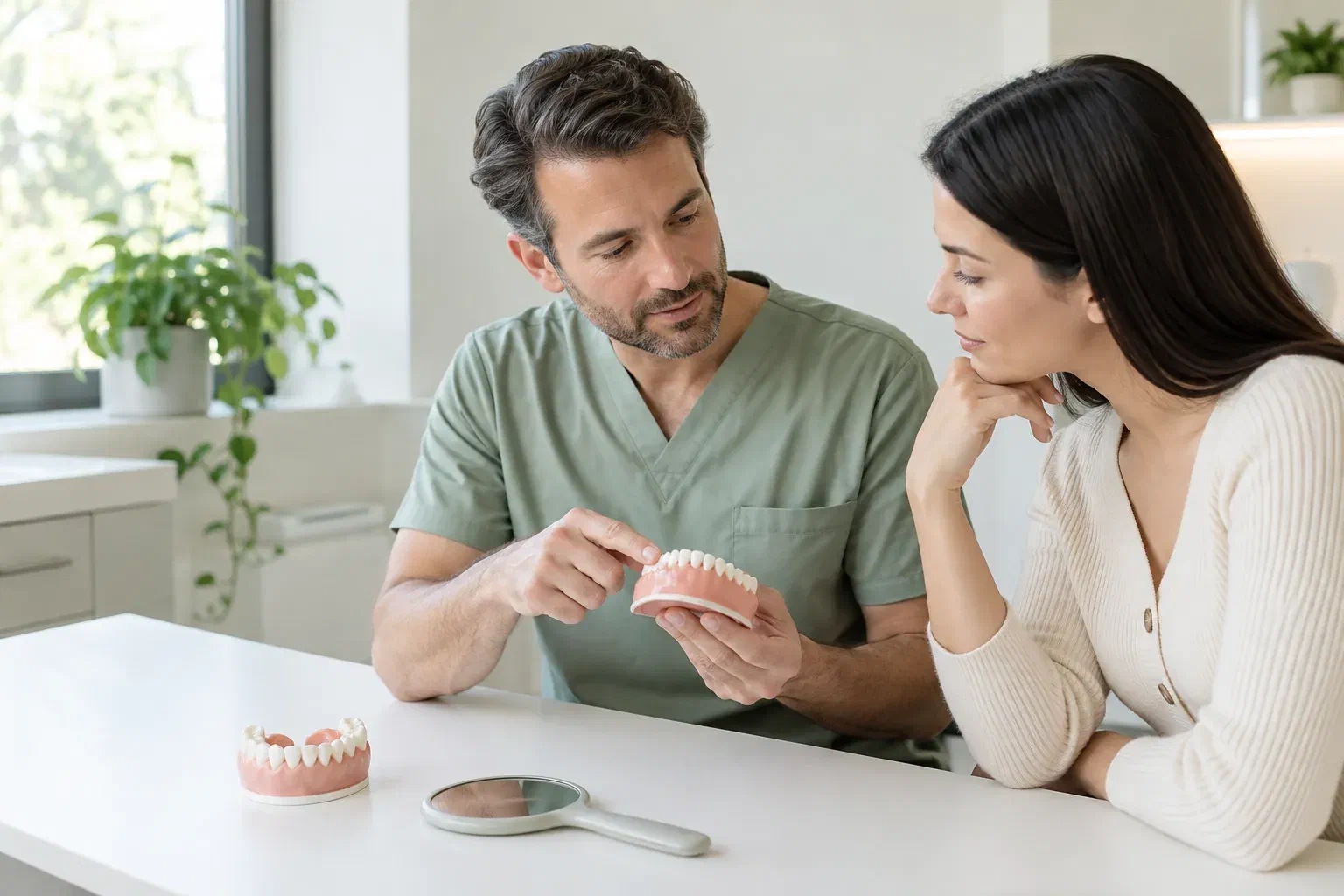
Illustrative patient discussing the appearance of her gumline with a dental clinician
Cosmetic Dentistry

Gum Contouring in Halton Hills

A wide laugh that shows a band of gum is one of the most common reasons people ask about contouring. The lip, the teeth and the tissue all play a part, so we look at each one before discussing what, if anything, should change.

Halton Hills · the gummy smile

What your laugh reveals

A polite smile might show only teeth, while a real laugh lifts the upper lip and reveals the gum above them. Some people love that look. Others start holding back when they laugh, and that is usually when the question of treatment comes up.

The amount of gum on display comes from a mix of factors. Lip length and how far it rises, the size and position of the teeth, the jaw, and the level of the gum tissue itself all contribute. Gum contouring changes only the last of these, by reshaping the tissue edge in specific areas where extra gum or an irregular line is part of the picture.

For people from across Halton Hills, including Georgetown, Acton and the smaller hamlets, the first step is working out which factors apply. We examine the tissue, explain what reshaping could and could not alter, and say plainly if a periodontist or another approach should be considered.

Talk about your gummy smile
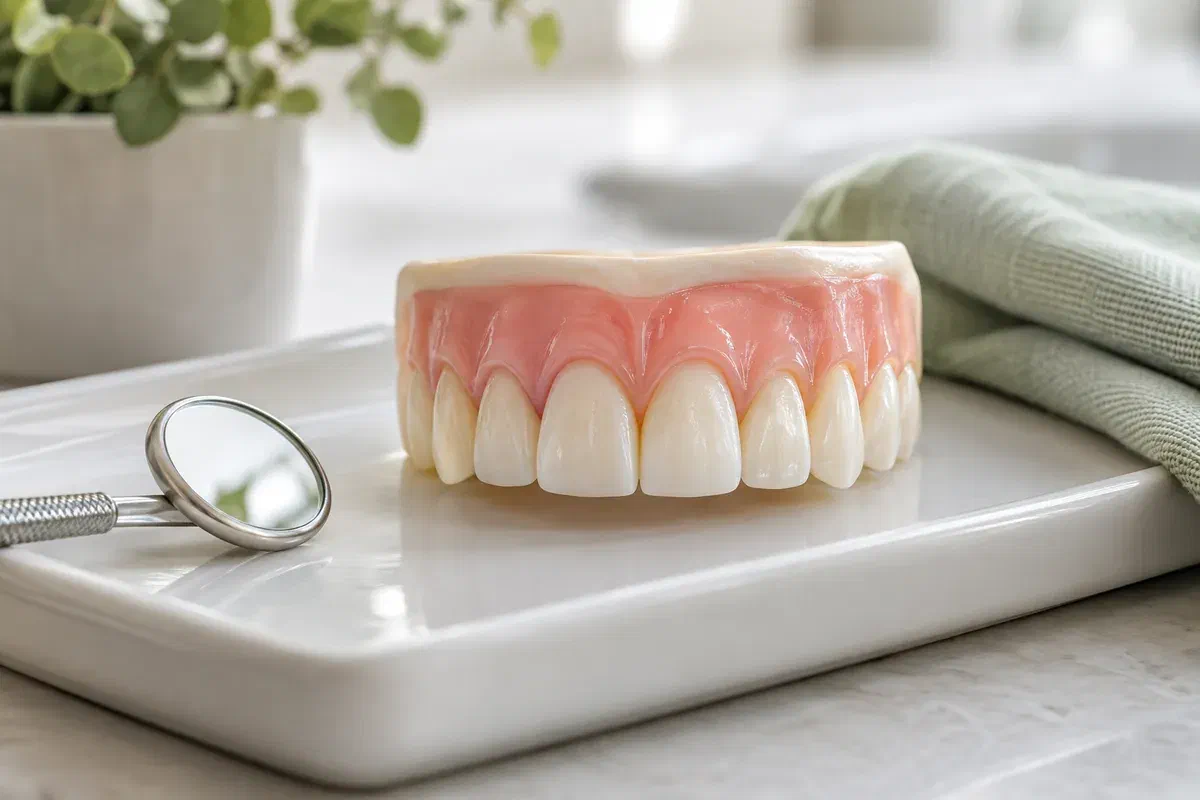
Illustrative front-teeth teaching model showing a gently scalloped gumline
Pieces of the puzzle

Tissue, tooth or lip, or all three?

Tell us when the gum bothers you most, and mention any bleeding, tenderness, swelling or receding tissue. A healthy smile you’d like to look different is approached unlike a gum condition.

Tooth crowns that seem short behind the gum

Where gum covers more of each tooth than usual, the teeth may look small even though they are a typical length underneath. The clinician measures and examines to find out. A photograph is not enough to plan any change.

Gum that peaks unevenly from one tooth to the next

When gum heights vary, a broad smile makes it more obvious. Show where it catches your eye. Gentle variation is natural, and you can ask whether a plan would treat one area or reshape the smile’s whole outline.

Thick, tender or pulling-back tissue

Changes in health, medicines and home care can all affect the gums. Thickened tissue may have a cause that needs treating first, and recession is the opposite problem to surplus gum. Both are discussed separately from any cosmetic aim.

Please continue any prescribed medicine even if you think it is changing your gums. Raise the concern with us and with your prescriber, and any review can then be arranged together.

If the gum is part of it

Less gum, more tooth, when the anatomy agrees

When extra tissue does contribute, reshaping it can reveal more of each natural tooth and soften the band of gum seen during a laugh. The change has to respect what lies underneath. A gummy smile is a description of appearance, not a medical finding that requires surgery.

Weigh the trade-offs honestly. This is surgery with a healing phase and possible complications, and tissue can reposition as it settles. It may also only partly change a smile driven mostly by lip movement. Ask about soreness, bleeding, infection, sensitivity, regrowth and further treatment.

Patient information: Cleveland Clinic — gum contouring, assessment, and recovery · American Academy of Periodontology — cosmetic periodontal procedures

An explanation of what is being changed

The teeth involved, and why each is included, should be clear. You should also understand whether only soft tissue is reshaped or other structures are involved. Hoping for a nicer laugh is not a plan.

Realistic expectations about lip movement

Contouring does not change how far your lip lifts. Discuss how much of your concern relates to tissue and how much to other factors. Your preferences matter within healthy limits.

Coordination with any orthodontic or restorative plans

Braces, veneers or crowns may affect the order of treatment. Healing gum can change where it settles. Find out when the gumline will be reassessed before anyone builds further work around it.

Getting to a decision

Four steps, each one shaped by what we find

Expect the details to depend on your anatomy and gum health. It is fine to ask early who would treat you, whether a specialist might be involved, and what preparation and follow-up look like.

  1. Look at the smile in motion and the tissue at rest

    We talk about your goals, health history, medicines and any past gum care. The clinician watches how your lip moves, examines the gums and checks how they sit on the teeth. Records may help, and anything that needs treating first is flagged.

  2. Explain the contributing factors and the options

    You hear which factors appear to be driving the look and how reshaping compares with alternatives, including doing nothing. The clinician explains whether gum alone is involved or bone too, as in crown lengthening. Risks, fees, healing and referral are covered before you agree.

  3. Carry out the procedure if you choose it

    For a suitable case, the treating clinician proceeds with the anaesthetic and technique you agreed on. You can ask beforehand how to pause and what to expect. Method is matched to your tissue, not to a marketing term.

  4. Support healing and review the outline

    Instructions cover cleaning, eating, any recommended medicines and activity. Your review is booked and you know how to reach us. Ask when the result can be judged and when further treatment could follow.

In the days that follow

Let the tissue settle before you judge your laugh

What healing involves depends on the extent and technique used. Your treating clinician’s instructions are the ones to follow, even if a friend’s gum procedure went differently.

Keep things clean and calm

Ask how to clean the treated gum and when you can return to your normal routine. Choose foods as advised and avoid anything that might disturb healing. Try not to keep checking the area in a mirror.

Use medicines and resume activities as directed

Take only the medicines and doses suggested for you, with allergies and other treatment in mind. Check whether exercise, physical work, smoking or vaping should pause. An antibiotic or medicated rinse is not standard for everyone.

Return for the review

Early swelling can change how a laugh looks for a while. Keep your follow-up and report lasting soreness, sensitivity or concerns about the shape. Ask when it will be fair to assess the final look.

Approaches to a gummy smile

Different contributors, different solutions

Ask which factor is mainly responsible for the gum you see and which treatment targets that factor. Two gummy smiles can call for quite different responses.

Where surplus gum is a main contributor

Reshaping the soft tissue edge

A soft tissue procedure may reduce selected areas. Find out how the planned edge was chosen and how much tissue would remain. The plan should prioritise healthy, stable gum over a perfect line on a screen.

Where bone level or jaw factors are involved

Crown lengthening or a specialist assessment

Some gummy smiles involve bone position or other anatomy beyond the gum. A periodontal or other specialist opinion can clarify the options. Ask how that would change the size of treatment and recovery.

Where health comes first or the look is a feature

Gum treatment, or keeping your smile as it is

Inflamed or receding gums need another kind of care. Many people also decide a healthy gummy smile suits them. You can ask which findings need treatment and which choices are entirely up to you.

Patient information: Cleveland Clinic — gingivectomy and crown lengthening distinctions

Gummy smile questions

Answers for people across Halton Hills

Ask what is causing the gum you see, what a procedure would change and how healing works. The answers should fit your own smile.

(905) 876-4488
What actually causes a gummy smile?
Often it is a combination: lip length and movement, tooth size and position, jaw anatomy and the level of the gum tissue. An assessment helps identify which factors apply to you, since that guides any recommendation.
Will contouring change how high my lip lifts?
No. Gum contouring changes tissue, not lip movement. If your lip is the main factor, reshaping the gum may change the look only partly. The clinician can explain how much of your concern relates to each factor.
Is a gummy smile something I should be worried about?
Not by itself. Many gummy smiles are perfectly healthy. Concerns arise mainly if the tissue is inflamed, enlarged or receding. An examination can confirm the health of your gums.
Could my teeth be the reason my gums show so much?
Possibly. Teeth that are short, worn or positioned in a certain way can make the gum appear more prominent. Ask whether tooth shape or position is part of the picture before focusing on the gum.
Does bone sometimes need to be reshaped as well?
In some cases. Crown lengthening can involve reshaping the bone that supports the tooth, while other procedures alter soft tissue only. The clinician should tell you which structures your plan would affect.
Should I expect to feel sore after treatment?
Some tenderness is common after gum surgery, but the extent varies with the procedure. Ask about comfort measures, eating and what to do if pain worsens instead of easing.
Gummy smile assessments for Halton Hills

Start with the reason behind the look

Book a consultation at our Bronte Street practice. We will examine your gums and smile, explain which factors are involved, outline suitable choices, and let you know whether specialist input would help.

Whether reshaping is appropriate rests on your gum health and anatomy. We confirm what is involved, who would do it and how recovery would go only once you have been assessed.

Visit Milton Dental Clinic
Unit 1, 342 Bronte St. S, Milton, ON L9T 5B7
Get directions Clinic hours
Monday–Thursday
11am–7pm
Friday–Sunday
By appointment only

Areas we serve

  • Milton
  • Oakville
  • Mississauga
  • Georgetown
  • Halton Hills
  • Acton
  • Campbellville
  • Brampton
  • Burlington
  • Puslinch
  • Rockwood
  • Erin
  • Caledon
  • Etobicoke
  • Old Milton
  • Bronte Meadows
  • Timberlea
  • Dorset Park
  • Dempsey
  • Clarke
  • Beaty
  • Coates
  • Harrison
  • Scott
  • Willmott
  • Ford
  • Bowes
  • Cobden
  • Walker
  • Mountain View
  • Milton Heights
  • Hawthorne Village
  • Valley View
  • Fallingbrook
  • Nassagaweya
  • Trafalgar
  • Esquesing
  • Nelson
  • Brookville
  • Moffat
  • Glen Williams
  • Norval
  • Limehouse
  • Stewarttown
  • Ashgrove
  • Hornby
  • Silver Creek
  • Speyside
  • Scotch Block
  • North Oakville
  • River Oaks
  • Glen Abbey
  • West Oak Trails
  • Palermo
  • Bronte Creek
  • College Park
  • Joshua Creek
  • Uptown Core
  • Preserve
  • Iroquois Ridge
  • Lisgar
  • Meadowvale
  • Meadowvale Village
  • Churchill Meadows
  • Erin Mills
  • Central Erin Mills
  • Streetsville
  • East Credit
  • Creditview
  • Heartland
  • Sheridan
  • Mount Pleasant
  • Credit Valley
  • Huttonville
  • Churchville
  • Springbrook
  • Northwest Brampton
  • Bram West
  • Fletcher's Meadow
  • Fletcher's Creek South
  • Alton Village
  • Orchard
  • Millcroft
  • Headon Forest
  • Tansley
  • Brant Hills
  • Tyandaga
  • Kilbride
  • Lowville
  • Aberfoyle
  • Morriston
  • Arkell
  • Hillsburgh
  • Freelton
  • Carlisle
  • Waterdown
  • Flamborough
  • Mountsberg

How can we help?

Milton Dental Clinic

Have a question about your smile? Choose the option that works best for you.

For urgent dental concerns, please call.
Messages are reviewed during clinic hours.