
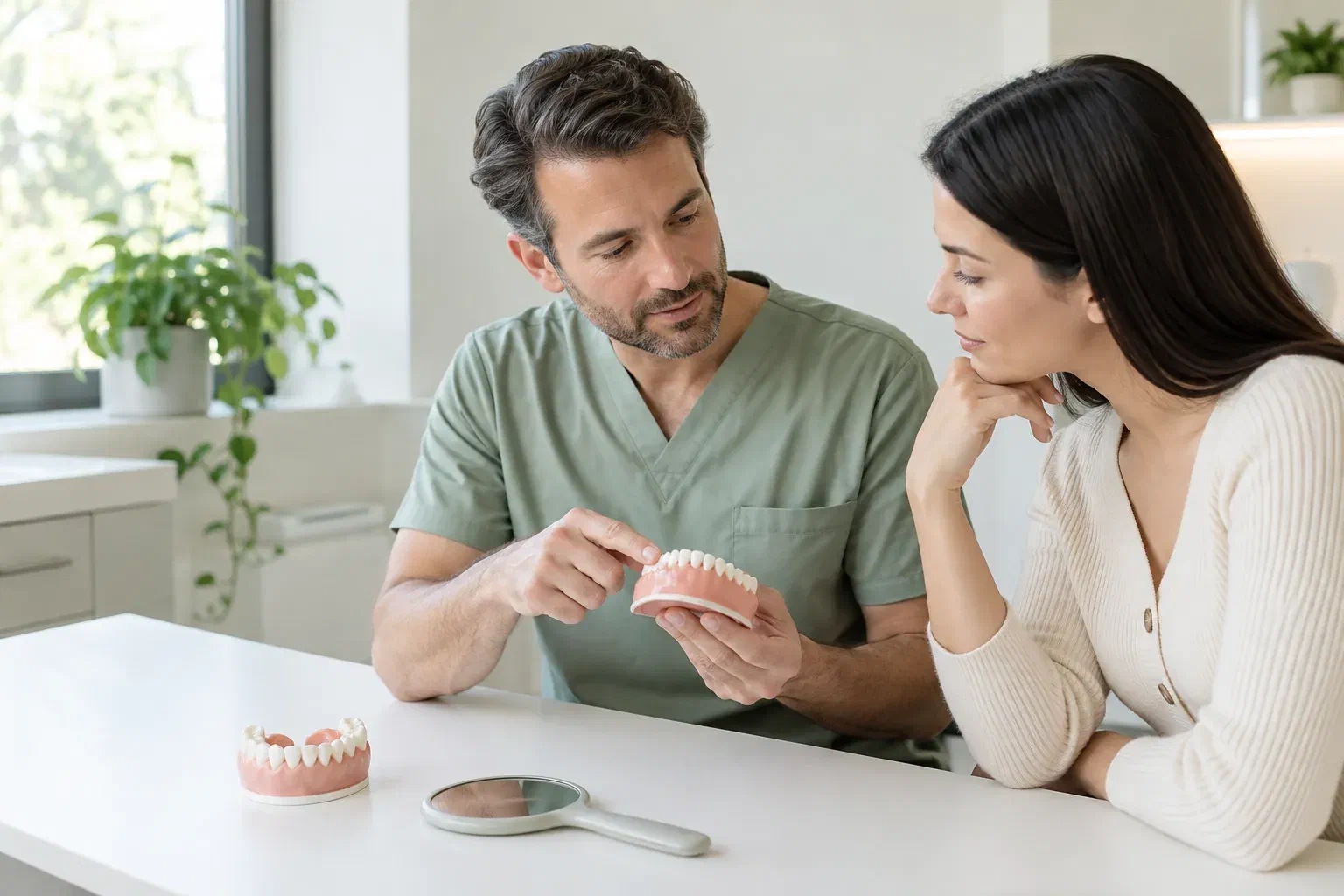
Illustrative patient discussing the appearance of her gumline with a dental clinician
Cosmetic Dentistry

Gum Contouring in Puslinch

Two procedures can look alike from the outside: one reshapes only the gum, the other also adjusts the bone beneath it. Knowing which one your case would need changes the planning, the healing and the decision itself.

Puslinch · gum or bone?

Under the gum, there is more to consider

Gum tissue rests on bone, and the two keep a fairly consistent distance from each other around a healthy tooth. That relationship is why some gumlines can be adjusted simply, while others cannot be moved much without also addressing the bone underneath. Trim the gum too close to the bone, and the body often tries to restore the original spacing as it heals.

When only soft tissue is reshaped, the procedure is usually described as gum contouring: a planned change to the gum edge where extra tissue or an uneven outline affects appearance. When the bone also needs reshaping, it is generally called crown lengthening, which is more involved. In both cases, a smile showing plenty of gum may be healthy and need nothing.

Coming from Puslinch, the most useful thing you can leave with is clarity on which of these applies. We examine the tissue, explain what the findings suggest, and tell you when a periodontal specialist should assess the bone and plan any surgery.

Find out what your gumline involves
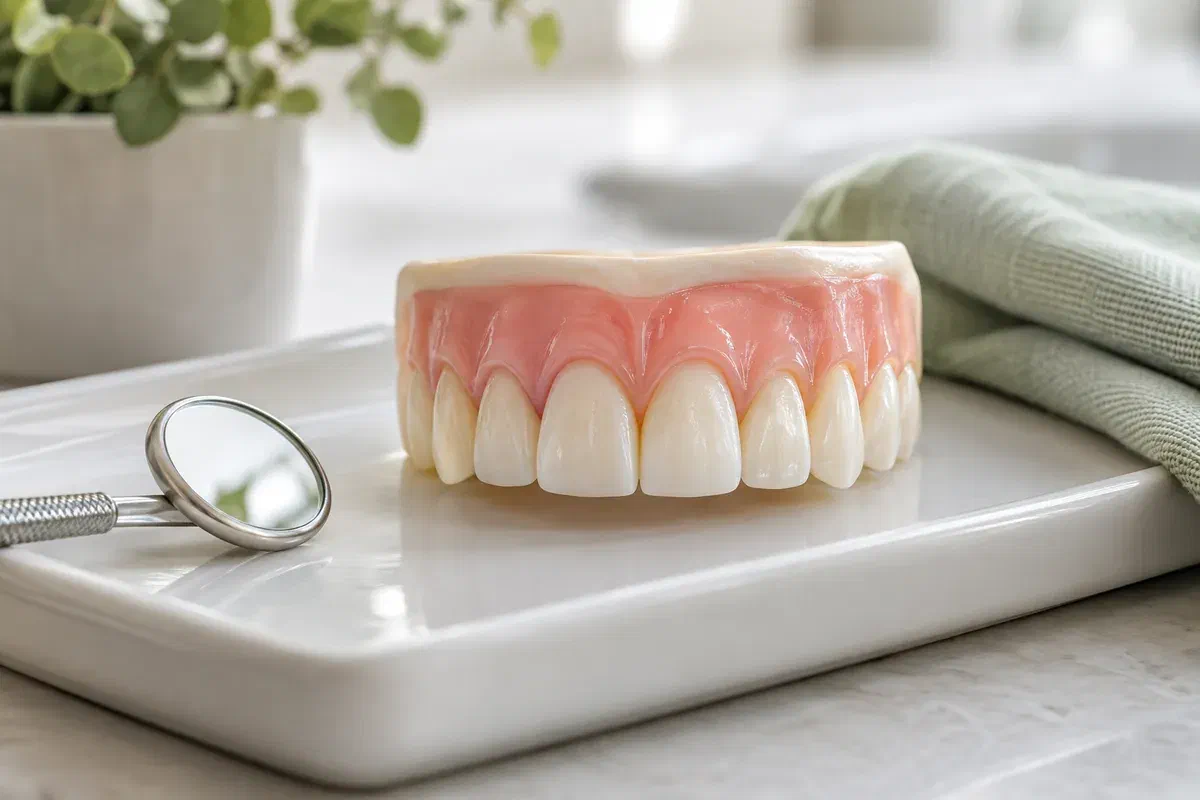
Illustrative front-teeth teaching model showing a gently scalloped gumline
Clues worth discussing

Three situations that need a closer look

Mention bleeding, tenderness, swelling or receding gum along with what you would like to change. A cosmetic preference is approached differently from a gum health issue.

Teeth that appear short under the gum

The tooth may be normal in length but partly covered, or the bone may sit close to where the crown begins. Tooth wear can also play a role. A clinical examination is needed, since no image reveals the bone level.

Gum heights that vary along the smile

Show where the irregularity is and what result you hope for. Small natural differences may be worth preserving. Find out whether any plan would change one area or the proportions of the whole smile.

Puffy, tender or receding gums

Health changes, medicines and daily cleaning all influence tissue. Enlarged gum may need its cause addressed first, and recession is a different concern from excess tissue that needs its own approach.

Continue any prescribed medicine even if you suspect a link with your gums. Bring the concern to us and to the prescriber, so a review can be arranged together.

Getting the diagnosis right

The correct procedure protects the tooth’s support

In the right case, either approach can reveal more natural tooth or improve an uneven outline. Choosing the wrong one, however, risks tissue that grows back or support that is compromised. Gum visible during a smile is not, on its own, grounds for either.

Both are surgery, with recovery time and potential complications, and tissue can shift as it heals. Bone reshaping usually adds to the scope. Raise tenderness, bleeding, infection, sensitivity, tissue rebound and the chance of further care before agreeing.

Patient information: Cleveland Clinic — gum contouring, assessment, and recovery · American Academy of Periodontology — cosmetic periodontal procedures

Clarity on soft tissue versus bone

You should know whether the plan alters gum alone or the bone too, and for which teeth. A general goal of a balanced smile doesn’t explain that difference, and it is one of the most important things to understand.

A result that respects tooth proportions

Discuss how the planned gum position relates to tooth length, width and your lip line. Preferences matter within healthy limits. Ask which aspects of the concern the procedure would and would not change.

Coordination when restorations are planned

Crown lengthening is often linked to restorative work, and cosmetic veneers may follow contouring. Healing affects timing. Ask when the gum will be reassessed before crowns or veneers are designed.

Working it out

Measure first, so the plan fits the bone

Each stage depends on findings. You can ask who would perform treatment, whether a periodontist would be involved, and what preparation and review are needed.

  1. Examine the gums and supporting structures

    We review your goals, health history, medicines and past gum care. The clinician examines the tissue and may take measurements or X-rays to understand the bone level. Anything that should be treated first is identified.

  2. Explain which procedure the findings point to

    You learn whether soft tissue contouring could achieve the goal or whether crown lengthening would be needed. Alternatives, including monitoring, are compared. Fees, risks, healing and specialist involvement are explained before you decide.

  3. Proceed with the agreed approach

    If treatment is right for you, the treating clinician carries it out with the anaesthetic and technique planned for your case. You can ask ahead of time how to signal for a break and what sensations to expect.

  4. Heal and reassess

    You go home with instructions on cleaning, food, any recommended medicine and activity, plus a review date and a contact for questions. Ask when the tissue can be evaluated for crowns, veneers or other planned work.

Recovery depends on scope

More involved treatment, more careful healing

Healing reflects how much was treated and whether bone was involved. Follow your treating clinician’s specific instructions rather than a general timetable you found elsewhere.

Protect the area while keeping it clean

You will be shown how to look after the site and when your usual brushing can resume nearby. Eat the foods suggested and avoid chewing on the treated side if advised. Leave the gum alone rather than checking it repeatedly.

Medicines and activity, as recommended

Take only what was advised, at the stated doses, keeping allergies and other prescriptions in mind. Ask about physical work, exercise, smoking or vaping. Antibiotics or rinses are prescribed only when appropriate.

Allow time before judging the outcome

Swelling and tissue changes can last a while, especially after bone reshaping. Keep the review and report lasting tenderness, sensitivity or worries about the edge. Ask when a final assessment makes sense.

Possible approaches

Which route does the anatomy support?

Ask what is producing the appearance and which procedure addresses it. Two gumlines that look alike can sit on very different bone levels.

When there is room to reshape gum without touching bone

Soft tissue contouring alone

Selected areas may be reshaped in the soft tissue. Ask how the target edge was chosen and how much gum would be left. Gum health and the bone relationship set the limits, not a design on a screen.

When the bone sits too close to the new gum position

Crown lengthening, often with a periodontist

If the gum cannot be moved without adjusting bone, a crown lengthening procedure may be discussed. A specialist opinion is often helpful. Ask how this would change recovery and any later restorations.

When inflammation, recession or preference leads

Addressing gum health, or no procedure

Inflamed or receding gums need a different plan from reshaping. A healthy gumline can also remain as it is. Ask which findings need treatment and which decisions are purely elective.

Patient information: Cleveland Clinic — gingivectomy and crown lengthening distinctions

Gum and bone questions

What Puslinch households want to know

Ask which structures a procedure would affect, why, and how healing would differ. Good answers relate to your own bone and tissue.

(905) 876-4488
How does the dentist know whether bone would need reshaping?
By examining the tissue and assessing how far the bone sits from the gum edge, often with measurements and X-rays. That relationship shows whether gum alone can be moved or whether bone is involved.
Is crown lengthening only done for cosmetic reasons?
No. It is also used to expose more tooth for a restoration, such as when decay or a fracture extends below the gum. In those cases the aim is to give a crown or filling enough sound tooth to hold onto. Ask what the purpose would be in your case and whether appearance is part of it.
Does bone reshaping make recovery longer?
It often involves a more extensive procedure, which can affect healing. The treating clinician will explain the expected recovery for your plan. Ask about eating, activity and follow-up visits.
What happens if gum is removed without considering the bone?
The tissue may grow back toward its original position or the result may not be stable. In some situations the health of the tissue around the tooth can also suffer. That is one reason careful assessment of the gum and bone together matters before any reshaping is planned.
Would a periodontist do the procedure?
Depending on the scope, a periodontal specialist may be recommended, particularly when bone is involved. Ask who would provide treatment and how care would be coordinated.
Is it fine to have the assessment and then decide later?
Yes. Understanding your findings does not commit you to treatment. If your gums are healthy, taking time to decide is entirely reasonable. You can go home, think it over, talk with family and book again when you have your questions ready.
Gumline consultations for Puslinch

Learn what lies beneath your gumline

Book an appointment at our Bronte Street practice. We will examine your gums, explain whether soft tissue or bone is involved, outline suitable options and specialist input, and list the questions to settle.

Which procedure suits you, if any, depends on your gum health and bone level. The approach, the person providing it and the expected recovery are confirmed only after an assessment.

Visit Milton Dental Clinic
Unit 1, 342 Bronte St. S, Milton, ON L9T 5B7
Get directions Clinic hours
Monday–Thursday
11am–7pm
Friday–Sunday
By appointment only

Areas we serve

  • Milton
  • Oakville
  • Mississauga
  • Georgetown
  • Halton Hills
  • Acton
  • Campbellville
  • Brampton
  • Burlington
  • Puslinch
  • Rockwood
  • Erin
  • Caledon
  • Etobicoke
  • Old Milton
  • Bronte Meadows
  • Timberlea
  • Dorset Park
  • Dempsey
  • Clarke
  • Beaty
  • Coates
  • Harrison
  • Scott
  • Willmott
  • Ford
  • Bowes
  • Cobden
  • Walker
  • Mountain View
  • Milton Heights
  • Hawthorne Village
  • Valley View
  • Fallingbrook
  • Nassagaweya
  • Trafalgar
  • Esquesing
  • Nelson
  • Brookville
  • Moffat
  • Glen Williams
  • Norval
  • Limehouse
  • Stewarttown
  • Ashgrove
  • Hornby
  • Silver Creek
  • Speyside
  • Scotch Block
  • North Oakville
  • River Oaks
  • Glen Abbey
  • West Oak Trails
  • Palermo
  • Bronte Creek
  • College Park
  • Joshua Creek
  • Uptown Core
  • Preserve
  • Iroquois Ridge
  • Lisgar
  • Meadowvale
  • Meadowvale Village
  • Churchill Meadows
  • Erin Mills
  • Central Erin Mills
  • Streetsville
  • East Credit
  • Creditview
  • Heartland
  • Sheridan
  • Mount Pleasant
  • Credit Valley
  • Huttonville
  • Churchville
  • Springbrook
  • Northwest Brampton
  • Bram West
  • Fletcher's Meadow
  • Fletcher's Creek South
  • Alton Village
  • Orchard
  • Millcroft
  • Headon Forest
  • Tansley
  • Brant Hills
  • Tyandaga
  • Kilbride
  • Lowville
  • Aberfoyle
  • Morriston
  • Arkell
  • Hillsburgh
  • Freelton
  • Carlisle
  • Waterdown
  • Flamborough
  • Mountsberg

How can we help?

Milton Dental Clinic

Have a question about your smile? Choose the option that works best for you.

For urgent dental concerns, please call.
Messages are reviewed during clinic hours.