

Illustrative patient and dental clinician comparing tooth shades during a consultation
Cosmetic Dentistry

Internal Tooth Bleaching in Acton

A bleached tooth that has slowly darkened again deserves a fresh look rather than an automatic repeat. From Acton, book an assessment to understand why the colour returned and which options, including further bleaching, may or may not suit the tooth now.

When the colour comes back

It was lighter once. Now it is fading again.

Some people come to us after a root-treated tooth was bleached years ago, looked good for a long while, and has since drifted back toward grey. Others are thinking ahead and want to know how durable the result might be. Either way, internal bleaching is a dentist-led method of lightening a tooth from inside its crown, distinct from any product used on the outer surface.

Whether it is a first attempt or a repeat, the tooth’s current state guides the decision. Your dentist looks again at the source of the colour, how the root canal treatment is holding up, the tissue around the root, and how much tooth remains. New or lingering symptoms are generally treated before the shade is revisited.

From Acton, try to bring what you know about earlier treatment: when the tooth was bleached, who did it, how it responded, and what filling closed it. Mention any injury history and how quickly the colour seemed to return. We can then explain the assessment needed and what options make sense now.

Have a returning shade reassessed
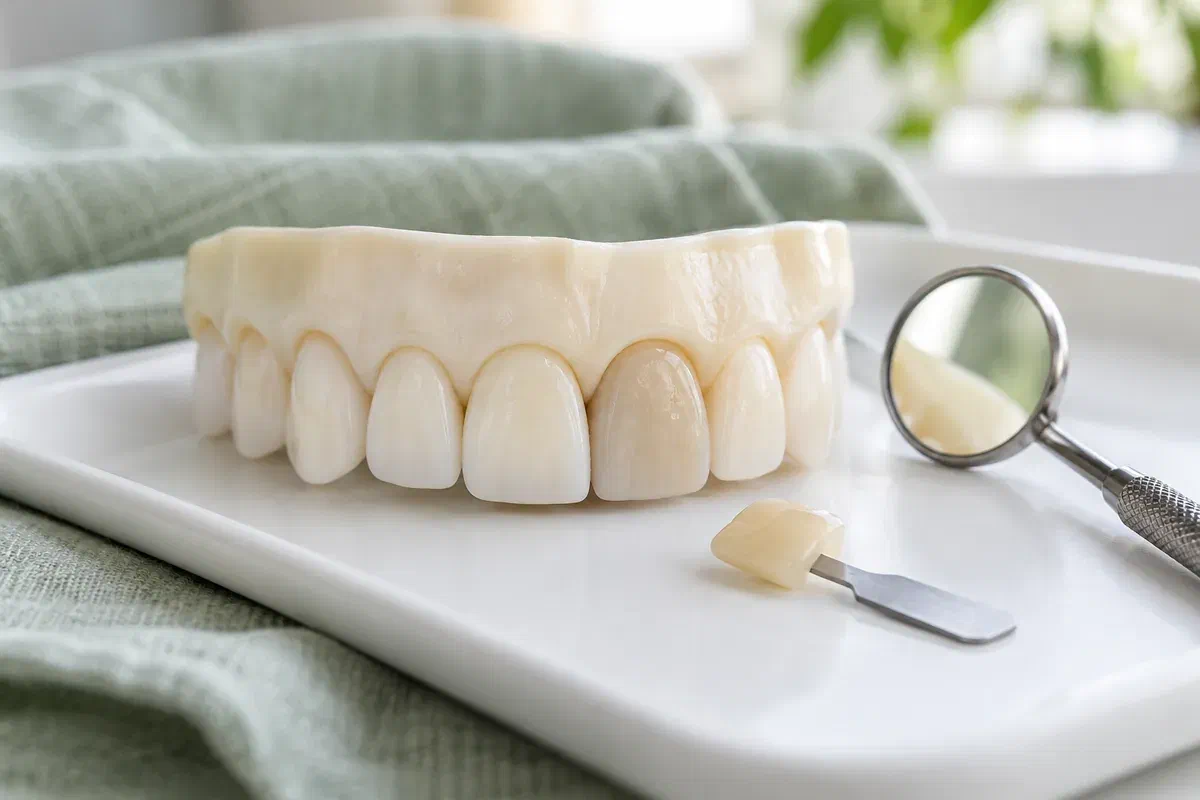
Illustrative front-teeth model with one subtly darker central tooth beside a shade sample
Reading the change

Why might colour return?

There can be more than one reason, and some are not cosmetic. Describe the timeline and treatment as fully as you can, so any discussion of appearance builds on a current assessment.

An old injury that started it all

Mention when the tooth was first hurt and what was done at the time. That history still matters when your dentist weighs the tooth’s condition and the risks of more treatment. The shade itself does not reveal how the tissues are doing today.

A previously bleached tooth darkening again

Explain when bleaching was done and how the tooth looked afterwards. Colour may return from the tooth, from an ageing filling, or from another cause. Knowing which one is involved affects whether a repeat would help at all.

A filling or symptom that has changed

A worn or leaking filling over the access opening, tenderness, or gum swelling should be looked at directly. Bleaching does not fix infection or a failing seal. Root canal or restorative review may be the better first step.

Please do not re-bleach a tooth at home or try to remove its filling. Any internal bleaching, first time or repeat, needs a protective barrier over the root filling and a plan made by your dentist.

Realistic expectations

Improvement is possible. Permanence is not promised.

In a suitable tooth, internal bleaching may lighten discolouration while leaving the outer surface uncovered. The response differs between teeth and between attempts. The colour may get closer to its neighbours, but a perfect match, or one that never fades, cannot be guaranteed.

Longevity is only one part of the picture. Darkness may return, a filling may need replacing to match, and further treatment may eventually be needed. External cervical root resorption is an uncommon but potentially serious complication involving tooth structure lost at the neck region of the root.

Patient information: Leeds Teaching Hospitals — whitening and non-vital bleaching · Research review — internal bleaching and external cervical resorption

A plan that fits this tooth now

Make sure any proposal reflects the tooth’s current condition, not just what worked before. The goal is usually a tooth that sits comfortably with the rest. Ask how the shade will be compared with your earlier result.

Structure considered every time

Each round of treatment is a chance to reconsider how much natural tooth remains and how best to protect it. A suitable final restoration is still required. Colour and strength are related, but not interchangeable, goals.

A sensible end point

Ask how your dentist will decide when to stop and when an alternative makes more sense. Repeating bleaching indefinitely is not a plan. Understand the reviews involved and the next step if the change is limited.

Reassessment to restoration

Four steps, whether it is the first round or not

Your dentist chooses a technique after a fresh examination. Ask about the number of visits, the temporary seal, how the root is protected, and how the tooth will be closed.

  1. Re-examine and compare

    History, symptoms, the existing filling, and the root canal are reviewed again. New images and shade records may be needed to compare with the past. Ask whether the tooth can proceed now or needs repair, root canal review, or more testing.

  2. Decide whether a repeat is wise

    Your dentist explains whether further bleaching is reasonable, how the root and gum would be protected, and what the limits are. Discuss risks, fees, alternatives, and the choice to leave it. Check which follow-up visits and restoration are part of it.

  3. Supervised bleaching, if chosen

    Your dentist reopens the access, seals off the root filling once more, and applies the agent following the chosen protocol. A temporary filling may hold between visits. Keep to the instructions and attend each check.

  4. Seal and set a review rhythm

    When the response has been assessed, your dentist ends the bleaching phase and closes the access with a suitable permanent restoration. Ask whether a visible filling needs re-matching and how often to have the tooth reviewed going forward.

Protecting the result

Habits that help you notice change early

Your instructions will vary with the technique and stage. Keep them written down, and get in touch whenever the seal, the tooth, or the gum around it feels different.

Treat the plan as fixed

Avoid layering home whitening on top, extending a stage, or adjusting a temporary seal. Uncertain about a step? Call. Your dentist needs a reliable record of everything used and how the tooth reacted.

Look after the temporary seal

Eat and clean as advised while treatment continues. If the temporary filling loosens or comes out, let us know promptly instead of waiting for the next booking. A tooth without its seal is more vulnerable.

Keep watching the tooth for years

Attend the visit for the final restoration, then keep regular check-ups so changes are caught early. Mention any shift in colour or comfort. A lighter tooth that had a root canal still needs long-term monitoring.

Patient information: American Association of Endodontists — root resorption

Next steps for a fading result

Repeat, repair, cover, or accept

Each route answers a different problem. Ask what it would change for your tooth and whether anything health-related comes first. The least extensive suitable path is not the same for everyone.

If reassessment supports another round

Further internal bleaching

This may be considered when the tooth remains suitable and the colour has returned from within. Discuss the expected response, protective steps, and how the tooth will be closed afterwards. It should never be treated as routine top-up whitening.

If the exam uncovers something else

Treating a seal, filling, or root canal problem

A leaking restoration or new symptom may need care before any cosmetic decision. Ask why this is recommended and how it might affect later options. Colour work cannot stand in for resolving an active issue.

If repeat bleaching is not the best fit

A veneer or crown, or living with the shade

For some teeth, covering may offer a more stable match. Compare preparation, upkeep, and matching limits. Accepting a modest colour difference in a healthy tooth is also a reasonable outcome.

Questions we hear from Acton

Durability, repeats, and long-term care

Common questions about how long internal bleaching lasts and what to do when a tooth darkens again.

(905) 876-4488
Is there a limit to how many times a tooth can be bleached internally?
There is no fixed number that suits every tooth. Each repeat is a new decision based on the tooth’s condition, structure, and risks. Your dentist may suggest an alternative rather than another round.
What might make the darkness return faster?
Possible factors include changes inside the tooth, an ageing or leaking filling, and the original cause of the discolouration. Your dentist can look for likely reasons in your case, which helps guide the next step.
My tooth was bleached at another clinic. Can you reassess it?
Yes. Bring any records or information you have about the earlier treatment. Your dentist will examine the tooth and may take new images to understand its current condition.
Would a crown be a more lasting answer than repeat bleaching?
A covering restoration can give more stable colour in certain cases, though it involves more preparation. Your dentist can compare the two based on your tooth’s structure and history.
How often should a bleached tooth be checked?
Your dentist will recommend a review schedule based on the tooth and its history. Regular check-ups, with images where appropriate, help catch changes early.
Can I combine reassessment with a regular check-up to save a trip?
Often, yes. Mention the darkened tooth when you book so enough time is set aside. If treatment is needed, your dentist can explain how the following visits would be scheduled.
From Acton

Bring the before, and we will look at the now.

Book with our Bronte Street practice to have a darker, previously treated tooth reassessed. We will examine it, explain why the colour may have returned, and outline which options, if any, make sense for it today.

Repeat bleaching is not right for every tooth. Results vary, each round needs dentist supervision, and the access must be properly restored.

Visit Milton Dental Clinic
Unit 1, 342 Bronte St. S, Milton, ON L9T 5B7
Get directions Clinic hours
Monday–Thursday
11am–7pm
Friday–Sunday
By appointment only

Areas we serve

  • Milton
  • Oakville
  • Mississauga
  • Georgetown
  • Halton Hills
  • Acton
  • Campbellville
  • Brampton
  • Burlington
  • Puslinch
  • Rockwood
  • Erin
  • Caledon
  • Etobicoke
  • Old Milton
  • Bronte Meadows
  • Timberlea
  • Dorset Park
  • Dempsey
  • Clarke
  • Beaty
  • Coates
  • Harrison
  • Scott
  • Willmott
  • Ford
  • Bowes
  • Cobden
  • Walker
  • Mountain View
  • Milton Heights
  • Hawthorne Village
  • Valley View
  • Fallingbrook
  • Nassagaweya
  • Trafalgar
  • Esquesing
  • Nelson
  • Brookville
  • Moffat
  • Glen Williams
  • Norval
  • Limehouse
  • Stewarttown
  • Ashgrove
  • Hornby
  • Silver Creek
  • Speyside
  • Scotch Block
  • North Oakville
  • River Oaks
  • Glen Abbey
  • West Oak Trails
  • Palermo
  • Bronte Creek
  • College Park
  • Joshua Creek
  • Uptown Core
  • Preserve
  • Iroquois Ridge
  • Lisgar
  • Meadowvale
  • Meadowvale Village
  • Churchill Meadows
  • Erin Mills
  • Central Erin Mills
  • Streetsville
  • East Credit
  • Creditview
  • Heartland
  • Sheridan
  • Mount Pleasant
  • Credit Valley
  • Huttonville
  • Churchville
  • Springbrook
  • Northwest Brampton
  • Bram West
  • Fletcher's Meadow
  • Fletcher's Creek South
  • Alton Village
  • Orchard
  • Millcroft
  • Headon Forest
  • Tansley
  • Brant Hills
  • Tyandaga
  • Kilbride
  • Lowville
  • Aberfoyle
  • Morriston
  • Arkell
  • Hillsburgh
  • Freelton
  • Carlisle
  • Waterdown
  • Flamborough
  • Mountsberg

How can we help?

Milton Dental Clinic

Have a question about your smile? Choose the option that works best for you.

For urgent dental concerns, please call.
Messages are reviewed during clinic hours.