

Illustrative patient and dental clinician comparing tooth shades during a consultation
Cosmetic Dentistry

Internal Tooth Bleaching in Brampton

A ball to the mouth, a root canal, and then, months or years later, a tooth that looks grey. For households in Brampton juggling busy calendars, we can assess that tooth and explain whether supervised internal bleaching is worth planning around.

After the injury

A knock today can show up as a grey tooth later.

A hockey stick, a soccer header gone wrong, a slip on the stairs. Front teeth take a lot of knocks, and some end up needing root canal treatment. Long after the emergency is over, the treated tooth may start looking duller than its neighbours. Internal bleaching is one way a dentist may lighten that tooth, working inside the crown rather than on the enamel.

Not every injured tooth qualifies, so the first visit is about understanding it. Your dentist considers what caused the colour, whether the root canal treatment is doing its job, the health of the surrounding gum and bone, and how much tooth structure is intact. Lingering symptoms or another unresolved issue usually take priority over appearance.

Bring what you know about the accident and any treatment since, along with any whitening already tried. Let us know if the colour is still shifting and how closely it should match. For Brampton families fitting appointments around school and work, we can also explain how many visits the assessment and any treatment might involve.

Book a look at an injured tooth
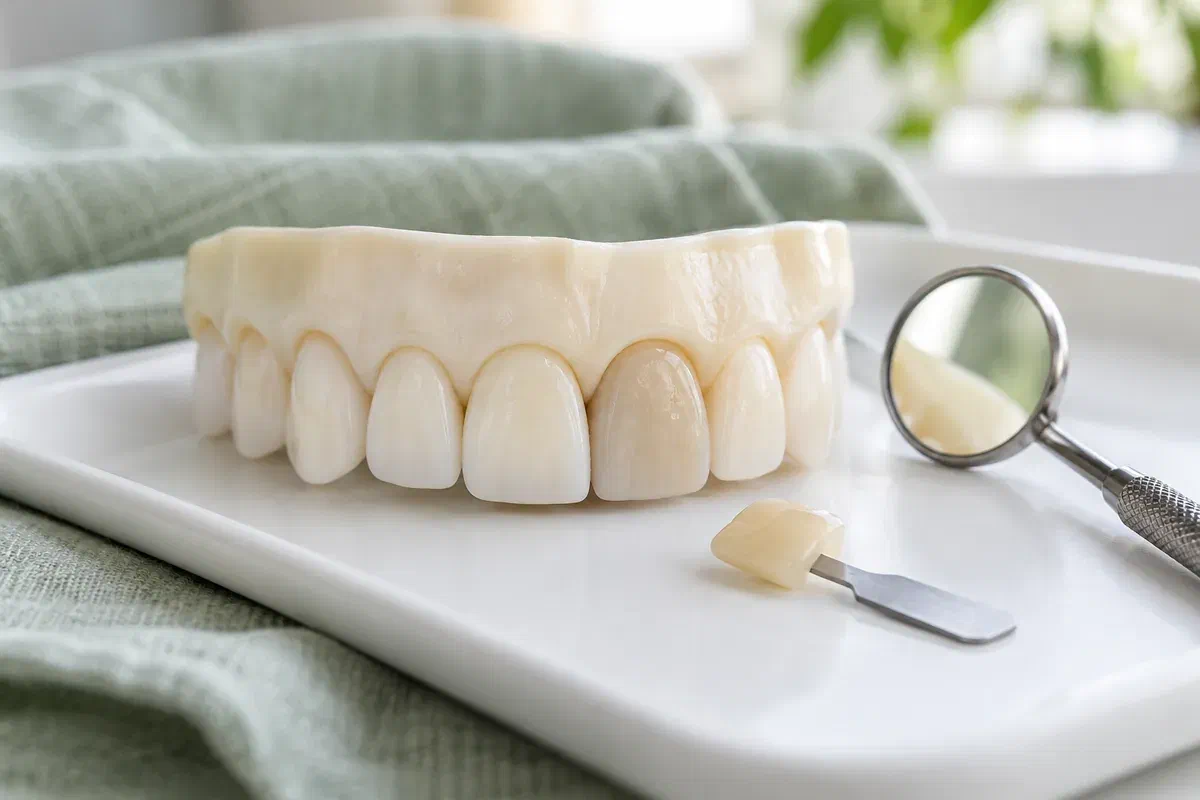
Illustrative front-teeth model with one subtly darker central tooth beside a shade sample
Common starting points

Three ways a tooth ends up here

Your history tells your dentist where to look. Share it plainly, and the conversation about colour can build on a clear understanding of the tooth.

A sports or playground injury

Describe what happened and the care that followed, including any emergency visit. Injury history matters when your dentist weighs the tooth’s condition and the risks of treatment. A change in shade alone cannot confirm how the tissues inside are doing.

Grey or brown after root canal treatment

Show which part of the tooth looks wrong and mention any fillings or previous whitening. The colour may come from tooth tissue, a filling, or the material sealing the canal. Each source responds differently, which affects what bleaching could accomplish.

Tenderness, swelling, or a broken filling

A sore tooth, a puffy gum, or damage to the filling over the root canal needs to be reported. Whitening does not resolve infection or repair a structural problem. Your dentist will say whether further root canal or restorative care should happen first.

Please do not try any home method to whiten the inside of a tooth. Opening it, removing a filling, or inserting gel can cause harm; internal bleaching needs a professional barrier over the root filling and a planned approach.

Possible upsides

Lighter, without a veneer, in the right case

If the tooth is suitable, internal bleaching may lighten it while leaving the outer enamel in place, so a veneer or crown may not be needed for colour alone. Results differ. Many people see the tooth move closer to its neighbours, but a complete or permanent match is not guaranteed.

Every option has trade-offs. The grey tone can come back, an existing filling may no longer match, and the tooth may need more care later. External cervical root resorption is an uncommon but potentially serious complication, where tooth structure breaks down around the root’s neck.

Patient information: Leeds Teaching Hospitals — whitening and non-vital bleaching · Research review — internal bleaching and external cervical resorption

Treatment for the tooth that changed

Check that the plan addresses this tooth’s specific cause. Most people want it to fit in with the rest of their smile rather than brighten everything. Ask how the shade goal is recorded and when it will be reviewed.

Natural structure kept where possible

Ask how bleaching compares with a covering restoration in terms of what each removes. A suitable final filling may still be needed to protect the tooth. Improving colour and protecting structure are related aims with separate answers.

Clear check-ins and an end point

Know how your dentist will gauge progress and when they would stop or change approach. Understand the review timing and what follows a limited response. A well-made plan does not involve indefinite rounds.

Visit by visit

What each appointment is for

Your dentist chooses the technique after an examination. It helps to know early how many visits are planned, what the temporary filling does, how the root is protected, and when the final seal goes in.

  1. Assessment and starting shade

    History, symptoms, the filling, and the root canal treatment are all reviewed. Radiographs and colour photos may be taken. Ask whether the tooth is ready now or whether a root canal review, repair, or more investigation should come first.

  2. A conversation about method and risk

    Your dentist explains the approach and how the root filling and gum will be protected. Go over what is realistic, possible complications, fees, and the choice of leaving the colour alone. Confirm what follow-up and final restoration are included.

  3. Supervised bleaching appointments

    A small opening in the crown gives access, a barrier protects the root filling, and bleaching material is placed using a set protocol. A temporary filling may stay in between visits. Follow the instructions given and keep each review rather than adjusting anything yourself.

  4. Final review and permanent restoration

    The colour change is checked and your dentist decides when bleaching is complete. The access is then closed with a suitable permanent filling or restoration as planned. Ask whether a visible older filling should be re-matched and how the tooth will be followed.

At home between visits

Keep the temporary filling safe and the schedule steady.

Instructions depend on the method and stage. Ask for them in writing and keep our number handy in case the tooth or its temporary filling changes, or the gum becomes irritated.

Do only what you were told to do

No extra whitening products, no stretching a stage, and no fiddling with the temporary filling. If a step is unclear, call before trying something. Accurate information about anything you tried helps your dentist read the tooth’s response.

Go easy on the temporary filling

Follow the chewing and cleaning advice for the tooth during treatment. If the temporary filling loosens, chips, or falls out, get in touch soon. Do not wait for the next scheduled visit to mention it.

Keep the last appointment, then keep checking

Attend the visit that closes the tooth properly, even if the colour looks great already. Continue regular dental check-ups and report any later change. A lighter root-treated tooth still needs ongoing monitoring.

Patient information: American Association of Endodontists — root resorption

Mapping the choices

Which route fits an injured, root-treated tooth?

Ask what each choice would achieve and whether there is a health issue to deal with first. The least invasive suitable route depends on the individual tooth.

Once the tooth has been checked and cleared

Internal bleaching when appropriate

This may be suggested for discolouration inside a root-treated tooth whose condition has been reviewed. Discuss expected change, protective measures, and the final filling. It is a clinical procedure, very different from a whitening tray or strip.

If there is a health or structural concern

Root canal or restorative care first

A poor seal, a symptom, or another finding may need attention before cosmetic work. Ask why this is suggested and how it affects later options. Bleaching cannot take the place of treating an active problem.

Where the cause or your goals suggest another path

Covering, surface whitening, or leaving it

Another approach may suit some causes of colour better. Compare preparation, maintenance, and how well each can match. Keeping a healthy tooth as it is remains a reasonable option once the findings are understood.

Questions from Brampton

Injured teeth, root canals, and lightening them later

Common questions about bleaching a tooth that darkened after an accident, including timing and age.

(905) 876-4488
How soon after an injury can a dark tooth be considered for bleaching?
There is no single timeline. The tooth first needs to be assessed and, if required, treated, and its condition should be stable before cosmetic work. Your dentist can explain when it would be appropriate to discuss bleaching.
Is internal bleaching an option for a teenager?
Age and stage of tooth development can affect the decision. Your dentist will assess the specific tooth and explain whether bleaching, waiting, or another approach makes sense. A parent or guardian should be part of that discussion.
Do all injured teeth eventually turn grey?
No. Some injured teeth keep their colour, while others change over time. Any tooth that has been injured is worth having checked, and colour change is one reason to have it reviewed.
Can my existing white filling be matched after bleaching?
Fillings do not lighten with the tooth. If the shade changes, a visible filling may stand out and need replacing. Discuss this, including any extra cost, before treatment begins.
Should I try bleaching again on my own if the grey returns?
No. If the colour comes back, the tooth should be reassessed. Your dentist will consider the tooth, its fillings, how it responded before, and the risks before suggesting any repeat treatment.
Can several family members be seen on the same day?
It may be possible to arrange appointments close together. Ask when booking, and mention which visits are for assessment and which are for treatment so the schedule can be planned realistically.
Booking from Brampton

Tell us how the tooth got hurt.

Contact our Bronte Street practice to discuss a tooth that darkened after an injury or root canal. After looking at the tooth, we will set out the realistic options and help you judge whether internal bleaching is worth considering.

Suitability depends on the tooth and its treatment history. Colour change varies from tooth to tooth, the bleaching is carried out only under a dentist’s care, and a permanent filling finishes the work.

Visit Milton Dental Clinic
Unit 1, 342 Bronte St. S, Milton, ON L9T 5B7
Get directions Clinic hours
Monday–Thursday
11am–7pm
Friday–Sunday
By appointment only

Areas we serve

  • Milton
  • Oakville
  • Mississauga
  • Georgetown
  • Halton Hills
  • Acton
  • Campbellville
  • Brampton
  • Burlington
  • Puslinch
  • Rockwood
  • Erin
  • Caledon
  • Etobicoke
  • Old Milton
  • Bronte Meadows
  • Timberlea
  • Dorset Park
  • Dempsey
  • Clarke
  • Beaty
  • Coates
  • Harrison
  • Scott
  • Willmott
  • Ford
  • Bowes
  • Cobden
  • Walker
  • Mountain View
  • Milton Heights
  • Hawthorne Village
  • Valley View
  • Fallingbrook
  • Nassagaweya
  • Trafalgar
  • Esquesing
  • Nelson
  • Brookville
  • Moffat
  • Glen Williams
  • Norval
  • Limehouse
  • Stewarttown
  • Ashgrove
  • Hornby
  • Silver Creek
  • Speyside
  • Scotch Block
  • North Oakville
  • River Oaks
  • Glen Abbey
  • West Oak Trails
  • Palermo
  • Bronte Creek
  • College Park
  • Joshua Creek
  • Uptown Core
  • Preserve
  • Iroquois Ridge
  • Lisgar
  • Meadowvale
  • Meadowvale Village
  • Churchill Meadows
  • Erin Mills
  • Central Erin Mills
  • Streetsville
  • East Credit
  • Creditview
  • Heartland
  • Sheridan
  • Mount Pleasant
  • Credit Valley
  • Huttonville
  • Churchville
  • Springbrook
  • Northwest Brampton
  • Bram West
  • Fletcher's Meadow
  • Fletcher's Creek South
  • Alton Village
  • Orchard
  • Millcroft
  • Headon Forest
  • Tansley
  • Brant Hills
  • Tyandaga
  • Kilbride
  • Lowville
  • Aberfoyle
  • Morriston
  • Arkell
  • Hillsburgh
  • Freelton
  • Carlisle
  • Waterdown
  • Flamborough
  • Mountsberg

How can we help?

Milton Dental Clinic

Have a question about your smile? Choose the option that works best for you.

For urgent dental concerns, please call.
Messages are reviewed during clinic hours.