

Illustrative patient and dental clinician comparing tooth shades during a consultation
Cosmetic Dentistry

Internal Tooth Bleaching in Campbellville

Lightening a root-treated tooth only counts as finished once the tooth is properly sealed. For households in Campbellville planning visits around busy weeks, we can assess the tooth and set out the full sequence, final restoration included, before you begin.

Start to finish

The last appointment is the one not to skip.

Once a dark tooth starts looking better, it is tempting to call the job done. Internal bleaching, though, leaves a small opening in the crown that is closed temporarily between stages. The treatment is a dentist-directed way of lightening a root-treated tooth from within, unlike surface whitening, and it ends only when that opening is permanently restored.

Before any of that, the tooth needs to be understood. Your dentist checks the cause of the darkness, the state of the root canal treatment, the gum and bone around the root, and how much of the tooth is still natural. Tenderness or an unsettled problem would normally be dealt with before colour.

If you are coming from Campbellville, it helps to plan the whole sequence at the start. Share any history of injury, the root canal, and past whitening. Tell us whether the colour is stable and how close a match you are after. We can then explain the assessment, the expected visits, and whether internal bleaching suits the tooth at all.

Plan the full treatment sequence
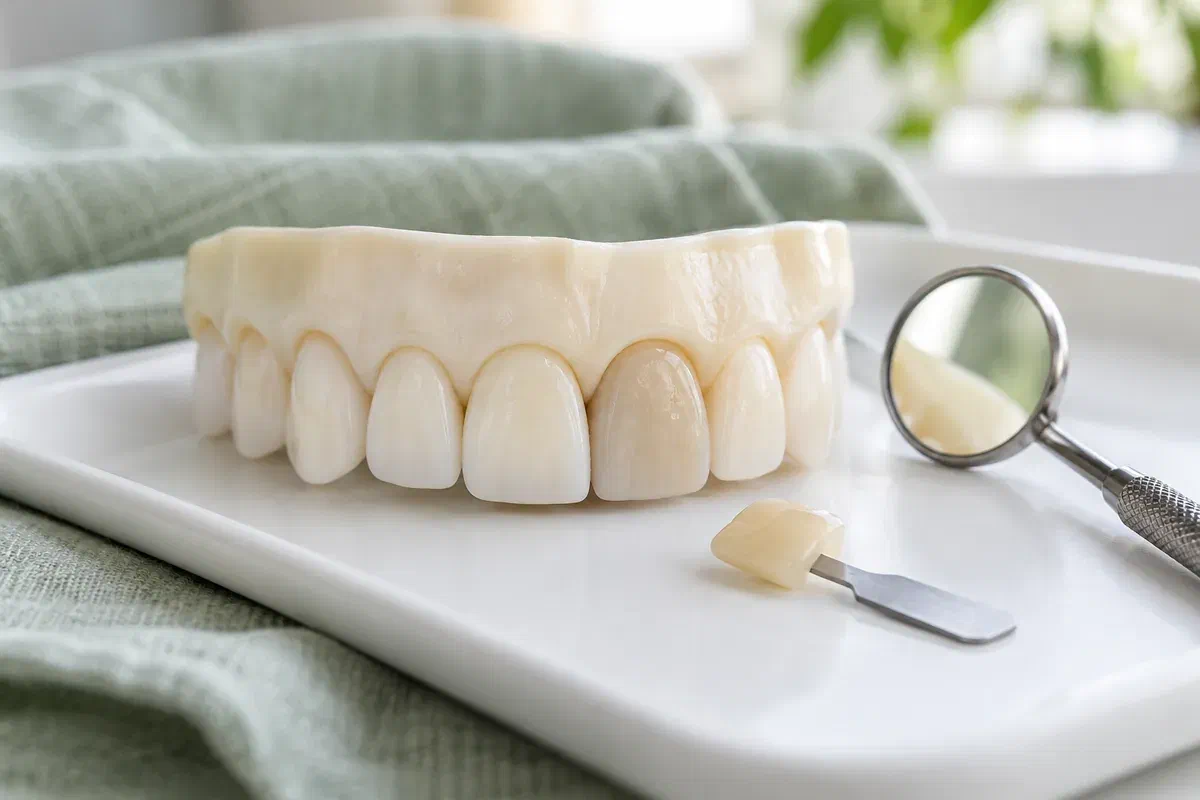
Illustrative front-teeth model with one subtly darker central tooth beside a shade sample
What to mention at the first visit

Small details, big influence

Your answers help your dentist judge both the tooth and the plan. Share them early, so any talk of appearance rests on a sound assessment.

A fall or blow some time back

Explain what happened and the care you received, even if it seems minor now. Trauma history informs how your dentist weighs the tooth’s condition and treatment risks. A shade change cannot show on its own what is going on around the root.

A treated tooth that looks off

Describe what bothers you and any fillings or bleaching it has already had. The colour might come from the tooth, from a restorative material, or from something else. That distinction shapes what internal bleaching could change.

Discomfort or a filling that has worn

Point out tenderness, swelling, or changes to the filling over the old root canal opening. Bleaching cannot cure infection or seal a leak. Your dentist may recommend root canal or restorative care as the first step.

Do not try to reach the inside of a tooth yourself, whether by removing a filling or applying a whitening product. Internal bleaching depends on protecting the root filling with a barrier and following a plan your dentist sets.

Why people consider it

A gentler first step for one discoloured tooth

When the tooth suits it, internal bleaching may reduce the darkness without preparing the tooth for a veneer or crown. Change varies widely. It may bring the colour closer to the surrounding teeth, though an exact or permanent match is not something any dentist can promise.

It is worth knowing the downsides too. Discolouration may return, an existing filling may stand out afterwards, and more care may be needed. Dentists also discuss external cervical root resorption, which is uncommon but can be serious and involves tooth structure being lost close to the gumline end of the root.

Patient information: Leeds Teaching Hospitals — whitening and non-vital bleaching · Research review — internal bleaching and external cervical resorption

Focused on what changed

Ask whether the proposal targets the specific cause of this tooth’s colour. Usually the goal is a tooth that fits in rather than a whiter smile. Find out how the target shade is recorded and when progress is checked.

Less tooth removed

Compare bleaching with covering the tooth, including how much preparation each involves. The tooth will still need a proper permanent filling. Colour and protection go together, though your dentist will consider each on its own terms.

A plan with a known finish

Learn how your dentist will judge the response and decide to stop or change course. Knowing the review dates in advance helps when organising trips. A good plan includes a clear end point.

The whole sequence

Every stage leads to a sealed, finished tooth.

Your dentist picks the technique once the tooth is examined. Ask how many visits there will be, how long the temporary seal stays, how the root is protected, and when the permanent restoration is booked.

  1. Assess and photograph the starting shade

    History, symptoms, the existing filling, and the root canal work are reviewed, often with X-rays and shade photos. Ask whether the tooth is ready or needs root canal review, a repair, or further investigation first.

  2. Set the plan, including the final visit

    You will hear the technique, how the root filling and gum will be protected, and the realistic limits. Discuss complications, fees, and the choice of not treating. Ask for the final restoration appointment to be part of the plan from day one.

  3. Bleach under supervision

    The crown is opened, a barrier protects the root filling, and bleaching material is placed using the chosen protocol. A temporary seal usually closes the tooth between visits. Stick to the instructions and keep each review.

  4. Close the tooth permanently

    After assessing the colour, your dentist ends bleaching and places a suitable permanent restoration. Ask whether any visible filling needs re-matching and how often the tooth should be checked afterwards.

Until the tooth is sealed

A temporary filling is meant to be temporary.

Your instructions depend on the method and stage. Keep them on hand, and call if the seal feels different, the tooth aches, or the gum becomes sore.

Leave the treatment to the plan

Skip extra whitening, avoid stretching a stage, and do not touch the temporary seal. If you are unsure, call before trying anything. Your dentist needs to know exactly what the tooth has been exposed to and how it has responded.

Be careful with the temporary seal

Follow the advice on chewing and cleaning near the tooth. If the seal cracks, loosens, or falls out, phone us promptly. A lost temporary is something to report straight away rather than at the next booked visit.

Do not let the final visit slide

Busy seasons happen, but the appointment that permanently closes the tooth is essential, even if you already like the colour. Keep up regular check-ups afterwards. A root-treated tooth needs monitoring whatever its shade.

Patient information: American Association of Endodontists — root resorption

Choosing what fits

Options depend on why the tooth is dark.

Ask what each route would accomplish and whether a health concern should be addressed first. The least invasive suitable option is different for every tooth.

Once the exam supports a colour change

Internal bleaching for a cleared tooth

This may be offered when the discolouration lies within the tooth and the earlier root canal checks out. Ask about realistic change, protection, and the permanent filling. Pharmacy whitening works on a completely different principle.

If a health or structural issue appears

Root canal or filling repair first

A faulty seal or ongoing symptom may need attention before cosmetic work. Ask why it is recommended and whether it alters your later choices. Bleaching does not replace treating a problem.

Where another approach suits better

A crown or veneer, other whitening, or nothing

Some causes of colour respond better to a different method. Compare preparation, upkeep, and matching limits. You may also decide to keep a sound tooth just as it is.

Campbellville questions

Finishing the job properly

Questions about temporary seals, final restorations, and keeping the treatment on schedule.

(905) 876-4488
How long can a temporary filling stay in during internal bleaching?
It is designed for the short interval your dentist sets between stages, not for long-term use. Ask how long yours is meant to last and book the next visit before you leave.
What happens if I delay the permanent restoration?
A tooth left with only a temporary seal for longer than planned may be more vulnerable. If your schedule changes, call us so we can advise on the safest timing.
Can the final filling be placed at the last bleaching visit?
It depends on the technique and how the shade is settling. Some dentists wait a short time before the final restoration. Your dentist will explain the timing for your tooth.
Could my dark tooth be bleached if it never had a root canal?
Internal bleaching is generally reserved for selected root-treated teeth. A dark tooth without that history needs a diagnosis first, and a root canal should not be done simply to allow bleaching.
Why is resorption mentioned in the consent discussion?
External cervical resorption is an uncommon but potentially serious complication involving loss of tooth structure. Your dentist will explain how your history relates to it and how the tooth will be monitored.
Can visits from Campbellville be grouped to save trips?
Ask for the expected sequence at the first appointment. Some visits need to be spaced, but others may line up with existing check-ups. Booking them together early makes planning easier.
Planning from Campbellville

Book the beginning and the end together.

Contact our Bronte Street practice about a darker root-treated tooth. We will examine it, explain whether internal bleaching is suitable, and set out every visit, including the permanent restoration, so nothing is left half done.

Internal bleaching suits some root-treated teeth but not others. Results vary, the work is dentist-supervised throughout, and the tooth must be closed with a permanent restoration.

Visit Milton Dental Clinic
Unit 1, 342 Bronte St. S, Milton, ON L9T 5B7
Get directions Clinic hours
Monday–Thursday
11am–7pm
Friday–Sunday
By appointment only

Areas we serve

  • Milton
  • Oakville
  • Mississauga
  • Georgetown
  • Halton Hills
  • Acton
  • Campbellville
  • Brampton
  • Burlington
  • Puslinch
  • Rockwood
  • Erin
  • Caledon
  • Etobicoke
  • Old Milton
  • Bronte Meadows
  • Timberlea
  • Dorset Park
  • Dempsey
  • Clarke
  • Beaty
  • Coates
  • Harrison
  • Scott
  • Willmott
  • Ford
  • Bowes
  • Cobden
  • Walker
  • Mountain View
  • Milton Heights
  • Hawthorne Village
  • Valley View
  • Fallingbrook
  • Nassagaweya
  • Trafalgar
  • Esquesing
  • Nelson
  • Brookville
  • Moffat
  • Glen Williams
  • Norval
  • Limehouse
  • Stewarttown
  • Ashgrove
  • Hornby
  • Silver Creek
  • Speyside
  • Scotch Block
  • North Oakville
  • River Oaks
  • Glen Abbey
  • West Oak Trails
  • Palermo
  • Bronte Creek
  • College Park
  • Joshua Creek
  • Uptown Core
  • Preserve
  • Iroquois Ridge
  • Lisgar
  • Meadowvale
  • Meadowvale Village
  • Churchill Meadows
  • Erin Mills
  • Central Erin Mills
  • Streetsville
  • East Credit
  • Creditview
  • Heartland
  • Sheridan
  • Mount Pleasant
  • Credit Valley
  • Huttonville
  • Churchville
  • Springbrook
  • Northwest Brampton
  • Bram West
  • Fletcher's Meadow
  • Fletcher's Creek South
  • Alton Village
  • Orchard
  • Millcroft
  • Headon Forest
  • Tansley
  • Brant Hills
  • Tyandaga
  • Kilbride
  • Lowville
  • Aberfoyle
  • Morriston
  • Arkell
  • Hillsburgh
  • Freelton
  • Carlisle
  • Waterdown
  • Flamborough
  • Mountsberg

How can we help?

Milton Dental Clinic

Have a question about your smile? Choose the option that works best for you.

For urgent dental concerns, please call.
Messages are reviewed during clinic hours.