

Illustrative patient and dental clinician comparing tooth shades during a consultation
Cosmetic Dentistry

Internal Tooth Bleaching in Georgetown

A good decision about bleaching a root-treated tooth depends on knowing the limits and risks as clearly as the possible benefit. From Georgetown, book a consultation where the dentist explains suitability, protection, and monitoring in plain terms.

An informed yes, or no

Ask about the risks as readily as the results.

It is natural to focus on how much lighter a dark tooth could become. A sound decision also asks what could go wrong, how it would be noticed, and what happens next. Internal bleaching treats colour inside the crown of a tooth that has had root canal treatment. A dentist carries it out with protective steps, and it is not the same as whitening the outer enamel.

Your dentist begins by checking whether the tooth is a reasonable candidate at all. That includes the likely cause of the darkness, the condition of the root canal treatment, the health of the tissue around the root, and the amount of tooth still present. Anything unresolved, such as tenderness or a failing filling, is normally looked after first.

When you visit from Georgetown, come with your questions written down alongside the tooth’s history: any injury, the root canal, previous whitening. Mention whether the shade has been changing and what level of match you would be content with. We will explain the assessment, the protective measures, and the alternatives, so you can weigh them properly.

Ask about risks and suitability
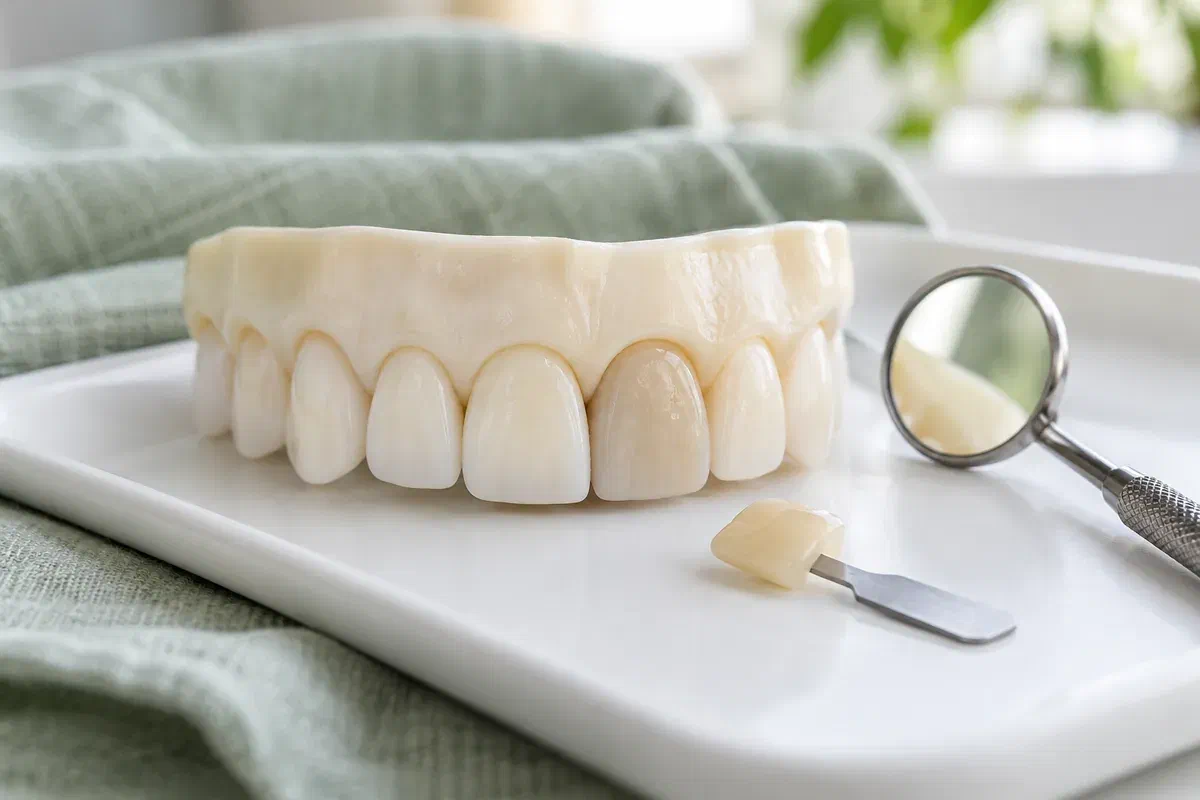
Illustrative front-teeth model with one subtly darker central tooth beside a shade sample
Facts your dentist needs

History shapes the risk picture.

Some details change how cautious a plan needs to be. Share them openly, so the cosmetic discussion is grounded in an accurate assessment of the tooth.

Previous trauma to the tooth

Tell your dentist when the injury occurred and what treatment followed. Trauma history is one of the factors considered when weighing the risks of bleaching. Colour alone says little about the current state of the tooth and its supporting tissue.

Earlier bleaching or several restorations

Say whether the tooth has been bleached before and describe its fillings. Past treatment affects both the likely response and the risk discussion. Your dentist will also try to identify whether the darkness lies in the tooth, a material, or elsewhere.

Symptoms or a suspect filling

Report soreness, swelling, or changes to the filling over the root canal opening. Bleaching does not treat infection or correct a structural fault. Your dentist will advise whether root canal or restorative review should take priority.

Self-treatment inside a tooth is unsafe. Never open a tooth, remove a filling, or insert whitening material yourself; internal bleaching requires a barrier to protect the root filling and a carefully planned professional approach.

Benefit, weighed honestly

What you might gain, and what you accept in return

For a suitable tooth, internal bleaching may reduce discolouration without the preparation a crown or veneer needs. Improvement is variable. A closer match with neighbouring teeth may be possible, but neither a full nor a permanent match can be assured.

In return, you accept some uncertainty. Colour can come back, existing fillings may need replacing, and further treatment may follow. External cervical root resorption, in which tooth structure is lost near the root’s cervical area, is uncommon but can be serious, and it deserves a frank conversation.

Patient information: Leeds Teaching Hospitals — whitening and non-vital bleaching · Research review — internal bleaching and external cervical resorption

A treatment matched to the cause

Ask whether the proposal targets the specific reason the tooth looks dark. You may be after a tooth that fits in, rather than whiter teeth throughout. Clarify how the shade goal is defined and when you will review it.

Less preparation, if suitable

Compare the structure each option would remove and what the tooth will need long term. A final restoration remains essential either way. Better colour and better protection are linked goals, yet they are weighed separately.

Monitoring as part of the bargain

Find out how progress and any complications will be checked, and when your dentist would stop. You should know what follow-up looks like for months and years afterwards. Good planning treats review as part of the treatment.

How safety is built in

Where protection happens at each stage

Technique follows the examination. Ask how each step protects the root and surrounding tissue, how visits are spaced, and when the permanent seal is placed.

  1. Examine before deciding

    Your dentist reviews history, symptoms, the filling, and the root canal. X-rays and shade records may be needed. Ask whether the tooth can proceed now or needs root canal review, repair, or further investigation.

  2. Consent with full information

    You will hear the proposed method, how the root filling and gum will be shielded, and the realistic limits. Discuss complications, costs, and the option of no treatment. Make sure you know what follow-up and final restoration are included.

  3. Bleach behind a protective barrier

    Access is made through the crown and a barrier is placed over the root filling before the bleaching material goes in. A temporary filling may seal the tooth between visits. Follow your instructions exactly and keep every review.

  4. Stop at the right point and seal

    Your dentist assesses the colour and decides when bleaching has done what it reasonably can. The access then receives a suitable permanent restoration. Ask about re-matching visible fillings and how the tooth will be checked over time.

Watching for changes

Report problems early, during and long after treatment.

What you need to do depends on the technique and stage. Keep your written instructions, and contact us if the temporary seal, the treated tooth, or the gum nearby changes.

No additions, no shortcuts

Avoid home whitening products, extra time on a stage, or adjusting the temporary filling. Ask if anything is unclear. Your dentist needs to know exactly what the tooth has been exposed to and how it reacted.

Protect the temporary seal

Follow the eating and cleaning advice you were given. If the temporary filling loosens, breaks, or comes out, contact us promptly. Leaving the tooth unsealed until your next review is not advisable.

Keep long-term reviews

Attend the final restoration appointment even if you are already happy with the shade. Continue regular check-ups so the tooth can be monitored, and mention any change you notice. A lighter tooth still needs watching.

Patient information: American Association of Endodontists — root resorption

Risk and reward, compared

Each option carries its own trade-offs.

For every route, ask what it changes, what it risks, and whether the tooth has a health issue to address first. The most conservative choice that suits you depends on your tooth.

For a tooth the examination supports

Internal bleaching, carefully selected

This may be considered when internal discolouration affects a root-treated tooth that has been fully reviewed. Discuss likely change, protection, monitoring, and the final filling. It is not comparable to a retail whitening kit.

Where the exam finds a concern

Root canal or restorative treatment first

A failing seal, a symptom, or another problem may need care before any cosmetic step. Ask why, and how it affects your options later. Bleaching should not be used instead of treating an active issue.

When a different balance of risks suits you

Covering, other whitening, or keeping the tooth as is

A veneer, crown, or other approach may fit some causes better. Compare preparation, maintenance, and matching. Choosing not to treat a healthy tooth is also a sound decision once you understand the findings.

Asked in Georgetown

Making an informed decision about internal bleaching

Questions about risk, monitoring, and what to ask before you agree to treatment.

(905) 876-4488
What questions should I ask before agreeing to internal bleaching?
Useful ones include why the tooth is dark, whether it is suitable, how the root will be protected, how many visits to expect, what happens if the change is small, and how the tooth will be monitored afterwards.
How would resorption be picked up if it happened?
Regular examinations and, where appropriate, X-rays help your dentist watch the tooth over time. Ask how often the tooth should be reviewed after bleaching and what signs to report between visits.
Can I stop treatment partway through if I change my mind?
Talk to your dentist first. The tooth will still need to be sealed properly, whatever stage you stop at. Your dentist can explain how to finish safely and what your options would be.
Does a past injury make internal bleaching riskier?
Trauma history is one of the factors dentists consider when discussing risk. Your dentist can explain how your particular history affects the decision and what precautions would apply.
Is it reasonable to get a second opinion?
Yes. Many people find it helpful before cosmetic treatment on a root-treated tooth. Bring any records or images you have so the second dentist can review the same information.
If the tooth goes dark again, should I simply repeat the bleaching?
Not automatically. A returning shade difference needs a fresh look at the tooth, its fillings, its previous response, and the risks before any repeat treatment or alternative is discussed.
Georgetown consultations

Clear answers before any treatment starts

Call our Bronte Street practice about a root-treated tooth that has darkened. We will examine it, walk you through the benefits and risks of internal bleaching, and describe the alternatives so the decision is genuinely yours.

Internal bleaching is only suitable for some root-treated teeth. Colour change varies, protective steps and monitoring are essential, and the tooth needs a proper final restoration.

Visit Milton Dental Clinic
Unit 1, 342 Bronte St. S, Milton, ON L9T 5B7
Get directions Clinic hours
Monday–Thursday
11am–7pm
Friday–Sunday
By appointment only

Areas we serve

  • Milton
  • Oakville
  • Mississauga
  • Georgetown
  • Halton Hills
  • Acton
  • Campbellville
  • Brampton
  • Burlington
  • Puslinch
  • Rockwood
  • Erin
  • Caledon
  • Etobicoke
  • Old Milton
  • Bronte Meadows
  • Timberlea
  • Dorset Park
  • Dempsey
  • Clarke
  • Beaty
  • Coates
  • Harrison
  • Scott
  • Willmott
  • Ford
  • Bowes
  • Cobden
  • Walker
  • Mountain View
  • Milton Heights
  • Hawthorne Village
  • Valley View
  • Fallingbrook
  • Nassagaweya
  • Trafalgar
  • Esquesing
  • Nelson
  • Brookville
  • Moffat
  • Glen Williams
  • Norval
  • Limehouse
  • Stewarttown
  • Ashgrove
  • Hornby
  • Silver Creek
  • Speyside
  • Scotch Block
  • North Oakville
  • River Oaks
  • Glen Abbey
  • West Oak Trails
  • Palermo
  • Bronte Creek
  • College Park
  • Joshua Creek
  • Uptown Core
  • Preserve
  • Iroquois Ridge
  • Lisgar
  • Meadowvale
  • Meadowvale Village
  • Churchill Meadows
  • Erin Mills
  • Central Erin Mills
  • Streetsville
  • East Credit
  • Creditview
  • Heartland
  • Sheridan
  • Mount Pleasant
  • Credit Valley
  • Huttonville
  • Churchville
  • Springbrook
  • Northwest Brampton
  • Bram West
  • Fletcher's Meadow
  • Fletcher's Creek South
  • Alton Village
  • Orchard
  • Millcroft
  • Headon Forest
  • Tansley
  • Brant Hills
  • Tyandaga
  • Kilbride
  • Lowville
  • Aberfoyle
  • Morriston
  • Arkell
  • Hillsburgh
  • Freelton
  • Carlisle
  • Waterdown
  • Flamborough
  • Mountsberg

How can we help?

Milton Dental Clinic

Have a question about your smile? Choose the option that works best for you.

For urgent dental concerns, please call.
Messages are reviewed during clinic hours.