

Illustrative patient and dental clinician comparing tooth shades during a consultation
Cosmetic Dentistry

Internal Tooth Bleaching in Milton

When one front tooth looks greyer than its neighbours in every photo, whitening the whole smile rarely solves it. Talk with our Milton team about whether a root-treated tooth could be lightened from the inside, and what has to be checked first.

One tooth, one question

Why does a single tooth turn darker than the rest?

Many people first notice it in a group picture: one front tooth sits a shade or two greyer than the others. When that tooth has already had a root canal, the colour often comes from inside it rather than from surface staining. Internal bleaching works from within the crown of the tooth, under a dentist’s direction, which is why it differs from a whitening tray or strip.

Before anyone talks about lightening, the tooth itself has to be understood. What caused the change, how well the root canal has held up, the state of the gum and bone around it, and how much natural structure remains all shape the answer. A tooth with symptoms or an unresolved problem may need attention before its appearance is considered.

For your visit in Milton, gather what you know: an old knock, the root canal, and anything tried to whiten it. Mention whether the shade is shifting and how closely it should match, and we can explain which assessment and option fit.

Ask about one darker tooth
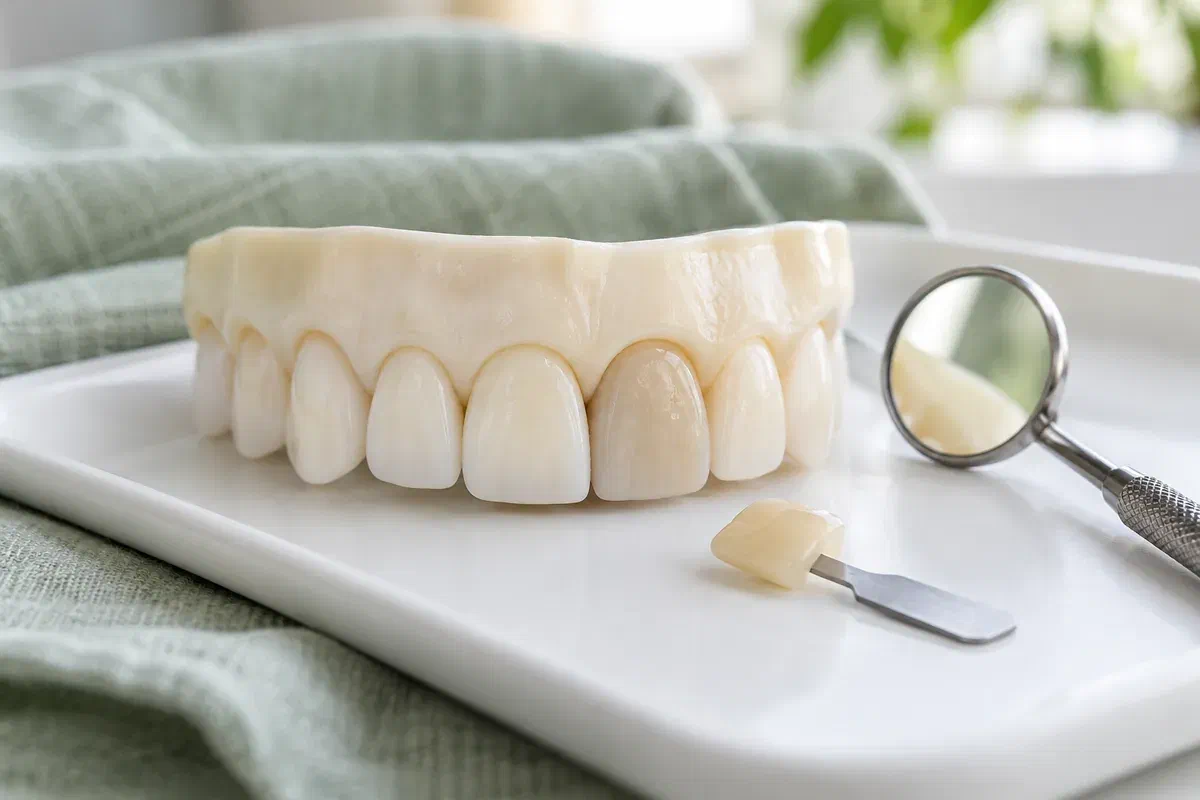
Illustrative front-teeth model with one subtly darker central tooth beside a shade sample
What you might be noticing

The shade tells us something. The tooth tells us more.

Share when you first saw the change and what treatment the tooth has had. A cosmetic conversation is most useful when it rests on a clear picture of the tooth’s health, not in place of one.

A tooth that greyed after a knock

Describe the injury and any care afterwards, even if it happened in childhood. That background helps the dentist weigh the tooth’s condition and the risks involved. Colour on its own cannot confirm what is happening inside the tooth or around the root.

A root canal tooth that stands out

Show us exactly which difference bothers you and mention any fillings or earlier whitening. The darkness might come from the tooth tissue, from a filling material, or from something else. Knowing which matters, because it changes what bleaching could realistically achieve.

Discomfort, swelling, or a filling that seems wrong

Tell us about tenderness, gum swelling, or any change to the filling over the old root canal opening. Whitening will not clear an infection or fix a crack or leak. Your dentist can say whether root canal or restorative review should happen before anything cosmetic.

Please never try to open a tooth, pick out a filling, or put whitening gel inside it at home. Internal bleaching depends on an examination, a protective seal over the root filling, and a plan your dentist has set out.

Where it can help

Sometimes the tooth can be lightened before it is covered.

In a suitable case, bleaching from the inside may reduce the darkness without placing a veneer or crown over the whole front of the tooth. How much it changes differs from person to person. A closer blend is often the aim, but an exact or lasting match cannot be guaranteed.

Weighing it up also means looking at the downsides. The colour may drift back, fillings may stop matching the new shade, and more treatment may follow. A rare but potentially serious complication, external cervical root resorption, involves loss of tooth structure close to where the root meets the crown.

Patient information: Leeds Teaching Hospitals — whitening and non-vital bleaching · Research review — internal bleaching and external cervical resorption

Attention on the tooth that differs

Check that the plan addresses the actual cause of the darkness. Your goal may be for that tooth to fit in with the rest, not to brighten your whole smile. It is fair to ask who picks the goal shade and how often it gets compared.

Keeping more of your natural tooth

Compare bleaching with a veneer or crown and what each would remove or reshape. Even after bleaching, the tooth may need a proper long-term filling for its condition. Getting the colour right and protecting the tooth go together, but they are separate questions.

A defined plan with check-ins

Find out how your dentist will judge the response and when they would stop or change course. Know the review dates and the next step if the colour barely moves. A sound plan has a clear finish point rather than open-ended rounds of bleaching.

From first look to final filling

Four stages, each with a checkpoint.

Your dentist picks the technique after examining the tooth. It helps to ask early about the number of visits, the temporary filling, the protective steps, and how the tooth will be sealed at the end.

  1. Examine the tooth and record its shade

    We go over the history, any symptoms, the current filling, and the root canal work. X-rays and shade photos may be part of this. Ask whether the tooth is ready now, or whether a root canal review, repair, or further testing should come first.

  2. Talk through approach, risks, and other choices

    Your dentist describes the technique and how the root filling and nearby tissue will be shielded. Go over realistic limits, possible complications, fees, and the option of leaving the colour as it is. Confirm what follow-up and final restoration are included.

  3. Complete the bleaching stages under supervision

    The dentist opens the crown, places a protective barrier, and applies the bleaching material according to the chosen protocol. Some methods leave a temporary filling in place between visits. Stick to the instructions you are given and keep each review, rather than adjusting anything yourself.

  4. Review the result and seal the tooth

    Your dentist checks the change in colour and decides when to finish. The opening is then closed with a suitable final filling or restoration on the planned schedule. Ask whether a visible existing filling should be re-matched and how the tooth will be watched over time.

Looking after the tooth

Care between appointments matters as much as the bleaching.

What you need to do depends on the method and where you are in treatment. Ask for the instructions in writing and for a way to reach us if the temporary filling, the tooth, or the gum around it changes.

Stay with the plan you were given

Avoid adding store-bought whitening, stretching a stage longer, or touching the temporary filling. If something in your instructions is unclear, call before guessing. Your dentist needs an accurate picture of what was used and how the tooth reacted.

Protect the temporary filling

Follow the advice on chewing and cleaning around the tooth while treatment continues. Let us know straight away if the temporary filling feels loose, chips, or falls out. Waiting for the next booked review is not the right way to handle a lost seal.

Finish the final filling and keep your check-ups

Come to the appointment that closes the tooth properly, even if you already like the colour. Keep up with regular dental visits and mention any later change. A lighter shade does not mean a root-treated tooth no longer needs watching.

Patient information: American Association of Endodontists — root resorption

Your choices for a darker tooth

Start with why it is dark, then decide what to do.

For each option, ask what it would actually change and whether the tooth needs care beyond looks. The most conservative suitable route depends on the tooth in front of us.

If the examination supports it

Internal bleaching for a suitable root-treated tooth

This may be offered when discolouration comes from inside a tooth whose condition has been checked. Discuss how much change is realistic, how the tooth is protected, and the final filling. It works very differently from over-the-counter strips or trays.

If a health or structural issue shows up

Root canal or restorative care first

A leak around the old filling or a new symptom gets investigated before cosmetic work. Ask why your dentist recommends this step and how it might affect your options afterwards. Bleaching is never a substitute for dealing with an active problem.

If the tooth or your wishes point elsewhere

A veneer or crown, other whitening, or simply waiting

Depending on what is causing the colour, another route may suit you better. Compare how much preparation, upkeep, and shade matching each involves. Not treating a healthy tooth at all is also a sensible choice once you understand the findings.

Your questions, answered

Common questions about lightening a root-treated tooth

Here are answers to questions people in Milton often raise about internal bleaching, from the first visit through to the final filling.

(905) 876-4488
How many appointments does internal bleaching usually take?
It varies with the technique and how the tooth responds. Some approaches involve a few visits spaced apart, with a temporary filling in between, followed by a final restoration. Your dentist can outline the expected number of visits after the examination.
Can I whiten my other teeth at the same time?
Sometimes the rest of the smile is whitened as well, but the order and timing need planning. Changing the surrounding teeth alters the shade target for the darker one. Discuss your overall goal so the steps can be arranged sensibly.
Does internal bleaching weaken the tooth?
A root-treated tooth has already lost some structure, and any treatment needs to respect what remains. Your dentist will consider how much tooth is left and what final restoration is needed to protect it. Ask how this applies to your tooth.
My dark tooth never had a root canal. Is internal bleaching still possible?
Internal bleaching is generally for selected teeth that have had root canal treatment. A darker tooth without that history needs its cause and health assessed first. A root canal should not be done just to allow whitening.
Why does the resorption risk come up in the consultation?
External cervical resorption, a loss of tooth structure near the neck of the root, is an uncommon but significant possible complication. Your dentist can explain how your tooth’s history relates to it, what protection is planned, and how it will be monitored.
Will the filling on the front of my tooth lighten too?
Filling materials do not bleach the way natural tooth does. If the tooth gets lighter, an existing visible filling may no longer match and could need replacing. Talk about that possibility, and any extra cost, before starting.
Book in Milton

Show us the tooth that does not match.

Reach out to our Bronte Street practice to talk about a darker tooth and the treatment it has had. We can go through what the examination shows, describe the realistic choices, and help you work out whether internal bleaching is worth discussing further.

Whether a tooth is suitable depends on its condition and root canal history. Results vary, and treatment needs professional supervision and a proper final restoration.

Visit Milton Dental Clinic
Unit 1, 342 Bronte St. S, Milton, ON L9T 5B7
Get directions Clinic hours
Monday–Thursday
11am–7pm
Friday–Sunday
By appointment only

Areas we serve

  • Milton
  • Oakville
  • Mississauga
  • Georgetown
  • Halton Hills
  • Acton
  • Campbellville
  • Brampton
  • Burlington
  • Puslinch
  • Rockwood
  • Erin
  • Caledon
  • Etobicoke
  • Old Milton
  • Bronte Meadows
  • Timberlea
  • Dorset Park
  • Dempsey
  • Clarke
  • Beaty
  • Coates
  • Harrison
  • Scott
  • Willmott
  • Ford
  • Bowes
  • Cobden
  • Walker
  • Mountain View
  • Milton Heights
  • Hawthorne Village
  • Valley View
  • Fallingbrook
  • Nassagaweya
  • Trafalgar
  • Esquesing
  • Nelson
  • Brookville
  • Moffat
  • Glen Williams
  • Norval
  • Limehouse
  • Stewarttown
  • Ashgrove
  • Hornby
  • Silver Creek
  • Speyside
  • Scotch Block
  • North Oakville
  • River Oaks
  • Glen Abbey
  • West Oak Trails
  • Palermo
  • Bronte Creek
  • College Park
  • Joshua Creek
  • Uptown Core
  • Preserve
  • Iroquois Ridge
  • Lisgar
  • Meadowvale
  • Meadowvale Village
  • Churchill Meadows
  • Erin Mills
  • Central Erin Mills
  • Streetsville
  • East Credit
  • Creditview
  • Heartland
  • Sheridan
  • Mount Pleasant
  • Credit Valley
  • Huttonville
  • Churchville
  • Springbrook
  • Northwest Brampton
  • Bram West
  • Fletcher's Meadow
  • Fletcher's Creek South
  • Alton Village
  • Orchard
  • Millcroft
  • Headon Forest
  • Tansley
  • Brant Hills
  • Tyandaga
  • Kilbride
  • Lowville
  • Aberfoyle
  • Morriston
  • Arkell
  • Hillsburgh
  • Freelton
  • Carlisle
  • Waterdown
  • Flamborough
  • Mountsberg

How can we help?

Milton Dental Clinic

Have a question about your smile? Choose the option that works best for you.

For urgent dental concerns, please call.
Messages are reviewed during clinic hours.