

Illustrative patient and dental clinician reviewing an aligner beside its protective case
Cosmetic Dentistry

Invisalign Attachment Repair

If an Invisalign attachment chips or comes away, contact the team supervising your treatment. An attachment assessment in Milton can review the affected tooth, aligner fit, and treatment stage, then clarify whether replacement or another adjustment is needed.

A closer look at Invisalign attachment repair

A small missing piece deserves advice tied to your treatment plan.

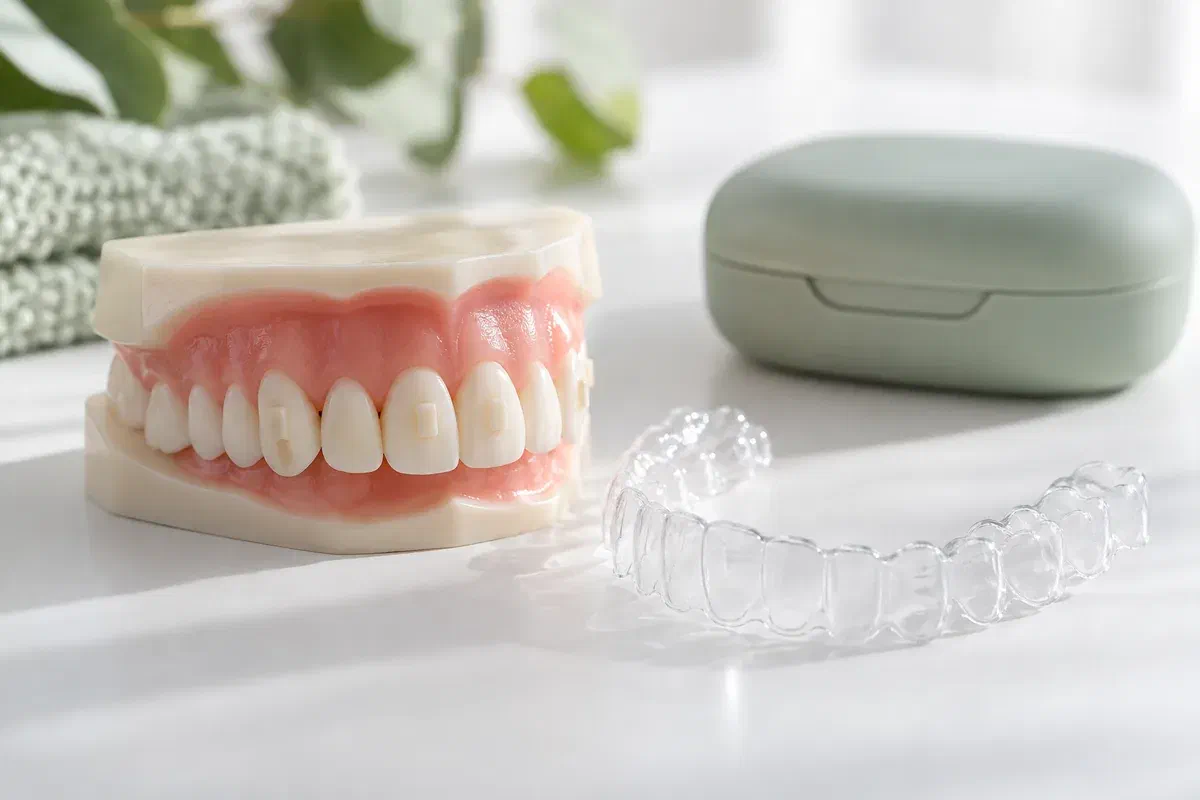
Invisalign attachments are small tooth-coloured shapes bonded to selected teeth as part of an aligner plan. They help the trays engage the teeth for particular planned movements. Their shape and position have a purpose, so a missing or damaged attachment should be reviewed in that context.

An attachment coming away does not tell you, by itself, how the rest of treatment is progressing. The clinician needs to know which tooth is affected, whether the tray still seats, and where you are in the sequence. That information helps determine the timing and type of response.

If you are receiving treatment through Milton Dental Clinic, contact our team with those details. If another practice supervises your aligners, contact that provider so advice and any local assistance can be coordinated. Do not try to rebuild the bump or change the sequence yourself.

Ask about an attachment concern
Illustrative tooth model with small tooth-coloured attachments beside an aligner and case
What to report when you contact the team

Describe the attachment, the tray, and the change you noticed.

A short, specific description helps the treating clinician understand the issue. You do not need to decide whether the problem is urgent or diagnose why the attachment came away.

A bump that appears missing or smaller

Explain which side and tooth area are affected and when you first noticed the change. Mention whether material came away during tray removal or eating. If you are unsure whether an attachment was there, ask the team to check the plan.

An aligner that does not fit as before

Describe any new gap between the tray and tooth, looseness, distortion, or difficulty seating it. Include the current tray number. Do not force a damaged appliance into place or assume the next tray will solve the problem.

A rough surface, sore area, or repeated loss

Tell the team about discomfort and whether the same attachment has needed attention before. A repeated issue may call for review of the tooth surface, fit, or handling. Honest details are more useful than worrying that you will be blamed.

Keep your current aligners and bring them to the appointment. Ask the supervising team which tray to wear while waiting and whether the planned change date should remain the same.

Why a focused attachment review matters

Connect the repair with the movement it is meant to support.

An attachment is part of a prescribed arrangement rather than a decorative addition. Replacement, when indicated, should match the treatment plan. The review is also a chance to assess whether the appliance is fitting as intended or whether another issue needs attention.

Prompt communication helps avoid guessing about wear or progression. The clinician can explain the next step and whether an appointment is needed before changing trays. There is no single waiting period or sequence change that suits every lost attachment.

Patient information: Invisalign — the purpose and placement of attachments

A decision based on the affected tooth and stage

Ask whether the attachment is needed for the current planned movement and how its loss affects the immediate instructions. The answer should be specific to your treatment. A general reassurance or online timetable cannot replace that review.

An opportunity to check the appliance itself

Bring attention to any crack, sharp edge, or fit change as well as the missing bump. The clinician can distinguish an attachment concern from a tray problem. Addressing both questions helps prevent a repair from leaving the original discomfort unexplained.

Clear instructions before you leave

Confirm which aligner to use, the next change date, and the next review. Ask for the instruction to be repeated if it differs from the original schedule. You should not have to infer the rest of the plan from the fact that an attachment was replaced.

What an attachment appointment can involve

Check the plan and fit before replacing the material.

The procedure depends on whether the attachment is missing, partly damaged, or associated with another concern. Tell the team if the tooth has a restoration or recent dental work.

  1. Confirm the treatment stage and affected area

    Review your current tray, recent wear, the timing of the attachment loss, and any symptoms. The clinician checks the relevant plan and tooth. If care is supervised elsewhere, the information needed for coordinated treatment may need to be obtained first.

  2. Assess the tooth surface and aligner fit

    The clinician examines any remaining material and checks the appliance as appropriate. Ask whether the concern involves only the attachment or whether the tooth or tray needs further assessment. A replacement should follow an explanation of the findings.

  3. Replace the attachment when indicated

    If replacement is required, the tooth is prepared for bonding and composite is placed using the prescribed shape and position, commonly with a placement template. The material is hardened with a curing light and excess is removed. This is a professional procedure, not a home repair.

  4. Review seating, removal, and the next tray instructions

    The clinician checks the result with the relevant appliance and explains how to continue. Practise removal if you have found it difficult. Confirm the current stage, next change date, and contact instructions if the material comes away again.

After an attachment is reviewed or replaced

Return to the routine with a clear instruction for this stage.

Follow the treating clinician's advice about wear and progression. Replacement does not automatically mean you should restart, skip ahead, or add days to the sequence.

Use the demonstrated insertion and removal method

Ask for another demonstration if the aligner catches or feels difficult to remove. Avoid unnecessary repeated removal and do not twist or distort the tray to get around a bump. Report a fit problem rather than modifying the appliance.

Keep the attachment and tooth surfaces clean

Brush carefully around the material and continue the recommended interdental routine. Ask how to reach an awkward area. An attachment should not become a reason to avoid cleaning a tooth, and persistent irritation should be discussed.

Watch for another loss without repeatedly testing it

Do not pick at the attachment or use your teeth as tools. If it appears chipped or missing again, record the timing and contact the team. Repeated loss needs review rather than increasingly forceful tray seating or home adhesive.

Choosing the appropriate next step

Not every attachment concern needs the same response.

The treatment plan, appliance fit, and tooth condition determine what happens next. Ask the supervising clinician to explain the recommendation and the interim wear instructions.

When the prescribed feature needs to be restored

Replacement of a required attachment

The clinician may replace the material to the planned design and confirm fit. Ask whether the timing affects your next tray change. A repair should be coordinated with the sequence rather than treated as an unrelated filling appointment.

When fit, damage, or symptoms need clarification

Assessment of the tray or tooth before replacement

A cracked appliance, a surface concern, or unexpected discomfort may need attention alongside the attachment. Explain every change you have noticed. The clinician can decide whether another action or revised plan is needed before routine progression.

When the original plan must guide the decision

Specific monitoring or coordination with the treating provider

The supervising clinician may give particular instructions about timing and review. If you are away from home, ask how local assistance should be arranged. Do not assume that an unfamiliar provider can reproduce the correct attachment without the necessary treatment information.

Questions about a lost Invisalign attachment

Get advice that fits your tray and treatment stage.

Contact the team with the affected area, tray number, and any fit or comfort changes. These details help turn a general concern into a useful next step.

(905) 876-4488
Should I contact my Invisalign provider when an attachment comes off even if the tray still fits?
Yes. Report the loss and ask for instructions. A tray seeming comfortable does not establish whether the attachment is needed for the planned movement. The provider can advise on replacement timing and whether the current schedule should change.
Can I glue the original Invisalign attachment back onto my tooth?
No. Do not use household or other adhesive. The attachment needs the prescribed shape, position, bonding method, and fit assessment. Contact the treating team rather than attempting to recreate the feature yourself.
Should I move to my next Invisalign tray while waiting for an attachment repair?
Ask the supervising clinician before changing the planned sequence. The answer depends on the stage, affected tooth, and fit. Do not skip ahead, restart earlier trays, or add wear days based only on general online advice.
What should I bring to an Invisalign attachment repair appointment?
Bring your current aligners and any other trays or records the team requests. Know the tray number and when the problem started. If another clinic manages treatment, explain that when arranging the visit so coordination can be considered.
Does losing one attachment mean my whole Invisalign treatment has failed?
Not necessarily. It is a problem to report and assess, rather than a conclusion about the entire treatment. The clinician can review the stage and fit, explain the effect on the plan, and arrange the appropriate response.
Why might the same Invisalign attachment need attention more than once?
The clinician may need to review the tooth surface, restoration history, appliance fit, or removal technique. Explain when it happens and any associated difficulty. Repeated loss should lead to reassessment rather than blame or a home workaround.
Invisalign attachment repair in Milton

Let the treating team know what has changed.

Contact our Bronte Street practice if an attachment concern arises during treatment with us. Share the current tray number, affected area, and any discomfort or fit change so the next step can be discussed in relation to your plan.

If another provider supervises your aligners, contact them for instructions and coordination. Online requests do not replace a call about an urgent symptom.

Visit Milton Dental Clinic
Unit 1, 342 Bronte St. S, Milton, ON L9T 5B7
Get directions Clinic hours
Monday–Thursday
11am–7pm
Friday–Sunday
By appointment only

How can we help?

Milton Dental Clinic

Have a question about your smile? Choose the option that works best for you.

For urgent dental concerns, please call.
Messages are reviewed during clinic hours.