

Illustrative patient and dental clinician reviewing an aligner beside its protective case
Cosmetic Dentistry

Invisalign Attachment Repair in Acton

The tray still clicks in and nothing hurts, so is a missing attachment worth the drive from Acton? Often it is worth a call. We can tell you whether that tooth needs its attachment back now and how your aligner should be worn.

It feels fine, though

Comfortable is not the same as on track

Many people shrug off a lost attachment because the aligner seems to sit perfectly well without it. It is an understandable reaction. Nothing hurts, the tray goes in, and the bump was so small you barely noticed it was ever there.

Comfort, though, does not show whether the tooth is moving as planned. Attachments give the tray a surface to press on, and some are essential at certain stages while others matter less. Telling the difference takes the plan, the tooth, and an idea of where you are in the series.

So yes, report it. If we oversee your aligners, phone us and we will tell you whether to come in soon or carry on for now. If treatment is supervised elsewhere, check with that office first, and let us know if they would like local help. Leave the tooth alone until then.

Find out whether it matters now
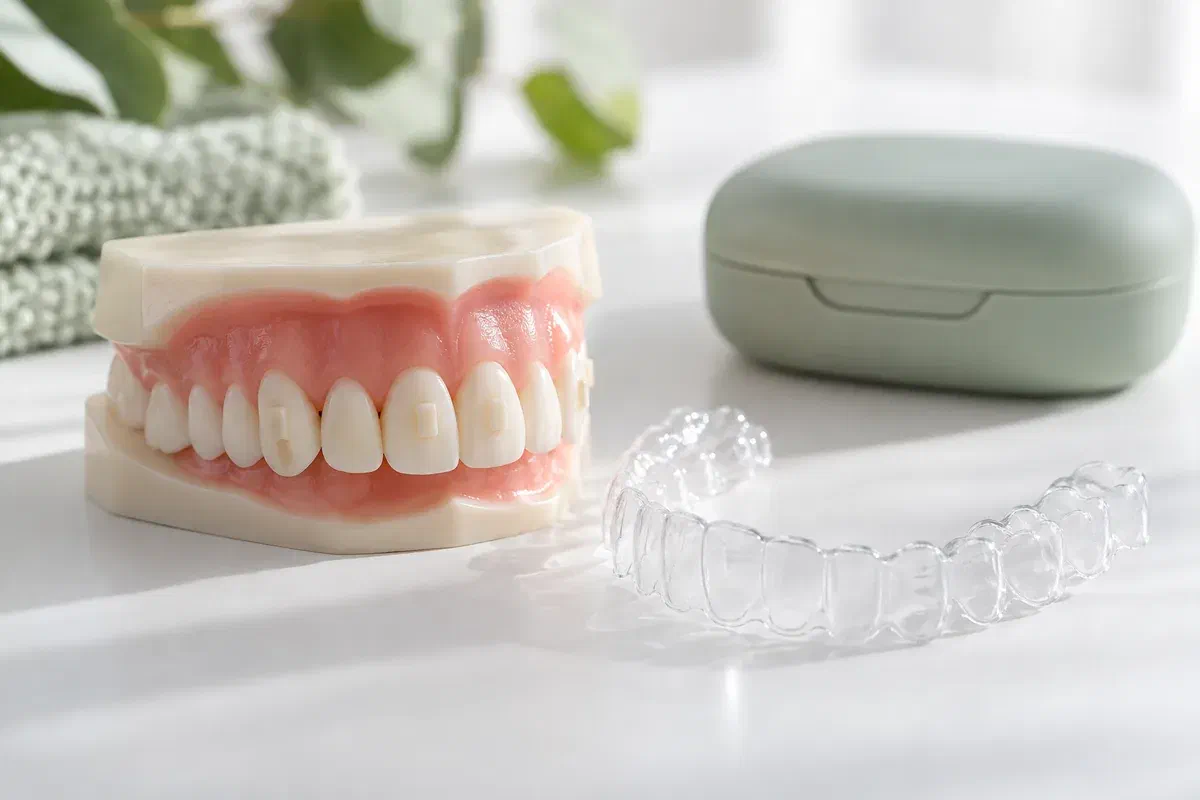
Illustrative tooth model with small tooth-coloured attachments beside an aligner and case
Notes from Acton worth sharing

Even when it feels fine, tell us this

Weighing urgency is the clinician’s task. A plain description, even of something that seems minor, helps them give the right advice the first time.

The spot that changed

Describe which side and tooth no longer has its bump and when you first realised. Was it while eating, brushing, or taking the tray out? If you cannot recall an attachment on that tooth, the plan will show whether one belongs there.

Subtle shifts in fit

Look closely: a thin gap at the edge of one tooth, a tray that releases more easily than before, or a slight warp. Note your tray number. Please do not push harder to close a gap or advance early hoping things sort themselves out.

Small discomforts, earlier losses

Mention a slightly rough area or mild tenderness, and whether this attachment has come off before. Little details can reveal a pattern in the surface, fit, or removal. Share them freely; nobody is grading you.

Keep wearing and caring for your current aligners unless told otherwise, and bring them with you. Ask whether your next change date should stay the same.

What a quick review settles

Certainty instead of guesswork

Every attachment is part of a prescription. If it is still doing work, a replacement should match the shape and placement in your plan. If it is not essential right now, the clinician can say so and explain what to watch for. Either way, a review also confirms the aligner is tracking.

Calling early saves days of wondering. You will hear whether to be seen before the next switch and how to wear the current tray in the meantime. No universal timetable exists for missing attachments, which is exactly why asking is worthwhile.

Patient information: Invisalign — the purpose and placement of attachments

A clear answer for your stage

Ask plainly whether the attachment is active in the current movement and whether its absence changes anything this week. That answer comes from your plan, not from how the tray feels or from a general online guide.

Hidden fit problems caught early

Mention any crack or minor looseness in the tray, even if it seems trivial. The clinician can tell whether a subtle fit change relates to the missing attachment or the aligner. Catching it early may avoid bigger adjustments later.

Instructions you can act on

Confirm your current tray, next change date, and when you will next be reviewed. If any of it differs from your schedule, ask for a repeat. You should leave the call or visit knowing exactly how to carry on.

If a visit is recommended

How the appointment usually goes

The details depend on whether the attachment is missing, chipped, or connected to another issue. Let us know about a filling, crown, or recent dental work on the tooth.

  1. Start with where you are in the series

    Which tray is in, how many hours it is being worn, the day the bump went missing, how things feel: these come first. The plan for that tooth is then reviewed. When a different office supervises, their details may be requested before anything else.

  2. Check the surface and seating

    Remaining composite is looked at closely, and the aligner may be seated to compare fit. It is reasonable to ask whether anything besides the attachment needs attention. The clinician explains what was found before proceeding.

  3. Bond a fresh one if the plan calls for it

    When a new one is needed, the tooth is prepared and tooth-coloured composite is formed to the designed shape, typically through a template. It is hardened under a curing light and excess is removed. Only a clinician should do this.

  4. Confirm the tray and your next step

    The aligner is checked over the new attachment and the way forward is explained. If removing it has been awkward, practise with the team. Confirm your stage, your next change, and who to call if it happens again.

Carrying on

Follow the schedule you were given

Wear time and tray changes come from your treating clinician. A replaced attachment does not mean you should go back, jump forward, or add days unless you are advised to.

Ease the tray out as shown

If it catches on the attachment, ask for another demonstration. Take aligners out only when needed, and never bend them to clear a ridge. If fit feels off, report it rather than reshaping the plastic.

Brush around every attachment

Clean gently at the edges of the composite and keep up your flossing or interdental cleaning. Ask about a hard-to-reach area. An attachment should never be a reason to skip a tooth, and irritation that lingers is worth a mention.

Notice, but do not test

Avoid picking at attachments or chewing on hard objects. If one chips or disappears again, jot down the date and call. Repeated loss needs reassessment, not more pressure on the tray or a home adhesive.

Possible outcomes

Sometimes now, sometimes later, sometimes a closer look

The plan, the tray’s fit, and the tooth all inform the recommendation. You are welcome to ask why a particular option was chosen and what to wear in between.

When it is active in the current stage

Replace the attachment soon

The clinician restores the attachment to its intended design and checks that the tray engages it. Ask whether this changes your next switch. The repair is part of your aligner sequence, not a separate filling visit.

When fit or symptoms need explaining

Look at the tray or tooth first

Even a comfortable tray can have a small crack, and a tooth surface can change. If anything else is going on, it may need care before or alongside the repair. Raise every observation, and the clinician will decide whether a different step makes sense.

When the plan allows a short wait

Continue with monitoring

You may be told to carry on with specific instructions until a planned review. If another provider manages your treatment, they should guide this. A correct attachment cannot be recreated without the treatment information.

Acton questions about missing attachments

When it feels fine but something is missing

Give us the tooth, the tray number, and anything that feels even slightly different. Small details help us tell you whether to come in.

(905) 876-4488
Is a missing attachment urgent if nothing hurts?
Usually it is not an emergency, but it is worth reporting soon. Whether it needs prompt repair depends on what the attachment is doing at your stage. The supervising clinician can tell you.
Why would my tray fit well without the attachment?
The tray can still seat over the tooth even if it is not gripping it the way the plan intended. Fit and function are not the same. That is why the clinician checks the plan, not just comfort.
Are some attachments more important than others?
Yes. Attachments are placed for different purposes and may matter more at some stages than others. The clinician can explain the role of the one you lost.
Should I keep wearing my aligner as usual?
In many cases you will be asked to keep wearing your current tray while you wait, but confirm with the supervising clinician. Do not force a tray that no longer seats.
Can I combine the repair with my next appointment to save a trip from Acton?
Sometimes that works. Call and describe the situation; the clinician can decide whether waiting is reasonable or whether you should be seen sooner.
If I skip reporting it, what might happen?
The tooth may not move as planned, and later trays could fit poorly. That does not mean treatment has failed, but early advice usually keeps things simpler.
Attachment advice in Milton

One call answers the question

If you are in aligner treatment with us and notice a missing or chipped attachment, call our Bronte Street practice. Even if everything feels fine, tell us the tooth and tray so we can say whether a visit is needed.

If another office oversees your aligners, contact them first for advice. For urgent symptoms, please phone rather than submitting an online request.

Visit Milton Dental Clinic
Unit 1, 342 Bronte St. S, Milton, ON L9T 5B7
Get directions Clinic hours
Monday–Thursday
11am–7pm
Friday–Sunday
By appointment only

Areas we serve

  • Milton
  • Oakville
  • Mississauga
  • Georgetown
  • Halton Hills
  • Acton
  • Campbellville
  • Brampton
  • Burlington
  • Puslinch
  • Rockwood
  • Erin
  • Caledon
  • Etobicoke
  • Old Milton
  • Bronte Meadows
  • Timberlea
  • Dorset Park
  • Dempsey
  • Clarke
  • Beaty
  • Coates
  • Harrison
  • Scott
  • Willmott
  • Ford
  • Bowes
  • Cobden
  • Walker
  • Mountain View
  • Milton Heights
  • Hawthorne Village
  • Valley View
  • Fallingbrook
  • Nassagaweya
  • Trafalgar
  • Esquesing
  • Nelson
  • Brookville
  • Moffat
  • Glen Williams
  • Norval
  • Limehouse
  • Stewarttown
  • Ashgrove
  • Hornby
  • Silver Creek
  • Speyside
  • Scotch Block
  • North Oakville
  • River Oaks
  • Glen Abbey
  • West Oak Trails
  • Palermo
  • Bronte Creek
  • College Park
  • Joshua Creek
  • Uptown Core
  • Preserve
  • Iroquois Ridge
  • Lisgar
  • Meadowvale
  • Meadowvale Village
  • Churchill Meadows
  • Erin Mills
  • Central Erin Mills
  • Streetsville
  • East Credit
  • Creditview
  • Heartland
  • Sheridan
  • Mount Pleasant
  • Credit Valley
  • Huttonville
  • Churchville
  • Springbrook
  • Northwest Brampton
  • Bram West
  • Fletcher's Meadow
  • Fletcher's Creek South
  • Alton Village
  • Orchard
  • Millcroft
  • Headon Forest
  • Tansley
  • Brant Hills
  • Tyandaga
  • Kilbride
  • Lowville
  • Aberfoyle
  • Morriston
  • Arkell
  • Hillsburgh
  • Freelton
  • Carlisle
  • Waterdown
  • Flamborough
  • Mountsberg

How can we help?

Milton Dental Clinic

Have a question about your smile? Choose the option that works best for you.

For urgent dental concerns, please call.
Messages are reviewed during clinic hours.