The tooth that feels different
Tell us the side and roughly which tooth, plus what you were eating or doing when it happened. If it came off while you removed the tray, say so. Unsure an attachment was ever there? We can check the records.


A hard bite at lunch, a tiny chip on your fork, and a tooth that now feels bare. If you are coming from Burlington, we can check the tooth and your aligner’s fit and explain whether that attachment needs replacing.
Crusty bread, a firm apple, an absent-minded crunch on ice. Aligners come out for meals, which leaves attachments doing their quiet work without a tray to shield them. Every so often one cracks or pops off, and you spot a pale fleck that is not food.
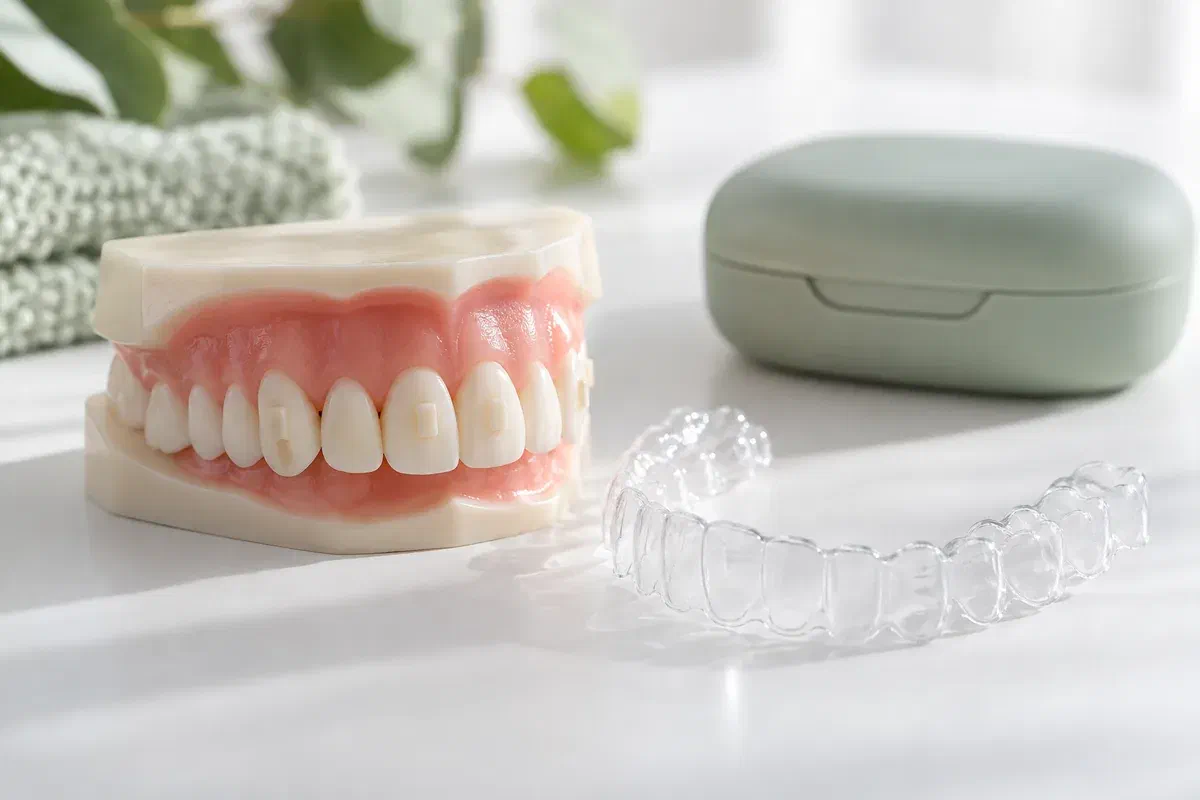
These bumps are bonded to chosen teeth so the aligner can grip and steer them. Their position and shape come straight from your treatment plan. When one goes missing, the clinician wants to know which tooth, how the tray fits once it is back in, and how far along you are.
Hang on to the piece if you find it, but do not try to stick it back. Contact the office supervising your aligners. If that is our team, call with the details; if another provider leads treatment, check with them first so any help we give lines up with their plan.
Deciding how urgent it is, or why it broke, is not your job. A short account of what you noticed gives the clinician what they need.
Tell us the side and roughly which tooth, plus what you were eating or doing when it happened. If it came off while you removed the tray, say so. Unsure an attachment was ever there? We can check the records.
Notice any gap over a tooth, a looser hold, a warped edge, or trouble clicking it into place. Have the tray number ready. Avoid forcing a tray that resists, and do not move on early hoping the next one fits better.
Mention a jagged remnant catching your tongue, a tender cheek, or a bump that has broken before. Patterns help the clinician think about the surface, tray fit, or eating habits. Straight answers are welcome here; no one is assigning fault.
Keep your current aligners and bring them along. Ask which tray to wear for now and whether your scheduled change should go ahead.
Your attachments are prescribed features with a specific role in moving teeth. A replacement should follow the original design. While you are in the chair, the clinician can also confirm the aligner is seating properly and look for anything else that needs attention.
Calling soon cuts down on guessing about wear. You will find out if you should be seen before your next tray and how to manage until then. Because every lost attachment is a little different, no single waiting window applies to everyone.
Patient information: Invisalign — the purpose and placement of attachments
Ask whether this attachment is active in the current movement and how its absence changes what you do this week. The response should come from your plan. General internet timetables are not built around your teeth.
Raise any crack, sharp area, or change in fit along with the broken bump. The clinician can tell whether the attachment or the aligner is the real issue. Fixing only one could leave the original irritation in place.
Confirm your tray, your next switch date, and when you will next be reviewed. If something has changed from the plan you started with, ask to go over it again. A repair should come with instructions, not loose ends.
What happens depends on whether the attachment is gone entirely, partly chipped, or tied to another problem. Let us know about fillings, crowns, or recent treatment on that tooth.
We ask which tray you are on, how consistently it has been worn, when the bump broke, and how things feel. The clinician checks what the plan intends for that tooth. Records from another supervising office may be needed first.
Any remaining composite is assessed and the aligner is seated as appropriate. Ask whether the issue goes beyond the attachment. The clinician should explain the findings before rebuilding anything.
When replacement is needed, the enamel gets a bonding preparation and fresh composite is shaped to the prescribed form, often with a template. A curing light sets it, and excess is cleaned off. It is a clinical step that cannot be copied at home.
The tray is tried over the new attachment and you will hear how to continue. If removal has been a struggle, practise it with the team. Confirm your stage, change date, and what to do if it breaks again.
Follow your clinician’s wear and change instructions. A replacement does not mean you should restart a tray, jump ahead, or stretch out the schedule unless advised.
Ask for a refresher if the tray catches on the attachment. Avoid taking it out more than necessary, and do not bend it to slide past a ridge. Report fit problems instead of altering the tray.
With trays out for meals, cut firm foods into smaller pieces and avoid chewing ice or hard candy. Brush around each attachment before the aligner goes back in, keep up flossing, and ask about tricky areas. Lingering irritation is worth a mention.
Resist picking at attachments or biting packaging. If one chips or disappears again, write down when and call. Repeated loss calls for reassessment rather than pushing harder on the tray or reaching for glue.
When you call, share the tooth, your tray number, and any change in fit or comfort. It helps us move quickly to a plan.
If an attachment breaks during aligner treatment with our team, contact our Bronte Street practice. Share the tray number, the affected tooth, and any discomfort or fit change so we can plan around where you are in treatment.
If another office supervises your aligners, contact them for instructions and coordination. Please phone about urgent symptoms rather than booking online.
