Which tooth lost its attachment
Say which side and tooth, and when you first noticed. Mention whether it came away while eating or removing the tray. If you are not sure there was an attachment there, the team can check before you worry further.


Months of careful tray changes, and now a bump is missing. It is natural to worry about lost progress. For households in Caledon, we review the tooth, the fit, and your stage, then explain calmly what this means for the plan.
After a long stretch of wearing trays faithfully, finding a bare spot on a tooth can be deflating. The worry tends to jump ahead: has the tooth slipped back, are the next trays useless, will treatment take longer? Those are fair questions, and they deserve real answers rather than guesses.
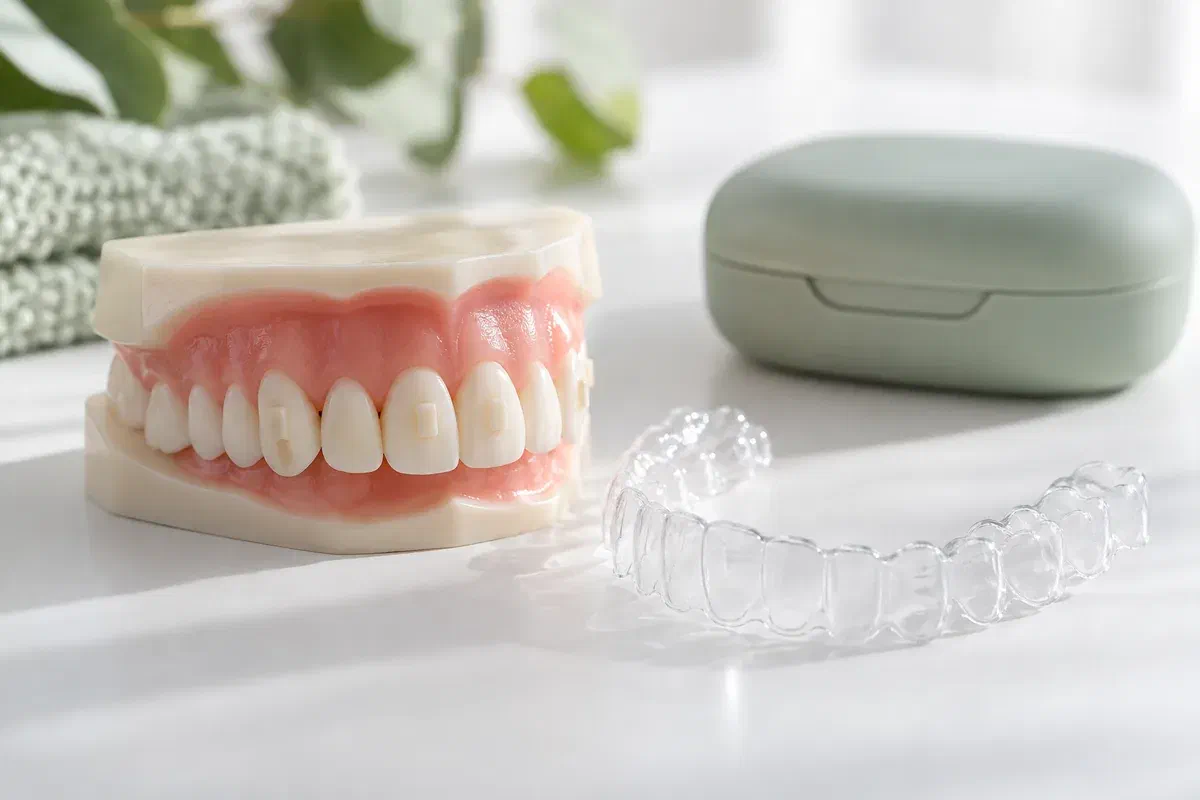
An attachment is a small, tooth-coloured composite shape that gives your aligner a firm point to push against for a particular movement. Its importance depends on the tooth and on where you are in the sequence. Some matter a great deal at one stage and much less at another.
If our team supervises your aligners, call with the tooth, the tray number, and any fit changes, and we will explain what is likely to happen next. If another office runs treatment, start with them so advice is coordinated. Please avoid home repairs while you wait.
You do not have to judge whether progress is lost or why it happened. Simple observations give the clinician enough to reassess properly.
Say which side and tooth, and when you first noticed. Mention whether it came away while eating or removing the tray. If you are not sure there was an attachment there, the team can check before you worry further.
Look for a gap at a tooth, a looser feel, a distorted edge, or difficulty seating the tray. Note its number. A tray that no longer seats is useful information; do not force it or jump ahead to make up time.
Mention soreness, a rough spot, or whether this has happened before with the same tooth. Repeats point toward practical causes, like surface, fit, or removal habits. There is nothing to be embarrassed about.
Keep the aligners you are using and bring them in. Ask the supervising team which tray to wear now and whether your next change date should stand.
Each attachment is a prescribed element of your plan. If it is needed, the replacement should match its original design. A careful look at the aligner’s fit also tells the clinician whether treatment is tracking as expected, which is often the real question on your mind.
Reaching out quickly replaces worry with information. You will learn whether to come in before your next change and how to wear your current tray until then. Since every case differs, there is no single timetable for a missing attachment.
Patient information: Invisalign — the purpose and placement of attachments
Ask whether this attachment is active right now and whether its loss changes anything about the coming weeks. The answer should come from your own plan. Online stories of other people’s treatment are not a reliable guide.
Mention cracks, sharp spots, or fit changes as well as the missing bump. The clinician can tell whether the aligner is still doing its job and address any tray problem at the same visit.
Before you leave, make sure you know which aligner is in, the day you switch, and when you will be seen again. If the plan has been adjusted, ask the clinician to explain why. You should go home reassured and clear about the next step.
The visit depends on whether the attachment is gone, chipped, or linked to a wider issue. Let us know about fillings, crowns, or recent work on the tooth.
We discuss your current tray, how consistently you have worn it, when you noticed the loss, and how things feel. The clinician checks what the plan expects of that tooth. If another office supervises, their records may be needed.
The aligner is seated to see how well it fits, and any leftover composite is examined. Ask directly whether the tooth has moved off course. The clinician should explain the findings before a repair.
When a replacement is appropriate, the tooth is prepared and composite is shaped to the prescribed form, commonly with a template. The material is light-cured and tidied. This is done only in the clinic.
The tray is tried over the result, and the clinician explains how to continue and whether the plan needs any adjustment. Practise removal if it has been difficult. Leave knowing your stage, next change, and who to call.
Keep following your treating clinician’s wear and switching advice. A replacement does not on its own mean you should repeat trays, rush ahead, or add days to catch up.
Use the technique you were shown, and ask for a refresher if the tray catches. Take aligners out only when needed and avoid bending them over a ridge. Report fit concerns instead of altering the tray.
Brush gently around each attachment and continue your interdental routine. Ask how to clean any awkward area. Do not let worry about an attachment stop you cleaning a tooth, and mention persistent irritation.
Avoid picking at attachments or biting hard objects. If one chips or comes off again, note the date and call. Another loss calls for reassessment, not extra force on the tray or home glue.
Progress worries are common after a lost attachment. These answers cover what people ask most, and a call with your tray details fills in the rest.
If our practice supervises your aligners and an attachment goes missing, phone our Bronte Street office. Tell us the tooth, your tray, and how it fits, and we will explain the likely next step and arrange a visit if needed.
If another clinic oversees your aligners, contact them first. Please phone about urgent symptoms rather than booking online.
