

Illustrative patient and dental clinician reviewing an aligner beside its protective case
Cosmetic Dentistry

Invisalign Attachment Repair in Erin

A missing attachment is often noticed during the daily routine of brushing, rinsing trays, and snapping them back in. From Erin or Hillsburgh, we can check the tooth and fit, rebuild the bump if needed, and help your routine protect it.

Morning brush, evening rinse

Your daily routine is often the first to notice

Aligner wearers develop a rhythm: trays out, brush, floss, rinse the trays, trays back in. Repeat after every meal. That rhythm is useful, because it is usually during these few minutes that you feel a tooth go smooth where a little composite ridge used to be.

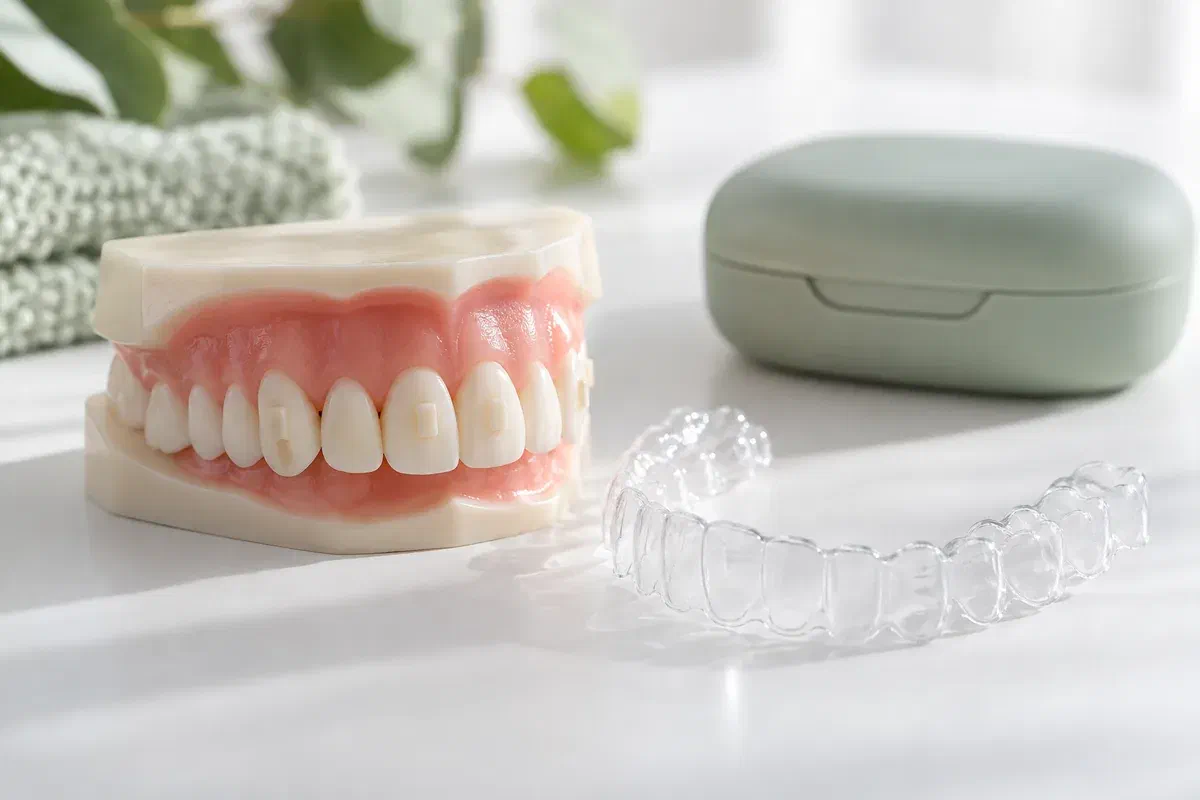
That ridge is an attachment, bonded to a selected tooth so the aligner has something to press against for a planned movement. Each one is shaped and positioned according to your treatment plan. Losing it raises three practical questions: which tooth, how the tray now fits, and what stage you are at.

If our team looks after your aligners, call with those answers and we will suggest a next step. If treatment is supervised elsewhere, contact that office first so any help is coordinated. Meanwhile, keep up your routine around the spot, but do not try to fill it.

Report a missing attachment
Illustrative tooth model with small tooth-coloured attachments beside an aligner and case
Noticed it while cleaning?

Things to note before you put the brush down

You are not expected to judge urgency or work out the cause. A clear description, gathered while it is fresh, makes the call short and productive.

The tooth that now feels smooth

Note the side, the tooth, and whether you felt the change while brushing, flossing, or eating. If a tiny piece came out on the brush or in the sink, mention it. Unsure an attachment was ever there? The plan will tell us.

How the rinsed tray goes back in

As you reinsert the aligner, notice any gap at a tooth, a looser hold, a bent area, or more effort than usual. Note the tray number. Please do not press harder to make it seat or move to the next tray early.

Tenderness around the area

Mention a rough edge, gum that bleeds or feels sore near the spot, or an attachment that has come off before. Details like these help the clinician think about surface, fit, and cleaning. Be as candid as you like; it is all useful.

Keep your current aligners clean and bring them along. Ask which tray to wear until your visit and whether your next change should be postponed.

What a review adds to your routine

A repair that suits the plan, and habits that protect it

Attachments are prescribed features, not decoration, so a replacement should follow your plan’s design. While you are in, the clinician can also confirm the tray is tracking properly and look at the gum and enamel around each attachment, which is where cleaning can be hardest.

Calling soon means you are not guessing about wear while the routine carries on. The team can tell you whether to come before your next switch and how to manage until then. Lost attachments are too varied for one universal waiting time.

Patient information: Invisalign — the purpose and placement of attachments

Guidance for the tooth and the stage

Ask whether the attachment is active in the current movement and how its loss affects this week’s instructions. The answer belongs to your plan. A general schedule from elsewhere cannot tell you that.

A check on the aligner too

Mention any crack, rough edge, or change in fit, including anything you noticed while rinsing the tray. The clinician can tell whether the attachment or the tray is the problem and deal with both.

Cleaning tips you can use tomorrow

Before leaving, confirm your tray, next change date, and next review, and ask for advice on brushing and flossing around attachments. If any instruction differs from your schedule, have it repeated so you can follow it at home.

When Erin visitors come in

How a repair appointment works

The visit depends on whether the attachment is entirely gone, chipped, or part of another concern. Tell us about any filling, crown, or recent treatment on that tooth.

  1. Talk through your routine and the loss

    We ask about your current tray, daily wear, when you first noticed the smooth spot, and anything that feels different. The clinician then checks what your plan intends for that tooth. Another supervising office may need to share records first.

  2. Assess the tooth, gum, and tray

    Remaining material is examined along with the surrounding gum, and the aligner is tried in as needed. Ask whether the concern involves more than the attachment. The findings should be explained before a replacement goes on.

  3. Rebuild the attachment where the plan needs it

    If required, the enamel is prepared and composite is pressed into the planned shape, usually with a template. It is set with a curing light, and excess is smoothed away so it is easier to keep clean. This is professional work only.

  4. Check fit and refresh your routine

    The tray is tested over the new attachment, and you will hear how to continue. If removal or cleaning has been tricky, the team can show you a better approach. Confirm your stage, next switch, and who to call if it happens again.

Daily care after a repair

Small habits, repeated often

Your treating clinician sets the wear and change schedule. A new attachment on its own is not a reason to restart a tray, skip forward, or add extra days.

Brush around each attachment

Angle the brush to reach above, below, and beside every bump, and keep up flossing or interdental brushes. Plaque can collect at the edges. Ask the team for help with an awkward spot, and mention gum irritation that does not settle.

Rinse and handle trays gently

Rinse aligners in cool or lukewarm water and clean them as instructed. Use the removal method you were shown, and avoid flexing the tray over a ridge. If it catches, ask for a refresher rather than trimming it.

Notice changes, but leave them be

Do not explore attachments with fingernails or bite on hard items. If one chips or disappears again, note the date and call. Repeated loss needs review, not stronger pressure on the tray or home adhesive.

Next steps

Rebuild, check, or keep an eye on it

Your plan, the aligner’s fit, and the tooth and gum condition shape what is recommended. Ask the reasons for the advice and what tray to wear in the meantime.

When the bump is part of the current movement

Restore the attachment

The attachment is rebuilt to its planned form and the clinician confirms the tray engages it. Ask whether this affects your next switch. Treat it as part of your aligner sequence, not as a separate filling.

When fit or comfort needs attention

Address the tray, tooth, or gum first

A cracked tray, a change in the enamel, or sore gum around the area may need care too. Tell us about everything you have seen. A different step or a revised plan may come before the repair.

When the original plan should set the timing

Monitor or coordinate

You may be asked to carry on with specific instructions until a review. If another office supervises your aligners, they should guide this. Without the treatment information, recreating the attachment correctly is not possible.

Erin routine questions

Cleaning, care, and what to do now

When you call, give the tooth, the tray number, and any change in fit or comfort. That is enough for us to suggest the right next step.

(905) 876-4488
Can brushing too hard knock off an attachment?
Normal brushing should not remove a well-bonded attachment. If you are brushing very firmly or using a hard brush, ask the team about technique. Gentle, thorough cleaning is the goal.
How do I clean around attachments properly?
Angle a soft brush around each bump, use floss or interdental brushes as recommended, and rinse well. The team can demonstrate at your visit if any spot is hard to reach.
Should I clean my aligner differently after a repair?
Keep following the cleaning instructions you were given, using cool or lukewarm water. If the tray now catches on the new attachment, mention it rather than reshaping the plastic.
My gum is a bit sore near the missing attachment. Is that normal?
Mild irritation can happen, but mention it when you call. Persistent soreness, bleeding, or swelling should be checked. Call promptly if pain is significant.
Can I wait for my next routine visit to get it replaced?
Ask the clinician supervising your treatment. It depends on what the attachment is doing at your stage. They can tell you whether to come in sooner.
Is losing an attachment a sign of poor home care?
Not necessarily. Attachments come off for many reasons, including biting forces, tray removal, and the tooth surface. It is a problem to report, not a judgement on you.
Attachment care for Erin and Hillsburgh

Tell us what your routine turned up

If our practice oversees your aligners and an attachment chips or lets go, call our Bronte Street office. Share which tooth, the tray you are on, and anything you have noticed while cleaning, so we can plan a visit for your stage.

When a different office holds your plan, check with them before booking here. Please use the phone, not an online form, for anything urgent.

Visit Milton Dental Clinic
Unit 1, 342 Bronte St. S, Milton, ON L9T 5B7
Get directions Clinic hours
Monday–Thursday
11am–7pm
Friday–Sunday
By appointment only

Areas we serve

  • Milton
  • Oakville
  • Mississauga
  • Georgetown
  • Halton Hills
  • Acton
  • Campbellville
  • Brampton
  • Burlington
  • Puslinch
  • Rockwood
  • Erin
  • Caledon
  • Etobicoke
  • Old Milton
  • Bronte Meadows
  • Timberlea
  • Dorset Park
  • Dempsey
  • Clarke
  • Beaty
  • Coates
  • Harrison
  • Scott
  • Willmott
  • Ford
  • Bowes
  • Cobden
  • Walker
  • Mountain View
  • Milton Heights
  • Hawthorne Village
  • Valley View
  • Fallingbrook
  • Nassagaweya
  • Trafalgar
  • Esquesing
  • Nelson
  • Brookville
  • Moffat
  • Glen Williams
  • Norval
  • Limehouse
  • Stewarttown
  • Ashgrove
  • Hornby
  • Silver Creek
  • Speyside
  • Scotch Block
  • North Oakville
  • River Oaks
  • Glen Abbey
  • West Oak Trails
  • Palermo
  • Bronte Creek
  • College Park
  • Joshua Creek
  • Uptown Core
  • Preserve
  • Iroquois Ridge
  • Lisgar
  • Meadowvale
  • Meadowvale Village
  • Churchill Meadows
  • Erin Mills
  • Central Erin Mills
  • Streetsville
  • East Credit
  • Creditview
  • Heartland
  • Sheridan
  • Mount Pleasant
  • Credit Valley
  • Huttonville
  • Churchville
  • Springbrook
  • Northwest Brampton
  • Bram West
  • Fletcher's Meadow
  • Fletcher's Creek South
  • Alton Village
  • Orchard
  • Millcroft
  • Headon Forest
  • Tansley
  • Brant Hills
  • Tyandaga
  • Kilbride
  • Lowville
  • Aberfoyle
  • Morriston
  • Arkell
  • Hillsburgh
  • Freelton
  • Carlisle
  • Waterdown
  • Flamborough
  • Mountsberg

How can we help?

Milton Dental Clinic

Have a question about your smile? Choose the option that works best for you.

For urgent dental concerns, please call.
Messages are reviewed during clinic hours.