

Illustrative patient and dental clinician reviewing an aligner beside its protective case
Cosmetic Dentistry

Invisalign Attachment Repair in Mississauga

Who should you call when an attachment comes off: the office that started your aligners, or the one nearest your day? From Mississauga, we help you sort that out and, where appropriate, review the tooth and tray fit.

Whose plan is it?

Start with the office that designed your treatment

Aligner treatment is built around a digital plan made by one supervising clinician. That plan decides which teeth carry attachments, the shape of each one, and exactly where it sits. When a bump goes missing, the person who holds that plan is the best first call.

Some people moved, changed jobs, or simply began care at a different office before finding us. That is fine. It just means a repair here may depend on information from the original provider: the attachment design, the template used to place it, and your current stage.

If we supervise your aligners, call us with the tooth, tray number, and any fit changes. If someone else does, phone them first and ask how they would like a repair handled. We are glad to coordinate once that is clear, rather than guessing at a design we cannot see.

Ask how coordination works
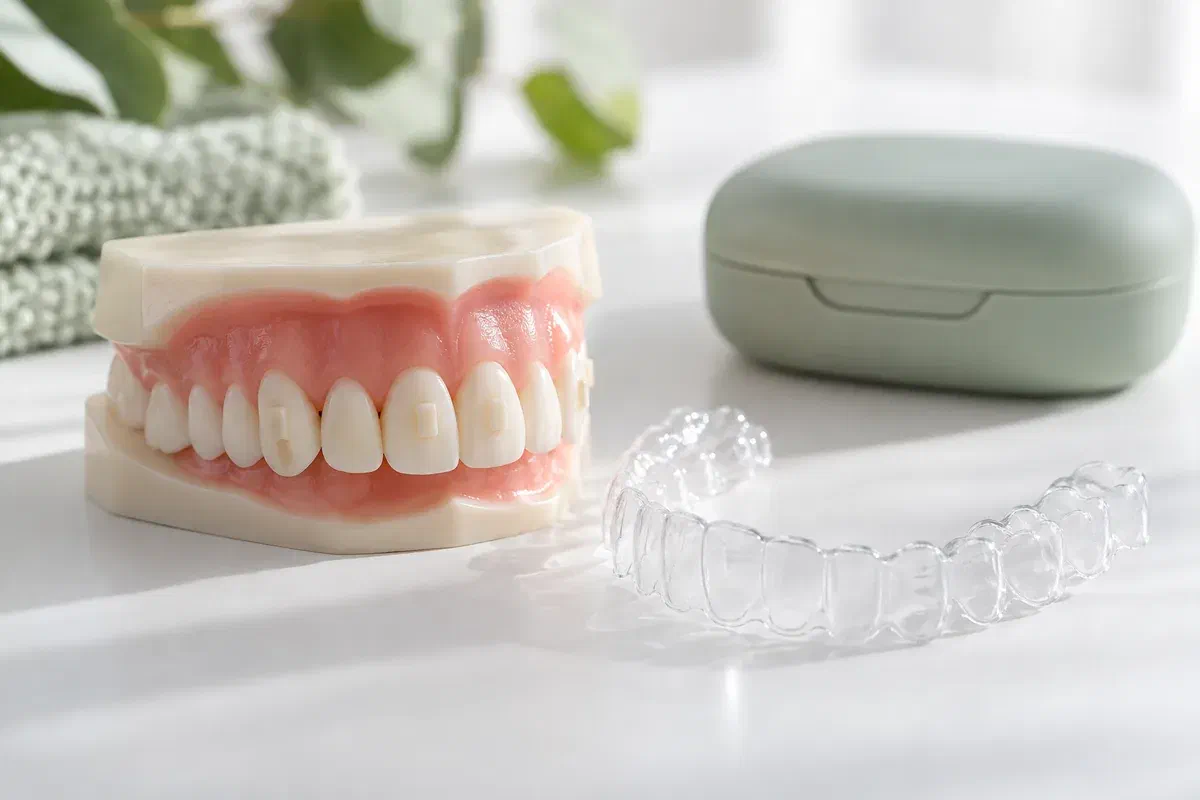
Illustrative tooth model with small tooth-coloured attachments beside an aligner and case
Notes to share with either office

What to have ready before you call

You are not expected to diagnose the cause or decide whether it is urgent. A few clear facts make the conversation with any provider, in Mississauga or here, faster and more useful.

Which attachment is missing

Describe the side and tooth, and when you first noticed the change. Say whether it came off during a meal or while removing the tray. If you are not certain an attachment was on that tooth, the supervising office can confirm it from the plan.

How your current aligner fits

Watch for a gap at the edge of a tooth, a tray that now feels loose, a bent section, or one that is hard to seat. Note the number printed on the tray. Pressing a poorly fitting tray into place or moving early to the next one is not a solution.

Soreness, roughness, or a pattern

Mention any spot that feels sharp or tender and whether this attachment has come off before. Repeats can be useful clues about the tooth surface, tray fit, or removal habits. Frank details help both offices more than worry about blame.

Keep the aligners you are wearing now and bring them to any appointment. Ask the supervising clinician which tray to stay in and whether your change date should move.

Why coordination helps

One plan, followed carefully

Each attachment is a prescribed detail, chosen for a particular movement. A replacement should reproduce that design, ideally using the original template or plan information. Reviewing the fit at the same time lets the clinician confirm the aligner is tracking and spot anything else that needs care.

Early contact avoids guesswork about whether to keep wearing a tray or wait. Your supervising clinician can say if you need to be seen before your next change. No fixed waiting period suits every missing attachment, which is why the plan should guide the timing.

Patient information: Invisalign — the purpose and placement of attachments

Advice rooted in your actual plan

Ask whether the missing attachment is active in the current movement and what its absence changes about this week. The answer belongs to your treatment. Advice that ignores your plan, however confident, cannot replace a review.

Attention to the tray as well

Point out cracks, sharp edges, or fit changes alongside the lost bump. The clinician can tell whether the attachment or the tray is the source of trouble. Sorting out both keeps a repair from leaving the original problem in place.

Instructions both offices understand

Confirm your current tray, the next change date, and when you will be reviewed, and ask that the information be shared with your supervising provider if appropriate. If the instructions differ from your schedule, have them repeated.

If you are seen at our clinic

Records first, composite second

The appointment depends on whether the attachment is gone, chipped, or part of a broader concern. Tell us if the tooth has a filling, crown, or recent dental work.

  1. Gather the plan and your history

    We ask about your current tray, how much you have been wearing it, when the attachment came off, and any symptoms. If another office supervises treatment, we may need the attachment design or template from them before we can proceed.

  2. Examine the tooth and aligner fit

    The clinician looks at any remaining material and tries the tray in where useful. Ask whether the problem is the attachment alone or also involves the tooth or appliance. You will hear the findings before a replacement is discussed.

  3. Rebond the attachment when appropriate

    If replacement is needed, the surface is cleaned and conditioned to accept bonding, then tooth-coloured composite is formed to the planned shape, usually with a template. A curing light hardens it and the excess is removed. This is professional work, never a home fix.

  4. Confirm fit and share the outcome

    The aligner is checked over the new attachment and the next steps are explained. If removal has been tricky, practise it with us. Where another office leads care, the outcome can be passed on so your plan stays consistent.

Carrying on afterwards

Follow the supervising clinician’s schedule

Wear time and tray changes come from the clinician overseeing your treatment. A new attachment does not mean you should repeat a tray, jump ahead, or add days unless they tell you to.

Remove trays the way you were taught

If the aligner snags on the attachment, ask for another demonstration. Take trays out only when needed and avoid twisting the plastic to clear a bump. A fit concern should be reported, not solved by trimming.

Clean carefully around the composite

Brush around the edges of every attachment and continue the interdental cleaning you were given. Ask about any spot that is hard to reach. An attachment should never mean neglecting a tooth, and ongoing irritation is worth raising.

Notice changes without testing them

Leave attachments alone and avoid using your teeth as tools. If one chips or disappears again, note the date and contact your supervising office. Repeated loss needs reassessment, not more force or home adhesive.

Ways this can be handled

Replace, assess, or coordinate

The plan, the tray’s fit, and the condition of the tooth decide the next step. Ask whoever sees you to explain the recommendation and what to wear until then.

When the design information is available

Rebuild the attachment to plan

With the plan in hand, the clinician can restore the attachment to its intended form and check tray engagement. Ask whether this changes your next switch. The repair should fit the aligner sequence, not be treated like a routine filling.

When another issue may be involved

Assess the tray or tooth first

A cracked aligner, a change on the tooth surface, or unexpected discomfort may need attention too. Mention everything you have noticed. The clinician may recommend a different step or a revised plan before you carry on.

When another office supervises care

Coordinate with your treating provider

Your original provider may prefer to handle the repair or give specific timing instructions. Ask them how local help should be arranged. Without the necessary treatment details, no clinic can be confident of recreating the attachment correctly.

Mississauga questions about shared care

Working between two offices

Whoever you call, share the tooth, your tray number, and any change in fit or comfort. Clear details help both teams give consistent advice.

(905) 876-4488
Can your clinic repair an attachment if another dentist started my Invisalign?
Possibly, once the supervising office has been consulted. We may need the attachment design or template from them. Call your provider first, then let us know how they would like a local repair handled.
What information should I request from my original provider?
Ask whether they can share the attachment details or template for the affected tooth and confirm your current stage. They may have specific instructions. We can talk to them directly if you give permission.
Who decides when I move to the next tray?
The clinician supervising your treatment. Even if a repair happens at another office, the tray schedule should come from the person managing your plan. Ask them before changing anything.
Is it a problem if my Mississauga provider and your team both see me?
Not if care is coordinated. Let each office know about the other, and keep both informed about repairs or fit concerns. That way your plan stays consistent and nobody works from incomplete information.
Can I wait until my next appointment with my own provider?
Ask them. Whether a missing attachment can wait depends on what it is doing at your stage. The supervising clinician can tell you if you should be seen sooner or adjust your instructions.
Does one missing attachment mean my treatment is off track?
Not necessarily. It is a problem to report, not a verdict on your progress. The clinician reviews your fit and stage and explains what, if anything, changes.
Attachment help from Milton

Let us know who leads your treatment

If an attachment chips or comes off during aligner treatment with us, contact our Bronte Street practice with your tray number, the affected tooth, and any discomfort. If another office leads your care, tell us so we can coordinate.

Contact your supervising provider first if your aligners are managed elsewhere. Please phone about urgent symptoms rather than using an online request.

Visit Milton Dental Clinic
Unit 1, 342 Bronte St. S, Milton, ON L9T 5B7
Get directions Clinic hours
Monday–Thursday
11am–7pm
Friday–Sunday
By appointment only

Areas we serve

  • Milton
  • Oakville
  • Mississauga
  • Georgetown
  • Halton Hills
  • Acton
  • Campbellville
  • Brampton
  • Burlington
  • Puslinch
  • Rockwood
  • Erin
  • Caledon
  • Etobicoke
  • Old Milton
  • Bronte Meadows
  • Timberlea
  • Dorset Park
  • Dempsey
  • Clarke
  • Beaty
  • Coates
  • Harrison
  • Scott
  • Willmott
  • Ford
  • Bowes
  • Cobden
  • Walker
  • Mountain View
  • Milton Heights
  • Hawthorne Village
  • Valley View
  • Fallingbrook
  • Nassagaweya
  • Trafalgar
  • Esquesing
  • Nelson
  • Brookville
  • Moffat
  • Glen Williams
  • Norval
  • Limehouse
  • Stewarttown
  • Ashgrove
  • Hornby
  • Silver Creek
  • Speyside
  • Scotch Block
  • North Oakville
  • River Oaks
  • Glen Abbey
  • West Oak Trails
  • Palermo
  • Bronte Creek
  • College Park
  • Joshua Creek
  • Uptown Core
  • Preserve
  • Iroquois Ridge
  • Lisgar
  • Meadowvale
  • Meadowvale Village
  • Churchill Meadows
  • Erin Mills
  • Central Erin Mills
  • Streetsville
  • East Credit
  • Creditview
  • Heartland
  • Sheridan
  • Mount Pleasant
  • Credit Valley
  • Huttonville
  • Churchville
  • Springbrook
  • Northwest Brampton
  • Bram West
  • Fletcher's Meadow
  • Fletcher's Creek South
  • Alton Village
  • Orchard
  • Millcroft
  • Headon Forest
  • Tansley
  • Brant Hills
  • Tyandaga
  • Kilbride
  • Lowville
  • Aberfoyle
  • Morriston
  • Arkell
  • Hillsburgh
  • Freelton
  • Carlisle
  • Waterdown
  • Flamborough
  • Mountsberg

How can we help?

Milton Dental Clinic

Have a question about your smile? Choose the option that works best for you.

For urgent dental concerns, please call.
Messages are reviewed during clinic hours.