Where the bump used to be
Name the tooth or side and when you noticed. Say whether it broke off while eating or as you removed the tray. If you cannot remember an attachment being there at all, ask us to check the treatment plan before you worry.


Tray change due tomorrow and an attachment just came off? Before you switch, check in. Coming from Oakville, you can have the tooth and aligner fit reviewed and get a clear answer on what to wear next.
Timing is rarely kind. The next aligner is sitting on the counter, ready for the morning, and you realise one of the small composite bumps on a tooth has vanished. It is tempting to carry on as scheduled and hope the new tray takes care of it.
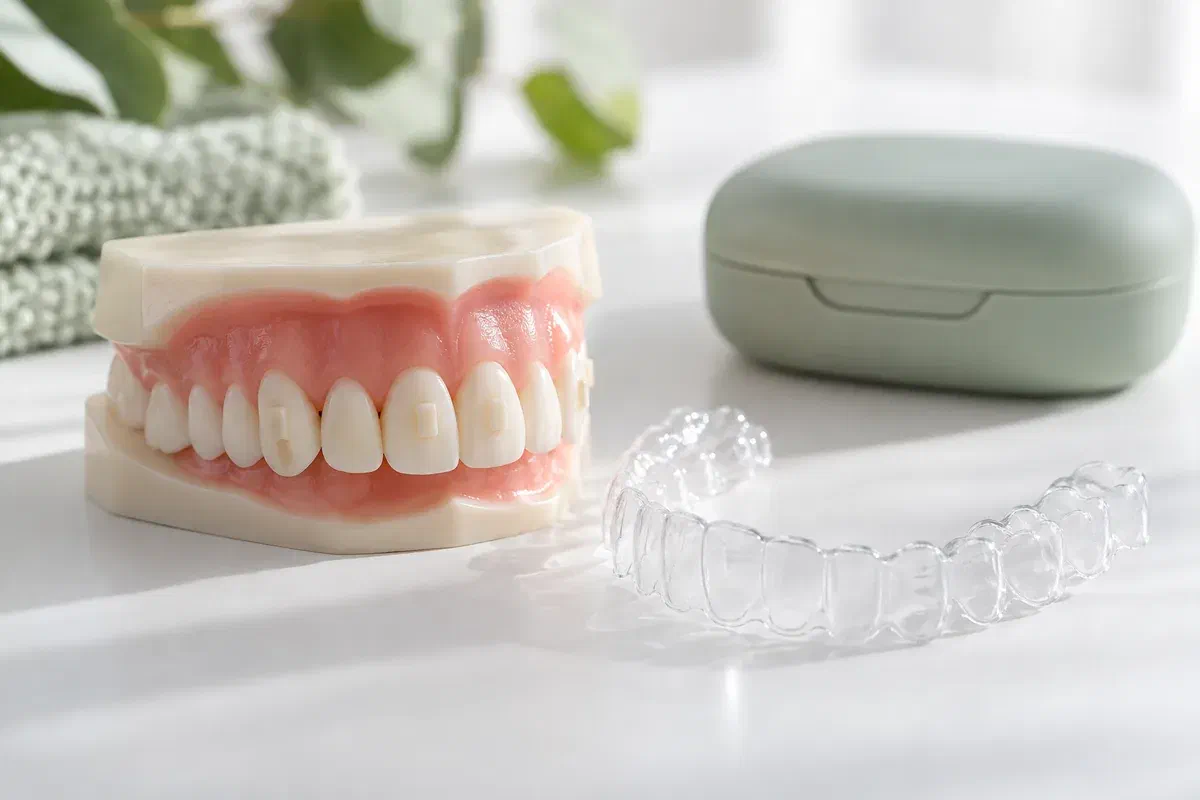
That bump, called an attachment, was placed where your plan needed extra grip for a specific movement. Whether the next tray can do its job without it depends on the tooth, the stage you have reached, and how well things fit right now. Only the clinician overseeing your plan can weigh those together.
So hold off on switching until you have spoken with whoever supervises your aligners. If that is our team, give us a call with the details. If treatment is handled by another office, contact them so advice from anywhere else stays coordinated. Either way, skip any home fix.
You do not need to know why it happened or whether it is serious. A clear description is enough for the clinician to decide on next steps.
Name the tooth or side and when you noticed. Say whether it broke off while eating or as you removed the tray. If you cannot remember an attachment being there at all, ask us to check the treatment plan before you worry.
Look for space between the tray and a tooth, a looser feel, a bent edge, or new difficulty seating it. Read off the tray number. Please do not jam an ill-fitting tray into place or count on tomorrow’s tray to put things right.
A sore spot, a scratchy edge, or a bump that has gone missing before are all worth sharing. Repeats can point toward the surface, the fit, or how the tray is handled. Clear answers help far more than worry about being judged.
Keep the aligners you are wearing now, and bring them in. Ask which tray to stay with and whether tomorrow’s planned change should be held.
Attachments are part of the prescription. They are not there for looks. When one is replaced, it should go back in the shape and position your plan calls for. The visit is also a chance to see whether the aligner is tracking as expected or whether a separate problem has crept in.
A quick call keeps you from guessing how long to stay in a tray. The clinician will tell you whether to come in before switching and what to do in the meantime. Missing attachments vary too much for one waiting period or schedule tweak to fit them all.
Patient information: Invisalign — the purpose and placement of attachments
Ask whether that attachment matters for what is moving now and what its loss changes about your instructions. Your answer should be about your case. A friend’s experience or a timeline online cannot stand in for a proper check.
Flag any crack, sharp spot, or shift in fit, not only the missing bump. The clinician can work out whether it is the attachment or the tray causing trouble. Looking at both keeps a new attachment from masking an unsolved problem.
Confirm which tray you are in, your next change date, and your next review before leaving. If anything has moved from the original schedule, have it repeated. You should not be left inferring the plan from the fact that a bump was replaced.
No two repair visits are identical; a missing bump, a cracked one, and one lost alongside a tray problem each need something slightly different. Mention any filling, crown, or recent dental work on that tooth.
We review your current tray, how much you have worn it, when the loss happened, and any symptoms. The clinician checks what the plan expects of that tooth. If another office supervises treatment, their information may be needed before going further.
Leftover material is examined and the tray is tried in as needed. Ask whether the problem is limited to the attachment or also involves the tooth or appliance. Findings should be explained to you before any replacement.
If needed, the surface is prepared for bonding and composite is pressed into the planned shape, commonly using a template. A curing light hardens it, and the extra is removed. This is done in the clinic, not at home.
The clinician checks how the tray sits over the result and explains how to carry on. Practise taking it out if that has been tricky. Leave sure of your stage, your next switch, and what to do if the attachment lifts off again.
Follow the wear and switching advice from your treating clinician. A rebuilt attachment does not on its own mean you should repeat a tray, leap ahead, or add days.
Ask to be shown again if the tray catches or resists coming out. Take it out only when you need to, and never twist the plastic to get past a ridge. If fit seems wrong, call us rather than adjusting the tray.
Brush gently around the composite and continue the flossing or interdental routine you were shown. Ask for help with a hard-to-reach spot. Never let an attachment become a reason to skip a tooth, and report any irritation that hangs on.
Do not pick at attachments or use your teeth to open things. If one looks chipped or missing again, note the date and call. Recurring loss needs reassessment, not more force on the tray or a dab of glue.
Share the tooth, tray number, and any changes in fit or comfort when you reach out. It helps us give you a useful answer quickly.
If an attachment chips or comes away during aligner treatment with our team, contact our Bronte Street practice. Have your tray number, the affected tooth, and any discomfort or fit change ready so we can advise you for your stage.
If another practice supervises your aligners, call them for guidance first. Urgent symptoms need a phone call, not an online request.
