Where the attachment was
Tell us the tooth and side and when you noticed it gone. Was it during a meal, when removing the tray, or out of nowhere? If you doubt an attachment was ever there, we can look at the plan.


It is tempting to reach for glue or a home kit when a tiny bump falls off a tooth. If you are coming from Rockwood, here is why a proper rebond matters, what the clinician actually does, and how to manage until your visit.
The piece is sitting in your palm, the drawer has a tube of superglue, and the internet has opinions. It feels like a five-minute job. In reality, an attachment is a precise shape bonded in a precise spot, and glue cannot recreate either.
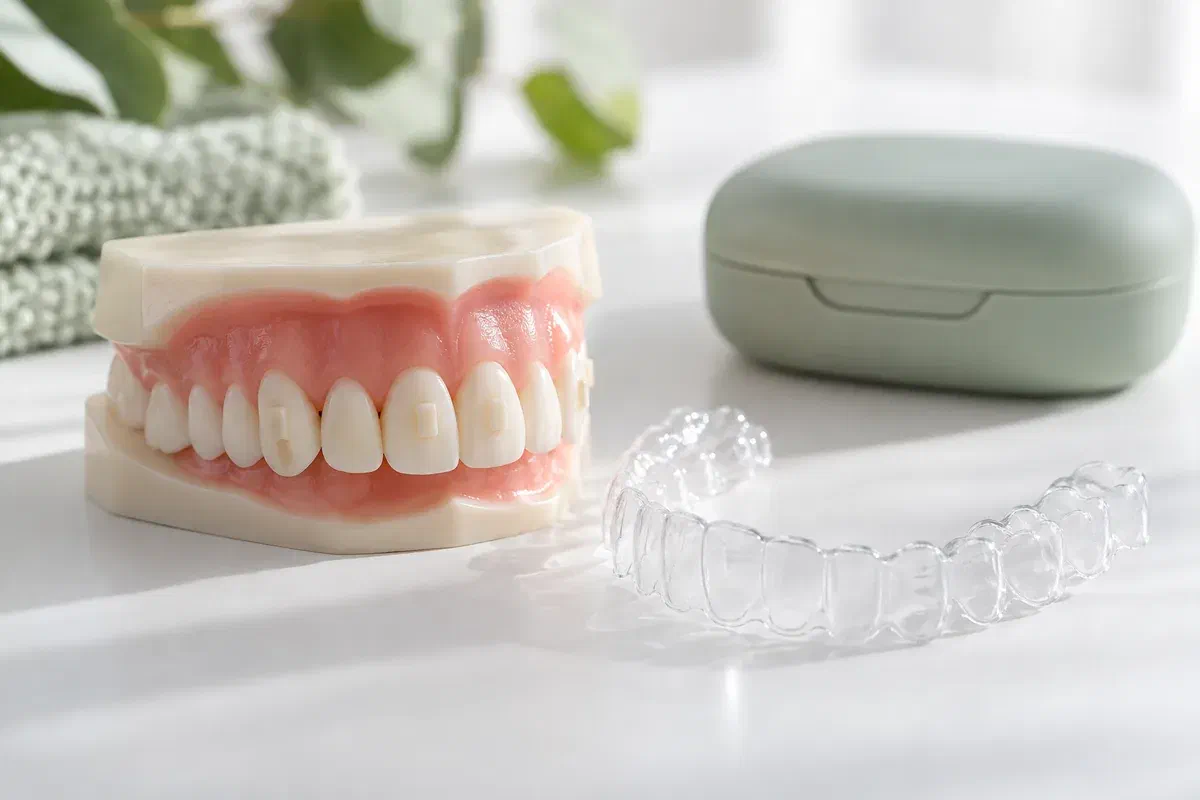
Attachments are made from tooth-coloured composite and placed with a template so the aligner meets them at exactly the right angle. That grip is what moves or holds the tooth. A lump in the wrong place, or adhesive on the enamel, can stop the tray seating and make proper rebonding harder.
If we supervise your aligners, call us with the tooth, the tray number, and how it fits; we can tell you what to do in the meantime. If another office leads your treatment, contact them first so any repair is coordinated. Keep the piece if you like, but leave it off.
There is no need to diagnose the cause or rate the urgency. A simple account gives the clinician what they need to plan the repair properly.
Tell us the tooth and side and when you noticed it gone. Was it during a meal, when removing the tray, or out of nowhere? If you doubt an attachment was ever there, we can look at the plan.
Note any gap above a tooth, looseness, a warped section, or effort needed to seat it. Give us the tray number. Do not force a tray into place, and do not try a later one to see if it fits better.
Mention a rough or sharp spot and whether the same attachment has come off before. If you have already tried a home fix, say so; it helps the clinician plan, and no one will lecture you.
Bring your current aligners. If any adhesive or material has been applied to the tooth or tray, mention it. Ask which tray to wear until your visit and whether to delay your next change.
An attachment works because of its exact shape and placement, both of which come from your treatment plan. A clinical replacement uses those specifications. The visit also lets the clinician confirm your aligner is tracking well and that nothing else, such as a cracked tray, needs attention.
Asking promptly takes away the temptation to improvise. You will hear whether to come in before your next switch and how to wear your tray until then. No single waiting period fits every lost attachment, so the advice should come from your plan.
Patient information: Invisalign — the purpose and placement of attachments
Ask how the attachment will be recreated and whether it is needed for the current movement. The clinician can explain the template and why it matters. A home repair has no way of matching the design.
Point out any crack, sharp edge, or fit change, including anything that started after a home repair attempt. The clinician will check that the aligner engages the new attachment correctly. If something was applied at home, they can clean it away first.
Confirm your current tray, next change date, and next review before you leave. If the plan has changed, ask for it to be repeated. You should leave knowing exactly how to carry on.
The details vary depending on whether the attachment is fully missing, chipped, or complicated by something else. Tell us about fillings, crowns, recent dental work, or anything applied at home.
We start with your current tray, wear time, the date of the loss, and any discomfort. The clinician checks the treatment design for that tooth. If another office supervises, their template or records may be needed.
Old composite or any home adhesive is examined and, if needed, removed. The aligner is tried in to check fit. You should hear what was found before anything new is placed.
The tooth is etched or conditioned and a bonding agent applied, then the template is filled with composite and seated over the teeth. A curing light hardens the material and the template is lifted away, leaving the attachment in its planned spot. Excess is then cleaned off.
The aligner is checked over the new attachment and the clinician tells you how to continue. If removal has been difficult, practise it. Confirm your stage, your next switch, and who to call if it happens again.
Keep following the wear and change advice from your treating clinician. A rebond is not a reason to go back a tray, move ahead, or add days unless you are told.
If the aligner snags on the new attachment, ask for another demonstration. Take trays out only when needed, and never bend them to get past a ridge. Report fit concerns instead of trimming.
Brush carefully at the edges of the composite and keep up flossing or interdental cleaning, because plaque tends to collect where the bump meets the enamel. Ask how to reach a difficult spot. Mention any gum irritation that does not settle within a few days.
Leave attachments alone with fingers and tongue, and avoid chewing hard objects. If one chips or falls off again, note the date and call. Repeated loss deserves a review, never a tube of glue.
Call with the tooth, the tray number, and anything already tried at home. We will advise on the safest way forward.
If our practice oversees your aligners and an attachment chips or comes off, call our Bronte Street office. Tell us which tooth, your tray, and anything tried at home, so the clinician can plan a clean, accurate rebond.
If another clinic supervises your aligners, contact them first for direction. Please phone about urgent symptoms rather than using an online request.
