

Illustrative adult patient discussing aligner treatment with a dental clinician
Cosmetic Dentistry

Invisalign Consultations in Acton

Sometimes the smile looks fine but the teeth meet awkwardly, edges are wearing down, or one spot always catches food. For adults from Acton, an Invisalign consultation examines how your bite works, not only how it looks, and explains whether aligners or another approach would make sense.

Bite-focused consultations for Acton

Close your teeth together. What do you feel?

Most aligner conversations begin with appearance, yet some of the most useful ones begin with function. Front teeth that have chipped or flattened, a tooth that takes every hard bite, or a spot where floss shreds can all hint that tooth positions are working against you.

Invisalign uses removable clear trays, made to a prescription and worn in order, to reposition teeth gradually. For some bite patterns that can help. For others, a different appliance, restorative care or a specialist opinion is more appropriate. Telling those apart is the real work of the consultation.

Bring any symptoms you have noticed, such as jaw tiredness or sensitivity, as well as cosmetic goals. Ask what records would be needed, who would supervise treatment and what daily wear involves. Coming in creates no obligation, and understanding your bite is useful whatever you decide.

Have your bite assessed
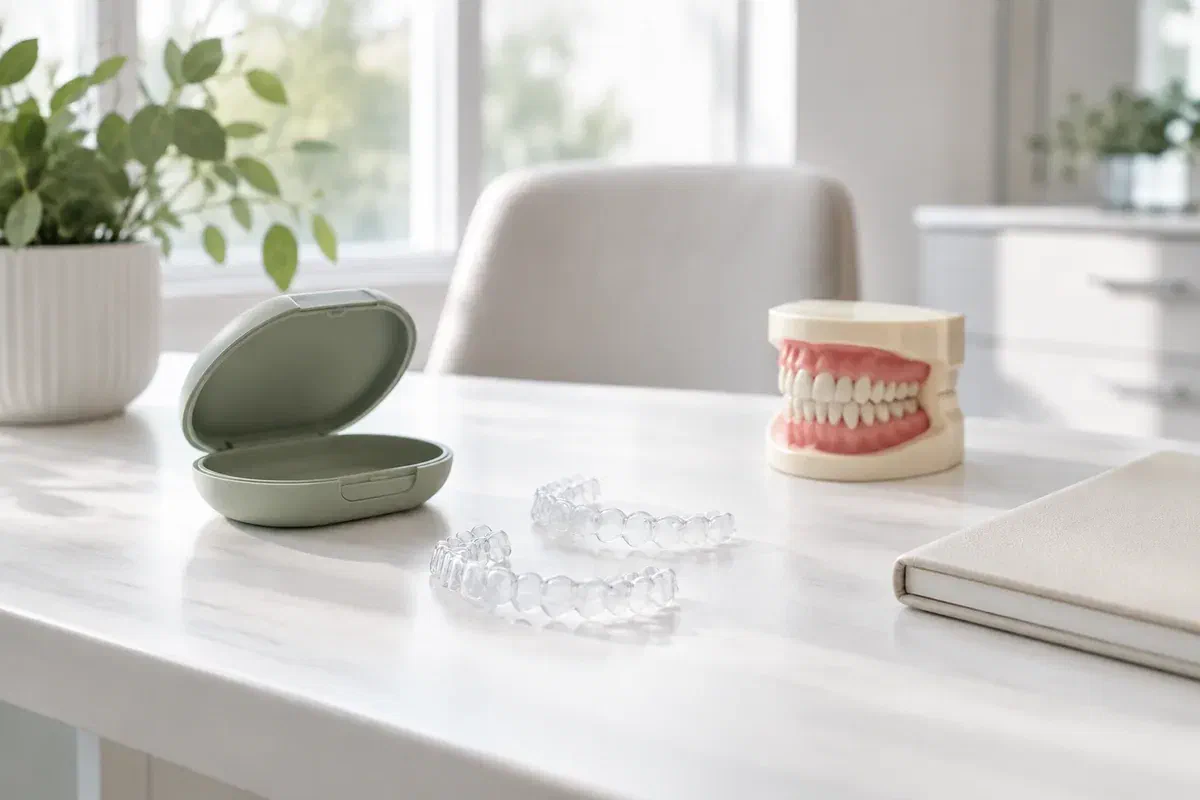
Illustrative aligners, protective case, tooth model, and notebook on a consultation desk
Tell us what you notice

Signs worth mentioning, even if they seem minor

Functional clues and cosmetic wishes both shape the advice you receive. Raise questions about comfort, time, fees and long-term care openly as well.

Where teeth meet, wear or crowd

Point out chipped or flattened edges, food traps, overlaps or gaps. Ask how these relate to your bite. An honest plan explains what moving teeth could improve and what it may not, instead of promising a perfect result.

Dental work and earlier orthodontics

Mention crowns, bridges, implants, bonding, injuries, gum treatment, braces and retainers. A night guard is worth bringing too. All of this can affect sequencing and should be reviewed before any scans are sent off for trays.

Habits that affect wear

Clenching, grinding, snacking and long workdays all matter. Aligners need steady wear and good cleaning. Ask how treatment would interact with your habits and any existing guard, rather than choosing trays because they are hard to see.

A first visit may indicate that a thorough exam, records, restorative care or a referral should come before a recommendation. Ask what this appointment covers and what would be separate.

What you should understand afterwards

How your bite works now, and what moving teeth could change

The consultation should explain whether removable aligners can achieve the movements your bite needs and who would plan and monitor that work. Knowing a brand name tells you nothing about whether it suits a functional problem in your mouth.

Holding the result matters as much as achieving it. Retainers and periodic checks keep teeth stable, especially if you clench or grind. Ask how retention would work with a night guard, what it costs, and how added trays or a revised plan would be managed if needed.

Patient information: Invisalign Canada — treatment stages and retention · British Orthodontic Society — questions before orthodontic treatment

A goal described in terms of function and look

Ask which teeth would move, how contact between upper and lower teeth would change and what would remain. A plainly stated aim helps you compare a limited plan with a fuller one.

Daily life with trays and a guard

Find out how mealtimes, brushing, tray storage and review visits would work week to week. Ask whether attachments are planned and how a night guard fits into the routine during treatment. Expect some tightness with each new tray.

Fees with clearly stated edges

Ask what is included and what may be extra, such as records, replacement trays, retainers, guards or added stages. Confirm the assumptions behind the estimate. Clear boundaries make honest comparison possible.

During the consultation

Symptoms, examination, choices

Scope depends on the appointment booked and the records available. Ask whether this is a first discussion or a visit that gathers the records needed for a full proposal.

  1. Describe what you feel and what you want

    Explain any wear, discomfort or food traps, as well as cosmetic hopes. The clinician reviews your health, medications, dental work and past orthodontics. Mention a planned move or long absence so continuity can be considered.

  2. Examine how the teeth come together

    Teeth, gums and bite are assessed, including how they meet in different jaw positions. Photos, X-rays or a scan may be recommended for a stated reason. Ask whether any wear or decay should be addressed first.

  3. Compare aligners with other approaches

    Suitability, likely stages, risks and your part in wear and reviews are discussed. Ask about attachments or space creation. A simulation is a planning tool, not a guarantee of how your bite will feel or look at the end.

  4. Know what happens before ordering

    More records, restorative care, a specialist opinion or time to think may come next. Confirm what was agreed, any fee for the next stage and how to ask follow-up questions.

Thinking it through

Consider the bite you would be living with for years.

Nothing has to happen right away. Most people use the following weeks to read the proposal, book any repair or cleaning that was advised and keep their usual home care and checkups going while they make up their minds.

Picture full-time wear

Invisalign guidance commonly describes 20 to 22 hours of daily wear, with your clinician providing your own instructions. Think about meals, cleaning and nights if you wear a guard. Ask about obstacles before starting, since lighter wear may not achieve the same movement.

Settle who monitors progress

Ask who checks your treatment, how often, and whom to call if a tray cracks, fits poorly or is lost. Ask what happens if teeth do not track. Clear responsibility matters throughout.

Plan restorative work in order

Tell the team about bonding, fillings or crowns planned elsewhere. Rebuilding worn edges before or after movement changes tray fit, so the order matters. Follow the agreed sequence and ask whether more assessment is needed.

Patient information: Invisalign Canada — patient questions and wear guidance

Where an assessment can lead

Move teeth, protect them, or both

Ask why a step suits your bite. Interest in Invisalign does not commit you to it, and another approach is not second best.

When the bite and your routine suit trays

Plan aligner treatment

When trays can deliver the bite changes you need, the usual next stage is a records appointment followed by a written proposal. Read what it will change, where it stops and who is accountable for each step. Look for review visits and retainers in the plan, since the work does not end with the final tray.

When bite changes need a different method

Another appliance or an orthodontist’s view

Some bite problems are better treated with another appliance or with specialist input. Ask what makes that suitable and what a referral would answer. A preference for removable trays can still be weighed.

When wear, decay or timing come first

Protect, restore or monitor first

A night guard, repair of worn edges or treatment of decay may take priority. You may also decide not to pursue elective movement. Ask which findings need care now and how they would be followed.

Acton bite questions

When the problem is how teeth meet

Ask about your own bite, the proposed scope and day-to-day treatment. General advertising cannot assess function in an individual mouth.

(905) 876-4488
Can aligners help with teeth that are wearing down?
Sometimes tooth position contributes to wear, and moving teeth may be part of a plan. Other causes, such as grinding or acidic food and drink, need their own attention. The assessment can explain which factors apply to you and whether protecting the teeth should come before any movement.
I grind my teeth at night. Can I still have Invisalign?
Mention it at the consultation. Grinding affects trays and retention, and the clinician can advise how a night guard and aligners would work together during and after treatment.
Should I mention jaw discomfort during the consultation?
Yes. Jaw aches, clicking or tiredness are worth describing. The clinician may assess them separately or suggest other care, since aligners are not a treatment for every jaw symptom.
Do I need to commit to treatment at the first visit?
No. The visit explains findings and options. Ask what records or decisions come next and whether they have fees. Take your time with any elective proposal.
Can worn front teeth be rebuilt after aligners?
Bonding or other restorations are sometimes planned after movement so they suit the new positions and the new way teeth meet. Ask the clinician about the order that makes most sense for your teeth, and whether any rebuilding would be part of the same estimate or a separate one.
Does a previous course of braces mean aligners will be simple now?
Not necessarily. Current positions, gum health and bite all need fresh assessment. Bring details of earlier treatment and any retainer so the clinician can advise.

Patient information: Align Technology — patient instructions and treatment considerations

Arranging a visit from Acton

Let’s start with how your teeth meet.

Arrange an appointment at our Bronte Street practice to discuss whether Invisalign or another orthodontic or restorative approach fits your bite. We will explain the assessment, the commitment and your options before you choose.

Suitability, the scope of care and any referral are confirmed after assessment. Ask about consultation fees and included records when you call.

Visit Milton Dental Clinic
Unit 1, 342 Bronte St. S, Milton, ON L9T 5B7
Get directions Clinic hours
Monday–Thursday
11am–7pm
Friday–Sunday
By appointment only

Areas we serve

  • Milton
  • Oakville
  • Mississauga
  • Georgetown
  • Halton Hills
  • Acton
  • Campbellville
  • Brampton
  • Burlington
  • Puslinch
  • Rockwood
  • Erin
  • Caledon
  • Etobicoke
  • Old Milton
  • Bronte Meadows
  • Timberlea
  • Dorset Park
  • Dempsey
  • Clarke
  • Beaty
  • Coates
  • Harrison
  • Scott
  • Willmott
  • Ford
  • Bowes
  • Cobden
  • Walker
  • Mountain View
  • Milton Heights
  • Hawthorne Village
  • Valley View
  • Fallingbrook
  • Nassagaweya
  • Trafalgar
  • Esquesing
  • Nelson
  • Brookville
  • Moffat
  • Glen Williams
  • Norval
  • Limehouse
  • Stewarttown
  • Ashgrove
  • Hornby
  • Silver Creek
  • Speyside
  • Scotch Block
  • North Oakville
  • River Oaks
  • Glen Abbey
  • West Oak Trails
  • Palermo
  • Bronte Creek
  • College Park
  • Joshua Creek
  • Uptown Core
  • Preserve
  • Iroquois Ridge
  • Lisgar
  • Meadowvale
  • Meadowvale Village
  • Churchill Meadows
  • Erin Mills
  • Central Erin Mills
  • Streetsville
  • East Credit
  • Creditview
  • Heartland
  • Sheridan
  • Mount Pleasant
  • Credit Valley
  • Huttonville
  • Churchville
  • Springbrook
  • Northwest Brampton
  • Bram West
  • Fletcher's Meadow
  • Fletcher's Creek South
  • Alton Village
  • Orchard
  • Millcroft
  • Headon Forest
  • Tansley
  • Brant Hills
  • Tyandaga
  • Kilbride
  • Lowville
  • Aberfoyle
  • Morriston
  • Arkell
  • Hillsburgh
  • Freelton
  • Carlisle
  • Waterdown
  • Flamborough
  • Mountsberg

How can we help?

Milton Dental Clinic

Have a question about your smile? Choose the option that works best for you.

For urgent dental concerns, please call.
Messages are reviewed during clinic hours.