

Illustrative adult patient discussing aligner treatment with a dental clinician
Cosmetic Dentistry

Invisalign Consultations in Caledon

The last aligner is not the finish line. For adults in Bolton and the other Caledon villages, an Invisalign consultation looks ahead to the years after treatment, from retainer wear to periodic checks, as well as whether trays suit your teeth and bite in the first place.

Long-view aligner consultations for Caledon

Think five years past the final tray.

Most conversations about clear aligners focus on the months of active movement. The longer chapter comes afterwards. Teeth tend to drift once orthodontic forces stop, so a retainer, and the habit of wearing it, becomes part of daily life for years.

Invisalign itself is a prescribed sequence of removable clear trays that reposition teeth step by step. Whether it suits you depends on the movement involved, the way your bite closes and the health of your gums and bone. The clinician considers all three before discussing any plan.

Treat the appointment as a chance to ask about the whole arc: records, supervision, active wear and the retention that follows. Being interested does not oblige you to begin. Knowing what you would be signing up for, over the long term, is the most useful outcome a first visit can give.

Ask about the full course of care
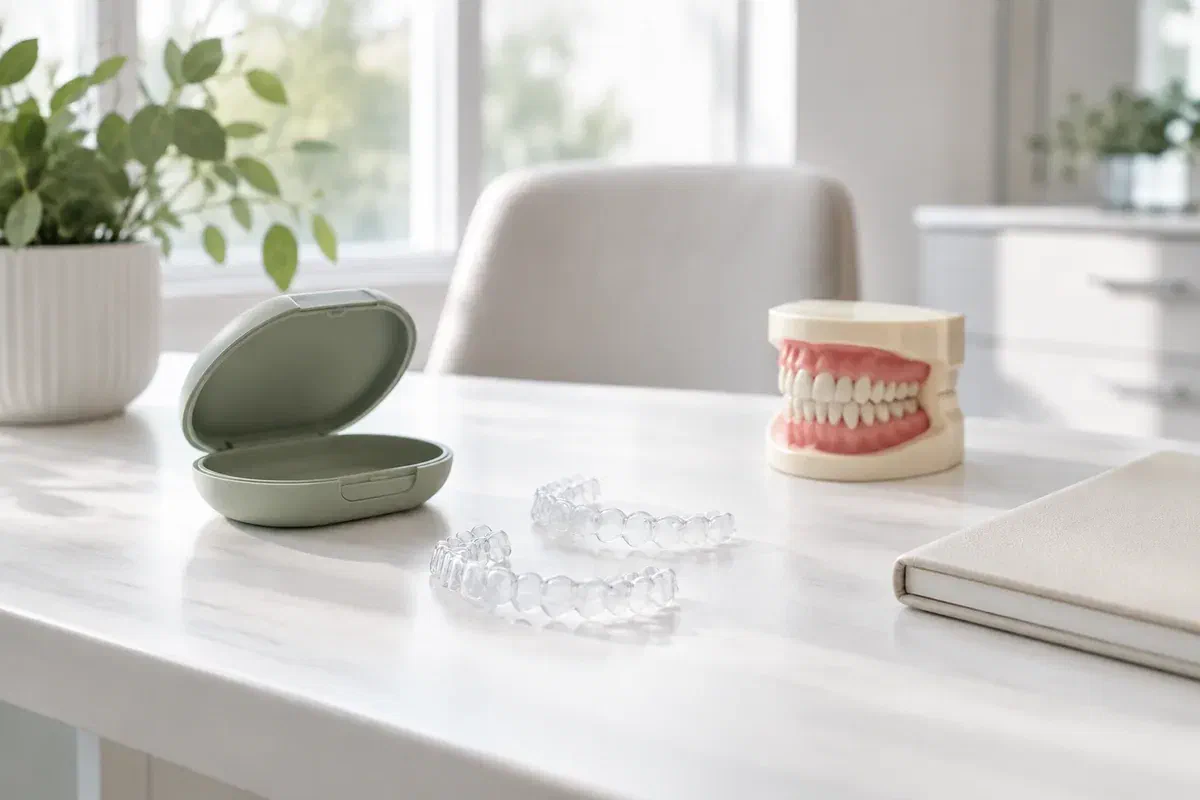
Illustrative aligners, protective case, tooth model, and notebook on a consultation desk
Raise these early

Today’s goal, yesterday’s dental work, tomorrow’s habits

The clinician needs to understand what you hope for, what has already been done and how you would keep things stable. Mention any questions about comfort, fees and ongoing visits.

The change you want to see

Point out the crowding, spacing or rotated tooth that concerns you. Ask whether moving it would alter how your back teeth come together. An honest proposal states its aims and its limits, rather than promising that every detail will be corrected.

Restorations and previous orthodontics

Mention braces, old retainers, crowns, bridges, implants, injuries and gum care. If earlier treatment relapsed, say how long you wore a retainer. That history affects planning and needs review before trays are ordered from scans.

Habits you can keep for years

Aligners need near-constant wear, and retainers need regular wear long after. Think about whether night-time retainer wear and careful cleaning would suit you. Ask about that commitment now, rather than choosing trays purely because they are discreet.

The first conversation may reveal that a full examination, additional records, other treatment or a specialist opinion is needed before advice can be firm. Find out what this appointment includes and what would be booked later.

What a consultation should cover

Suitability now, stability later

You should come away knowing whether removable aligners can achieve the movements involved and which clinician would design and oversee the plan. Familiarity with a product name is no guide to whether it suits your teeth.

Retention deserves its own conversation. Ask what kind of retainer would be used, how many hours it would be worn at first and later, how often it would be checked and what replacements cost. It is also fair to ask what happens if teeth do not follow the original projection and extra aligners become necessary.

Patient information: Invisalign Canada — treatment stages and retention · British Orthodontic Society — questions before orthodontic treatment

A goal you can describe

Ask which teeth would shift, how the bite would change and what would be left alone. A clearly stated aim lets you compare a limited plan with a comprehensive one, and judge how much retention each would need.

Everyday life in trays, then in retainers

Ask about removing trays to eat, cleaning, storage and how often reviews would be. Ask whether attachments are planned. Then ask what changes once retention begins, and how a retainer is cleaned and stored.

An estimate that reaches past the last tray

Ask what the fee covers and what may be added, such as records, replacement aligners, the first retainer, later replacement retainers or added stages. Confirm what it assumes, so long-term costs are part of the comparison.

During your appointment

Where you are, where you could be, how you would stay there

The scope depends on the visit you book and any records you bring. Ask whether this appointment is a first conversation or includes the records a written proposal would need.

  1. Outline your goals and past treatment

    Describe the change you want and any previous orthodontics, including how retention went. The clinician reviews health details, medications, symptoms and dental work. Mention a planned move or long absence so follow-up and retention can be considered.

  2. Examination of teeth, gums and bite

    The clinician checks how the teeth relate and the condition of their support. Photographs, radiographs or a scan may be advised, each for an explained reason. Ask whether gum care or a filling should come first.

  3. Options compared, including retention

    Suitability, likely stages, risks and your role in wear and reviews are discussed, along with how results would be held afterwards. Ask about attachments or space creation if raised. A simulation is a planning picture, not a guarantee.

  4. Next steps agreed before anything is ordered

    More records, a specialist opinion or time with the estimate may follow. Before you leave, make sure you know what was decided, whether the following appointment carries a fee and the easiest way to get answers if questions come up at home.

Reflecting on the proposal

Could you keep this up?

People usually spend this stage reading the proposal and arranging any care that was recommended. Keep your normal home care and checkups in place while you think it over.

Test the daily hours

Invisalign guidance commonly describes 20 to 22 hours of tray wear a day, with your own instructions coming from your clinician. Walk through meals, cleaning and trips away. Name any likely obstacle now, since irregular wear may not produce the planned movement.

Clarify who looks after you, during and after

Ask who supervises active treatment, who checks retainers later and how to report a tray or retainer that breaks, fits poorly or goes missing. Ask what happens if teeth fall behind. Clear responsibility matters for years, not months.

Sequence other dental work

Mention any crowns, fillings or other procedures being planned with another office. Reshaping a tooth can affect scans, trays and retainers. Keep to the order you agreed and ask whether another check is needed before starting.

Patient information: Invisalign Canada — patient questions and wear guidance

Possible recommendations

Begin, redirect or hold

Ask why a particular path suits you. Exploring Invisalign does not commit you, and choosing a different approach is just as valid.

When findings and your long-term routine support it

Start Invisalign planning

If aligners fit the clinical goals, records and a written proposal may follow. Before ordering, make sure scope, limits and responsibilities are clear, and that the retention plan is written down as carefully as the active stage.

When the bite or movement calls for something different

Another appliance or an orthodontist’s opinion

Some concerns are better handled with a different appliance or specialist input. Ask why that would suit you, what a referral should answer and how retention would be managed under that approach.

When health findings or timing point to patience

Treat other needs first, wait or monitor

Gum concerns, decay or a busy period may make waiting wiser. Some people decide against an elective change once they understand the long-term commitment. Ask what still needs care and how you would be kept under review.

Caledon questions about the long term

Retainers, checks and the years after

Ask about your teeth, the proposed scope and what the commitment looks like well beyond active treatment. Promotions rarely mention the retention years.

(905) 876-4488
How long will I need to wear a retainer after aligners?
Retention is often recommended long term, because teeth can keep moving throughout life. Many plans start with more frequent wear and later settle into night-time use. Ask how that schedule would change over time and what the clinician advises for your own teeth.
What kinds of retainers are there?
Options include removable retainers and fixed wires bonded behind the front teeth, and some people use both. Each has its own cleaning and maintenance needs, and a fixed wire needs checking for loose spots. Ask which is suggested for you and why.
How often will my retainer need replacing?
Removable retainers can wear, crack or be lost, so replacement is likely at some point. Ask how long they typically last and whether replacements are included in any estimate.
Can my family’s appointments be booked together on one visit?
Ask when you call. For households spread across a large rural town, coordinating several visits can save a trip, depending on availability and what each person needs. Mention who is coming and why so the team can see what fits.
Do I have to commit at my first consultation?
No. The visit explains findings and options. Ask what the next step would be and whether it has a fee, and take the time you need with an elective proposal.
Would an implant affect my aligner plan?
Yes. An implant is set in bone and will not move with trays like a natural tooth. The clinician needs to plan around it and the neighbouring teeth before recommending anything.

Patient information: Align Technology — patient instructions and treatment considerations

Visiting from Caledon

The years after matter as much as the months during.

Arrange a visit to our Bronte Street practice to talk about whether Invisalign or another orthodontic approach suits you, and what keeping the result would involve. We will explain the assessment and the full commitment before you decide.

Suitability, scope and any referral are confirmed only after assessment. The team can explain consultation fees and included records when you call.

Visit Milton Dental Clinic
Unit 1, 342 Bronte St. S, Milton, ON L9T 5B7
Get directions Clinic hours
Monday–Thursday
11am–7pm
Friday–Sunday
By appointment only

Areas we serve

  • Milton
  • Oakville
  • Mississauga
  • Georgetown
  • Halton Hills
  • Acton
  • Campbellville
  • Brampton
  • Burlington
  • Puslinch
  • Rockwood
  • Erin
  • Caledon
  • Etobicoke
  • Old Milton
  • Bronte Meadows
  • Timberlea
  • Dorset Park
  • Dempsey
  • Clarke
  • Beaty
  • Coates
  • Harrison
  • Scott
  • Willmott
  • Ford
  • Bowes
  • Cobden
  • Walker
  • Mountain View
  • Milton Heights
  • Hawthorne Village
  • Valley View
  • Fallingbrook
  • Nassagaweya
  • Trafalgar
  • Esquesing
  • Nelson
  • Brookville
  • Moffat
  • Glen Williams
  • Norval
  • Limehouse
  • Stewarttown
  • Ashgrove
  • Hornby
  • Silver Creek
  • Speyside
  • Scotch Block
  • North Oakville
  • River Oaks
  • Glen Abbey
  • West Oak Trails
  • Palermo
  • Bronte Creek
  • College Park
  • Joshua Creek
  • Uptown Core
  • Preserve
  • Iroquois Ridge
  • Lisgar
  • Meadowvale
  • Meadowvale Village
  • Churchill Meadows
  • Erin Mills
  • Central Erin Mills
  • Streetsville
  • East Credit
  • Creditview
  • Heartland
  • Sheridan
  • Mount Pleasant
  • Credit Valley
  • Huttonville
  • Churchville
  • Springbrook
  • Northwest Brampton
  • Bram West
  • Fletcher's Meadow
  • Fletcher's Creek South
  • Alton Village
  • Orchard
  • Millcroft
  • Headon Forest
  • Tansley
  • Brant Hills
  • Tyandaga
  • Kilbride
  • Lowville
  • Aberfoyle
  • Morriston
  • Arkell
  • Hillsburgh
  • Freelton
  • Carlisle
  • Waterdown
  • Flamborough
  • Mountsberg

How can we help?

Milton Dental Clinic

Have a question about your smile? Choose the option that works best for you.

For urgent dental concerns, please call.
Messages are reviewed during clinic hours.