

Illustrative adult patient discussing aligner treatment with a dental clinician
Cosmetic Dentistry

Invisalign Consultations in Campbellville

Trays get lost on hikes, left at the barn or forgotten after lunch. For Campbellville households, an Invisalign consultation covers suitability and supervision, and also the practical plan for what to do when something goes wrong between visits, so a rural routine and aligners can coexist.

Aligner planning in Campbellville

Plan for the lost tray before it happens.

Life outside the town centre has its own rhythm: chores before work, long days outdoors, errands bundled into a single trip. Removable aligners have to fit that rhythm, and the questions worth asking early are as practical as they are clinical.

Clinically, Invisalign is a prescribed series of clear, removable trays that move teeth in small steps. It suits some concerns and not others. The clinician considers what you want to change, how your bite comes together and whether gums and bone are healthy enough for movement.

Alongside that, you can ask how reviews might be grouped, who would supervise care and what to do if a tray cracks or goes missing on a weekend. Booking a consultation does not commit you to anything. Leaving with a clear view of what treatment would demand is a good outcome in itself.

Arrange a practical aligner talk
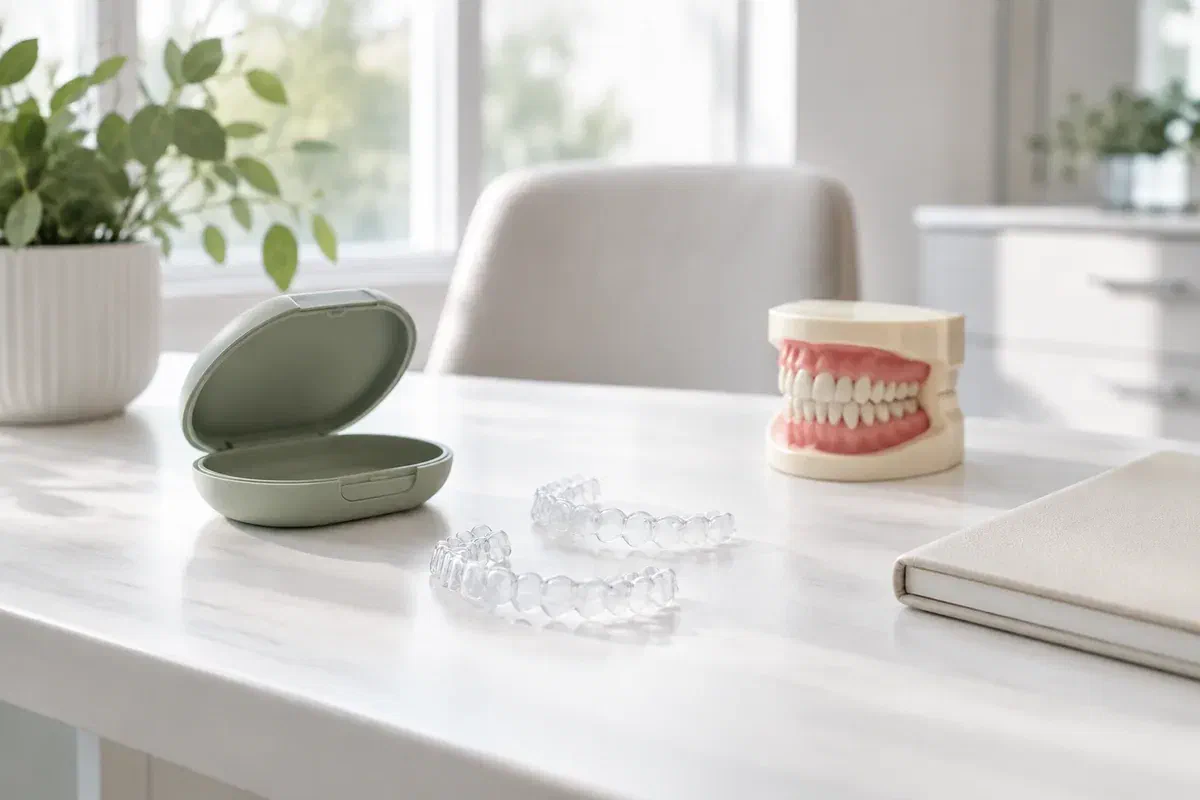
Illustrative aligners, protective case, tooth model, and notebook on a consultation desk
What to bring up

Goals, past dental care and the shape of your days

The clinician can give better advice when they understand your concerns, your history and how you live. Mention any doubts about comfort, travel, fees or upkeep.

The tooth or space you would change

Show what bothers you, whether it is crowding, a gap or a turned tooth. Ask if changing it would affect how your teeth close. A good plan sets out its aim and limits honestly instead of suggesting every detail will be perfected.

Dental history and existing work

Share past braces, retainers, crowns, bridges, implants, injuries and gum care. If you have records from another office, bringing them can save a later trip. This history can change the order of treatment and must be considered before trays are ordered.

Outdoor work, early starts and irregular meals

Aligners come out to eat and drink anything but water, then go back after cleaning. Think about how that fits long days outside or meals on the move. Ask how others manage it rather than deciding only on how discreet trays look.

A first conversation may show that an exam, records, other care or a referral should come before a recommendation. Ask which steps can be combined to reduce trips and which need separate appointments.

By the end of the visit

You should know how treatment would run, week by week.

The consultation should make clear whether removable aligners suit the movements involved and who would plan and oversee them. A widely advertised name does not establish that it is the right approach for your teeth or your routine.

Ask about the stage after the final tray. Retainers keep teeth in place and periodic checks confirm they still fit, so their cost and schedule belong in the decision. If teeth fall behind and extra trays are needed, find out whether that would mean more trips in.

Patient information: Invisalign Canada — treatment stages and retention · British Orthodontic Society — questions before orthodontic treatment

A goal you can say in a sentence

Ask which teeth would move, how the bite would change and what would be left alone. With a clear aim, comparing a limited plan to a fuller one becomes much simpler, and you can judge whether the extra visits would be worthwhile.

A routine that survives real life

Ask how to remove and store trays during meals, how to clean on the go, how often reviews would be and whether attachments are planned. Keep a spare case in the truck or bag, and ask what to do if a tray is left behind.

An estimate that names its limits

Ask what the fee covers and what may be billed separately, such as further records, lost-tray replacements, retainers or added stages. Confirm what it assumes. That clarity helps you plan without relying on a promotional price.

How we spend the appointment

Hear, look, compare and plan the next trip

What is covered depends on the visit booked and any records you bring. Ask whether planning records can be taken at the same appointment if aligners look suitable.

  1. Hear what you want and what came before

    Describe your goals and any orthodontic history. The clinician reviews health details, medications, symptoms and dental work. If you expect to travel for long stretches or move, mention it so follow-up can be arranged.

  2. Look at teeth, gums and bite

    The clinician examines how the teeth relate and whether more records would help. Photographs, radiographs or scans may be advised for a clear reason. Ask whether a cavity or gum problem should be treated first, and whether it can be done on the same day.

  3. Compare aligners with other approaches

    Suitability, expected stages, risks and the wear and review demands are discussed openly. Ask about attachments and space creation if relevant. A digital simulation illustrates intent and should not be treated as a guaranteed outcome.

  4. Plan what happens next

    More records, a specialist view or time to consider the estimate may follow. Confirm what was agreed, whether fees apply to the next stage and how to reach the team by phone with questions, to avoid unnecessary trips.

Back home, thinking it over

Will it work at the kitchen table, in the car and outdoors?

Most people use this time to look over the proposal and arrange any dental care that was advised. Keep your normal home care and checkups going while you weigh the decision.

Test the hours of wear against a real day

Invisalign guidance commonly refers to wearing trays 20 to 22 hours daily, with your clinician setting the instructions. Walk through early meals, snacks outdoors and evenings. Raise any obstacle before treatment instead of hoping occasional wear will work as well.

Agree on a lost-tray plan

Ask who supervises progress, how often check-ins would fall and whom to call if a tray breaks, fits badly or goes missing. Ask whether to wear the previous or next tray in the meantime. Having the answer ready saves a stressful phone call later.

Line up other dental work

Tell the team about fillings, crowns or other care planned elsewhere. Changes to tooth shape can affect scans and fit. Keep to the agreed order and ask whether another assessment is needed before trays are made.

Patient information: Invisalign Canada — patient questions and wear guidance

Possible recommendations

Trays, an alternative, or not just yet

Ask why a recommendation fits you. Interest in Invisalign does not commit you, and another approach is an equally valid choice.

When findings and your routine support it

Go ahead with aligner planning

If trays match the clinical goals, the usual next step is records and a written proposal. Make sure scope, limits and responsibilities are clear before ordering, and that reviews and retainers are part of the plan.

When the bite or movement needs a different approach

Try another appliance or specialist advice

Some problems are better handled another way or with an orthodontist’s involvement. Ask what makes that suitable and what a referral would answer. Your preference for removable trays can still be talked through.

When health findings or the season suggest pausing

Treat something else first or wait

Planting, harvest or any other crowded stretch of the year can make a later start more realistic, and a cavity or inflamed gums would need attention first anyway. Some people simply conclude the change is not worth it to them. Ask what has to be treated regardless and when a recheck would make sense.

Campbellville aligner questions

Practical questions from outside the town centre

Ask about your own teeth, the proposal and how treatment would fit daily life. Marketing cannot answer the practical details of an individual plan.

(905) 876-4488
Can several family members book consultations on the same day?
Raise it on the phone. Putting a partner’s checkup or a teenager’s cleaning on the same afternoon may be possible, though it depends on the schedule and on what each visit involves. The earlier you mention it, the more options there tend to be.
What is the best way to carry aligners during outdoor work?
Keep trays in their case whenever they are out of your mouth, never wrapped in a napkin or loose in a pocket. Ask the clinician about cleaning and storage when water is not handy.
Does booking a consultation mean I am starting treatment?
No. The visit is for understanding findings and options. Ask which records or decisions would follow and whether they carry separate fees. Take time to consider an elective proposal.
Can minor tray problems be handled by phone?
Some questions can be answered by phone, while others need a visit. Ask the team which issues fall into each group so you know when a trip is necessary.
Is a missing back tooth a problem for aligners?
It can affect planning, as nearby teeth may have drifted or tilted. Mention it at the consultation so the clinician can explain how it changes the options, including whether replacing it is worth considering.
Will I still need retainers after treatment is finished?
Yes, retention is normally part of the plan because teeth tend to drift. Ask what type is recommended, how long to wear it and whether it is included in the estimate.

Patient information: Align Technology — patient instructions and treatment considerations

Coming in from Campbellville

Practical answers, then your decision

Book time at our Bronte Street practice to find out whether Invisalign or another orthodontic approach suits you. We will explain the assessment, how visits could be grouped and what treatment would ask of you before you choose.

Suitability, scope and any referral can only be confirmed after assessment. Ask about fees and what records are included when you call.

Visit Milton Dental Clinic
Unit 1, 342 Bronte St. S, Milton, ON L9T 5B7
Get directions Clinic hours
Monday–Thursday
11am–7pm
Friday–Sunday
By appointment only

Areas we serve

  • Milton
  • Oakville
  • Mississauga
  • Georgetown
  • Halton Hills
  • Acton
  • Campbellville
  • Brampton
  • Burlington
  • Puslinch
  • Rockwood
  • Erin
  • Caledon
  • Etobicoke
  • Old Milton
  • Bronte Meadows
  • Timberlea
  • Dorset Park
  • Dempsey
  • Clarke
  • Beaty
  • Coates
  • Harrison
  • Scott
  • Willmott
  • Ford
  • Bowes
  • Cobden
  • Walker
  • Mountain View
  • Milton Heights
  • Hawthorne Village
  • Valley View
  • Fallingbrook
  • Nassagaweya
  • Trafalgar
  • Esquesing
  • Nelson
  • Brookville
  • Moffat
  • Glen Williams
  • Norval
  • Limehouse
  • Stewarttown
  • Ashgrove
  • Hornby
  • Silver Creek
  • Speyside
  • Scotch Block
  • North Oakville
  • River Oaks
  • Glen Abbey
  • West Oak Trails
  • Palermo
  • Bronte Creek
  • College Park
  • Joshua Creek
  • Uptown Core
  • Preserve
  • Iroquois Ridge
  • Lisgar
  • Meadowvale
  • Meadowvale Village
  • Churchill Meadows
  • Erin Mills
  • Central Erin Mills
  • Streetsville
  • East Credit
  • Creditview
  • Heartland
  • Sheridan
  • Mount Pleasant
  • Credit Valley
  • Huttonville
  • Churchville
  • Springbrook
  • Northwest Brampton
  • Bram West
  • Fletcher's Meadow
  • Fletcher's Creek South
  • Alton Village
  • Orchard
  • Millcroft
  • Headon Forest
  • Tansley
  • Brant Hills
  • Tyandaga
  • Kilbride
  • Lowville
  • Aberfoyle
  • Morriston
  • Arkell
  • Hillsburgh
  • Freelton
  • Carlisle
  • Waterdown
  • Flamborough
  • Mountsberg

How can we help?

Milton Dental Clinic

Have a question about your smile? Choose the option that works best for you.

For urgent dental concerns, please call.
Messages are reviewed during clinic hours.