

Illustrative adult patient discussing aligner treatment with a dental clinician
Cosmetic Dentistry

Invisalign Consultations in Old Milton

Had braces years ago and noticed your front teeth creeping back? For anyone in Old Milton weighing clear aligners, a consultation checks today’s teeth, gums and bite, explains how retention fits in, and sets out options before you commit to anything.

Old Milton aligner consultations

When the straight teeth you once had start to wander

A retainer that stopped fitting, a lower tooth that slowly turned, a gap that reopened: these are common reasons adults from Milton’s historic downtown start asking about Invisalign. Teeth keep responding to pressure throughout life, so earlier orthodontic work does not settle the matter forever.

Clear aligners are a prescribed series of removable trays that guide teeth step by step. Whether they suit you depends on the movements involved, the way your bite closes and the condition of the gums and bone that support each tooth. Appearance is one consideration among several.

The visit is meant to answer questions, not to start treatment on the spot. Ask what information the clinician would need, who would supervise progress and what daily wear would look like. Many people simply want to understand what has changed since their braces came off, and that is a perfectly good reason to come in.

Ask about your shifting teeth
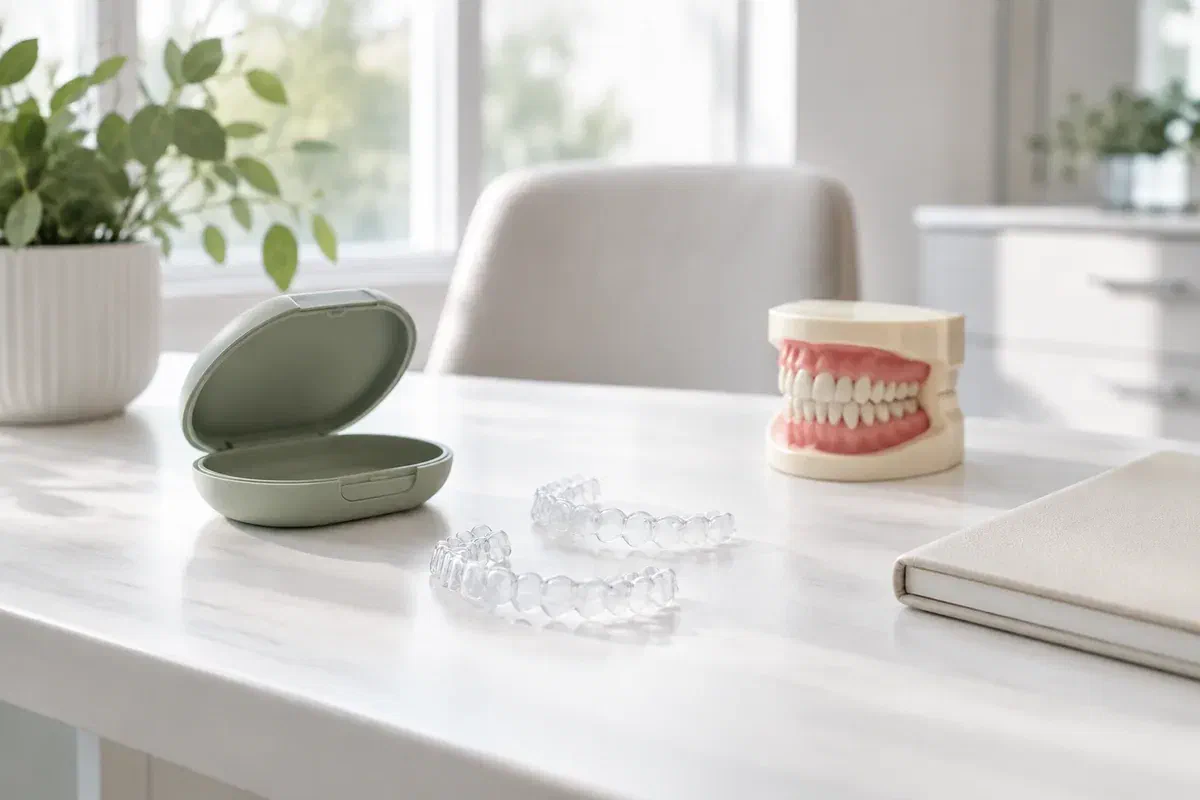
Illustrative aligners, protective case, tooth model, and notebook on a consultation desk
Bring your history with you

What changed, when, and what you would like back

Details about earlier treatment and your current concerns help the clinician judge what kind of plan is realistic. Mention time, comfort and cost questions as well, because they belong in the same conversation.

The movement you have noticed

Point to the tooth that has rotated or the space that has opened. Ask whether that change also affects how your teeth meet when you chew. Any proposal should state what it intends to correct and admit what it may not, rather than suggesting a flawless result.

Old appliances and newer dental work

Bring any retainer you still have, even if it no longer fits. Mention crowns, bridges, implants, past injuries and gum treatment completed since your braces. These can change the sequence of care and must be considered before scans are used to order trays.

Keeping trays in for most of the day

Think about how you eat, how often you sip tea or coffee, and whether you travel or care for family. Aligners rely on dependable wear and cleaning. Test the routine against your real week before deciding, rather than choosing them only because they are hard to see.

A first appointment may reveal that an exam, more records, other treatment or a referral is needed before a firm recommendation. Ask which parts are covered by this visit and which would be arranged later.

Leaving with answers

Understand the commitment before you think about the trays.

A helpful consultation explains whether removable aligners can manage the movements your teeth now need, and names the clinician who would plan and monitor the work. Knowing a brand is popular does not tell you it is the right method for a mouth that has already been through orthodontics.

Relapse after braces is a reminder that retention matters. Ask how long retainers would be worn after the active phase, what they cost and how they would be checked. It is also worth hearing how extra trays or a change of plan would be handled if teeth do not move as forecast.

Patient information: Invisalign Canada — treatment stages and retention · British Orthodontic Society — questions before orthodontic treatment

A goal that matches what you noticed

Ask which teeth would move and which bite relationships would change. You should be able to describe the aim plainly. A clear target helps you decide between a small touch-up plan and a broader one.

Daily life with aligners, described honestly

Ask about removing trays for meals, cleaning teeth and trays, storing them safely and how often you would be reviewed. Small tooth-coloured attachments may be used and can be visible. Expect a short adjustment period when each new set goes in.

An estimate you can actually read

Ask what the quoted fee includes and what may be extra, such as further records, replacement trays, retainers or added stages. Confirm the assumptions behind the figure. Understanding its limits lets you compare choices fairly instead of focusing on a single price.

Inside the appointment

From the story of your teeth to a clear next step

The scope depends on the type of visit and any records you bring. Check in advance whether this is an introductory discussion or whether it includes the records a detailed proposal would need.

  1. Share your orthodontic past and present goals

    Explain when you had braces, how long you wore a retainer and what has shifted. Go over health information, medicines, symptoms and dental work. If you expect to relocate or travel for long periods, raise it so ongoing care can be planned.

  2. Check the bite, the gums and each tooth’s support

    The clinician examines how the teeth relate and whether gum or bone changes affect planning. Photographs, radiographs or scans may be recommended for a specific purpose. Ask whether anything needs treating before orthodontic movement is considered.

  3. Discuss aligners next to the alternatives

    Review suitability, likely stages, risks and your part in wear and follow-up. Ask about attachments or creating small spaces if mentioned. Any on-screen simulation is a planning tool, not a guarantee of exactly where teeth will end up.

  4. Leave knowing what happens before any order

    You may need further records, a specialist opinion or time to consider the estimate. Clarify what was agreed, whether a fee applies to the next stage and how to ask follow-up questions before trays are made.

Between the consultation and any start date

Think it over with retention in mind.

The next step is usually clarifying the plan and completing any dental care that was recommended. Carry on with your normal brushing, flossing and checkups while you weigh the decision.

Test the wear routine before you agree

Invisalign guidance commonly describes 20 to 22 hours of wear each day, though your clinician sets your instructions. Consider meals, cleaning and days out. Mention anything that might get in the way instead of assuming occasional wear will do the same job.

Know who is responsible for monitoring

Find out who will review your progress, how often, and whom to contact about a loose fit or lost tray. Ask what would happen if teeth stopped tracking. Clear responsibility matters for the entire course and for retention afterwards.

Sequence other dental treatment carefully

Tell the team about crowns, fillings or other work planned with another dentist. Changing a tooth’s shape can affect scans and tray fit. Follow the order you agreed and ask whether a further check is needed before you begin.

Patient information: Invisalign Canada — patient questions and wear guidance

Possible recommendations

Aligners are one route. There are others.

Ask why a given step suits your teeth. Coming in interested in Invisalign does not commit you to it, and another approach is not a second-best option.

When findings and your routine support aligners

Plan Invisalign treatment

If trays fit the clinical aims, further records and a detailed proposal may come next. Confirm scope, limits and responsibilities before ordering. The plan should account for monitoring and long-term retention as well as active movement.

When the bite or the movements need a different method

Seek another appliance or an orthodontist’s input

Some relapse or bite problems are better managed another way or with specialist advice. Ask what makes that suggestion suitable and what a referral is meant to answer. You can still discuss your wish for removable trays.

When oral-health findings or timing suggest waiting

Treat, postpone or simply monitor

Gum treatment or a repair might need to come first. You may also decide not to pursue an elective change once you understand the choices. Ask which findings still need care and how monitoring would be arranged.

Old Milton questions about aligners

Before you decide, ask these.

Focus on your own teeth, the planned scope and what treatment involves day to day. Marketing material cannot answer the specifics of a personal plan.

(905) 876-4488
Why have my teeth moved even though I had braces as a teenager?
Teeth can shift over time, especially if retainers were worn for only a short while. Gum changes and wear can also play a part. An assessment can show what has moved and whether treatment, retention advice or monitoring makes sense.
Can my old retainer be used to push my teeth back?
Do not force a retainer that no longer fits, as that can strain teeth or the appliance. Bring it to the consultation instead. The clinician can explain whether it is still useful or whether a new plan or retainer is needed.
Is the first appointment a commitment to start Invisalign?
No. It is a chance to understand the findings and your options. Ask what records or decisions would follow and whether they have separate fees. You are free to take time over an elective proposal.
Does gum recession affect whether aligners are suitable?
It can. Moving teeth relies on healthy supporting tissue, so gum and bone condition are part of the assessment. The clinician may recommend gum care or monitoring before orthodontic planning, or explain how it shapes the options.
I have a crown and an implant. Should I mention both?
Yes. Existing restorations influence planning, and an implant does not move like a natural tooth. The clinician needs to know where each one sits and how nearby teeth relate before recommending any aligner treatment.
How long would I need to wear a retainer this time?
Retention is usually long term after orthodontic movement, which is often why teeth stayed straight for some people and not others. Ask what type of retainer is suggested, how often to wear it and whether it is in the estimate.

Patient information: Align Technology — patient instructions and treatment considerations

Booking from Old Milton

Bring the old retainer, and the questions you have been saving.

Arrange a visit at our Bronte Street practice to talk about whether Invisalign or another orthodontic option could address the changes you have noticed. We will explain the assessment, the commitment and the possible next steps before you decide.

Suitability, the scope of treatment and any referral depend on assessment. Ask about consultation fees and which records are included when you book.

Visit Milton Dental Clinic
Unit 1, 342 Bronte St. S, Milton, ON L9T 5B7
Get directions Clinic hours
Monday–Thursday
11am–7pm
Friday–Sunday
By appointment only

Areas we serve

  • Milton
  • Oakville
  • Mississauga
  • Georgetown
  • Halton Hills
  • Acton
  • Campbellville
  • Brampton
  • Burlington
  • Puslinch
  • Rockwood
  • Erin
  • Caledon
  • Etobicoke
  • Old Milton
  • Bronte Meadows
  • Timberlea
  • Dorset Park
  • Dempsey
  • Clarke
  • Beaty
  • Coates
  • Harrison
  • Scott
  • Willmott
  • Ford
  • Bowes
  • Cobden
  • Walker
  • Mountain View
  • Milton Heights
  • Hawthorne Village
  • Valley View
  • Fallingbrook
  • Nassagaweya
  • Trafalgar
  • Esquesing
  • Nelson
  • Brookville
  • Moffat
  • Glen Williams
  • Norval
  • Limehouse
  • Stewarttown
  • Ashgrove
  • Hornby
  • Silver Creek
  • Speyside
  • Scotch Block
  • North Oakville
  • River Oaks
  • Glen Abbey
  • West Oak Trails
  • Palermo
  • Bronte Creek
  • College Park
  • Joshua Creek
  • Uptown Core
  • Preserve
  • Iroquois Ridge
  • Lisgar
  • Meadowvale
  • Meadowvale Village
  • Churchill Meadows
  • Erin Mills
  • Central Erin Mills
  • Streetsville
  • East Credit
  • Creditview
  • Heartland
  • Sheridan
  • Mount Pleasant
  • Credit Valley
  • Huttonville
  • Churchville
  • Springbrook
  • Northwest Brampton
  • Bram West
  • Fletcher's Meadow
  • Fletcher's Creek South
  • Alton Village
  • Orchard
  • Millcroft
  • Headon Forest
  • Tansley
  • Brant Hills
  • Tyandaga
  • Kilbride
  • Lowville
  • Aberfoyle
  • Morriston
  • Arkell
  • Hillsburgh
  • Freelton
  • Carlisle
  • Waterdown
  • Flamborough
  • Mountsberg

How can we help?

Milton Dental Clinic

Have a question about your smile? Choose the option that works best for you.

For urgent dental concerns, please call.
Messages are reviewed during clinic hours.