

Illustrative adult patient discussing aligner treatment with a dental clinician
Cosmetic Dentistry

Invisalign Consultations in Puslinch

The trays only work if they are in your mouth. Adults travelling from Puslinch can use an Invisalign consultation to test that honestly against shift work, physical jobs and unpredictable days, and to hear about other approaches if removable aligners would be a struggle.

An honest aligner conversation for Puslinch

Would you really wear them?

It is the question people tend to skip. Removable trays are appealing precisely because they come out, yet that same freedom is what makes them easy to leave on the counter. Night shifts, physical work and meals eaten on the go can all chip away at wear time.

Invisalign is a prescribed series of clear aligners that shift teeth a little with each change. When it is a good clinical match and worn as instructed, it can be an effective tool. Suitability depends on the movement needed, the way your bite meets and the condition of gums and bone.

During the consultation you are welcome to be frank about your habits. Ask what records would be needed, who would supervise you and how strict the routine would be. You are not signing up for anything, and if a fixed appliance or a later start would serve you better, that is worth hearing.

Talk it through honestly
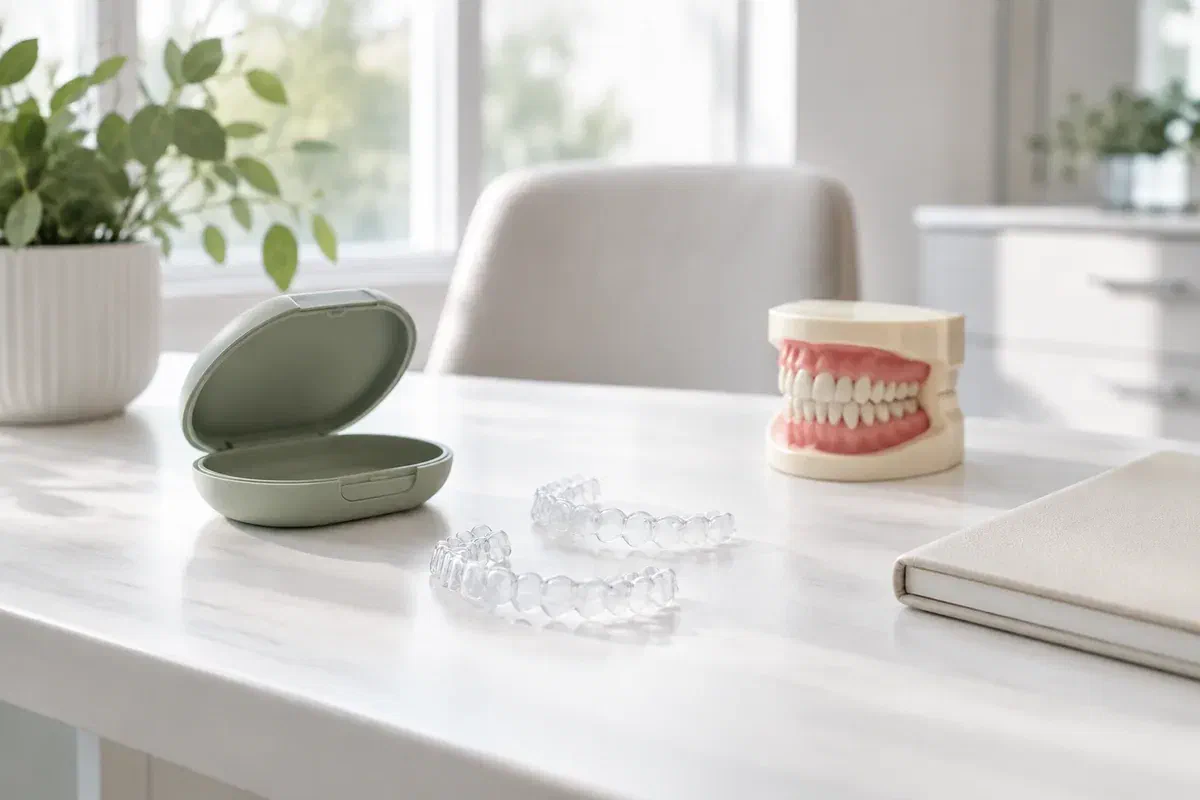
Illustrative aligners, protective case, tooth model, and notebook on a consultation desk
Things to be candid about

What you want, what you have had, and how you live

Clear information on all three helps the clinician recommend something you will actually follow through on. Mention any concerns about comfort, money or the long haul as well.

The specific concern

Point to the overlap, gap or rotated tooth you notice. Ask whether fixing it would also alter your bite. Any proposal should describe what it is trying to achieve and what it will not change, rather than promising a flawless smile.

Old appliances, restorations and injuries

Mention braces, retainers, crowns, bridges, implants, gum care and any knocks to the teeth from work or sport. These can alter how treatment is sequenced and need a look before scans are used to make trays.

Shifts, gloves, dust and lunch breaks

Think about where you would take trays out, how you would clean teeth before putting them back, and whether your job leaves your hands dirty. Ask how others in demanding jobs manage instead of committing because aligners are nearly invisible.

You might learn that a fuller exam, X-rays or scans, a filling or a specialist opinion has to happen before any recommendation. Check what this visit includes, and what would be a separate booking.

What you should take home

Suitability first, then a plan you can live with

Expect a clear explanation of whether removable trays can achieve the movement involved and who would design and check the treatment. The brand name says nothing about whether a removable system will work with your particular teeth and working life.

Retainers come next and are just as important. They hold the result once movement stops, and they also need to be worn reliably. Ask what kind would be used, what it costs and how added trays or a change of plan would be dealt with if wear slipped.

Patient information: Invisalign Canada — treatment stages and retention · British Orthodontic Society — questions before orthodontic treatment

A goal stated in plain terms

Ask which teeth would move, how the bite would change and what would stay as it is. When the aim is clear, it is easier to judge whether a shorter limited plan is enough or a fuller one is worth the commitment.

Rules for wear, cleaning and storage

Ask how long trays should be in each day, how to clean them when you are away from a sink, how to store them safely and how often reviews would be. Ask whether attachments are planned and how noticeable they would be.

A fee with nothing left vague

Ask what is covered and what could cost more, such as additional records, replacement aligners after loss, retainers or extra stages. Ask what the estimate assumes about how well trays are worn. That lets you compare fairly.

What the visit includes

Habits, health, options

The scope depends on the appointment and any records you already have. Ask in advance whether this is a first conversation or includes planning records for a written proposal.

  1. Talk about goals, history and routine

    Explain the change you want, earlier orthodontic care and a typical working day. The clinician reviews your health, medications, symptoms and dental work. Mention any upcoming move or long stretch away from home.

  2. Assess the teeth, gums and bite

    The clinician checks how teeth relate and whether further records would aid diagnosis. Photos, radiographs or a scan may be advised for a stated reason. Ask whether anything needs treating before movement is considered.

  3. Weigh removable against fixed and other options

    Suitability, likely stages, risks and your role in wear and reviews are discussed. If reliable wear is a concern, ask how a fixed appliance compares. A digital preview is only a planning image and does not guarantee the result.

  4. Leave with a clear next step

    Further records, a specialist opinion or simply time to reflect may follow. Confirm what was agreed, any fee for the next stage and how to ask questions afterwards.

Before you say yes

Run a trial week in your head.

The period after the consultation is a good time to review the proposal and complete any recommended dental care. Keep your usual brushing, flossing and checkups going as you decide.

Count the hours out of your mouth

Invisalign guidance often mentions 20 to 22 hours a day of wear, and your clinician will give you specific instructions. Tally meals, coffee breaks and shift changes. If the numbers do not add up, say so before treatment starts.

Know who to contact and when

Ask who will monitor progress, how often you would be checked and how to report a tray that breaks, fits badly or goes missing. Ask what happens if teeth lag behind schedule.

Keep other care in order

Tell the team about fillings, crowns or other treatment planned with another dentist. A change in tooth shape can affect fit. Follow the sequence you agreed and ask whether another check is needed.

Patient information: Invisalign Canada — patient questions and wear guidance

Recommendations that can follow

Removable, fixed or neither for now

Ask why a path suits you. Coming in curious about Invisalign does not mean you have to start, and another appliance is a perfectly sound choice.

When the clinical fit and your routine both hold up

Move forward with Invisalign

If trays suit the goals and you are confident about wear, records and a detailed proposal may come next. Confirm scope, limits and responsibilities before ordering, including reviews and retention.

When reliable tray wear or the bite is a concern

Consider a fixed appliance or an orthodontist

If removable trays would be hard to keep in, or the movement calls for it, another appliance or specialist advice may suit better. Ask what a referral would answer and how the options compare in daily life.

When timing or oral health point to a pause

Wait, treat other needs or monitor

A demanding work season, decay or gum concerns may make waiting sensible. Some people choose not to pursue elective treatment once they know the options. Ask which findings still need care and how follow-up would work.

Puslinch aligner questions

Straight talk about wear, work and alternatives

Ask about your own teeth, the planned scope and whether the routine is realistic. Advertising cannot judge how treatment fits your working day.

(905) 876-4488
What happens if I do not wear my aligners enough?
Teeth may not move as planned, and trays may stop fitting properly. That can lengthen treatment or require extra aligners. Ask the clinician how progress is checked and what to do if wear slips.
Can I wear aligners while doing heavy physical work?
Many people do, but dust, gloves and limited breaks can make cleaning and reinsertion harder. Describe your job at the consultation so the clinician can give practical advice.
Is a fixed appliance a better choice for some people?
It can be, particularly where reliable wear is difficult or certain movements are needed. Fixed braces bring their own cleaning and diet demands, so neither choice is effortless. Ask how the options compare for your teeth and routine, and whether a referral would help you decide.
Do aligners need to come out for contact sports?
Ask the clinician before your next game. A sports mouthguard may be advised for some activities, and the right choice depends on the sport and the treatment stage. Store trays in their case while they are out, and put them back in after cleaning once you are done.
Will I be asked to start treatment on the day of the consultation?
No. The consultation is for understanding findings and options. Ask about next steps and any fees, and take your time over an elective proposal.
Why does a dental implant matter for aligner planning?
An implant is anchored in bone and does not move as natural teeth do. The clinician must plan around it and the neighbouring teeth before recommending treatment.

Patient information: Align Technology — patient instructions and treatment considerations

Travelling from Puslinch

Bring your real schedule, not your ideal one.

Book a consultation at our Bronte Street practice to find out whether Invisalign, another appliance or a different plan suits you. We will explain the assessment and the commitment honestly so you can make a choice you can stick with.

Suitability, the right appliance and any referral are decided after assessment. Ask about consultation fees and included records when booking.

Visit Milton Dental Clinic
Unit 1, 342 Bronte St. S, Milton, ON L9T 5B7
Get directions Clinic hours
Monday–Thursday
11am–7pm
Friday–Sunday
By appointment only

Areas we serve

  • Milton
  • Oakville
  • Mississauga
  • Georgetown
  • Halton Hills
  • Acton
  • Campbellville
  • Brampton
  • Burlington
  • Puslinch
  • Rockwood
  • Erin
  • Caledon
  • Etobicoke
  • Old Milton
  • Bronte Meadows
  • Timberlea
  • Dorset Park
  • Dempsey
  • Clarke
  • Beaty
  • Coates
  • Harrison
  • Scott
  • Willmott
  • Ford
  • Bowes
  • Cobden
  • Walker
  • Mountain View
  • Milton Heights
  • Hawthorne Village
  • Valley View
  • Fallingbrook
  • Nassagaweya
  • Trafalgar
  • Esquesing
  • Nelson
  • Brookville
  • Moffat
  • Glen Williams
  • Norval
  • Limehouse
  • Stewarttown
  • Ashgrove
  • Hornby
  • Silver Creek
  • Speyside
  • Scotch Block
  • North Oakville
  • River Oaks
  • Glen Abbey
  • West Oak Trails
  • Palermo
  • Bronte Creek
  • College Park
  • Joshua Creek
  • Uptown Core
  • Preserve
  • Iroquois Ridge
  • Lisgar
  • Meadowvale
  • Meadowvale Village
  • Churchill Meadows
  • Erin Mills
  • Central Erin Mills
  • Streetsville
  • East Credit
  • Creditview
  • Heartland
  • Sheridan
  • Mount Pleasant
  • Credit Valley
  • Huttonville
  • Churchville
  • Springbrook
  • Northwest Brampton
  • Bram West
  • Fletcher's Meadow
  • Fletcher's Creek South
  • Alton Village
  • Orchard
  • Millcroft
  • Headon Forest
  • Tansley
  • Brant Hills
  • Tyandaga
  • Kilbride
  • Lowville
  • Aberfoyle
  • Morriston
  • Arkell
  • Hillsburgh
  • Freelton
  • Carlisle
  • Waterdown
  • Flamborough
  • Mountsberg

How can we help?

Milton Dental Clinic

Have a question about your smile? Choose the option that works best for you.

For urgent dental concerns, please call.
Messages are reviewed during clinic hours.