

Illustrative adult patient discussing a limited aligner plan with a dental clinician
Cosmetic Dentistry

Invisalign Express in Burlington

A wedding or big occasion on the horizon often prompts the first aligner question. From Burlington, talk with us about Invisalign Express before you count on a date: what a limited plan might realistically change, what it leaves out, and what else could suit you.

When there is a date in mind

Plan the treatment first. Then see how it lines up with the calendar.

An engagement, a family celebration, or a professional photo shoot can make a small crooked tooth feel urgent. Invisalign Express is a limited aligner option for selected minor movements, sometimes including a little relapse after old braces. Whether it can help, and on what timeline, depends on the movements involved rather than the size of the concern in a photo.

Express describes a narrower scope, not a deadline the treatment will meet. Every limited plan stops at a defined point. Ask where your teeth would be at that point, how they would bite together, and whether a larger issue would be left for another day.

If you are coming from Burlington, bring the date you are working toward, a sense of the change you want, and any records from earlier orthodontic care. At our Bronte Street practice we can talk about the assessment and whether a limited approach is worth pursuing. Ask which product and terms would genuinely apply instead of assuming all advertised packages match.

Talk about your timeline
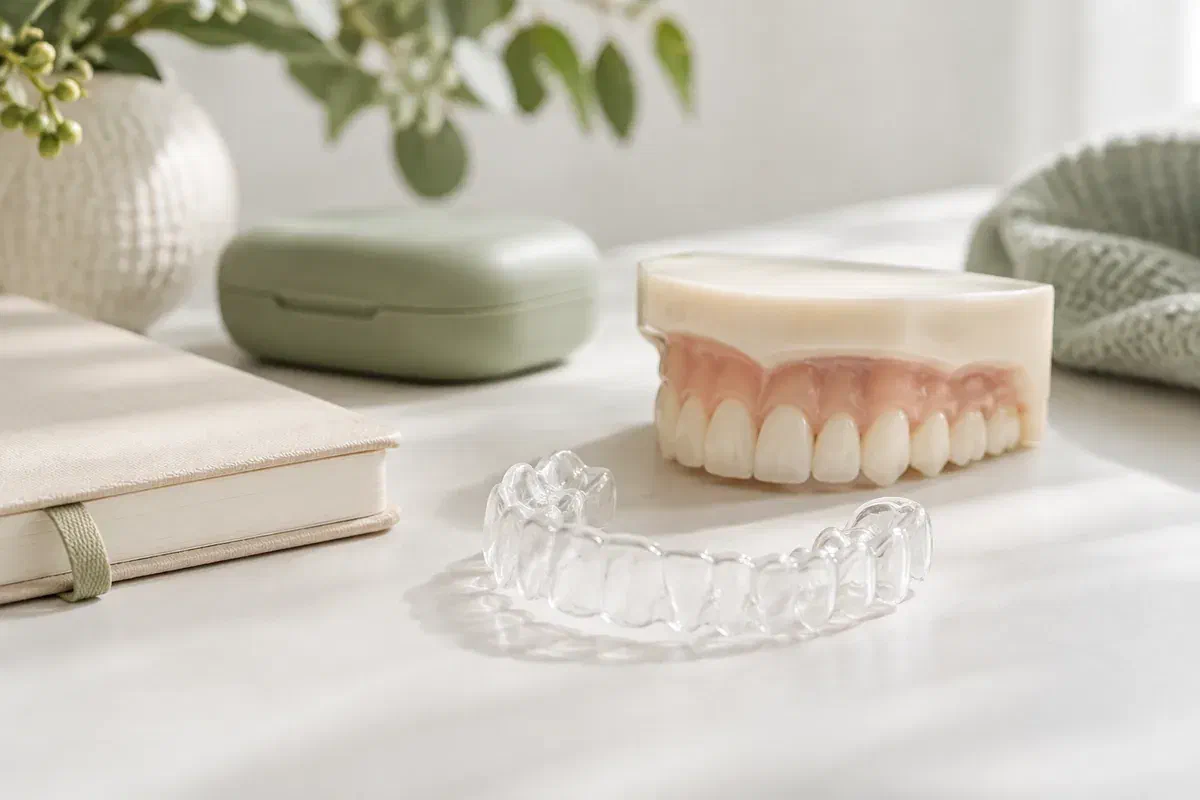
Illustrative clear aligner, tooth model, notebook, and protective case
Before you set expectations

Three situations that shape the conversation

Spaces, rotations, and shifting after braces may look similar on camera but rarely have identical causes. The assessment ties the change you see to the gums, nearby teeth, and the way your bite closes.

Movement since your braces came off

Say when you noticed the change and whether a retainer still fits, went missing, or broke. Bring it along if asked. Prior orthodontics opens the discussion but does not settle suitability, and an old appliance should never be pushed back on to save a visit.

A smile-line tooth with knock-on effects

The tooth that shows in photos may need space from its neighbours or a change in how the lower teeth meet it. Discuss appearance and function at once. Limited treatment should still account for the contacts around the tooth you care about.

An event that cannot move

Raise the date at your first visit. It helps the team understand your priorities, but it cannot decide a safe scope. Ask what timeline is realistic, what might extend it, and whether starting now or after the event makes more sense.

Calling a plan Express does not determine your tray count, how long you will be in treatment, the fee, or whether extra aligners are covered. Ask to see the full proposal before committing.

The case for a focused plan

Small, well-defined goals are easier to plan around.

When a concern genuinely suits it, a limited plan keeps attention on a few agreed corrections, which can make the commitment easier to picture. That benefit comes from the defined scope. It does not skip the examination or reviews, and the clinician should explain why the scope is right for you.

Clear terms also let you compare honestly. If someone recommends broader treatment, ask what added problem it would address and whether that changes your timing. If you would rather postpone, ask whether any exam finding needs care before or after your event.

Patient information: Align Technology — limited-treatment product scope

A described finish line

Ask the clinician to identify the teeth and contacts the plan includes and to describe a good result in plain words. Choosing on that basis is more reliable than choosing a package because it sounds quicker or costs less.

No surprises at the final review

Limited treatment can leave some crowding or bite features as they are. Find out which ones, the reasons, and how they might matter to you. Any limitation you accept should be understood before the first tray, not after the last.

Retainers that protect the result

Bring up retention early. Ask what retainer is proposed, when you would get it, and how follow-up would be handled. Holding teeth in their new position stays important however brief the active phase turns out to be.

The path to a decision

Findings before packages, every time.

Here is what the assessment and discussion usually involve. No step assumes a particular number of aligners or a finishing date, even when your event is fixed.

  1. Share the goal, the date, and the history

    Show us the tooth or space that bothers you and mention any recent shifting, tenderness, or retainer trouble. Tell us about past orthodontic care and your event. Practical constraints matter, so the plan reflects your situation and not only a look at the front teeth.

  2. Assess health, bite, and records

    The clinician reviews your teeth, gums, and how the jaws close together. Scans or images may be taken to plan movement. Ask what each record shows and whether any other dental concern should be treated before aligners are planned.

  3. Discuss the proposal and its alternatives

    Go through the planned changes, limits, risks, responsibilities, and estimate. Ask whether attachments are part of the plan and why. When the required movement exceeds a limited package, a broader option or orthodontic referral is often the better discussion.

  4. Agree how treatment will be run

    If you start, confirm daily wear, when trays change, review dates, and who to contact about fit, especially if your schedule is busy before the event. Ask how the team will decide movement is complete, since the final tray alone does not decide it.

Wearing trays in a busy season

Event planning and aligners can coexist.

Stick to the instructions written for you and keep each review. Even a modest goal depends on steady wear, clean trays, and telling the team when something changes.

Keep wear steady through busy weeks

Ask how tastings, dinners, drinks, and travel fit your instructions. Carry a case everywhere and test the routine before the busiest days. Never leave trays out longer or switch early in the hope of finishing sooner.

Phone before changing course

If a tray no longer fits, is damaged, or an attachment comes off, contact the treating team and say which stage you are on. Ask for a specific instruction. Skipping ahead, repeating, or going back without advice can complicate the plan.

Know the retainer plan ahead of time

Before your last planned review, ask what follows and whether retainers need a scan or appointment. Check what to wear in between, especially if that falls near your event, and keep the instruction with your appointment details.

Comparing paths from Burlington

Which option fits the exam and the calendar?

Ask what each recommendation sets out to do. A sound comparison spells out how scope differs instead of implying every aligner package delivers the same result.

For a minor movement goal that has been assessed

A limited Invisalign Express plan

A limited plan may be offered when the changes needed fit within its scope. Look at what it covers, what it leaves, and what happens if teeth move more slowly than expected. Confirm the exact package and terms before agreeing.

For movements that go beyond a limited plan

Broader orthodontic care

If the bite or the movements needed exceed the proposed limit, a wider plan or specialist opinion may be recommended. Ask why. A concern that looks minor may need a more involved approach, even if that means rethinking the timeline.

When timing or other care makes more sense later

Waiting until after the event

You might choose to hold off and revisit alignment once the occasion has passed. Ask whether a retainer check or monitoring would help in the meantime and whether the exam turned up anything else to treat. A pause should still have a plan.

Deadline and Express questions

What people with an upcoming event ask most.

These answers help you tell a package name apart from the treatment actually recommended for your teeth.

(905) 876-4488
Can I be fitted with Express aligners shortly before a wedding?
Ask about timing carefully. Early days with new trays and any attachments can take some adjusting. The clinician can help you decide whether starting before or after the event is more practical.
Will attachments show in photos during an Express plan?
Attachments are small and tooth-coloured but can sometimes be noticed up close. Ask whether any are planned, where they would sit, and how this might affect photographs taken during treatment.
Can I take my aligners out for a special dinner or speech?
Aligners are removable, and your instructions will explain how meals and wear time work. Ask how to handle a long event, and keep a case with you so trays are stored safely while out.
Does an Express plan come with a guaranteed finish date?
No. Share your date and ask how the estimate relates to the movements planned, reviews, and possible changes. Avoid making plans that depend on a fixed finishing time.
Is one rotated tooth always simple enough for Invisalign Express?
Not always. The number of teeth involved does not tell you how difficult the movement is. Ask whether space or bite contacts affect the plan and why a limited or broader approach is suggested.
Will I still need a retainer after a brief Express course?
Yes. Ask how the new positions will be held, which retainer is proposed, and when it will be ready. Confirm what to wear between your last tray and the retainer.
Book from Burlington

Tell us the date, and we will talk scope.

A first conversation at our Bronte Street practice covers what a short aligner plan could change, the assessment it requires, and how realistic your timing is. You leave knowing the scope, the alternatives, and the honest answer about dates.

Suitability and package availability need confirmation. The service name guarantees no treatment length, tray count, or outcome.

Visit Milton Dental Clinic
Unit 1, 342 Bronte St. S, Milton, ON L9T 5B7
Get directions Clinic hours
Monday–Thursday
11am–7pm
Friday–Sunday
By appointment only

Areas we serve

  • Milton
  • Oakville
  • Mississauga
  • Georgetown
  • Halton Hills
  • Acton
  • Campbellville
  • Brampton
  • Burlington
  • Puslinch
  • Rockwood
  • Erin
  • Caledon
  • Etobicoke
  • Old Milton
  • Bronte Meadows
  • Timberlea
  • Dorset Park
  • Dempsey
  • Clarke
  • Beaty
  • Coates
  • Harrison
  • Scott
  • Willmott
  • Ford
  • Bowes
  • Cobden
  • Walker
  • Mountain View
  • Milton Heights
  • Hawthorne Village
  • Valley View
  • Fallingbrook
  • Nassagaweya
  • Trafalgar
  • Esquesing
  • Nelson
  • Brookville
  • Moffat
  • Glen Williams
  • Norval
  • Limehouse
  • Stewarttown
  • Ashgrove
  • Hornby
  • Silver Creek
  • Speyside
  • Scotch Block
  • North Oakville
  • River Oaks
  • Glen Abbey
  • West Oak Trails
  • Palermo
  • Bronte Creek
  • College Park
  • Joshua Creek
  • Uptown Core
  • Preserve
  • Iroquois Ridge
  • Lisgar
  • Meadowvale
  • Meadowvale Village
  • Churchill Meadows
  • Erin Mills
  • Central Erin Mills
  • Streetsville
  • East Credit
  • Creditview
  • Heartland
  • Sheridan
  • Mount Pleasant
  • Credit Valley
  • Huttonville
  • Churchville
  • Springbrook
  • Northwest Brampton
  • Bram West
  • Fletcher's Meadow
  • Fletcher's Creek South
  • Alton Village
  • Orchard
  • Millcroft
  • Headon Forest
  • Tansley
  • Brant Hills
  • Tyandaga
  • Kilbride
  • Lowville
  • Aberfoyle
  • Morriston
  • Arkell
  • Hillsburgh
  • Freelton
  • Carlisle
  • Waterdown
  • Flamborough
  • Mountsberg

How can we help?

Milton Dental Clinic

Have a question about your smile? Choose the option that works best for you.

For urgent dental concerns, please call.
Messages are reviewed during clinic hours.