

Illustrative adult patient discussing a limited aligner plan with a dental clinician
Cosmetic Dentistry

Invisalign Express in Caledon

What looks like a front-tooth issue is sometimes a bite issue in disguise. For adults coming from Bolton and other Caledon villages, we explain how your teeth meet, whether Invisalign Express suits a limited concern, and what a short plan would leave unchanged.

Looking beyond the smile line

Close your teeth together. That is where the assessment starts.

In the mirror you see the fronts of your teeth. What you cannot easily see is how the top and bottom rows fit when you bite, chew, and slide your jaw. Invisalign Express is a limited aligner plan meant for selected small movements, and whether a concern belongs in that category often depends on the bite as much as on the visible tooth.

A tooth that looks slightly out of line may be pushed there by contact from below, or it may be free to move with little effect elsewhere. A short plan works to a fixed endpoint. Ask how your teeth would meet at that point and what bite features the plan would not try to change.

From Caledon, the visit to our Bronte Street practice is worth planning, so bring earlier orthodontic records, any retainer, and notes on things like chipped edges, jaw tiredness, or teeth that feel like they hit first. The team will explain the assessment, share an honest view on limited treatment, and clarify which product and terms would apply.

Have your bite assessed
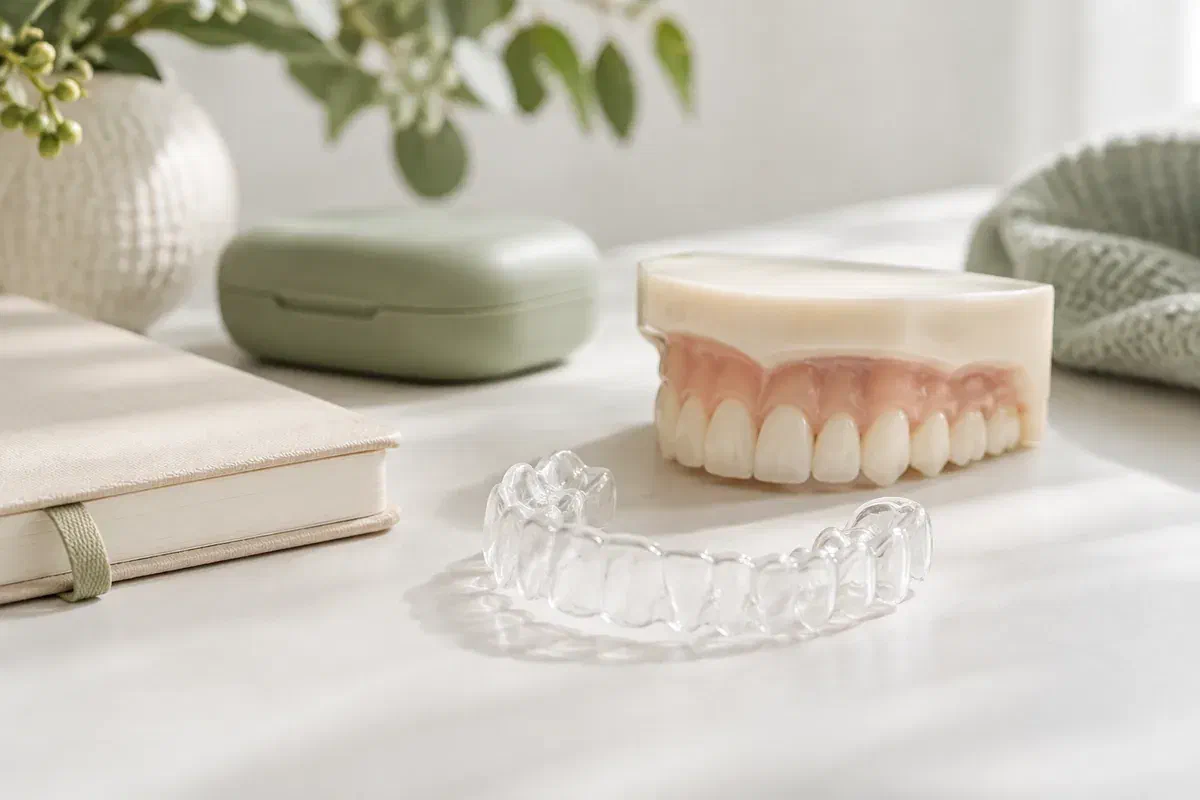
Illustrative clear aligner, tooth model, notebook, and protective case
When the bite is part of the story

Three ways a small concern connects to how you bite

Gaps, rotations, and relapse after braces can each be influenced by how the teeth meet. Assessment links what you see with the contacts, wear patterns, and gums around it before any scope is proposed.

Relapse after braces, and a changed bite

Tell us when the shift started and whether your retainer still fits, has been lost, or broke. As teeth drift, the way they meet can change too. Earlier orthodontics does not prove a short course will suit, and a tight retainer should never be forced on.

A front tooth taking extra pressure

If a lower tooth pushes against an upper one, moving the visible tooth may require changes to how they meet, or room elsewhere. Look for chipping or wear on the edge and mention it. A limited plan must still respect those contacts.

A timeline you have in mind

If you are hoping to finish by a particular date, say so early. That goal is useful to know but cannot determine a safe scope, particularly where the bite is involved. Ask what timing is realistic and what might change it.

Your tray count, time in treatment, fee, and access to extra aligners are not set by the Express name. Ask for the specific proposal, including any bite changes it does or does not include, to be explained.

When limited treatment is enough

A narrow plan works best when the bite allows it.

If the movement needed is genuinely minor and the bite permits it, a limited plan can stay with the few corrections you have agreed on. That focus is where its value lies. Examination and reviews remain part of the process, and the reasons the scope suits your teeth should be clear.

A precise proposal makes comparison easier. When broader treatment is suggested, ask which bite relationship it would address and whether that matters for comfort or wear. If you choose to wait, ask whether anything noted during the exam, such as worn edges, needs separate attention.

Patient information: Align Technology — limited-treatment product scope

An end point described in bite terms

Ask the clinician which teeth would move and how they would meet once treatment finishes. Agreeing on both appearance and contact is a sturdier reason to choose than a package's apparent speed or cost.

A plain account of what stays

A short plan may leave parts of the bite as they are. Find out which, why, and whether that could affect wear or comfort later. Any limitation you accept should be agreed knowingly before treatment, not discovered after.

Holding the new contacts in place

Ask which retainer is planned, when you would receive it, and how often it would be checked. Teeth settle into new contacts over time, and retention helps protect them long after the active phase ends.

How the bite is evaluated

From how you bite to what you decide

The findings shape the package. These stages describe what to expect, without assuming any number of aligners or a set finishing date.

  1. Share your concern and what you have felt

    Show us the tooth or gap and mention recent shifting, jaw fatigue, chipped edges, or problems with a retainer. Bring records from past orthodontics. Tell us what matters most and any practical constraints, so the scope reflects more than appearance.

  2. Check how teeth meet and move

    The clinician examines teeth and gums and observes how you bite and slide your jaw. A scan, photographs, or bite records may be needed. Ask what each reveals and whether another issue should be treated before alignment.

  3. Set the limited plan against alternatives

    Talk through the intended changes, how the bite would be affected, the limits and risks, your role, and the estimate. Ask what attachments would do if they are proposed. If movements exceed a limited package, consider broader care or a referral.

  4. Confirm the routine and reviews

    Before beginning, know your daily wear target, when to switch trays, when you will be seen, and how to reach someone about fit. Find out what the clinician looks for to confirm that the bite and alignment have reached the goal, since the last tray alone does not.

While teeth are moving

Notice how your bite feels, and say so.

Follow your own instructions and keep your reviews. A short course still depends on steady wear, clean trays, and reporting changes, including any new sensation when you bite.

Keep wear consistent

Work out with the team where eating, drinking, and cleaning sit within your wear hours. Keep a case handy. A plan with fewer stages is never a reason to leave trays out longer or move ahead early, even if the teeth already look better.

Mention bite or fit changes

A tray that sits proud of the teeth, a crack, a lost attachment, or teeth that suddenly feel as if they hit differently are all reasons to contact the treating team. Explain the stage you are on and wait for guidance before changing trays.

Prepare for retainers

Before your last review, ask how retainers will be made and whether records can be taken at that visit to spare an extra trip from Caledon. Confirm what to wear in the interval and keep the instructions handy.

Options for Caledon adults

Which scope suits both the smile and the bite?

For each recommendation, ask what it would change in appearance and in how your teeth meet. A fair comparison shows scope differences instead of implying all aligner packages end the same way.

When the movement is minor and the bite allows it

A limited Invisalign Express plan

This may be discussed when the needed changes fit a suitable limited scope. Look at what it covers, what remains, and what the plan does if teeth fall behind. Confirm the exact package and terms before agreeing.

For bite relationships that also need correcting

Comprehensive orthodontic treatment

Broader aligners, braces, or an orthodontist's opinion may be recommended when bite relationships or movements go past the limit. Ask why that extra scope matters. A small-looking concern sometimes needs it.

When you decide not to move teeth now

Monitoring, a retainer, or protecting worn edges

You may choose not to pursue movement after weighing the trade-offs. Ask whether a retainer, periodic monitoring, or other protection for worn teeth would be sensible, and whether any findings need care.

Bite and Express questions

What people ask when the bite is involved.

A product name tells you little about your bite. These answers focus on what your teeth actually need.

(905) 876-4488
Why does my bite matter if I only want to straighten a front tooth?
The opposite teeth may be what pushed the front tooth out of line, or they may block it from moving. The bite helps decide whether a limited plan is realistic.
Could a short aligner plan change the way my teeth meet?
Moving teeth can alter contacts. Ask how the planned movements would affect your bite and how that would be checked at reviews.
Does Invisalign Express help with teeth grinding or clenching?
It is not a treatment for grinding. If you clench or grind, mention it, since it may affect planning and retainer choice, and ask whether separate advice is recommended.
My front teeth have chipped edges. Does that affect an Express plan?
It can. Wear may point to bite forces worth understanding before movement. Ask whether any repair is best done before or after alignment.
Will an Express plan always need extra aligners if my bite is complicated?
Not always. A more involved bite can mean more uncertainty, though, so ask what the agreement says about re-assessment, further trays, or widening the scope, and get any limits or separate fees confirmed for your plan.
How can I keep Express visits manageable from Caledon?
Ask how many reviews to expect and book them early. The clinic is open Monday to Thursday afternoons into the evening, with other days by appointment, which can help you plan around commuting.
Visit from Caledon

Bite down, and let us take a look.

Book time at our Bronte Street practice to discuss limited aligner care. We will assess how your teeth meet, explain the scope and alternatives, and help you decide on the next step.

Suitability and package availability need confirmation after examination. Neither treatment length, tray count, nor outcome is guaranteed by the name.

Visit Milton Dental Clinic
Unit 1, 342 Bronte St. S, Milton, ON L9T 5B7
Get directions Clinic hours
Monday–Thursday
11am–7pm
Friday–Sunday
By appointment only

Areas we serve

  • Milton
  • Oakville
  • Mississauga
  • Georgetown
  • Halton Hills
  • Acton
  • Campbellville
  • Brampton
  • Burlington
  • Puslinch
  • Rockwood
  • Erin
  • Caledon
  • Etobicoke
  • Old Milton
  • Bronte Meadows
  • Timberlea
  • Dorset Park
  • Dempsey
  • Clarke
  • Beaty
  • Coates
  • Harrison
  • Scott
  • Willmott
  • Ford
  • Bowes
  • Cobden
  • Walker
  • Mountain View
  • Milton Heights
  • Hawthorne Village
  • Valley View
  • Fallingbrook
  • Nassagaweya
  • Trafalgar
  • Esquesing
  • Nelson
  • Brookville
  • Moffat
  • Glen Williams
  • Norval
  • Limehouse
  • Stewarttown
  • Ashgrove
  • Hornby
  • Silver Creek
  • Speyside
  • Scotch Block
  • North Oakville
  • River Oaks
  • Glen Abbey
  • West Oak Trails
  • Palermo
  • Bronte Creek
  • College Park
  • Joshua Creek
  • Uptown Core
  • Preserve
  • Iroquois Ridge
  • Lisgar
  • Meadowvale
  • Meadowvale Village
  • Churchill Meadows
  • Erin Mills
  • Central Erin Mills
  • Streetsville
  • East Credit
  • Creditview
  • Heartland
  • Sheridan
  • Mount Pleasant
  • Credit Valley
  • Huttonville
  • Churchville
  • Springbrook
  • Northwest Brampton
  • Bram West
  • Fletcher's Meadow
  • Fletcher's Creek South
  • Alton Village
  • Orchard
  • Millcroft
  • Headon Forest
  • Tansley
  • Brant Hills
  • Tyandaga
  • Kilbride
  • Lowville
  • Aberfoyle
  • Morriston
  • Arkell
  • Hillsburgh
  • Freelton
  • Carlisle
  • Waterdown
  • Flamborough
  • Mountsberg

How can we help?

Milton Dental Clinic

Have a question about your smile? Choose the option that works best for you.

For urgent dental concerns, please call.
Messages are reviewed during clinic hours.