

Illustrative adult patient discussing a limited aligner plan with a dental clinician
Cosmetic Dentistry

Invisalign Express in Mississauga

Online ads make short aligner packages sound identical. They are not. For adults travelling from Mississauga, we explain what Invisalign Express actually covers, how suitability is decided after an exam, and what to ask before you sign any limited-treatment agreement.

Reading past the advertising

What does the word Express actually promise?

Very little on its own. Invisalign Express is the name of a limited aligner option meant for selected minor movements, such as a small space, slight crowding, or modest shifting after earlier braces. The label describes a narrower scope. It does not tell you how many trays you will use, how long you will wear them, or whether your teeth qualify.

Suitability is decided by the movements your teeth would need, which only an examination and records can reveal. A plan with a smaller target also has firm boundaries. You should know the planned finishing position, how the bite will close, and what the plan will intentionally leave alone.

From Meadowvale, Churchill Meadows, or elsewhere in Mississauga, you are welcome to bring the advertisement or quote that caught your eye. At our Bronte Street practice, we can explain the assessment and whether a limited approach is worth exploring for you. Ask which product would actually be used and on what terms.

Bring your questions about short aligner plans
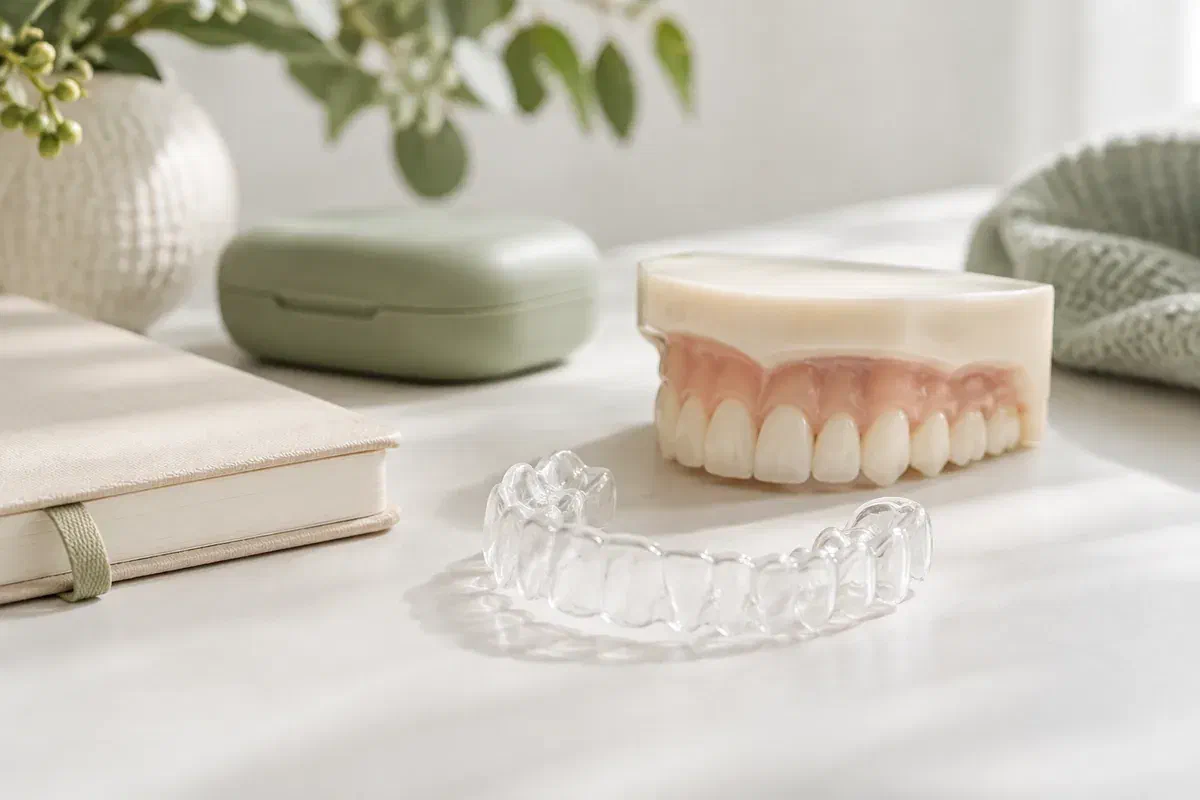
Illustrative clear aligner, tooth model, notebook, and protective case
Questions behind the ad

Before comparing prices, compare what is being treated.

An attractive package is only useful if it matches your teeth. Gaps, turned teeth, and relapse each have their own explanations, and the plan should be built on those explanations rather than on a headline.

Shifting since earlier orthodontics

Note when things started to change and whether your retainer fits, is lost, or has cracked. Bring it if you still have it. A past course of braces is a reason to ask about limited treatment, not proof that it will work, and an old retainer should not be jammed in.

A visible tooth connected to the bite

An ad photo shows the front of the smile, not how teeth meet. Ask whether correcting your visible tooth would need room elsewhere or a change in the bite. Good limited treatment still considers the neighbouring teeth and contacts.

A timeline set by your plans

If you want results by a certain time, mention it early. The date informs the discussion but cannot override what is clinically appropriate. Ask about realistic timing, what could change it, and whether beginning now is wise.

No package name fixes your personal tray count, duration, fee, or right to further aligners. Ask for the specific proposal, and what it includes, to be explained in writing before you decide.

What the right limited plan delivers

Focus, clarity, and an honest scope.

For a concern that truly fits, limited treatment concentrates on a handful of agreed changes. That defined focus is the benefit. It still involves an exam, records, and reviews, and you should hear clearly why the narrower scope suits your situation.

A transparent proposal also makes it easier to compare offers. When broader treatment is suggested, ask exactly what it adds. If you decide to wait, ask whether something found during the visit should still be treated or rechecked.

Patient information: Align Technology — limited-treatment product scope

A goal stated in plain terms

Ask which teeth and contacts are part of the plan and how a successful finish would look and feel. With that agreed, you are choosing treatment, not a bundle that simply advertises speed or a lower price.

Clarity about the remaining features

Not every alignment or bite feature will necessarily change under limited treatment. Ask which will stay, why, and how they might affect you. An accepted limitation should be part of your informed decision, not an unwelcome discovery at the end.

Retention included in the conversation

Ask early about the retainer that would follow treatment, when it would be provided, and how follow-up visits work. A short active phase still leaves you with the long-term job of holding teeth in place.

How the assessment unfolds

Examine, define, compare, then decide.

The package follows the findings. This is the sequence of discussion and assessment to expect, with no assumed aligner number or guaranteed end date.

  1. Explain what you want and what came before

    Point out the change you are hoping for and mention any recent shifting, soreness, or retainer issues. Share earlier orthodontic records where possible. Tell us your priorities and practical limits, including how often you can travel in, so the scope rests on a full picture.

  2. Examine teeth, gums, and bite

    The clinician checks your oral health and how your teeth come together. Scans or images may be needed to plan movement accurately. Ask what each record tells the team and whether another dental issue should come first.

  3. Set the limited option beside the others

    Review the intended changes, the limits, risks, your responsibilities, and the estimate. Ask whether attachments are proposed and why. If what you need goes past a limited plan, a broader option or an orthodontic referral may suit you better.

  4. Confirm the details before you start

    If you proceed, clarify wear time, tray changes, review appointments, and the right person to reach with a fit question. Find out what tells the clinician that movement is done. Simply using up the trays in a package is not a substitute for that judgment.

Once treatment begins

Short plan, full commitment.

Keep to the instructions written for you and attend every review you agree to. A small goal still needs consistent wear, careful cleaning, and quick contact if something changes.

Build wear into your commute and workday

Ask how meals, coffee, cleaning, and long days fit your instructions. Carry a case and rehearse the routine before a busy week. Fewer trays never justifies shorter wear or moving to the next set early.

Report fit issues rather than guessing

If a tray will not seat, cracks, or an attachment comes away, call the treating team. Mention the stage and what happened. Wait for specific advice instead of skipping, repeating, or returning to an earlier tray on your own.

Plan the switch to retainers

Before your final planned review, ask what comes next and whether a scan or visit is needed for retainers. Confirm what to wear in any gap, and arrange the visit ahead of time so you are not making an extra trip unexpectedly.

Options to compare from Mississauga

Three paths, each with a different reach.

Ask what every option is designed to achieve. An honest comparison shows how scope differs rather than suggesting that every aligner package gives the same result.

For a confirmed minor movement goal

Invisalign Express, if it fits

A limited plan may be appropriate when the changes needed sit within its scope. Look closely at what it covers, what stays the same, and how a slower-than-expected response would be handled. Confirm the package and terms first.

For bite or multi-tooth concerns

Comprehensive orthodontic treatment

Broader aligner treatment, braces, or a specialist opinion may be recommended when movements exceed the limited plan. Ask why the extra scope matters. Some small-looking concerns need a more involved approach to be corrected properly.

When you decide to wait or other care comes first

A retainer review or holding off

You may decide the change is not worth treating after hearing the trade-offs. Ask whether a retainer check or monitoring is worthwhile and whether any other dental concern needs attention. Waiting should still come with a clear next step.

Ad and package questions

Things to check before you agree to a limited plan.

These answers help you look beyond the name of a package to the treatment actually being recommended.

(905) 876-4488
Are all short aligner packages advertised online the same as Invisalign Express?
No. Different products and providers use different scopes and terms. Ask which specific system would be used, what assessment comes first, and what supervision is included during treatment.
Is an in-person exam really necessary for a limited aligner plan?
Yes. Photos cannot show gum health, existing dental problems, or how your teeth meet. An examination and records help the clinician decide whether limited treatment is appropriate at all.
What should a written Express proposal include?
Look for the teeth being treated, the intended result, what is not included, the estimate, how extra aligners or changes in scope are handled, and the retention plan. Ask about anything that is unclear before signing.
Can I combine Invisalign Express with teeth whitening?
Ask about timing. Whitening may be discussed before, during, or after alignment depending on your situation and any dental work. The clinician can explain the options and what to expect.
Could a limited plan straighten the front but not change my bite?
Yes, and that can be intentional. Ask which features would remain unchanged, the possible consequences, and whether a broader option should be considered first.
How do I plan Express review visits from Mississauga?
Ask how often reviews are likely and try to book them in advance. The clinic is open Monday to Thursday afternoons into the evening, with other days by appointment, which can help you choose times that suit your schedule.
Visiting from Mississauga

Bring the quote. We will help you read it.

Sit down with us on Bronte Street to talk about short-scope orthodontics. You will learn what an assessment needs to cover, how a limited plan compares with other choices, and what decision comes next.

Suitability and package availability are confirmed only after assessment. The service name does not guarantee any duration, tray count, or outcome.

Visit Milton Dental Clinic
Unit 1, 342 Bronte St. S, Milton, ON L9T 5B7
Get directions Clinic hours
Monday–Thursday
11am–7pm
Friday–Sunday
By appointment only

Areas we serve

  • Milton
  • Oakville
  • Mississauga
  • Georgetown
  • Halton Hills
  • Acton
  • Campbellville
  • Brampton
  • Burlington
  • Puslinch
  • Rockwood
  • Erin
  • Caledon
  • Etobicoke
  • Old Milton
  • Bronte Meadows
  • Timberlea
  • Dorset Park
  • Dempsey
  • Clarke
  • Beaty
  • Coates
  • Harrison
  • Scott
  • Willmott
  • Ford
  • Bowes
  • Cobden
  • Walker
  • Mountain View
  • Milton Heights
  • Hawthorne Village
  • Valley View
  • Fallingbrook
  • Nassagaweya
  • Trafalgar
  • Esquesing
  • Nelson
  • Brookville
  • Moffat
  • Glen Williams
  • Norval
  • Limehouse
  • Stewarttown
  • Ashgrove
  • Hornby
  • Silver Creek
  • Speyside
  • Scotch Block
  • North Oakville
  • River Oaks
  • Glen Abbey
  • West Oak Trails
  • Palermo
  • Bronte Creek
  • College Park
  • Joshua Creek
  • Uptown Core
  • Preserve
  • Iroquois Ridge
  • Lisgar
  • Meadowvale
  • Meadowvale Village
  • Churchill Meadows
  • Erin Mills
  • Central Erin Mills
  • Streetsville
  • East Credit
  • Creditview
  • Heartland
  • Sheridan
  • Mount Pleasant
  • Credit Valley
  • Huttonville
  • Churchville
  • Springbrook
  • Northwest Brampton
  • Bram West
  • Fletcher's Meadow
  • Fletcher's Creek South
  • Alton Village
  • Orchard
  • Millcroft
  • Headon Forest
  • Tansley
  • Brant Hills
  • Tyandaga
  • Kilbride
  • Lowville
  • Aberfoyle
  • Morriston
  • Arkell
  • Hillsburgh
  • Freelton
  • Carlisle
  • Waterdown
  • Flamborough
  • Mountsberg

How can we help?

Milton Dental Clinic

Have a question about your smile? Choose the option that works best for you.

For urgent dental concerns, please call.
Messages are reviewed during clinic hours.