

Illustrative adult patient discussing a limited aligner plan with a dental clinician
Cosmetic Dentistry

Invisalign Express in Old Milton

Teeth that were straightened long ago can creep back out of place. Around Old Milton, help is close by for a conversation about Invisalign Express: what a limited plan could correct, what it would not touch, and when another option makes more sense.

When straight teeth start to wander

An old retainer in a drawer tells part of the story.

Plenty of adults had braces as teenagers, wore a retainer for a while, then gradually stopped. Decades later, a lower front tooth overlaps its neighbour or a small space opens up. Invisalign Express is a limited aligner option meant for selected minor movements like some of these, but only an assessment of the movement involved shows whether it fits.

Calling a plan Express does not mean every shifted tooth can be put back quickly. The plan has a defined endpoint and deliberate limits. It helps to understand exactly where your teeth would finish, how the bite would close, and whether anything larger would be left outside what you agree to.

Our Bronte Street practice sits a short way from Milton's historic downtown. Bring the retainer you still have, any old orthodontic paperwork, and a clear idea of what bothers you now. We can discuss what assessment involves and whether a limited plan deserves a closer look. Ask which product and terms would really apply to your case.

Ask about teeth that have shifted
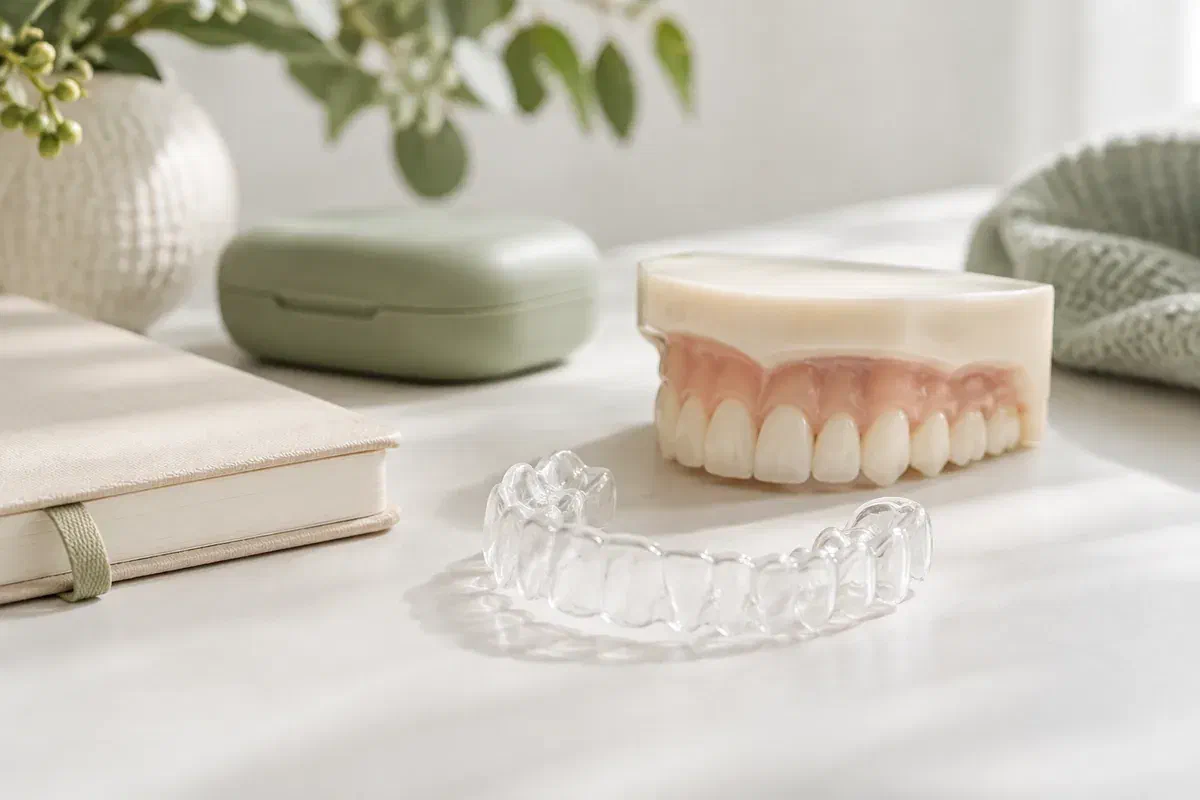
Illustrative clear aligner, tooth model, notebook, and protective case
Old treatment, new questions

Relapse, crowding, or something else?

Movement after braces is common, but it is not always the same kind of movement. Gum changes, worn or missing teeth, and bite habits can all play a part, so the visible change needs to be read alongside the rest of the mouth.

A retainer you stopped wearing

Tell us when you last wore it and whether it still seats. If it now pinches or will not go in, do not press it into place. Bring it with you instead. Having had orthodontics before does not guarantee a short course is suitable this time.

Front teeth that changed with the rest of your mouth

Over many years, fillings, crowns, or a lost back tooth can alter how the front teeth are supported. Ask whether correcting the tooth you see would involve space or movement elsewhere, and talk about appearance and bite together rather than one at a time.

A reason to want it done by a certain time

Perhaps a family wedding or a milestone birthday is coming up. Share it before planning starts. The occasion is worth knowing about, but it cannot set the treatment scope. Ask what timing is realistic and what could make the estimate change.

The Express label does not decide how many trays you would use, how long treatment lasts, the fee, or whether extra aligners are included. Ask for the specific proposal to be walked through first.

What a limited plan can offer

Clear edges, honestly described.

If your relapse is genuinely minor, a limited plan can keep treatment focused on a small, agreed list of corrections. The point is a well-defined scope. It does not replace examination or follow-up visits, and you deserve to hear why that scope is reasonable for your own teeth and history.

A precise proposal also helps you weigh other routes. Where a broader plan is advised, ask what further problem it addresses. If you would prefer not to start anything yet, ask whether any finding from the exam still calls for treatment or a recheck.

Patient information: Align Technology — limited-treatment product scope

Knowing exactly which teeth are included

Ask the clinician to name the teeth and contacts the plan is meant to change and to describe how a satisfying result would look and feel. That shared target matters more than picking a package because it sounds quicker or lighter on the budget.

Candour about the parts left alone

A limited approach may not address every overlap or bite feature, especially in teeth that have shifted over many years. Find out which features stay as they are, why, and what it means for you. Agreeing to a limit should be a choice made early.

A retention plan that actually lasts

Since relapse is often what brought you in, discuss retention from the outset. Ask what retainer is proposed, when you would receive it, how long it should be worn, and how follow-up would work. A short active phase still needs a long-term holding plan.

What the steps look like

History, examination, options, then a choice.

The findings should shape the plan, not the other way round. These stages outline the conversation and assessment ahead, with no set tray count or promised finishing date.

  1. Tell the story of your earlier treatment

    Describe roughly when you had braces, how long you wore a retainer, and when the shifting began. Mention any discomfort or recent change. Share what you most want improved and any practical limits, so the scope reflects your full history and not only a brief look.

  2. Check oral health and the way teeth meet

    The clinician examines teeth, gums, and older dental work, and looks at how the upper and lower teeth come together. Scans or images may be needed. Ask what each record adds and whether any other dental problem should be treated before alignment is planned.

  3. Weigh the limited proposal against others

    Go through the planned changes, their boundaries, risks, what you would be responsible for, and the estimate. Ask whether attachments are suggested and why. When the movement needed goes past a limited package, a fuller plan or an orthodontic referral may be the better conversation.

  4. Agree on instructions and check-ins

    If you decide to start, confirm daily wear time, when to change trays, when reviews fall, and who to call with fit questions. Ask how the team will decide that movement is complete, because the last tray in the set is not that decision.

Living with aligners again

Treat a brief course as seriously as a long one.

Follow the instructions written for you and keep each planned review. Even a modest goal depends on regular wear, clean trays, and letting the team know when something changes.

Set up habits that suit your day

Ask how meals, coffee, cleaning, and outings fit your wear schedule. Keep a case with you and settle the routine before a busy stretch. A smaller number of stages is no reason to take trays out for longer or change them early.

Ask before changing the order of trays

If a tray stops fitting snugly, gets damaged, or an attachment comes loose, contact the treating team. Say which tray you are on and describe what happened. Get direction rather than deciding alone to skip one, repeat one, or go back.

Line up the move to retainers

Before your final planned review, ask what happens afterward and whether a scan or appointment is needed for retainers. Confirm what to wear in between. Keep those instructions somewhere you will find them, so the end of active treatment is not a loose end.

Choosing a route in Old Milton

Which scope suits teeth that have moved?

Ask what each option is designed to do. A fair comparison makes the differences in scope plain and does not suggest that all aligner packages produce the same outcome.

If the assessed movement is small

A limited Express plan for minor relapse

This may be suggested when the corrections needed fall within a suitable limited scope. Look at what is covered, what is not, and how the plan would adapt if teeth fall behind. Confirm the actual package and its terms before agreeing to anything.

If the bite or several teeth need change

Fuller orthodontic retreatment

A broader plan, or a specialist opinion, may be recommended when the movement goes past the proposed limit. Ask why the added scope is worthwhile. A shift that looks small in the mirror can occasionally need a more thorough approach to correct well.

If you hold off or other care is needed first

A new retainer, monitoring, or no movement

You may conclude that the change is not worth treating once you understand the trade-offs. Ask whether a retainer assessment or periodic monitoring would be sensible, and whether any dental finding still needs care. Holding off should still leave a clear plan.

Old Milton questions about relapse

What adults with past braces often ask.

These answers help you tell a product name apart from the treatment that is actually right for your teeth.

(905) 876-4488
Why did my teeth move years after my braces came off?
Teeth can keep shifting throughout life, and retainer wear often tapers off over time. Gum changes, dental work, and bite forces may also contribute. An examination helps explain your situation before any treatment is suggested.
Can my old retainer be reused instead of starting aligners?
Sometimes a retainer that still fits well can be assessed, but one that feels tight should not be forced back in. Bring it to the visit and ask whether a new retainer, records, or aligner treatment would be more appropriate.
Do crowns or older fillings affect an Invisalign Express plan?
They can. Existing dental work may change how trays fit or how teeth are planned to move. Mention any crowns, bridges, or large fillings so the clinician can take them into account and explain any implications.
Is an Express estimate clear about what happens if more trays are needed?
It should be. Ask how further assessment, additional aligners, and changes in scope are handled, and confirm any limits or separate fees in writing for the plan actually offered.
Could an Express plan correct the overlap but leave my bite as it is?
Yes, a limited plan may deliberately leave some features unchanged. Ask which ones, what the consequences might be, and whether a more comprehensive option deserves a look before you decide.
Will I need to wear a retainer for good after relapse treatment?
Long-term retention is commonly advised after teeth have been moved. Ask what retainer and wear schedule are recommended for you, how follow-up works, and what to do if the retainer is lost or stops fitting.
Visit from Old Milton

Start with the tooth that moved.

Arrange a conversation at our Bronte Street practice about limited orthodontic treatment. We can explain the assessment needed and help you understand the scope, the alternatives, and the decision in front of you.

Suitability and the availability of any package must be confirmed. The service name does not guarantee a treatment length, tray count, or outcome.

Visit Milton Dental Clinic
Unit 1, 342 Bronte St. S, Milton, ON L9T 5B7
Get directions Clinic hours
Monday–Thursday
11am–7pm
Friday–Sunday
By appointment only

Areas we serve

  • Milton
  • Oakville
  • Mississauga
  • Georgetown
  • Halton Hills
  • Acton
  • Campbellville
  • Brampton
  • Burlington
  • Puslinch
  • Rockwood
  • Erin
  • Caledon
  • Etobicoke
  • Old Milton
  • Bronte Meadows
  • Timberlea
  • Dorset Park
  • Dempsey
  • Clarke
  • Beaty
  • Coates
  • Harrison
  • Scott
  • Willmott
  • Ford
  • Bowes
  • Cobden
  • Walker
  • Mountain View
  • Milton Heights
  • Hawthorne Village
  • Valley View
  • Fallingbrook
  • Nassagaweya
  • Trafalgar
  • Esquesing
  • Nelson
  • Brookville
  • Moffat
  • Glen Williams
  • Norval
  • Limehouse
  • Stewarttown
  • Ashgrove
  • Hornby
  • Silver Creek
  • Speyside
  • Scotch Block
  • North Oakville
  • River Oaks
  • Glen Abbey
  • West Oak Trails
  • Palermo
  • Bronte Creek
  • College Park
  • Joshua Creek
  • Uptown Core
  • Preserve
  • Iroquois Ridge
  • Lisgar
  • Meadowvale
  • Meadowvale Village
  • Churchill Meadows
  • Erin Mills
  • Central Erin Mills
  • Streetsville
  • East Credit
  • Creditview
  • Heartland
  • Sheridan
  • Mount Pleasant
  • Credit Valley
  • Huttonville
  • Churchville
  • Springbrook
  • Northwest Brampton
  • Bram West
  • Fletcher's Meadow
  • Fletcher's Creek South
  • Alton Village
  • Orchard
  • Millcroft
  • Headon Forest
  • Tansley
  • Brant Hills
  • Tyandaga
  • Kilbride
  • Lowville
  • Aberfoyle
  • Morriston
  • Arkell
  • Hillsburgh
  • Freelton
  • Carlisle
  • Waterdown
  • Flamborough
  • Mountsberg

How can we help?

Milton Dental Clinic

Have a question about your smile? Choose the option that works best for you.

For urgent dental concerns, please call.
Messages are reviewed during clinic hours.