

Illustrative adult patient discussing clear aligners with a dental clinician
Cosmetic Dentistry

Invisalign for Adults in Caledon

Clear aligners, fixed braces or a referral to an orthodontist: adults often arrive unsure which to ask about. From Caledon, explore adult Invisalign as one option among several, with a clear look at your bite, gums, existing restorations, the daily wear involved and the retainers afterward.

Comparing adult orthodontic options

Aligners are one answer. Is it yours?

A friend had aligners, a coworker had braces, and an online ad promises results by mail. It is no wonder adults feel unsure where to start. The most useful first step is not choosing a product but understanding what your teeth and bite actually need, and then comparing approaches against that.

Invisalign is one method: a series of prescribed, removable aligners that move teeth in stages. It can suit some situations well and others less so. A clinician weighs what an examination reveals about the teeth, gums and bite, along with crowns, implants, gum history and how readily you could keep up daily wear.

For households in Caledon, whether in Bolton or one of the smaller villages, a single well-prepared consultation at our Bronte Street practice can clarify the choices. We can explain the assessment, the trade-offs between approaches and when an orthodontist’s opinion is the sensible next step.

Compare your options
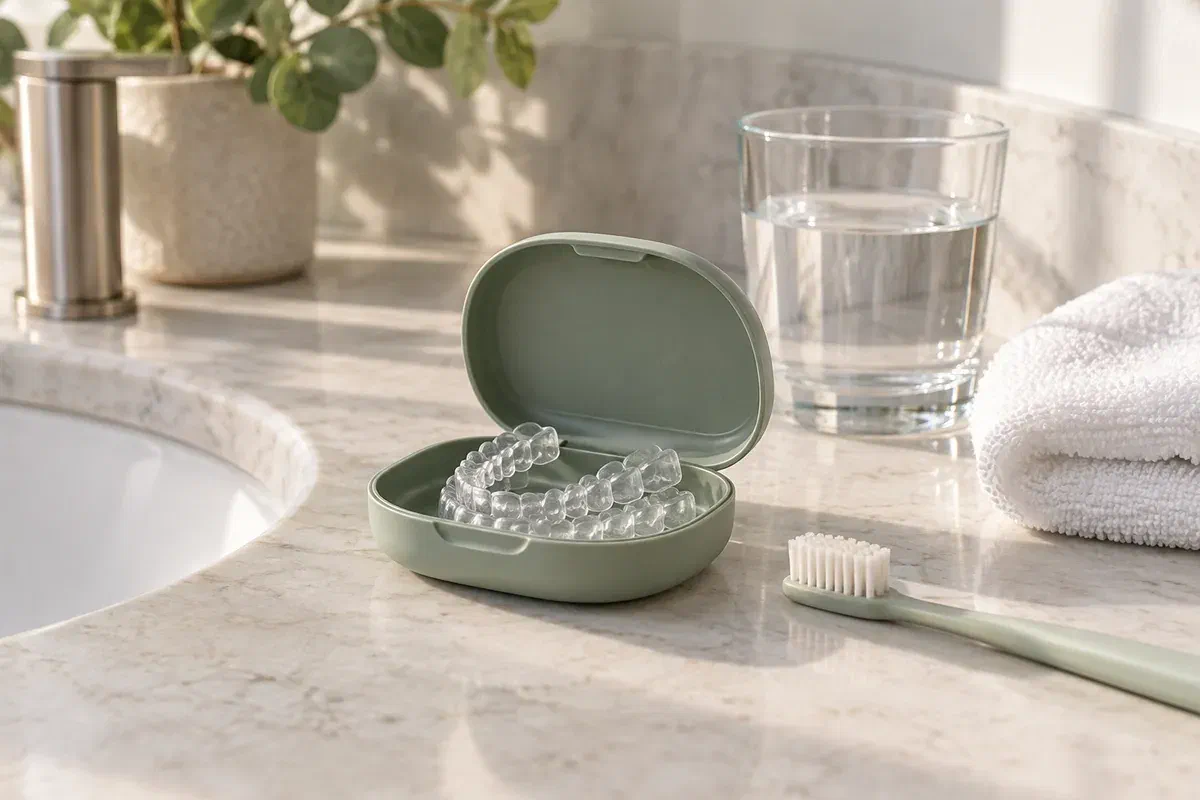
Illustrative adult aligner-care arrangement with a case, toothbrush, towel, and water
Information that guides the choice

The details that point toward one approach or another

Describe the change you want and everything a plan would need to accommodate. That information helps the clinician explain which methods suit your situation and what each would require.

Dental work already in place

Crowns, bridges, implants and large fillings can affect which appliance works best and how teeth move. Mention them, and any upcoming procedures. Since an implant is integrated with the bone and will not reposition, it limits movement around it whatever method is chosen.

Gum and bone condition

Bleeding, recession, loose teeth or prior periodontal treatment can influence both suitability and the choice of appliance. The supporting tissues are evaluated first. If gum care is recommended, ask who will provide it and how it affects the timeline.

How much responsibility suits you

Removable aligners rely on you to wear them; fixed appliances do not come out. Consider your work, travel and family life, and be honest about your own habits. That self-assessment is a genuine part of choosing an approach.

Age does not choose the method or decide suitability. Your oral health, the type of movement needed and the routine you can keep are the factors that matter.

Weighing aligners against alternatives

Convenience, control and the trade-offs between them

Aligners can be removed to eat and clean, and many adults prefer how they look compared with brackets. Fixed braces, by contrast, work continuously without depending on your daily discipline. Neither is simply better; the right comparison depends on your findings and your habits.

Ask the clinician what each approach could realistically achieve for your concerns and which features might remain either way. A good comparison should show how outcomes, effort and time differ, so you can choose with your eyes open.

Patient information: British Orthodontic Society — considering adult orthodontic treatment

A comparison built around your goal

Whether the concern is crowding, a deep overlap, relapse after earlier braces or space for restorations, state it clearly. Ask how each method would address it, and whether other dental problems should be dealt with first.

Clear roles if a specialist is involved

If an orthodontist or periodontist joins your care, ask how their appointments will fit with checkups and any aligner reviews. Clarify who leads each part of the plan and how they will share information.

Long-term commitments for every option

All orthodontic approaches involve reviews and retention. Ask about refinement stages, retainers and maintenance for each option along with the initial estimates. Discuss what would happen if you moved or your situation changed.

From assessment to a choice

Understand the problem, then compare solutions.

A good consultation helps you see the options side by side. Ask what the first visit includes and what records, referrals or decisions may follow.

  1. Explain your goals and background

    Describe what you want to change and why now. Share medical conditions, medicines, previous dental injuries and any past orthodontic treatment or advice. Include symptoms even if they seem unrelated to appearance.

  2. Assess the teeth, gums and bite

    The clinician examines the relevant areas and considers what records are needed. Ask whether other dental or periodontal treatment should happen first, and whether the findings suggest a specialist should assess you.

  3. Lay out the options side by side

    Review what aligners, other appliances or specialist care would each involve, including scope, risks, monitoring and attachments. Go through estimates, possible extra stages and retention before deciding which route suits you.

  4. Start the chosen approach properly

    Going ahead with aligners means learning to insert, remove and clean them, and knowing who to call about problems. Confirm your wear and change schedule. If another route is chosen, ask what the next appointment or referral will involve.

If you choose aligners

What a typical day would ask of you

Understanding the daily routine helps you compare options honestly. If you proceed, follow the instructions you are given and raise problems early.

Meals and cleaning on busy days

You would carry an aligner case and cleaning supplies wherever you eat. Think about how commuting, work lunches and long errands would go. If cleaning away from home is hard, ask for advice rather than leaving trays out.

Regular dental care continues

Checkups and cleanings remain important during orthodontic treatment of any kind. Keep the visits recommended for you, and tell each clinician about procedures planned elsewhere that could affect appliance fit.

Raising problems before they grow

Contact the team about significant soreness, a damaged tray or difficulty sticking to the schedule. Describe your stage and circumstances. Don’t move through aligners faster than prescribed to recover lost time.

Patient information: Invisalign Canada — treatment responsibilities and follow-up

Three possible directions

Clear trays, a fixed appliance, or treatment that comes before either

Liking the idea of a removable, discreet appliance is a fair starting point. It sits beside the findings, the movements required and any other treatment you need.

When aligners fit the agreed goals

Invisalign, if it suits the case

Aligners may be a reasonable choice when they can address the agreed changes and you are confident about the routine. Ask about their limits, review frequency and retention. Understand the plan before anything is ordered.

When another method suits the problem

Fixed braces or an orthodontist

Some bite relationships or tooth movements are better handled with another appliance or by a specialist. Ask what that option would achieve and why it is advised. Your interest in discretion can still be part of the discussion.

When health or timing comes first

Dental or gum care before deciding

Other treatment may need to come first, or you may prefer to decide later. Ask which problems require care no matter which approach you choose. Find out how the options could be revisited afterward.

Comparing approaches

Questions adults ask when weighing their choices

Every case and preference is different. These questions can help you compare the options for yours.

(905) 876-4488
How do I decide between aligners and traditional braces as an adult?
Start with what your teeth and bite need, then consider how each approach fits your habits and preferences. Ask the clinician to explain which method suits your findings and why, including the trade-offs in effort and monitoring.
Will I be referred to an orthodontist?
A referral may be suggested if your bite, the required movement or your history is complex. Ask why it is or is not being recommended, and what the specialist would assess. You can also ask for a referral if you would like one.
Is it reasonable to get a second opinion before starting?
Yes. Orthodontic treatment is a significant commitment, and many adults find a second view helpful. Ask for copies of relevant records if you plan to seek one, and compare the reasoning behind each recommendation.
Can I switch from aligners to another appliance if things aren’t working?
Changes to the plan are sometimes possible, but they depend on your progress and findings. If you are struggling, talk to the treating team early. Ask at the outset what would happen if aligners did not achieve the expected movement.
Are mail-order aligners the same as clinician-supervised Invisalign?
Supervised treatment involves an in-person examination, monitoring and follow-up by a clinician. Ask what assessment and reviews would be part of your plan, and be cautious about moving teeth without an examination of your gums and bite.
Can my bite problem be treated with aligners if my jaws don’t line up?
Some bite problems relate to jaw position rather than tooth position alone. The clinician will assess this and may recommend specialist input. Ask what aligners could and could not address in your situation.
Coming from Caledon

Leave knowing your options, not just one.

Visit our Bronte Street practice to set clear aligners, fixed appliances and specialist care side by side against your own findings. We will help you understand the questions, possible care sequence and responsibilities of each route before you decide.

Suitability, scope and the need for specialist care depend on an individual assessment.

Visit Milton Dental Clinic
Unit 1, 342 Bronte St. S, Milton, ON L9T 5B7
Get directions Clinic hours
Monday–Thursday
11am–7pm
Friday–Sunday
By appointment only

Areas we serve

  • Milton
  • Oakville
  • Mississauga
  • Georgetown
  • Halton Hills
  • Acton
  • Campbellville
  • Brampton
  • Burlington
  • Puslinch
  • Rockwood
  • Erin
  • Caledon
  • Etobicoke
  • Old Milton
  • Bronte Meadows
  • Timberlea
  • Dorset Park
  • Dempsey
  • Clarke
  • Beaty
  • Coates
  • Harrison
  • Scott
  • Willmott
  • Ford
  • Bowes
  • Cobden
  • Walker
  • Mountain View
  • Milton Heights
  • Hawthorne Village
  • Valley View
  • Fallingbrook
  • Nassagaweya
  • Trafalgar
  • Esquesing
  • Nelson
  • Brookville
  • Moffat
  • Glen Williams
  • Norval
  • Limehouse
  • Stewarttown
  • Ashgrove
  • Hornby
  • Silver Creek
  • Speyside
  • Scotch Block
  • North Oakville
  • River Oaks
  • Glen Abbey
  • West Oak Trails
  • Palermo
  • Bronte Creek
  • College Park
  • Joshua Creek
  • Uptown Core
  • Preserve
  • Iroquois Ridge
  • Lisgar
  • Meadowvale
  • Meadowvale Village
  • Churchill Meadows
  • Erin Mills
  • Central Erin Mills
  • Streetsville
  • East Credit
  • Creditview
  • Heartland
  • Sheridan
  • Mount Pleasant
  • Credit Valley
  • Huttonville
  • Churchville
  • Springbrook
  • Northwest Brampton
  • Bram West
  • Fletcher's Meadow
  • Fletcher's Creek South
  • Alton Village
  • Orchard
  • Millcroft
  • Headon Forest
  • Tansley
  • Brant Hills
  • Tyandaga
  • Kilbride
  • Lowville
  • Aberfoyle
  • Morriston
  • Arkell
  • Hillsburgh
  • Freelton
  • Carlisle
  • Waterdown
  • Flamborough
  • Mountsberg

How can we help?

Milton Dental Clinic

Have a question about your smile? Choose the option that works best for you.

For urgent dental concerns, please call.
Messages are reviewed during clinic hours.