

Illustrative adult patient discussing clear aligners with a dental clinician
Cosmetic Dentistry

Invisalign for Adults in Campbellville

Worn edges, a sore jaw in the morning or a night guard on the bedside table are clues that matter when you think about straightening. From Campbellville, explore adult Invisalign with attention to clenching habits, gum health, existing restorations, daily wear and long-term retention.

When clenching is part of the story

The night guard on your nightstand belongs in the conversation.

Adults who clench or grind often notice it first in the mirror: front teeth that look shorter, edges that have chipped, or crowding that seems to have crept in. Some already sleep with a guard. When alignment comes up, a sensible early question is how those habits and appliances will be managed together.

Invisalign uses removable, prescribed aligners that shift teeth in stages. Whether it is suitable depends on what the clinician finds in your teeth, gums and bite, including any wear, and on crowns, implants or gum history. It is not a treatment for grinding itself, so that concern needs its own discussion.

Because Campbellville is a rural part of Milton, many households prefer to group dental appointments where they can. At our Bronte Street practice we can discuss what assessment is needed and whether aligners, another appliance or specialist input fits your situation, and plan visits with that in mind.

Talk about grinding and alignment
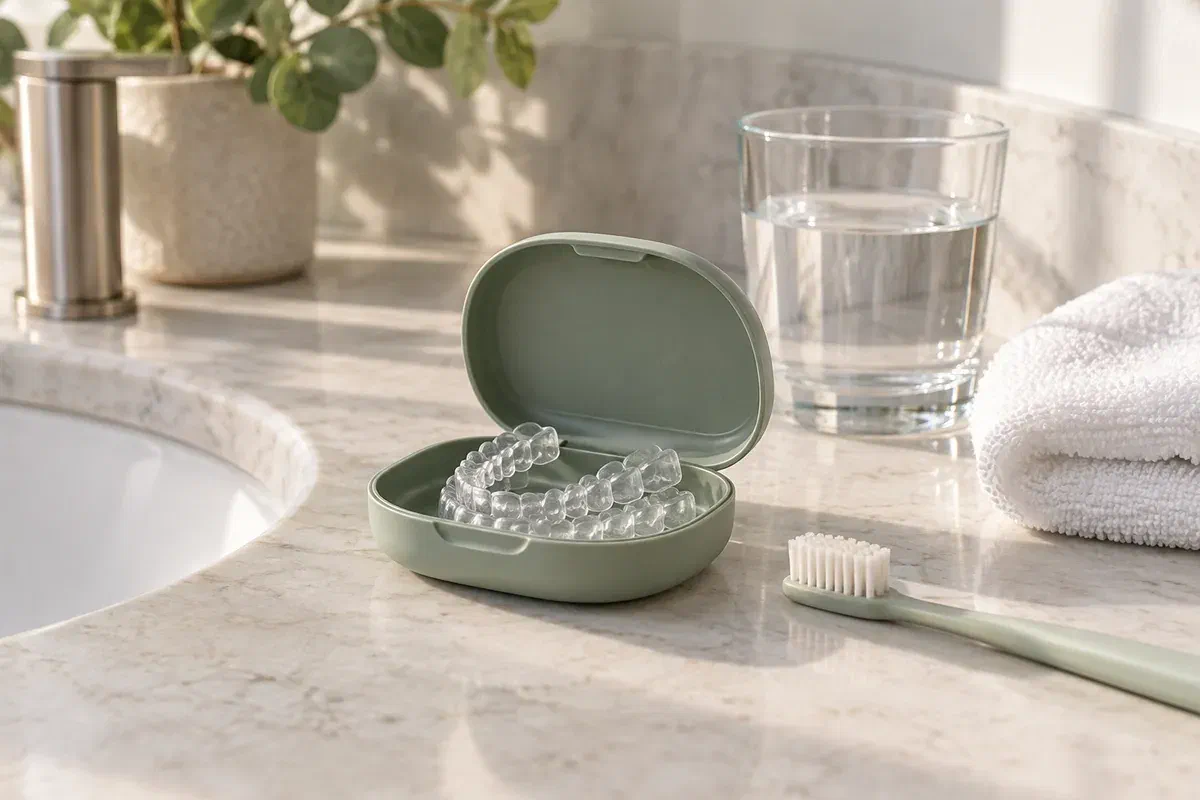
Illustrative adult aligner-care arrangement with a case, toothbrush, towel, and water
Worth mentioning early

Habits, history and the hours you keep

Begin with the result you would like, then explain what any plan has to account for. Clinicians can only be clear about limits and duties when they know the whole story.

Worn, chipped or restored teeth

Tell the clinician about crowns, bridges, implants and fillings, especially any placed because of wear. Mention restorations you may need. An implant does not drift with the teeth around it, so its position has to be respected when movement is planned.

Gums under strain

Heavy clenching, recession, bleeding or a tooth that feels mobile are all worth describing, along with any past periodontal care. Supporting tissues are evaluated before movement. If treatment is needed first, ask who will provide it and when alignment might follow.

Rural routines and long days outdoors

Farm chores, early starts, long drives and days away from a sink can make removable trays harder to manage. Describe your days honestly. A plan that reflects them has a far better chance of working.

Age is not the measure of suitability. Current oral health, the extent of wear, the movement required and the routine you can keep matter more.

What to weigh

Alignment, wear and comfort, considered together

Clear trays come out for meals and brushing, and many adults find that easier than fixed braces. That freedom also makes you responsible for wearing them as prescribed, every day and every night. Balance both sides when you compare aligners with other routes.

For people with worn teeth, goals can be mixed: straighter teeth, protection of what remains, or space for future restorations. Ask the clinician which outcomes treatment can reasonably support and which features will stay. Then decide whether the benefit is worth the commitment.

Patient information: British Orthodontic Society — considering adult orthodontic treatment

Focus on your biggest concern

It may be crowding, short-looking front teeth, a change since earlier braces, or preparing for crowns. Say which matters most. Ask how it fits the findings and whether wear or gum issues should be addressed first.

One plan across your dental care

Ask how aligner reviews will fit with checkups, cleanings, night-guard adjustments and any specialist visits. Know who is responsible for each part, and how clinicians will share updates if several are involved.

Retention and protection after treatment

Discuss reviews, refinement stages, retainers and how grinding will be managed once active treatment ends. Ask what happens if your circumstances change. These questions deserve as much time as the first trays.

How planning works

Understand the wear before planning the movement.

Your consultation should make room for your history, habits and questions. Ask what the first appointment covers and what records or decisions may come next.

  1. Talk about goals, habits and health

    Explain why you are considering alignment and what would make it worthwhile. Mention clenching, grinding, jaw discomfort, headaches on waking, medical conditions, medicines and earlier orthodontics. Include symptoms even if they seem unrelated.

  2. Examine wear, gums and bite

    The clinician assesses the teeth, the supporting tissues and how your bite comes together, and considers what records are needed. Ask whether restorative or gum care should come first. A specialist opinion may be suggested for complex findings.

  3. Weigh the proposal

    Review the scope, risks, monitoring and alternatives, and how grinding will be managed during treatment. Ask about attachments and how wear might affect them. Go through the estimate, extra stages and retention before deciding.

  4. Begin with a clear routine

    If treatment proceeds, learn how to handle and clean the trays and whom to call about problems. Confirm your wear and change schedule and what to do with your night guard. Ask which reviews can be grouped with other visits.

Daily care in the country

Plan for the barn, the truck and the kitchen table.

A routine is only useful if it holds up on long, busy days. Follow the instructions your clinician sets, and ask for help as soon as something makes them hard to manage.

Carry what you need

Keep your aligner case, a toothbrush and anything else recommended in your vehicle or bag. Think ahead about meals during chores or long errands. If cleaning is difficult away from home, ask for advice instead of leaving the trays out.

Combine visits where it makes sense

Aligner reviews and dental checkups have separate purposes, but some can sometimes be scheduled close together. Ask the team. Tell every clinician about planned procedures, as changes to a tooth can affect fit.

Report jaw pain, damage or fit issues

Get in touch about significant soreness, worsening jaw discomfort, a cracked tray or a routine that is not working. Note your current stage. Don’t speed through aligners to make up for missed wear.

Patient information: Invisalign Canada — treatment responsibilities and follow-up

Campbellville adults: options

Pick the path that protects your teeth and fits your days.

A preference for removable treatment is valid. It is weighed together with the findings, the movements required, wear and grinding, and other planned care.

When aligners can meet the agreed goals

Invisalign with a wear plan

Aligners may suit you when they can achieve the agreed changes and grinding can be managed alongside them. Ask about limitations, review frequency and retention. Understand the plan before appliances are ordered.

When the problem needs a different approach

Another appliance or a specialist

Some bite relationships, heavy wear or complex movement may call for another method or an orthodontist. Ask what that option would achieve and why it is suggested. A preference for discreet care can still be discussed.

When oral health or timing comes first

Restore or protect first, align later

Worn or damaged teeth may need restoring, or grinding may need managing, before any alignment. You might also choose to wait. Learn which problems would need care even without orthodontics, and how alignment could be reconsidered once your teeth are protected or rebuilt.

Grinding and aligner questions

What clenchers and grinders often ask

Habits and wear patterns differ from person to person. These questions can help you discuss yours.

(905) 876-4488
Will aligners stop me from grinding my teeth?
Aligners are designed to move teeth, not to treat grinding, so they should not be chosen in the hope of controlling the habit. Ask the clinician how grinding should be managed during and after treatment.
Can worn-down front teeth be aligned?
Often worn teeth can still be moved, but wear may affect how the plan is designed and what restorations might be considered later. Ask the clinician whether alignment would come before or after any rebuilding of worn edges.
What should I do with my night guard during adult Invisalign?
Bring it to the consultation. A guard made for your current teeth may not fit as they move. The clinician will advise what to wear at night during active treatment and what may be needed once retention begins.
I wake with a sore jaw. Should I mention it before starting?
Yes. Jaw discomfort is relevant to assessing your bite and planning treatment. Describe when it happens and what helps. The clinician may recommend further assessment before any tooth movement begins.
Will grinding damage my aligners?
Heavy grinding can wear or crack trays. Tell the clinician about the habit so they can advise on monitoring and what to do if an aligner shows damage. Contact the team rather than continuing with a broken tray.
Can visits be grouped for a household in Campbellville?
Ask the team whether reviews can be booked alongside checkups or appointments for other family members, where that is clinically appropriate. Some visits need to happen at set points in treatment, so confirm those first.
From Campbellville

Bring your night guard and your questions.

Our Bronte Street practice can talk you through adult orthodontic assessment and whether Invisalign might suit you alongside any grinding concerns. We will cover the questions to ask, how care might be sequenced and your daily responsibilities.

Only an individual examination can show whether aligners suit you, what scope is sensible and whether an orthodontist or other specialist should be involved.

Visit Milton Dental Clinic
Unit 1, 342 Bronte St. S, Milton, ON L9T 5B7
Get directions Clinic hours
Monday–Thursday
11am–7pm
Friday–Sunday
By appointment only

Areas we serve

  • Milton
  • Oakville
  • Mississauga
  • Georgetown
  • Halton Hills
  • Acton
  • Campbellville
  • Brampton
  • Burlington
  • Puslinch
  • Rockwood
  • Erin
  • Caledon
  • Etobicoke
  • Old Milton
  • Bronte Meadows
  • Timberlea
  • Dorset Park
  • Dempsey
  • Clarke
  • Beaty
  • Coates
  • Harrison
  • Scott
  • Willmott
  • Ford
  • Bowes
  • Cobden
  • Walker
  • Mountain View
  • Milton Heights
  • Hawthorne Village
  • Valley View
  • Fallingbrook
  • Nassagaweya
  • Trafalgar
  • Esquesing
  • Nelson
  • Brookville
  • Moffat
  • Glen Williams
  • Norval
  • Limehouse
  • Stewarttown
  • Ashgrove
  • Hornby
  • Silver Creek
  • Speyside
  • Scotch Block
  • North Oakville
  • River Oaks
  • Glen Abbey
  • West Oak Trails
  • Palermo
  • Bronte Creek
  • College Park
  • Joshua Creek
  • Uptown Core
  • Preserve
  • Iroquois Ridge
  • Lisgar
  • Meadowvale
  • Meadowvale Village
  • Churchill Meadows
  • Erin Mills
  • Central Erin Mills
  • Streetsville
  • East Credit
  • Creditview
  • Heartland
  • Sheridan
  • Mount Pleasant
  • Credit Valley
  • Huttonville
  • Churchville
  • Springbrook
  • Northwest Brampton
  • Bram West
  • Fletcher's Meadow
  • Fletcher's Creek South
  • Alton Village
  • Orchard
  • Millcroft
  • Headon Forest
  • Tansley
  • Brant Hills
  • Tyandaga
  • Kilbride
  • Lowville
  • Aberfoyle
  • Morriston
  • Arkell
  • Hillsburgh
  • Freelton
  • Carlisle
  • Waterdown
  • Flamborough
  • Mountsberg

How can we help?

Milton Dental Clinic

Have a question about your smile? Choose the option that works best for you.

For urgent dental concerns, please call.
Messages are reviewed during clinic hours.