

Illustrative adult patient discussing clear aligners with a dental clinician
Cosmetic Dentistry

Invisalign for Adults in Georgetown

Some adults have one small thing they would change; others are not sure the effort is worth it at all. From Georgetown, explore adult Invisalign by weighing realistic improvement against the commitment, with attention to your gums, bite, dental work, daily wear and retainers.

Deciding whether to go ahead

A small change, a real commitment

It is often one tooth. A lateral incisor that sits back a little, a lower tooth that has turned, a gap that never closed. You notice it in photos and wonder whether it is worth doing anything about. That is a perfectly reasonable question, and the answer depends on more than appearance.

Invisalign involves wearing a prescribed series of removable aligners that move teeth a little with each stage. Its suitability is judged by examining the teeth, the gums that support them and the way the bite fits together. Crowns, implants, gum history and the realities of your day all feed into whether the effort makes sense.

Adults from Georgetown are welcome to come to our Bronte Street practice simply to find out. There is no obligation to proceed. We can explain what assessment involves, what a realistic change might look like and whether aligners, another option or a specialist opinion would suit you better.

Find out what is realistic
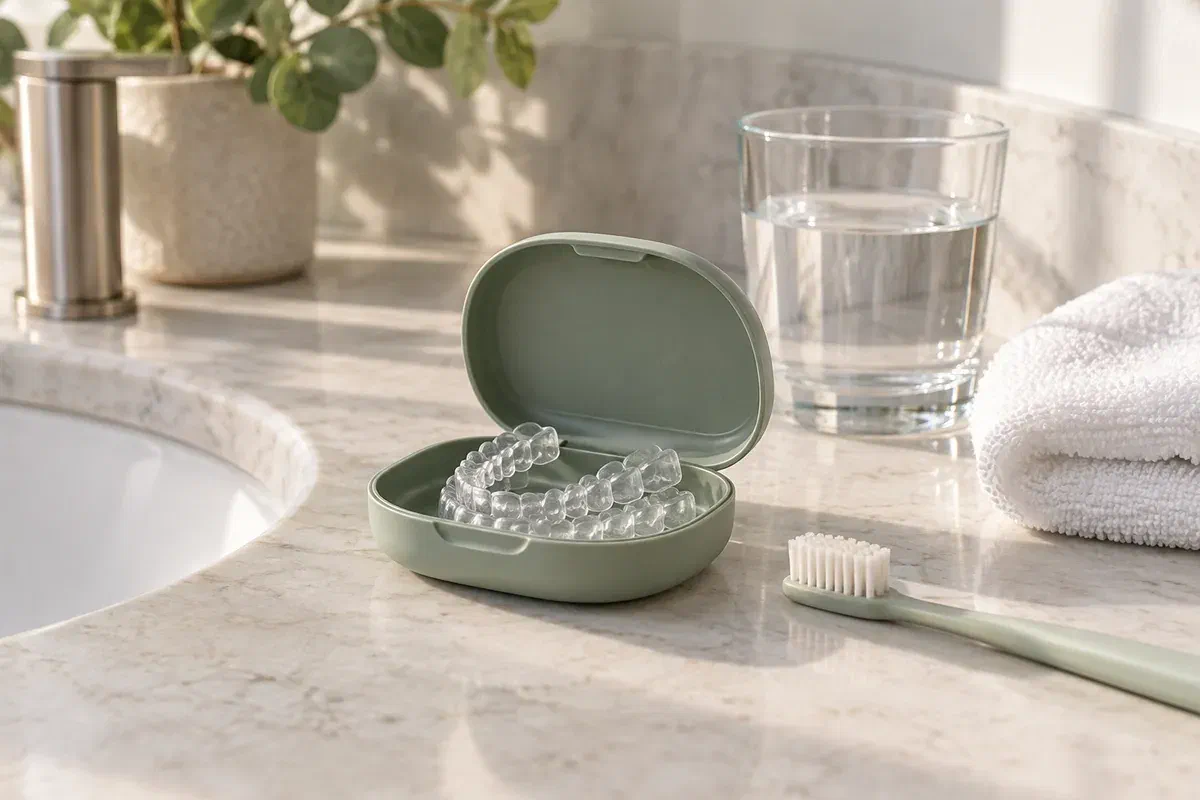
Illustrative adult aligner-care arrangement with a case, toothbrush, towel, and water
Information that helps

What a clinician needs to know to give you an honest answer

Tell us the change you hope for and the factors a plan would need to respect. With that information, the limits, benefits and responsibilities can be laid out plainly.

Your existing dental work

Crowns, bridges, implants and large fillings can limit or complicate movement. Mention any you have and anything you expect to need. An implant behaves differently from a natural tooth because it cannot be shifted, so its location shapes what is possible nearby.

The state of your gums

Describe any bleeding, recession, looseness or past periodontal care. The supporting tissues are evaluated before tooth movement is recommended. If gum treatment is needed first, ask who would carry it out and how that would affect timing.

Whether the routine is realistic for you

Removable aligners only work when worn as prescribed, day after day. Think honestly about work, family, meals and travel. A clinician can help you judge whether the routine is workable, but only if you describe your life as it actually is.

At thirty or at sixty, age alone is not the answer. Your oral health, the movement needed and whether you can follow the plan matter most.

Weighing benefit against effort

Is the improvement worth the months it takes?

Clear aligners can be taken out for meals and cleaning, and many adults like that they are less noticeable than brackets. Yet that same removability means the result rests on your consistency. Count both the convenience and the discipline when you compare it with other approaches.

For a small concern, ask the clinician exactly what change to expect and what might stay the same. For broader concerns, ask which ones treatment can reasonably address. A good proposal should give you enough to decide whether the benefit justifies the time, effort and retention that follow.

Patient information: British Orthodontic Society — considering adult orthodontic treatment

A focused discussion of your goal

Explain the single detail or set of concerns that bothers you. Ask how it relates to your bite and overall dental health, and whether anything more pressing needs attention before cosmetic alignment is considered.

Alignment that fits your overall dental care

Ask how aligner reviews would sit alongside routine checkups, hygiene and any specialist visits. Clarify who is responsible for which part. If more than one office is involved, find out how they will communicate.

The full picture, not just the start

Ask about the number of reviews, possible refinement stages, retainers and future upkeep along with the initial estimate. Find out what would happen if you moved or needed to pause. Those details are part of deciding whether it is worth it.

From curiosity to a decision

Four conversations before any trays are made

A consultation is a chance to learn, not a commitment. Ask what the first visit includes and what records or choices might come afterward.

  1. Explain what bothers you and why now

    Describe the change you would like and how much it matters to you. Share health conditions, medicines, any injuries to your teeth and previous orthodontic care. Mention symptoms even if they seem unrelated to how you look.

  2. Learn what the examination shows

    The clinician looks at the teeth, gums and bite and decides what records are needed for planning. Ask whether any dental or gum treatment should happen first, and whether a specialist assessment would be sensible.

  3. Compare what you would gain with what it takes

    Go through the proposed scope, risks, monitoring and alternatives, including doing nothing for now. Ask about attachments. Review the estimate, any extra stages and retention, and take time to decide.

  4. If you proceed, start well

    You will be shown how to insert, remove and clean your aligners and told who to call about problems. Confirm your prescribed wear and change schedule. Ask how progress will be reviewed and which appointments to book ahead.

What daily life involves

Simple habits, kept up for the long haul

Before you decide, it helps to know what the routine actually looks like. The instructions come from your treating clinician, who can also help you solve problems along the way.

Meals and cleaning outside the house

You would carry a case, a toothbrush and whatever else you have been advised to use. Consider how work lunches, gatherings and travel days would go. If cleaning away from home proves difficult, ask for suggestions instead of leaving trays out.

Ongoing checkups alongside treatment

Regular dental visits continue during aligner care because they look after different things. Keep the hygiene and periodontal visits recommended for you, and tell each clinician about planned restorations that might change appliance fit.

Speaking up when something goes wrong

Contact the team about notable discomfort, a damaged tray or a routine that is slipping. Share the stage you are at and what happened. Rushing through several trays to catch up is not advised.

Patient information: Invisalign Canada — treatment responsibilities and follow-up

Georgetown adults: three choices

Go ahead, go another way, or wait.

Your interest in a removable, discreet appliance is a legitimate part of the decision. It is weighed against the findings, the movements needed and any other dental care on your plan.

When aligners can achieve what you agreed

A suitable Invisalign plan

Aligners may be a good option when they can deliver the agreed scope and the routine suits you. Ask about limitations, how often you would be reviewed and what retention involves. You should understand the plan before appliances are ordered.

When another method suits the concern better

A different appliance or a specialist

Some movements or bite patterns are better managed with another approach or orthodontic specialist care. Ask what that would achieve and why it is advised. A preference for discretion can still be part of the conversation.

When health or timing points elsewhere

Other care first, or no treatment for now

Other dental needs may come first, or you may decide the change is not worth it at this point. Ask which findings need attention regardless. Find out how the idea could be revisited later if your priorities change.

Questions before committing

Is it worth it for me?

Only you can decide, but good information helps. These questions can guide the conversation.

(905) 876-4488
Can Invisalign treat just one crooked tooth?
Sometimes the focus can be limited, but moving one tooth can affect the bite and neighbouring teeth. The clinician will assess whether a narrower plan is appropriate for you. Ask what a limited approach could and could not achieve.
Is it possible to treat only the upper teeth?
That depends on how your upper and lower teeth meet. In some cases one arch can be treated; in others both need attention to keep the bite working well. Ask the clinician to explain what your findings suggest.
Can I see what the result might look like before deciding?
Some planning processes include a digital preview of proposed tooth movement. Ask whether one would be part of your planning and how closely it reflects a realistic outcome. A preview is a plan, not a guarantee.
What if I decide to stop partway through?
Stopping early can leave teeth in an in-between position. Discuss the commitment fully before you begin, and if circumstances change during treatment, talk to the team rather than simply stopping. Ask what options would exist.
Will straightening change how my bite feels?
Moving teeth can change how they meet, and some adults notice the difference. Ask the clinician how your bite is expected to change and what monitoring will be done to check it during and after treatment.
Is there any harm in waiting a year to decide?
For many purely cosmetic concerns, taking time to decide is reasonable. However, some findings, such as gum problems or decay, need attention regardless. Ask which parts of your assessment are time-sensitive and which can wait.
Coming in from Georgetown

Come to learn. Decide later.

Visit our Bronte Street practice to discuss adult orthodontic assessment and whether Invisalign could address what bothers you. We can explain the questions to ask, the likely order of care and your daily responsibilities, with no pressure to proceed.

Suitability, scope and any referral for specialist care depend on an individual assessment.

Visit Milton Dental Clinic
Unit 1, 342 Bronte St. S, Milton, ON L9T 5B7
Get directions Clinic hours
Monday–Thursday
11am–7pm
Friday–Sunday
By appointment only

Areas we serve

  • Milton
  • Oakville
  • Mississauga
  • Georgetown
  • Halton Hills
  • Acton
  • Campbellville
  • Brampton
  • Burlington
  • Puslinch
  • Rockwood
  • Erin
  • Caledon
  • Etobicoke
  • Old Milton
  • Bronte Meadows
  • Timberlea
  • Dorset Park
  • Dempsey
  • Clarke
  • Beaty
  • Coates
  • Harrison
  • Scott
  • Willmott
  • Ford
  • Bowes
  • Cobden
  • Walker
  • Mountain View
  • Milton Heights
  • Hawthorne Village
  • Valley View
  • Fallingbrook
  • Nassagaweya
  • Trafalgar
  • Esquesing
  • Nelson
  • Brookville
  • Moffat
  • Glen Williams
  • Norval
  • Limehouse
  • Stewarttown
  • Ashgrove
  • Hornby
  • Silver Creek
  • Speyside
  • Scotch Block
  • North Oakville
  • River Oaks
  • Glen Abbey
  • West Oak Trails
  • Palermo
  • Bronte Creek
  • College Park
  • Joshua Creek
  • Uptown Core
  • Preserve
  • Iroquois Ridge
  • Lisgar
  • Meadowvale
  • Meadowvale Village
  • Churchill Meadows
  • Erin Mills
  • Central Erin Mills
  • Streetsville
  • East Credit
  • Creditview
  • Heartland
  • Sheridan
  • Mount Pleasant
  • Credit Valley
  • Huttonville
  • Churchville
  • Springbrook
  • Northwest Brampton
  • Bram West
  • Fletcher's Meadow
  • Fletcher's Creek South
  • Alton Village
  • Orchard
  • Millcroft
  • Headon Forest
  • Tansley
  • Brant Hills
  • Tyandaga
  • Kilbride
  • Lowville
  • Aberfoyle
  • Morriston
  • Arkell
  • Hillsburgh
  • Freelton
  • Carlisle
  • Waterdown
  • Flamborough
  • Mountsberg

How can we help?

Milton Dental Clinic

Have a question about your smile? Choose the option that works best for you.

For urgent dental concerns, please call.
Messages are reviewed during clinic hours.