

Illustrative adult patient discussing clear aligners with a dental clinician
Cosmetic Dentistry

Invisalign for Adults in Old Milton

After years of fillings, crowns and checkups, an adult mouth tells a long story. If you are wondering whether alignment still makes sense, explore Invisalign from Old Milton with a careful look at restorations, gum support, everyday wear and the retainers that keep results in place.

Alignment with a longer dental history

A mouth with decades of dental work can still be part of an alignment plan.

Many people who have lived on the established streets of Milton’s historic downtown for years have had a good deal of dentistry along the way. A few crowns, an older bridge, perhaps an implant. When the idea of straightening comes up, the first question is often whether all that work gets in the way.

Invisalign aligners are removable trays, prescribed and changed in stages to move teeth gradually. Restorations do not automatically exclude you, but they do have to be part of the planning. So do the health of your gums, the way your teeth meet and how comfortably a daily wear routine fits your life now.

Bring your dental records, or simply your memory of what has been done and when. At our Bronte Street practice, close by for anyone in Old Milton, we can talk through what an assessment would cover and whether aligners, another approach or a specialist opinion is the better next step.

Talk about aligners and existing dental work
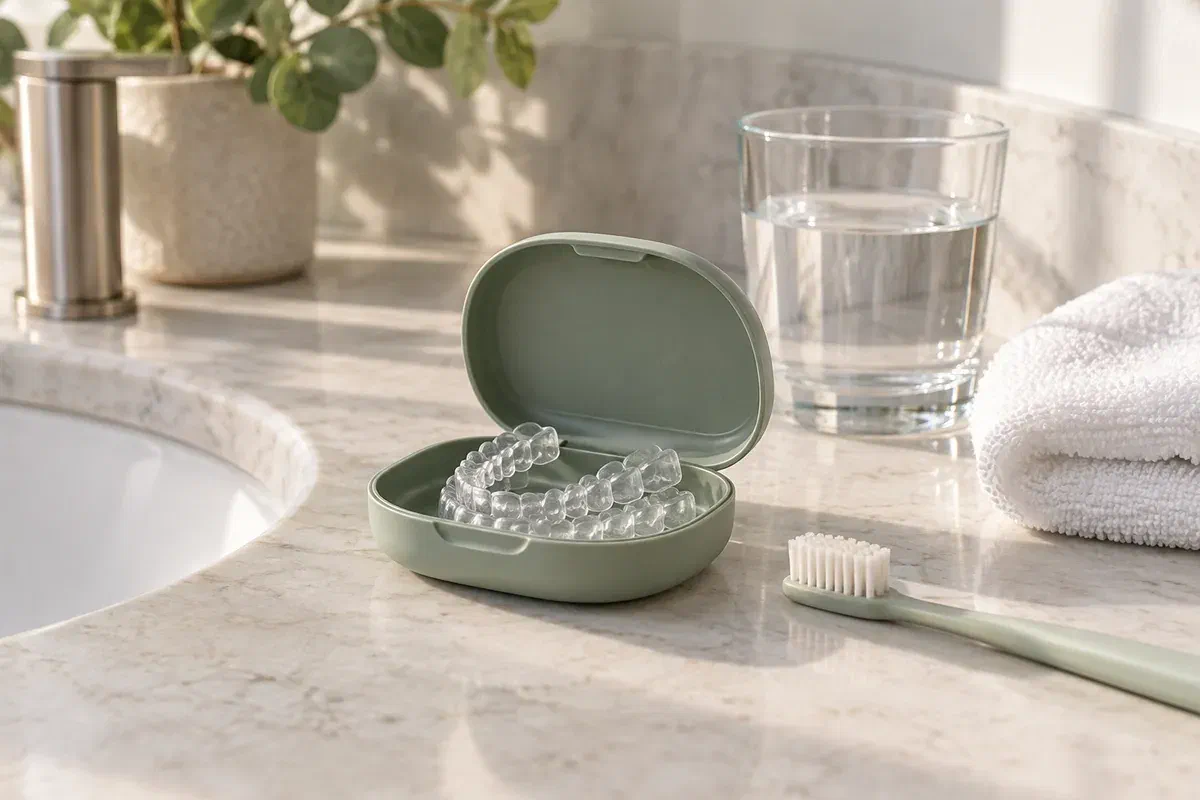
Illustrative adult aligner-care arrangement with a case, toothbrush, towel, and water
Before anything moves

Tell us about the work your teeth already carry.

Your goal is important, but so is the list of things a plan has to respect. Sharing it early lets the clinician explain realistic limits and what would be asked of you.

Older restorations and work still to come

Crowns, bridges, implants and large fillings all affect how teeth can be moved and in what order. Mention anything you expect to replace soon. Because an implant is anchored in bone and stays put, the teeth around it must be planned with that in mind.

Gums that have changed over time

Recession, bleeding, a tooth that feels a little loose or past periodontal treatment are all worth describing. The supporting tissues are checked before alignment is considered. If gum care is needed first, ask who will provide it and how it affects timing.

A routine you can keep

Retirement, part-time work, caring for grandchildren or a busy volunteer schedule each shape the day differently. Aligners only work when they are worn as prescribed. Be candid about what could get in the way so the plan reflects real life.

No birthday makes aligners right or wrong on its own. Your current oral health, the movement involved and whether the routine suits you are the questions that count.

Is it worth it?

Think about the whole journey, not only the trays.

Removable aligners let you eat normally and clean your teeth without working around brackets. That freedom has a price: the trays must actually be in your mouth for the hours prescribed. Keep both points in view when you compare aligners with other methods.

Your hopes might be quite specific, like one tooth that has rotated, or broader. A good clinician will tell you which changes are realistic and which features are likely to remain. Only then can you decide whether the likely improvement justifies the effort.

Patient information: British Orthodontic Society — considering adult orthodontic treatment

Attention to what bothers you

It may be a lower tooth that has crept out of line, a gap that has widened, or the need to make room for a new crown. Say which matters most. Ask how that priority relates to the findings and whether other concerns should come first.

Care that fits around your restorations

Ask how aligner reviews will work alongside regular checkups and any visits to a periodontist or other specialist. Find out who is responsible for each step. When several people are involved, clear communication keeps the order of care understandable.

A realistic view of what follows

Treatment does not end with the last tray. Ask about reviews, possible refinement stages, retainers and long-term maintenance. Discuss what would happen if your health or living arrangements changed partway through.

How planning unfolds

Start with your history, then decide.

A consultation should leave space for your past treatment, your goals and any doubts you have. Ask what the first appointment includes and what records or choices may come afterward.

  1. Share your goals and medical background

    Explain what has made you curious about alignment now. Review health conditions, medicines you take, past dental injuries and earlier orthodontics. Mention any symptoms, including jaw discomfort, even if they seem unconnected to the way your teeth look.

  2. Check the foundations

    The clinician looks at the teeth, gums and bite and considers the records needed for planning. Ask whether a restoration or gum treatment should be done before alignment. A specialist may be recommended when your history or findings are more involved.

  3. Weigh the proposal carefully

    Go through the suggested scope, the risks, how you will be monitored and what other options exist. Ask whether attachments are part of it. Review the estimate along with any later stages and retainers before deciding.

  4. Get started with confidence

    If you go ahead, you will be shown how to handle and clean the aligners and given a contact for problems. Confirm your personal wear and change schedule. Ask how progress will be reviewed and which visits to book ahead.

Day-to-day wear

Small habits, repeated faithfully.

The best routine is one that still works when your day goes off script. Your treating clinician gives the instructions and can help you troubleshoot when something makes them hard to follow.

Plan ahead for lunches and outings

Carry the case and cleaning items you have been shown how to use. Consider in advance how a meal out with friends or a family gathering will work. If brushing away from home is awkward, ask for suggestions instead of leaving trays out for hours.

Keep your regular dental visits

An aligner review and a dental checkup do different jobs. Continue the hygiene and periodontal appointments recommended for you. If a crown or filling is planned, tell everyone involved so the change in tooth shape can be considered for fit.

Report problems promptly

Get in touch if soreness is more than mild, a tray cracks or goes missing, or the routine is slipping. Note your current stage and what happened. Never skip ahead through trays to catch up on missed wear.

Patient information: Invisalign Canada — treatment responsibilities and follow-up

Old Milton adults: your options

Match the approach to the findings.

A preference for a removable, discreet appliance is valid. It is considered together with your examination, the movements required and the other dental care you may need.

When aligners can meet the agreed scope

An Invisalign plan suited to you

Clear aligners may be reasonable if they can achieve what you have agreed on and you can follow the routine. Ask about the limits, review frequency and retention. Make sure the plan makes sense to you before any trays are ordered.

When the problem calls for something else

Another appliance or an orthodontist

Some bite issues or tooth movements are better addressed with another method or a specialist. Ask what that option would achieve and why it is suggested. Your interest in something less visible can still be discussed.

When health or timing should lead

Restore first, or decide later

A failing filling, gum concerns or other care may need to come first, or now may not be the right time. Learn which findings need treatment either way. Ask how alignment could be reconsidered once those issues or obstacles are settled.

Common questions

What adults with established dental work tend to ask.

No two dental histories read the same way. These questions are a starting point for discussing yours.

(905) 876-4488
Can aligners move teeth next to an old bridge?
A bridge joins teeth together, which affects how those teeth and their neighbours can be moved. Tell the clinician where it is and roughly when it was placed. Ask whether the plan works around it, or whether replacing it would need to be considered first.
Will I need my crowns replaced after Invisalign?
Not necessarily, but it is a fair question to ask during planning. Sometimes a restoration is redone after alignment to suit the new position, and sometimes it is left as it is. Ask what the clinician expects for your specific teeth and why.
I have some gum recession. Should that stop me from asking?
No. Recession is something to describe, not a reason to stay away. The clinician will assess how stable the gums and supporting bone are and may suggest periodontal input. Ask what monitoring would be needed before and during any tooth movement.
Do medicines I take need to be mentioned for adult aligner planning?
Yes. Bring a current list of medications and health conditions. Some can affect the gums, saliva or bone, and the clinician needs the full picture to plan safely. Ask whether any of them change the approach or the monitoring.
How long will I need to wear a retainer afterward?
Retention is a long-term part of orthodontic care, because teeth can shift again over time. The clinician will recommend a retainer type and schedule for your situation. Ask what the plan is for replacing a retainer if it wears or breaks.
Can I take my aligners out for a family dinner?
Aligners are removed for meals, but the total time out of the mouth matters. Ask how special occasions fit within your prescribed wear. Clean your teeth before putting the trays back, and avoid making long breaks a regular habit.
Visit us from Old Milton

Your history is welcome here. Bring it with you.

Stop by our Bronte Street practice to discuss whether Invisalign might suit your teeth and your daily life. We can explain what an assessment covers, how care around existing restorations might be sequenced, and what you would be responsible for.

Suitability, scope and any specialist referral are decided through an individual assessment.

Visit Milton Dental Clinic
Unit 1, 342 Bronte St. S, Milton, ON L9T 5B7
Get directions Clinic hours
Monday–Thursday
11am–7pm
Friday–Sunday
By appointment only

Areas we serve

  • Milton
  • Oakville
  • Mississauga
  • Georgetown
  • Halton Hills
  • Acton
  • Campbellville
  • Brampton
  • Burlington
  • Puslinch
  • Rockwood
  • Erin
  • Caledon
  • Etobicoke
  • Old Milton
  • Bronte Meadows
  • Timberlea
  • Dorset Park
  • Dempsey
  • Clarke
  • Beaty
  • Coates
  • Harrison
  • Scott
  • Willmott
  • Ford
  • Bowes
  • Cobden
  • Walker
  • Mountain View
  • Milton Heights
  • Hawthorne Village
  • Valley View
  • Fallingbrook
  • Nassagaweya
  • Trafalgar
  • Esquesing
  • Nelson
  • Brookville
  • Moffat
  • Glen Williams
  • Norval
  • Limehouse
  • Stewarttown
  • Ashgrove
  • Hornby
  • Silver Creek
  • Speyside
  • Scotch Block
  • North Oakville
  • River Oaks
  • Glen Abbey
  • West Oak Trails
  • Palermo
  • Bronte Creek
  • College Park
  • Joshua Creek
  • Uptown Core
  • Preserve
  • Iroquois Ridge
  • Lisgar
  • Meadowvale
  • Meadowvale Village
  • Churchill Meadows
  • Erin Mills
  • Central Erin Mills
  • Streetsville
  • East Credit
  • Creditview
  • Heartland
  • Sheridan
  • Mount Pleasant
  • Credit Valley
  • Huttonville
  • Churchville
  • Springbrook
  • Northwest Brampton
  • Bram West
  • Fletcher's Meadow
  • Fletcher's Creek South
  • Alton Village
  • Orchard
  • Millcroft
  • Headon Forest
  • Tansley
  • Brant Hills
  • Tyandaga
  • Kilbride
  • Lowville
  • Aberfoyle
  • Morriston
  • Arkell
  • Hillsburgh
  • Freelton
  • Carlisle
  • Waterdown
  • Flamborough
  • Mountsberg

How can we help?

Milton Dental Clinic

Have a question about your smile? Choose the option that works best for you.

For urgent dental concerns, please call.
Messages are reviewed during clinic hours.