

Illustrative patient and dental clinician reviewing an aligner and tooth model
Cosmetic Dentistry

Invisalign Refinements in Campbellville

Straighter front teeth are easy to see. A bite that lands a little differently at dinner is harder to judge. For households around Campbellville, a refinement review looks at how your teeth now meet, what is still unfinished, and whether further aligners, another approach, or retainers should come next.

Bite checks and refinements for Campbellville

Your smile looks right. Does your bite feel right?

Partway through a meal, you may notice that your back teeth do not meet the way they used to, or that one side seems to touch first. During aligner treatment, the bite can change as teeth move, and the final stage is a good moment to check how everything comes together.

Sometimes that check leads to refinements: extra aligners designed after reassessment, intended to finish movements that have not fully happened. These are still part of active treatment. A retainer has a different role, which is to hold teeth in position once your clinician decides active movement is complete.

If we supervise your aligners, describe the bite change at your progress review. If another office manages your treatment, start with them; a second opinion from us is possible when it fits the situation. For rural households, grouping that review with other family appointments can save a trip.

Book a bite and progress review
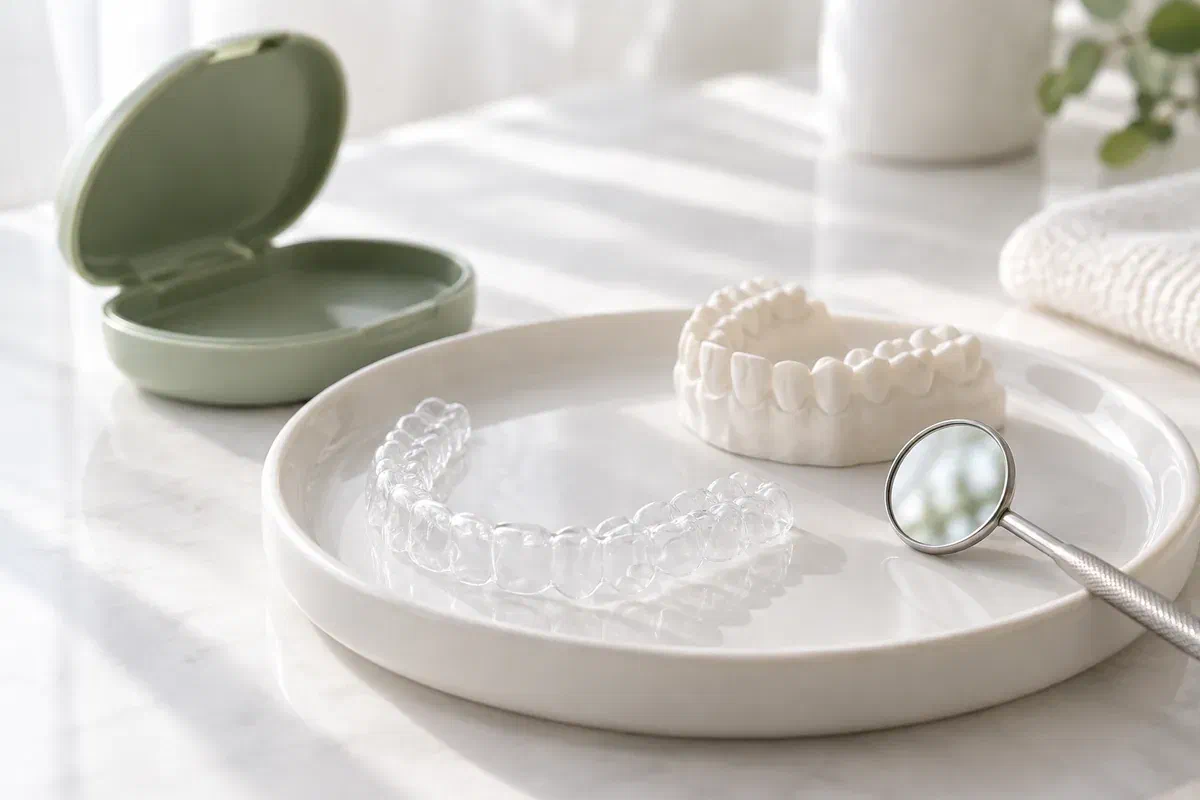
Illustrative clear aligner, tooth model, dental mirror, and protective case
Telling the clinician what has changed

Chewing, contact, and comfort

Bite concerns are often felt more than seen. Describing when and where you notice the change helps the clinician tell unfinished movement apart from a fit problem or a tooth-shape detail.

Front teeth that are nearly, not quite, there

Name the tooth, rotation, or space that still looks off. Ask whether it sits short of your treatment goal and whether more movement would be reasonable. A picture can support what you say, but your teeth and bite need to be examined.

Back teeth meeting differently

Explain which side touches first, whether chewing feels uneven, and whether trays have started lifting. Note the stage when it began. A new series is not automatically the fix, so let the clinician investigate the cause first.

Fitting more treatment into rural life

Further stages can mean more trips, more wear, and more cost. Be open about what feels manageable. Ask what the next stage is designed to achieve, how many visits it might need, and what the alternatives are.

Refinements being recommended is not, in itself, evidence of a mistake or of poor wear. Ask for the specific findings behind the suggestion.

What reassessment can tell you

The bite, explained

A careful review connects what you feel with what the clinician finds. It separates concerns about function and comfort from cosmetic ones, and both from details caused by a tooth’s natural outline or wear rather than its position.

It is also honest about limits. Further aligners do not guarantee a perfect bite or smile, and some adjustments may not be advisable. The discussion should cover likely benefit, risk, uncertainty, and how willing you are to continue.

A specific reason for further trays

Ask which contacts or positions the refinement series would change and why aligners suit that goal. If both bite and appearance concerns remain, ask how they are prioritized. Reasons tied to your exam are worth more than a general reassurance.

Planning around today’s bite

New scans or photos may be taken so the plan reflects how your teeth meet now. Ask what is being re-evaluated, whether attachments or elastics would change, and whether any new dental concern should be addressed.

A defined route to retention

Ask what will tell the clinician that the bite and alignment goals have been met, and how the transition to retainers will be handled. Confirm practical and financial limits. A projected finish is a guide only.

Inside the review

Feel, look, plan, and hold.

Your history and concern set the exact steps. Ask for guidance covering the appointment and the interval until any new aligners arrive, so a single trip covers as much as it can.

  1. Describe the bite in your own words

    Bring your current aligners and explain where your teeth seem to meet differently. Mention skipped wear, lost attachments, or tenderness candidly. The clinician will compare your description with your records and the goals agreed at the outset.

  2. Assess contacts, positions, and health

    The clinician examines how your teeth meet, their positions, and your general oral health. A scan, photographs, or impressions may be suggested for a specific purpose. Ask whether any issue should be treated before further movement.

  3. Weigh refinements against other routes

    Talk through what extra aligners would aim to change, where they might fall short, and any changes to attachments or elastics. Clarify fees and inclusions. If an alternative is recommended, ask what makes it a better fit for your findings.

  4. Take home clear holding instructions

    Confirm which appliance to wear, for how many hours, and who to call if it breaks. Once the new series arrives, follow its schedule; the switching pattern you used earlier may not apply.

Through the interval

Keep things steady between stages.

Planning and delivery can take a few weeks. Ask practical questions at the review so you are not left guessing at home in Campbellville.

Wear only what you were told to

The clinician may want you in a particular tray or another appliance while new aligners are made. Keep to the stated hours. Reaching your last tray does not mean you can stop. Phone the team if it cracks or no longer fits.

Notice how the new trays affect your bite

When the refinement series starts, check the order, timing, and any elastics or attachments. Mention any new chewing discomfort at your review. If your routine has changed, discuss it so the plan still works.

Confirm the bite before retainers

Share any lingering concern about how your teeth meet, or how they look, at the scheduled review. Ask whether it is something aligners can address. Make sure active movement is formally finished and the retainer plan is clear.

Possible ways forward

Finishing the bite, the smile, or both

What is recommended should reflect your examination and goals. For each path, ask what it does about the remaining concern and what it means for future visits.

When targeted movement is suitable

Refinements aimed at a specific contact or tooth

A further series may be designed to adjust particular teeth or the way the arches meet. Ask what will change and how the bite will be rechecked. Confirm appointments and any additional costs before it is ordered.

When the concern may lie elsewhere

A different assessment or method

Bite findings sometimes call for specialist advice, a different technique, or a look at a worn tooth or restoration. Ask whether another round of aligner movement could realistically change the bite, and who will take charge of the next recommendation.

When the bite and alignment are confirmed

Moving into retention

Once your clinician is satisfied that the bite and alignment have reached the agreed point, talk through anything you are choosing to live with and how retention will work. That decision should be said out loud. Ask about the retainer, how to wear it, check-ups, and who to phone if it ever feels tight or loose.

Patient information: British Orthodontic Society — aligner treatment and retention

Bite and refinement questions

Questions about how your teeth come together

These are general answers; yours will come from your own scans, photos, and bite assessment. Another person’s refinement experience will not predict your bite or your timeline.

(905) 876-4488
Is it normal for my bite to feel different during aligner treatment?
Some change can happen as teeth move, and aligners themselves cover the biting surfaces. A bite that feels uneven, sore, or noticeably different should still be mentioned so the clinician can assess it. Try to note when you first felt it, which side is involved, and whether it changes when the trays are out.
Can refinements adjust how my back teeth meet?
In some cases, refinements aim to improve contacts or the bite relationship. Ask whether that is the goal for you and how it would be judged. Some bite concerns may need a different approach.
Why might elastics be added in a refinement series?
Some plans use small elastics attached to aligners to help with certain bite corrections. Ask whether your series includes them, how to wear them, and what to do if one breaks.
Can I group my refinement review with family dental visits?
Often, yes. Mention when booking that you would like appointments arranged together, and the team will see what is possible. Keep in mind that some records or reviews may need their own time. Calling ahead with a list of who needs what helps the team plan a sensible block of appointments.
Does a refinement plan mean my first series didn’t work?
Not necessarily. Teeth can respond differently than predicted. Ask which goals were met, which remain, and how the findings support the recommendation.
Do I wear refinement trays the same way I will wear a retainer?
Not usually. Refinement trays continue active movement and have their own wear and change instructions. Retainers hold teeth afterward and follow a separate routine. Ask for specific instructions for each.
Progress reviews for Campbellville

Tell us how your bite feels, and bring the trays.

Book time at our Bronte Street practice to understand the assessment you need and what any further aligners would aim to do. If another provider oversees your care, mention it when booking.

Refinement suitability, cost, timing, and any change of provider require assessment. No further aligners can guarantee a particular bite or appearance.

Visit Milton Dental Clinic
Unit 1, 342 Bronte St. S, Milton, ON L9T 5B7
Get directions Clinic hours
Monday–Thursday
11am–7pm
Friday–Sunday
By appointment only

Areas we serve

  • Milton
  • Oakville
  • Mississauga
  • Georgetown
  • Halton Hills
  • Acton
  • Campbellville
  • Brampton
  • Burlington
  • Puslinch
  • Rockwood
  • Erin
  • Caledon
  • Etobicoke
  • Old Milton
  • Bronte Meadows
  • Timberlea
  • Dorset Park
  • Dempsey
  • Clarke
  • Beaty
  • Coates
  • Harrison
  • Scott
  • Willmott
  • Ford
  • Bowes
  • Cobden
  • Walker
  • Mountain View
  • Milton Heights
  • Hawthorne Village
  • Valley View
  • Fallingbrook
  • Nassagaweya
  • Trafalgar
  • Esquesing
  • Nelson
  • Brookville
  • Moffat
  • Glen Williams
  • Norval
  • Limehouse
  • Stewarttown
  • Ashgrove
  • Hornby
  • Silver Creek
  • Speyside
  • Scotch Block
  • North Oakville
  • River Oaks
  • Glen Abbey
  • West Oak Trails
  • Palermo
  • Bronte Creek
  • College Park
  • Joshua Creek
  • Uptown Core
  • Preserve
  • Iroquois Ridge
  • Lisgar
  • Meadowvale
  • Meadowvale Village
  • Churchill Meadows
  • Erin Mills
  • Central Erin Mills
  • Streetsville
  • East Credit
  • Creditview
  • Heartland
  • Sheridan
  • Mount Pleasant
  • Credit Valley
  • Huttonville
  • Churchville
  • Springbrook
  • Northwest Brampton
  • Bram West
  • Fletcher's Meadow
  • Fletcher's Creek South
  • Alton Village
  • Orchard
  • Millcroft
  • Headon Forest
  • Tansley
  • Brant Hills
  • Tyandaga
  • Kilbride
  • Lowville
  • Aberfoyle
  • Morriston
  • Arkell
  • Hillsburgh
  • Freelton
  • Carlisle
  • Waterdown
  • Flamborough
  • Mountsberg

How can we help?

Milton Dental Clinic

Have a question about your smile? Choose the option that works best for you.

For urgent dental concerns, please call.
Messages are reviewed during clinic hours.