

Illustrative patient and dental clinician reviewing an aligner and tooth model
Cosmetic Dentistry

Invisalign Refinements in Georgetown

A small gap between a tray and a tooth is easy to ignore, but it can mean teeth and aligners have drifted apart. For anyone in Georgetown seeing that happen near the end of a series, a progress review checks the fit, the movement so far, and whether refinement aligners belong in the next step.

Aligner fit and refinements, for Georgetown

When the tray stops hugging the tooth

You press the aligner in and one corner refuses to sit down. Maybe there is a sliver of air over a canine, or the tray clicks into place everywhere except one spot. That mismatch can mean a tooth has not kept pace with the planned sequence.

Refinements may follow once a clinician has looked closely. They are an additional series of aligners, planned after reassessment, to continue active movement toward goals that are still open. Retainers are separate: they are used after active treatment is judged finished and help keep teeth where they are.

If our clinic supervises your aligners, call us when the fit changes rather than waiting for the last tray. If another practice manages your care, contact them first; we can offer a separate opinion where that is appropriate. A fit problem deserves an explanation, not just a new box.

Ask about a fit and progress check
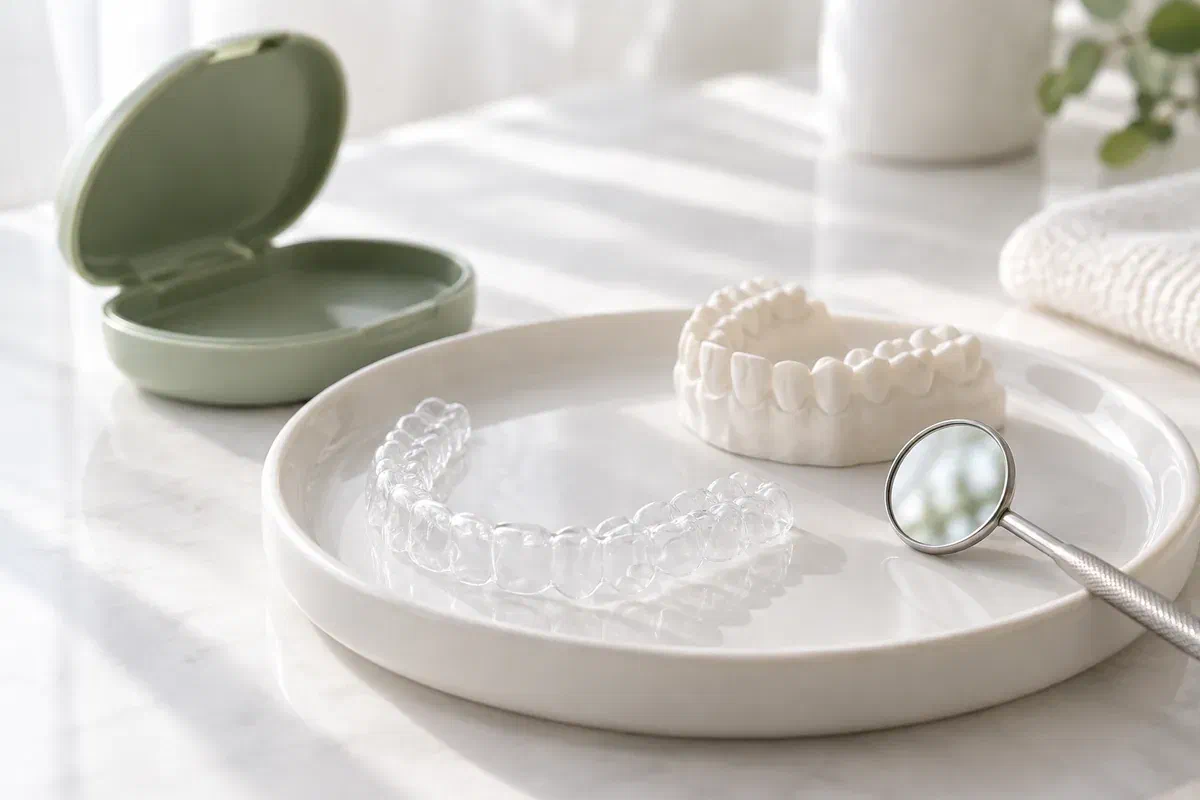
Illustrative clear aligner, tooth model, dental mirror, and protective case
Signs to mention

Describe the fit, not just the look.

A tray that lifts, a bite that changes, and a tooth that simply looks uneven may have different causes. Explain what you notice so the clinician can separate them.

A tooth lagging behind the plan

Point to the tooth under the air gap or the space that has not closed. Ask whether it is short of the intended position and whether more movement is sensible. A photo of the tray on your teeth can help, though it cannot replace an exam.

Trays that rock, lift, or click

Note which tray number first felt loose, whether a bite change came with it, and whether chewing has become uncomfortable. Mention lost or worn attachments. Let the cause be found before assuming a refinement series will cure it.

Frustration about going backwards

Being told to stay in a tray longer, or to restart with new ones, can feel like losing ground. Say how you feel about the time, cost, and routine. Ask what a new stage would accomplish and which alternatives might be available.

A poor fit or a refinement recommendation does not automatically mean anyone made a mistake or that you wore your trays poorly. Ask what the examination found.

Why checking fit early helps

Catch the drift before it grows.

A timely review links what the clinician sees with a specific response. Sometimes that is a holding instruction, sometimes new records, sometimes a refinement plan. The aim is to sort issues of function or oral health from cosmetic ones, and from details that reflect a tooth’s shape rather than its position.

Limits matter here too. New aligners cannot guarantee a perfect finish, and not every change is wise to pursue. A sound discussion weighs likely benefit, risks, what is uncertain, and whether you want to continue.

An explanation for the poor fit

Ask the clinician what they think is causing the mismatch, and whether it relates to movement, attachments, or the tray itself. If a refinement series is suggested, ask what it would change. Specific reasons help you trust the plan.

New records from the current position

A fresh scan or photos may be needed so any new aligners are designed around your teeth as they are today. Ask what is being re-recorded and whether attachments will be replaced or repositioned.

A clear line to the finish

Ask how the next review will judge whether goals are met and how retention would begin. Confirm practical and financial limits. A visible endpoint makes extra steps easier, although no finish date can be guaranteed.

What happens at the review

Fit check, exam, explanation, and next instructions

The details depend on your treatment so far. Ask for guidance on the visit and on what to wear if new trays take a few weeks.

  1. Try the trays in together

    Bring your current aligner and the previous one if you still have it. The clinician can see how each seats and where it lifts. Mention missed wear, lost attachments, or soreness honestly, and let them compare it with your records.

  2. Examine teeth, bite, and attachments

    Tooth positions, contacts, and attachments are checked along with your general oral health. A scan, photos, or impressions may be advised for a particular reason. Ask what each will show and whether anything needs treatment first.

  3. Explain the proposed response

    Discuss whether a holding period, attachment repair, or a refinement series is recommended, what each aims to achieve, and its limits. Ask about fees and inclusions. If another approach is suggested, ask why it suits the findings.

  4. Confirm the holding plan

    Before you leave, know which tray to wear, for how many hours, and who to call if it cracks. When refinements arrive, follow their schedule. The earlier switching rhythm may not apply to the new series.

Between the review and new trays

Keep the fit as good as it can be.

Waiting for planning or manufacturing can raise practical questions. Ask early so you know what to wear and how your next visit will be booked.

Wear the tray you were told to wear

Often the clinician picks the best-fitting aligner you have and asks you to keep it in until the refinements arrive. Keep to the hours. Do not jump ahead to a looser tray. Call if your holding appliance breaks or stops seating.

Seat new aligners carefully

When the refinement series arrives, check the order, switching interval, and any new attachments. Ask whether a seating aid is recommended. If your schedule in Georgetown has changed since you started, mention it so the plan still suits you.

Report fit problems promptly

If a new tray also fails to seat, contact the team instead of waiting for the next review. Keep track of when it started. Before treatment is called complete, confirm the end of active movement and the retainer plan.

What might come next

From a better fit to a finished smile

The plan should follow the exam and your goals. Ask how each option addresses the fit or position concern and what it would mean for future care.

When the plan needs updating

Refinement aligners to get back on track

A new series may be designed from your current positions to address specific teeth or contacts. Ask what will change and how fit and progress will be reviewed. Confirm the arrangements and any additional fees before it is ordered.

When the issue lies elsewhere

Attachment work or a different approach

Sometimes the answer is replacing attachments, specialist input, or a shape-related or restorative discussion. Ask whether more movement of the same kind is likely to help, and who will coordinate any referral.

When the goals have been reached

Finish and move into retention

If active treatment is judged complete, talk through any limitations you are accepting and how retention will work. Ask about the retainer, wear instructions, follow-up checks, and what to do if it ever stops fitting well.

Patient information: British Orthodontic Society — aligner treatment and retention

Fit and refinement questions

What a loose tray might be telling you

Answers depend on your records and examination. Another person’s refinement count is not a useful forecast for your treatment.

(905) 876-4488
What does it mean when an aligner doesn’t fully seat on a tooth?
It may mean the tooth has not moved as far as the tray expects, an attachment has worn or come off, or the tray is damaged. The clinician needs to check. Contact the team rather than forcing the tray or skipping ahead.
Should I stay in my current tray longer if it feels loose?
Only if your treating clinician tells you to. Sometimes they advise staying in a tray longer or going back to a previous one, but that decision depends on what is happening. Ask for a specific instruction.
Can a missing attachment affect how my trays fit?
Yes. Attachments help aligners grip and guide teeth. If one comes off, tell the team so they can decide whether it needs replacing before the next stage. Keep wearing your appliance unless told otherwise.
Are aligner seating aids worth using?
Some clinicians recommend them to help trays seat fully. Ask whether one is suitable for you and how to use it. It should not be used to force a tray that clearly does not fit.
Will refinement aligners replace my retainer?
No. Refinement aligners are for further active movement. A retainer is used afterward to help maintain the result. Ask which appliance you have been given and what its purpose is.
Do I have to wait for my last tray to raise a fit concern?
No. Contact the treating team as soon as you notice a fit problem, new symptoms, or a worry about progress. They can tell you whether you need to be seen sooner.
Georgetown aligner check-ins

Bring the tray that won’t sit down.

Arrange a visit at our Bronte Street practice so we can check the fit, explain what assessment is needed, and discuss the purpose of any further aligners. Tell us when booking if another provider manages your care.

We can only confirm whether refinements suit you, and what they would involve and cost, after an assessment. Further aligners cannot promise a specific result.

Visit Milton Dental Clinic
Unit 1, 342 Bronte St. S, Milton, ON L9T 5B7
Get directions Clinic hours
Monday–Thursday
11am–7pm
Friday–Sunday
By appointment only

Areas we serve

  • Milton
  • Oakville
  • Mississauga
  • Georgetown
  • Halton Hills
  • Acton
  • Campbellville
  • Brampton
  • Burlington
  • Puslinch
  • Rockwood
  • Erin
  • Caledon
  • Etobicoke
  • Old Milton
  • Bronte Meadows
  • Timberlea
  • Dorset Park
  • Dempsey
  • Clarke
  • Beaty
  • Coates
  • Harrison
  • Scott
  • Willmott
  • Ford
  • Bowes
  • Cobden
  • Walker
  • Mountain View
  • Milton Heights
  • Hawthorne Village
  • Valley View
  • Fallingbrook
  • Nassagaweya
  • Trafalgar
  • Esquesing
  • Nelson
  • Brookville
  • Moffat
  • Glen Williams
  • Norval
  • Limehouse
  • Stewarttown
  • Ashgrove
  • Hornby
  • Silver Creek
  • Speyside
  • Scotch Block
  • North Oakville
  • River Oaks
  • Glen Abbey
  • West Oak Trails
  • Palermo
  • Bronte Creek
  • College Park
  • Joshua Creek
  • Uptown Core
  • Preserve
  • Iroquois Ridge
  • Lisgar
  • Meadowvale
  • Meadowvale Village
  • Churchill Meadows
  • Erin Mills
  • Central Erin Mills
  • Streetsville
  • East Credit
  • Creditview
  • Heartland
  • Sheridan
  • Mount Pleasant
  • Credit Valley
  • Huttonville
  • Churchville
  • Springbrook
  • Northwest Brampton
  • Bram West
  • Fletcher's Meadow
  • Fletcher's Creek South
  • Alton Village
  • Orchard
  • Millcroft
  • Headon Forest
  • Tansley
  • Brant Hills
  • Tyandaga
  • Kilbride
  • Lowville
  • Aberfoyle
  • Morriston
  • Arkell
  • Hillsburgh
  • Freelton
  • Carlisle
  • Waterdown
  • Flamborough
  • Mountsberg

How can we help?

Milton Dental Clinic

Have a question about your smile? Choose the option that works best for you.

For urgent dental concerns, please call.
Messages are reviewed during clinic hours.