

Illustrative patient and dental clinician reviewing an aligner and tooth model
Cosmetic Dentistry

Invisalign Refinements in Halton Hills

Near the end of aligner treatment, the real decision is often whether to keep going or to call it done. A refinement review for people in Halton Hills weighs what is left against the effort of another series, so you can choose between more trays, another approach, or retainers with clear reasons.

A decision point for Halton Hills aligner wearers

Is this good enough, or is there more worth doing?

By the last few trays, many people feel a mix of relief and doubt. The smile looks far better, yet one detail still catches the light. Deciding whether that detail deserves another stage depends on what it is, how much it matters to you, and what it would take to change.

If it is a matter of tooth position, refinements may be one route. They are extra aligners designed after a fresh assessment, continuing active treatment toward an unmet goal. They differ from retainers, which are meant to preserve positions after the clinician decides active movement is finished.

When your treatment is supervised by our clinic, raise the question at your progress review. If your aligners come from another office, speak with that clinician first, and ask us about a separate opinion if you need one. Either way, the choice to continue or stop should be an informed one. Whether home is Georgetown, Acton, Glen Williams, or one of the smaller hamlets, it also helps to know how many extra visits each path would ask of you before you pick one.

Talk through your options
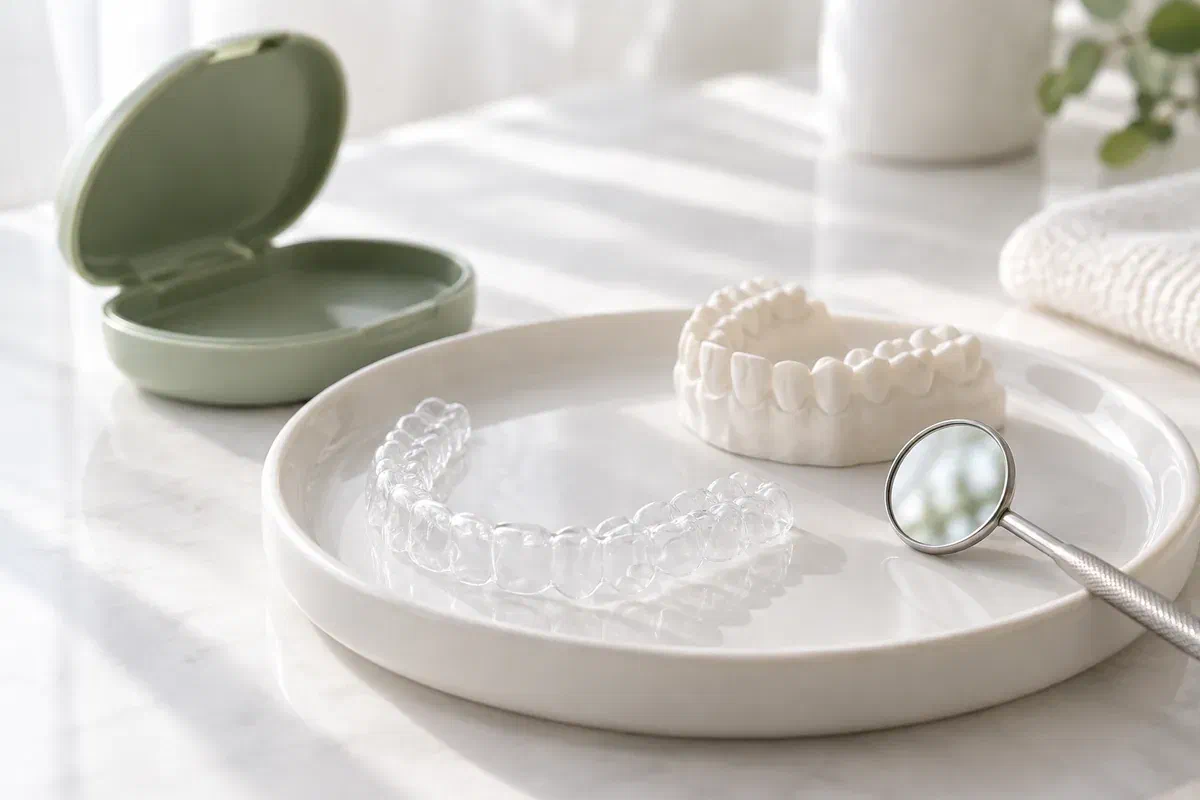
Illustrative clear aligner, tooth model, dental mirror, and protective case
Putting the remaining detail into words

What would you change, if you could change one thing?

Choosing one priority often makes the conversation clearer. Describe what you see and feel so the clinician can tell a position concern from a fit issue or a tooth-shape question.

The tooth or space you still notice

Show the specific overlap, gap, or turned tooth. Ask whether it differs from the agreed target and whether moving it is reasonable at this stage. A photo can help you describe it; your teeth and bite still need to be examined in person.

A bite or tray that feels different

Explain any tray that no longer sits flush, teeth that touch differently, or discomfort when chewing. Mention the stage. Let the clinician find the cause before deciding that another round of aligners would solve it.

Your appetite for more treatment

It is fine to feel you have had enough. Tell the clinician how you feel about further time, fees, and wear. Ask what a new stage would realistically achieve and what other choices you have, including stopping.

A suggestion of refinements is not, by itself, a sign of error or of poor compliance. Ask for the reasoning that applies to your own progress.

What helps you decide

Benefit on one side, effort on the other

A useful reassessment ties each remaining concern to a possible action, then helps you rank them. Some affect function or oral health. Some are purely cosmetic. Others come from a tooth’s natural outline, which moving it will not change.

Weighing those against the limits is the real work. More aligners do not guarantee a perfect result, and some refinements may bring little visible change. Expect an honest discussion of benefit, risk, uncertainty, and how you feel about continuing.

Clarity on what further trays would do

Have the clinician spell out the change a refinement series would aim for and why it is a sensible tool. If several concerns remain, ask which would make the most difference. Specific reasons make the yes-or-no decision easier.

A plan based on where you are now

Updated photos or a scan may be needed to plan from current positions. Ask what would be re-evaluated and whether attachments would change. A new filling or dental concern should also be considered in the decision.

Confidence in either answer

Ask how the next review would judge success if you continue, and what retention would look like if you stop now. Confirm practical and financial limits. Either way, you should know what comes next, without treating a predicted end date as certain.

Working through the decision

How we help you choose

The steps depend on your history and concern. Ask for instructions that cover the appointment and any wait while a decision or new trays are pending.

  1. Restate what you hoped to achieve

    Bring your current aligners and explain which goals feel met and which do not. Mention missed wear, lost attachments, or soreness without guessing why. The clinician compares your view with the records and agreed outcomes.

  2. Examine and decide on further records

    Tooth positions, bite, and oral health are assessed. Scans or photos may be suggested for a specific reason. Ask what they would show and whether any oral-health issue should be dealt with before further movement or retention.

  3. Lay out the options side by side

    Discuss what more aligners would aim for, their limits, and any change to attachments. Compare that with stopping and retaining, or with another approach. Clarify fees, and ask why any alternative might suit your findings better.

  4. Agree on what to wear while you decide

    Confirm which appliance to wear meanwhile, for how long, and who to call about damage. If you go ahead, follow the new series’ instructions rather than assuming your old change schedule still applies.

While the plan is settled

Don’t let indecision become a gap in wear.

Taking time to decide is reasonable, but teeth may shift without the right appliance. Ask what to wear while you think it over.

Follow the interim instruction closely

Your clinician may ask you to keep wearing a particular aligner or another appliance. Stick to the hours given. Running out of trays is not a reason to stop. Call the team if the appliance no longer fits or breaks.

If you continue, treat it as a fresh start

Check the tray order, switching interval, and any new attachments or elastics. Keep reviews and bring what is requested. If life in Halton Hills has changed since you began, such as new work hours, mention it so the plan fits.

If you stop, confirm it properly

Make sure the clinician has formally agreed that active movement is complete and that any accepted limitations are recorded. Then get clear instructions on the retainer, how often to wear it, and how fit will be checked.

The choices in front of you

Continue, change course, or conclude

The recommendation should follow from your exam and goals. Ask how each option addresses the remaining concern and what it means for your long-term care.

When the remaining goal is worth pursuing

Continue with targeted refinements

A refinement series may be suggested for specific teeth or bite relationships. Ask what will change and how progress will be measured. Confirm appointments and any extra fees before you approve the series.

When movement may not be the answer

Change course with another approach

The findings could point to specialist advice, a different technique, or a shape or restorative option. Ask whether more aligner movement would actually address the concern, and who would coordinate the next step.

When the agreed goals are satisfied

Conclude and protect the result

If you and your clinician agree active treatment is done, note any limitations you are accepting and settle the retainer plan. Ask which retainer you will use, how often, when it will be reviewed, and what to do if fit changes.

Patient information: British Orthodontic Society — aligner treatment and retention

Deciding about refinements

Questions people ask before they choose

Each answer depends on your records and exam. Someone else’s decision about refinements is not a good guide to your own.

(905) 876-4488
Is it okay to decline refinements and move to retainers?
You can discuss it. Ask what declining would mean for your bite, stability, and oral health, and whether the remaining concern is mainly cosmetic. If stopping is reasonable, the decision and retainer plan should be clearly agreed.
How much difference will a refinement series really make?
Ask the clinician to describe the expected change in specific terms and its limits. Some refinements produce clear improvement, others subtle change. A realistic explanation helps you judge whether it is worth the time.
Can I take time to think before agreeing to more trays?
Usually, yes. Ask what you should wear while deciding so your teeth are held in place. If records are needed, check whether waiting would mean they need to be retaken later.
Does needing refinements suggest my treatment was planned badly?
Not on its own. Teeth respond individually and do not always follow predictions. Ask what has and has not been achieved, and how the findings support the recommendation.
Will my retainer move my teeth if I stop early?
No. A retainer is intended to hold teeth in their current positions, not move them further. If you want a remaining detail changed, that would require active treatment, so discuss it before you stop.
Can I return for refinements later if I change my mind?
Ask your treating clinician. Further treatment later may be possible but would usually need a new assessment and records, and may have different fees. Wearing your retainer as instructed in the meantime helps keep options open.
Halton Hills progress reviews

Come ready to decide, or ready to ask more.

Set aside time for a frank conversation at our Bronte Street practice. We will explain the assessment involved and the purpose of each option. Let us know if another provider manages your aligners.

Refinement suitability, timing, fees, and any change of provider need assessment. No further series can guarantee a particular result.

Visit Milton Dental Clinic
Unit 1, 342 Bronte St. S, Milton, ON L9T 5B7
Get directions Clinic hours
Monday–Thursday
11am–7pm
Friday–Sunday
By appointment only

Areas we serve

  • Milton
  • Oakville
  • Mississauga
  • Georgetown
  • Halton Hills
  • Acton
  • Campbellville
  • Brampton
  • Burlington
  • Puslinch
  • Rockwood
  • Erin
  • Caledon
  • Etobicoke
  • Old Milton
  • Bronte Meadows
  • Timberlea
  • Dorset Park
  • Dempsey
  • Clarke
  • Beaty
  • Coates
  • Harrison
  • Scott
  • Willmott
  • Ford
  • Bowes
  • Cobden
  • Walker
  • Mountain View
  • Milton Heights
  • Hawthorne Village
  • Valley View
  • Fallingbrook
  • Nassagaweya
  • Trafalgar
  • Esquesing
  • Nelson
  • Brookville
  • Moffat
  • Glen Williams
  • Norval
  • Limehouse
  • Stewarttown
  • Ashgrove
  • Hornby
  • Silver Creek
  • Speyside
  • Scotch Block
  • North Oakville
  • River Oaks
  • Glen Abbey
  • West Oak Trails
  • Palermo
  • Bronte Creek
  • College Park
  • Joshua Creek
  • Uptown Core
  • Preserve
  • Iroquois Ridge
  • Lisgar
  • Meadowvale
  • Meadowvale Village
  • Churchill Meadows
  • Erin Mills
  • Central Erin Mills
  • Streetsville
  • East Credit
  • Creditview
  • Heartland
  • Sheridan
  • Mount Pleasant
  • Credit Valley
  • Huttonville
  • Churchville
  • Springbrook
  • Northwest Brampton
  • Bram West
  • Fletcher's Meadow
  • Fletcher's Creek South
  • Alton Village
  • Orchard
  • Millcroft
  • Headon Forest
  • Tansley
  • Brant Hills
  • Tyandaga
  • Kilbride
  • Lowville
  • Aberfoyle
  • Morriston
  • Arkell
  • Hillsburgh
  • Freelton
  • Carlisle
  • Waterdown
  • Flamborough
  • Mountsberg

How can we help?

Milton Dental Clinic

Have a question about your smile? Choose the option that works best for you.

For urgent dental concerns, please call.
Messages are reviewed during clinic hours.