

Illustrative patient and dental clinician reviewing an aligner and tooth model
Cosmetic Dentistry

Invisalign Refinements in Rockwood

Clear trays all look much alike, so it is easy to lose track of whether the one in your case is moving teeth or holding them. A refinement review for Rockwood households explains which stage you are in, what any further aligners would do, and how the hand-off to retainers will work.

Moving or holding? A Rockwood guide

Two clear trays, two very different jobs

A refinement aligner and a clear retainer can look nearly identical on the bathroom counter. Their purposes are not the same. Refinements are additional aligners prescribed after a reassessment, made to keep shifting teeth toward goals still open. A retainer is meant to keep teeth where they are once active movement ends.

Confusing the two causes real problems. Wearing a retainer schedule during refinements can slow progress, while treating a retainer like a disposable tray can let teeth drift. Before your current box runs out, it pays to know which appliance you will be using next and why.

If our team manages your aligners, ask at the progress review exactly which stage you are entering. If another office supervises your case, they should be your first call; a separate opinion here is available when it is warranted. You should finish the visit knowing what each tray is for. Coming from Rockwood, it also helps to bring every case you have at home, so any stray trays can be identified on the spot.

Clarify your next stage
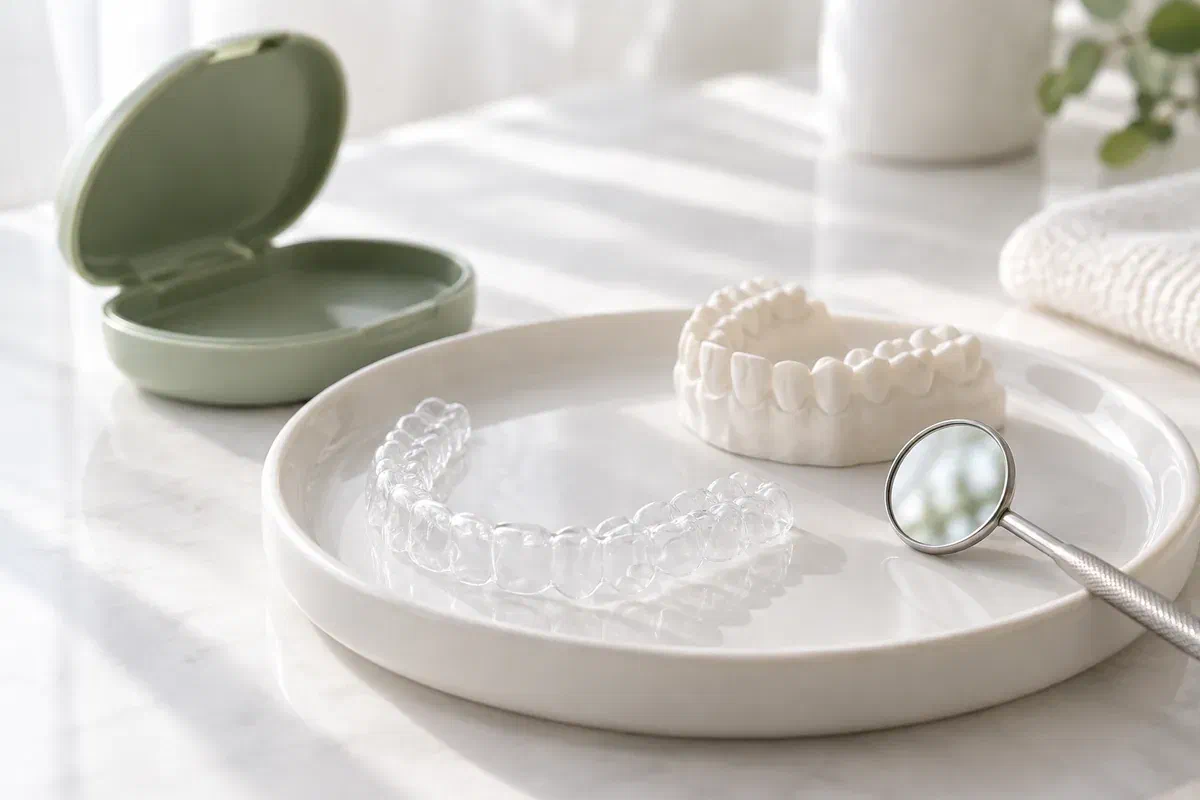
Illustrative clear aligner, tooth model, dental mirror, and protective case
Before the stage changes

Tell us what is left on your list.

An unfinished movement, an appliance that has stopped fitting, and a tooth with an uneven outline each need a different response. Describe what you see and feel so the clinician can tell which is which.

A detail that has not settled

Point out the gap, overlap, or turned tooth that remains. Ask whether it is outside the result you agreed on and whether further movement makes sense before retention. A photo can help, but your teeth need to be examined in person.

Fit or bite changes near the end

Mention trays that no longer sit flat, a bite that has started to feel different, or tenderness when chewing, and say when it began. Let the cause be assessed instead of assuming new aligners will settle it.

Uncertainty about the next commitment

Whether the next step is more trays or a long-term retainer, it asks something of you. Share your concerns about time, fees, and routine. Ask what each option involves and why one is being recommended over another.

Being offered refinements is not, by itself, a sign of a mistake or that your wear was lacking. Ask for the findings that support the recommendation in your case.

What a stage review clarifies

Know where you are before you move on.

A clear reassessment ties the current findings to one next step and explains it. It should separate concerns about function or oral health from cosmetic ones, and both from features of a tooth’s shape that aligners do not change.

It also defines the edges of what more treatment can do. Another series does not guarantee perfection, and not every requested change is advisable. Expect a balanced talk about benefit, risk, uncertainty, and your interest in continuing versus moving to retention.

A named purpose if movement continues

Ask what the refinement aligners would change and why that approach suits you. If more than one concern remains, ask which takes priority. A reason tied to your exam is more useful than a general statement that refinements are common.

Current records for current teeth

Updated photos or a scan may be needed to plan from present positions. Ask what is being re-examined and whether attachments will change. Any new dental problem should be part of the plan, whichever stage comes next.

A well-defined hand-off to retainers

Find out what the clinician will look for before declaring active treatment finished and how the retainer will be introduced. Confirm practical and financial limits. A predicted date helps planning but is not a promise.

The review, in order

Where you are, what is left, what comes next

Your treatment history sets the sequence. Ask for directions covering the appointment and any time between finishing your current trays and starting the next appliance.

  1. Confirm the goals you started with

    Bring the trays you are wearing and talk through what you have noticed. Be candid about missed wear, lost attachments, or soreness. The clinician compares your account with the records and the goals agreed when treatment began.

  2. Check teeth, bite, and records

    The clinician looks at where each tooth now sits, how the arches meet, and the health of your gums and teeth. A scan, photographs, or impressions may be suggested for a defined purpose. Ask what is missing and whether any issue needs care before further movement or retention.

  3. Decide between refining and retaining

    Discuss what extra aligners would aim to achieve and their limits, or, if movement is finished, what retention involves. Clarify fees and what your agreement includes. If another approach is advised, ask why it fits.

  4. Label the next appliance clearly

    Leave knowing which appliance you will wear next, whether it is a refinement tray or a retainer, the daily hours, and who to call about damage. Follow the new instructions rather than the old schedule.

During the transition

One appliance, one set of rules

Between stages it is easy to mix up instructions. Ask early, and keep the instructions for each appliance separate so nothing gets crossed.

Wear the interim appliance as directed

You may be told to stay in a certain aligner, or to start a retainer, while refinements are made. Keep to the specified hours. An empty box does not mean you are done. Let the team know if your interim appliance stops fitting.

Keep refinement and retainer instructions apart

If you start refinements, check the tray order, switching interval, and any added components. Store retainers separately once you have them. If your schedule in Rockwood has changed, mention it so the plan suits your routine.

Ask the last questions before retention starts

Share any lingering concern about position, bite, or appearance at the scheduled review. Ask whether it is something aligners can address. Make sure the end of active movement is formally confirmed before you switch to a retainer routine.

Next-stage options

Keep moving, change approach, or start holding

The recommendation should come out of your exam and agreed goals. Find out what each option would do about the concern that remains and how it shapes the care that follows.

When further change is warranted

A refinement series to finish movement

Additional aligners may be designed for particular teeth or the bite. Have the clinician describe the expected difference and the point at which they will check it. Confirm appointments and any extra costs before approving the new series, and ask how many trays it is likely to include.

When aligners may not be the tool

A rethink or a specialist referral

Some concerns call for a different method, specialist advice, or a look at tooth shape or an existing restoration. Ask whether more aligner movement could realistically help and who will coordinate the recommendation.

When active movement is judged complete

Starting the retention phase

If the clinician considers treatment complete, discuss any compromises you are accepting and how retention will work. Ask which retainer you will use, how often to wear it, when it will be checked, and how to replace it.

Patient information: British Orthodontic Society — aligner treatment and retention

Stage and retainer questions

Sorting out which tray does what

General answers only; yours depend on your examination and records. Comparing tray counts with someone else will not tell you much.

(905) 876-4488
How can I tell a refinement tray from a retainer?
Ask your treating team to label or explain each appliance when you receive it. Refinement trays usually come as a numbered series with change instructions; a retainer is a single appliance with its own wear routine. Keep them in separate cases.
When does retention actually begin?
Retention begins when your clinician confirms that active treatment is complete. That should be a clear decision, not an assumption based on running out of trays. Ask for the retainer instructions in writing.
Can I wear my last aligner as a retainer?
Only if your clinician specifically tells you to. Aligners are not always designed for long-term retention and may wear out. Ask what appliance you should use to hold your teeth and for how long.
Why would I need refinements if my teeth look straight to me?
The clinician may be looking at details such as bite contacts or small rotations that are hard to see. Ask what remains, why it matters, and what would happen if you moved straight to retention instead.
Does a refinement mean the treatment plan was wrong?
Not by itself. Teeth often respond a little differently than predicted. Ask which goals were met, which were not, and how the findings support the suggestion of more aligners.
How long will I need to wear a retainer after refinements?
It varies, and many clinicians recommend long-term retainer wear. Ask what is planned for you, how the schedule may change over time, and how the fit will be checked at future visits.
Rockwood progress reviews

Bring every tray and case you have, labelled if you can.

Book a visit at our Bronte Street practice so we can explain the assessment needed and whether further aligners or retention should come next. If another provider manages your care, let us know when booking.

We can only advise on refinements, retention, costs, and any change of provider after an assessment. Further aligners cannot guarantee a particular result.

Visit Milton Dental Clinic
Unit 1, 342 Bronte St. S, Milton, ON L9T 5B7
Get directions Clinic hours
Monday–Thursday
11am–7pm
Friday–Sunday
By appointment only

Areas we serve

  • Milton
  • Oakville
  • Mississauga
  • Georgetown
  • Halton Hills
  • Acton
  • Campbellville
  • Brampton
  • Burlington
  • Puslinch
  • Rockwood
  • Erin
  • Caledon
  • Etobicoke
  • Old Milton
  • Bronte Meadows
  • Timberlea
  • Dorset Park
  • Dempsey
  • Clarke
  • Beaty
  • Coates
  • Harrison
  • Scott
  • Willmott
  • Ford
  • Bowes
  • Cobden
  • Walker
  • Mountain View
  • Milton Heights
  • Hawthorne Village
  • Valley View
  • Fallingbrook
  • Nassagaweya
  • Trafalgar
  • Esquesing
  • Nelson
  • Brookville
  • Moffat
  • Glen Williams
  • Norval
  • Limehouse
  • Stewarttown
  • Ashgrove
  • Hornby
  • Silver Creek
  • Speyside
  • Scotch Block
  • North Oakville
  • River Oaks
  • Glen Abbey
  • West Oak Trails
  • Palermo
  • Bronte Creek
  • College Park
  • Joshua Creek
  • Uptown Core
  • Preserve
  • Iroquois Ridge
  • Lisgar
  • Meadowvale
  • Meadowvale Village
  • Churchill Meadows
  • Erin Mills
  • Central Erin Mills
  • Streetsville
  • East Credit
  • Creditview
  • Heartland
  • Sheridan
  • Mount Pleasant
  • Credit Valley
  • Huttonville
  • Churchville
  • Springbrook
  • Northwest Brampton
  • Bram West
  • Fletcher's Meadow
  • Fletcher's Creek South
  • Alton Village
  • Orchard
  • Millcroft
  • Headon Forest
  • Tansley
  • Brant Hills
  • Tyandaga
  • Kilbride
  • Lowville
  • Aberfoyle
  • Morriston
  • Arkell
  • Hillsburgh
  • Freelton
  • Carlisle
  • Waterdown
  • Flamborough
  • Mountsberg

How can we help?

Milton Dental Clinic

Have a question about your smile? Choose the option that works best for you.

For urgent dental concerns, please call.
Messages are reviewed during clinic hours.