

Illustrative patient discussing treatment information with a dental clinician
Cosmetic Dentistry

Invisalign Second Opinions in Caledon

You've already heard two views on your aligners, and they don't agree. From Bolton or elsewhere in Caledon, you can book a review that focuses on why the advice differs, which findings each opinion rests on, and what further information might help you choose between them.

Conflicting advice, Caledon

When the experts disagree, look at their reasoning.

Hearing two different recommendations can be more confusing than hearing one. Perhaps one clinician says treatment is nearly done and another suggests more aligners. Maybe one proposes a short plan while the other advises a specialist. Another review can help you understand where and why the opinions part ways.

Disagreement doesn't automatically mean one view is wrong. Clinicians may have seen different records, been asked different questions or be planning toward different goals. Untangling that requires the actual proposals, the treatment records and an examination, not just a summary of what each person said.

Get in touch with our Bronte Street practice and mention that you already have conflicting advice. Tell us whether treatment is underway. We'll explain the documents that would help and how a review can be set up. Seeing us doesn't change who supervises any active care.

Review the conflicting advice
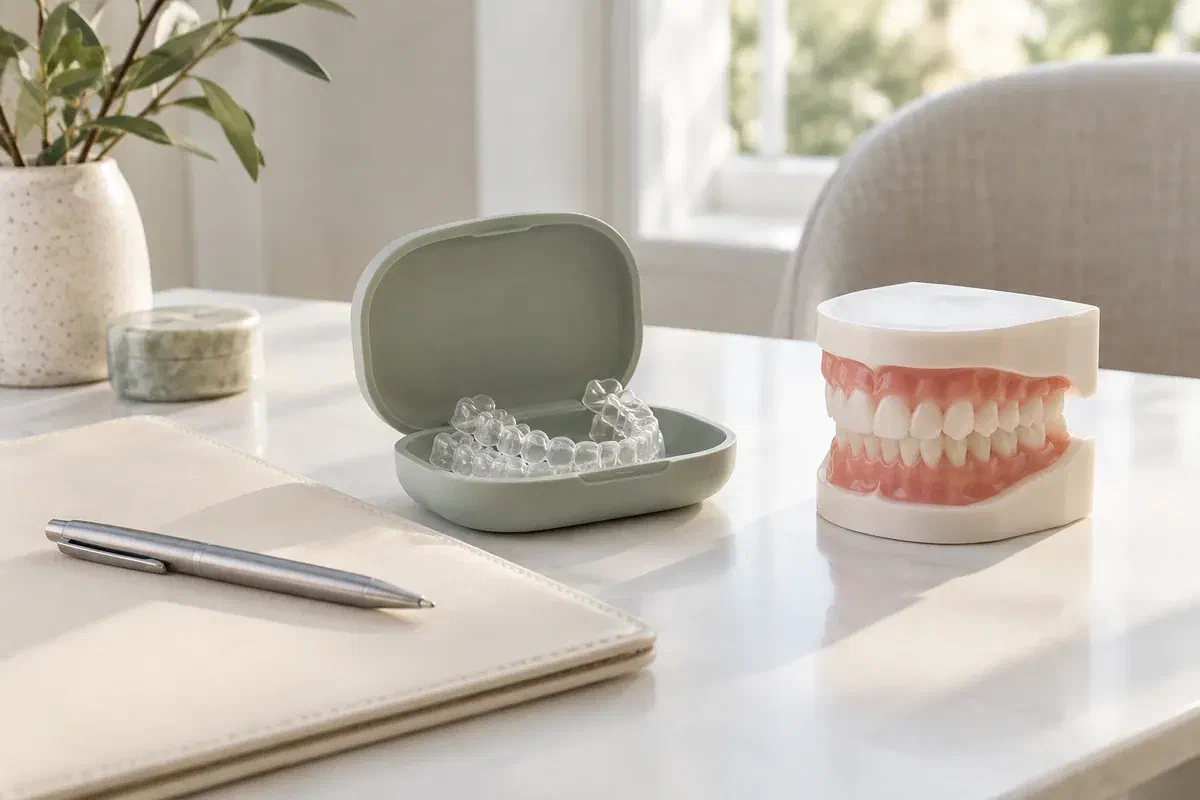
Illustrative consultation folder, pen, clear aligners, protective case, and tooth model
Typical disagreements

Where do the two opinions split?

Try to put the difference into one sentence. That gives the review a clear focus and helps us suggest which records would actually resolve it.

Different plans for the same smile

One clinician may favour a short, focused course and another a broader correction. Bring both written plans and ask what each sets out to achieve. Very often the disagreement is about goals or scope rather than the facts of your teeth.

Different readings of a fit or bite problem

Two people may interpret a tray that doesn't seat, or a bite that feels different, in different ways. Note when the issue began and bring your current trays if asked. An examination alongside the history helps compare their explanations.

Disagreement about what comes next

One office may advise refinements while another suggests retainers, or a specialist referral. Ask which records would let a third clinician weigh those positions. Be clear whether you want the reasoning explained, an independent view, or a talk about moving care.

Seeking clarity when advice conflicts is sensible. It doesn't oblige you to decide that either clinician has made an error.

How a further review can help

Make sense of the gap between two answers

A useful outcome may be a clear explanation of what each opinion assumed. A further assessment can show where the two views actually agree, what information one of them may have lacked, and whether a specialist orthodontist is the right person to settle the remaining question.

Even so, a review can't do everything. It may need further records or an exam before commenting. An opinion on your current situation doesn't rule on fault, settle any financial disagreement between offices, or guarantee that following one view will lead to a particular result.

Goals laid out side by side

Ask whether the conflicting opinions are aiming at the same outcome. A cosmetic adjustment of the front teeth is a different target from a complete change in how the teeth meet, and both differ again from a restorative route. Matching the targets often shrinks the disagreement.

What each view is based on

Ask which records or findings support each conclusion and which points remain uncertain. A careful reviewer separates observation from interpretation. If one opinion had information the other didn't, that may explain much of the difference.

A practical way to move forward

You might return to one clinician with focused questions, ask for a specialist's assessment, or consider another arrangement. Ask what each path would involve. The aim is to help you decide, not to add a third competing voice.

Setting up a focused review

Gather both opinions, then examine.

Let us know which stage you're at: still choosing, mid-treatment or near the end. That shapes the appointment and the records worth collecting.

  1. Summarise the disagreement when you book

    Describe what each clinician recommended and any symptoms you have. Ask what type of visit suits the question and how long it takes. Confirm the cost before booking.

  2. Collect records from both offices

    Useful material may include each written proposal, X-rays, photos, progress notes and any letters. Request copies from each office, or have them shared directly with your consent. Bring your trays and a list of questions if requested.

  3. Review the history and examine

    Explain the treatment so far and how each opinion came about. The clinician weighs the records and both recommendations against current examination findings. If something important is missing, further records may be needed.

  4. Discuss findings and agree who leads

    Ask how the review sees the disagreement, what's uncertain and whether a specialist referral would help. Agree how findings might be shared with your treating clinician. Confirm who gives ongoing instructions and whether moving care needs its own conversation.

Living with the decision for a while

Three opinions, one set of instructions

More advice can feel like more noise. Keep track of who recommended what, and keep a single clinician responsible for your active treatment while you decide.

Map out where the views now stand

Write down the points everyone agrees on and those still in dispute. For each difference, ask whether it relates to diagnosis, goals, scope or approach. You can ask the clinicians to speak with one another directly.

Follow the clinician who supervises you

Your treating clinician remains the person who sets your tray schedule and next appointment. Don't pick and choose between instructions from different offices. If a new problem makes wearing aligners hard, call them promptly.

Formalise any transfer before relying on it

Changing providers means agreeing on who accepts the case, which records move, who is responsible for what, fees and the plan. A consultation alone doesn't change who's in charge. Ask how continuity would be kept and who handles urgent concerns.

Resolving the difference

Pick a direction you understand.

The best step depends on the findings and the disagreement you brought. Ask which conclusions follow from evidence and which choices belong to you.

When one view now makes more sense

Return to one of the original clinicians

Understanding the reasoning may help you choose between the opinions you had. Take any remaining questions back to that clinician, and share anything from the review that seems relevant.

When the disagreement needs more expertise

Ask for a specialist to weigh in

If the question is beyond what a general review can settle, an orthodontist's assessment or further records may help. Ask what that step would aim to resolve, and who supervises your aligners until then.

When neither original arrangement suits you

Start over with a planned change of provider

Ask whether a different clinician could accept your case and what their plan would involve. Review records, estimates and responsibilities first. Arrange any change around continuity rather than assuming it after one visit.

Caledon questions about conflicting advice

Two answers already? Here's what to ask.

Written copies of both opinions, along with relevant records, give the review something concrete to work from. Mention any current treatment when you call so we can suggest the right appointment.

(905) 876-4488
What should I do when two dentists give opposite Invisalign advice?
Ask each to explain the reasoning and the findings behind their recommendation. Compare the goals they’re planning toward. If the difference remains, a further review or specialist assessment may help clarify it.
Is it unusual to need a third opinion on aligner treatment?
It isn’t unreasonable when earlier advice conflicts. A third review should focus on why the opinions differ rather than simply adding another recommendation to the pile. Ask what the visit can realistically add, and whether a specialist might be the more useful next step instead.
Should I tell the reviewing clinician what the other two said?
Yes. Sharing each opinion, ideally in writing, helps the reviewer understand the disagreement. They’ll still form their own view from records and examination findings, and they may agree with one opinion, both in part, or neither. Ask them to explain how they reached it.
Can an orthodontist settle a disagreement between two general dentists?
A specialist may be able to offer a more detailed assessment of complex questions. Their view is still an opinion based on findings, so ask them to explain how it relates to the earlier advice.
How long should I keep wearing aligners while opinions are being compared?
Follow the instructions of the clinician supervising your treatment. Don’t stop or change trays on your own while you compare views. If a problem makes wear difficult, contact them for guidance promptly.
How do I collect records from two different offices before a visit from Caledon?
Request copies from each office, explaining that they’re for a further opinion, or authorise them to send records directly. Ask the reviewing clinic which items matter most so you can prioritise.
Booking from Caledon

Bring both opinions. We'll help you compare them.

Contact our Bronte Street practice to arrange a review. Tell us what each clinician advised and whether treatment has started, and we'll explain the records, the scope of the visit and what may follow.

A further opinion can't guarantee a final answer or that we'll accept a transfer. Ask about assessment fees and needed records when you book.

Visit Milton Dental Clinic
Unit 1, 342 Bronte St. S, Milton, ON L9T 5B7
Get directions Clinic hours
Monday–Thursday
11am–7pm
Friday–Sunday
By appointment only

Areas we serve

  • Milton
  • Oakville
  • Mississauga
  • Georgetown
  • Halton Hills
  • Acton
  • Campbellville
  • Brampton
  • Burlington
  • Puslinch
  • Rockwood
  • Erin
  • Caledon
  • Etobicoke
  • Old Milton
  • Bronte Meadows
  • Timberlea
  • Dorset Park
  • Dempsey
  • Clarke
  • Beaty
  • Coates
  • Harrison
  • Scott
  • Willmott
  • Ford
  • Bowes
  • Cobden
  • Walker
  • Mountain View
  • Milton Heights
  • Hawthorne Village
  • Valley View
  • Fallingbrook
  • Nassagaweya
  • Trafalgar
  • Esquesing
  • Nelson
  • Brookville
  • Moffat
  • Glen Williams
  • Norval
  • Limehouse
  • Stewarttown
  • Ashgrove
  • Hornby
  • Silver Creek
  • Speyside
  • Scotch Block
  • North Oakville
  • River Oaks
  • Glen Abbey
  • West Oak Trails
  • Palermo
  • Bronte Creek
  • College Park
  • Joshua Creek
  • Uptown Core
  • Preserve
  • Iroquois Ridge
  • Lisgar
  • Meadowvale
  • Meadowvale Village
  • Churchill Meadows
  • Erin Mills
  • Central Erin Mills
  • Streetsville
  • East Credit
  • Creditview
  • Heartland
  • Sheridan
  • Mount Pleasant
  • Credit Valley
  • Huttonville
  • Churchville
  • Springbrook
  • Northwest Brampton
  • Bram West
  • Fletcher's Meadow
  • Fletcher's Creek South
  • Alton Village
  • Orchard
  • Millcroft
  • Headon Forest
  • Tansley
  • Brant Hills
  • Tyandaga
  • Kilbride
  • Lowville
  • Aberfoyle
  • Morriston
  • Arkell
  • Hillsburgh
  • Freelton
  • Carlisle
  • Waterdown
  • Flamborough
  • Mountsberg

How can we help?

Milton Dental Clinic

Have a question about your smile? Choose the option that works best for you.

For urgent dental concerns, please call.
Messages are reviewed during clinic hours.