

Illustrative patient discussing treatment information with a dental clinician
Cosmetic Dentistry

Invisalign Second Opinions in Old Milton

Aligners that no longer seem to sit snugly, or progress that looks slower than you were told to expect, can leave you unsure what to ask. From Old Milton, book a calm review of your records, current findings and goals so the next decision rests on clearer information.

Old Milton aligner reviews

What does it mean when a tray stops fitting the way it used to?

Many people first think about another opinion during treatment, not before it. A new tray leaves a small gap, a tooth seems to lag behind, or the mirror doesn't match the preview you were shown. Those moments raise reasonable questions, and an independent review is one way to explore them.

Fit alone does not reveal the reason. Wear time, the sequence of trays, the original plan and what an examination shows today all play a part. Without the history and records, nobody can responsibly say whether a plan is on course or why a change has appeared.

Our practice on Bronte Street sits a short way from Milton's historic downtown. When you book, tell us treatment is underway and which tray you are on. We will explain what information helps. Coming to us for an opinion leaves your supervising clinician in charge of day-to-day instructions.

Request an aligner review
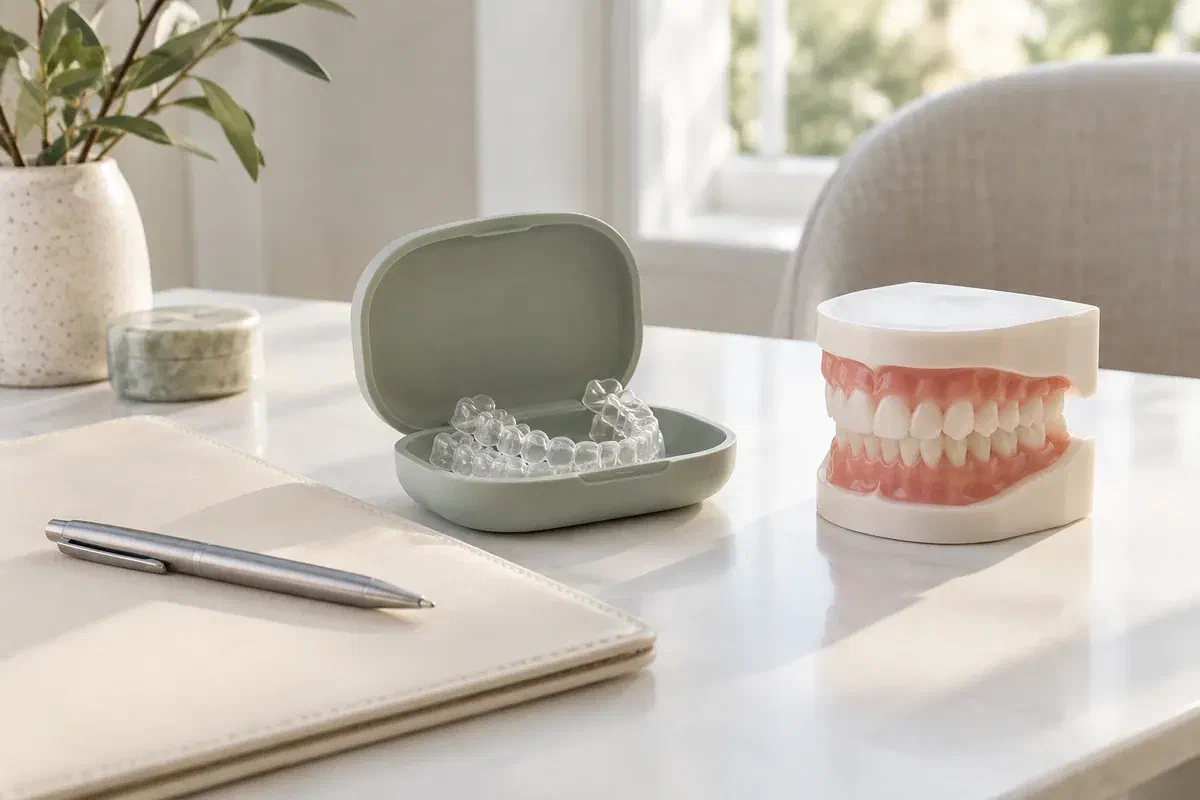
Illustrative consultation folder, pen, clear aligners, protective case, and tooth model
Signs that a question is worth asking

Small gaps, slow movement, or a bite that feels new?

You can come in with a feeling rather than a theory. Describe what you notice, when it started and what you want explained, and the assessment can be shaped around that.

Plans that described different journeys

If you were offered more than one option before starting, they may have covered different amounts of change. Bring the written proposals and ask what each was meant to achieve. Matching the goals helps explain why the steps and costs varied.

Trays that seat poorly or teeth that feel different

Keep a short note of when the fit changed, which tray you were wearing and any soreness or bite shift. Bring current aligners if asked. A sound review looks at findings and history together and avoids blaming a cause from a quick description.

A suggested change of course you weren't expecting

Refinements, a modified approach, or an early move to retainers can each come up. Ask what records would let another clinician assess that advice. Decide whether you want reasoning explained, an independent assessment, or a discussion about possibly moving your care.

Questions during treatment are expected and healthy. Asking for another view does not commit you to the idea that something has gone wrong.

What you can reasonably expect

Understanding where things stand is often the real win.

A different plan is not the only useful outcome. Sometimes the review confirms the approach and explains it more clearly. Sometimes it shows which questions are still unanswered, or suggests that an orthodontic specialist would be better placed to advise.

There are boundaries worth knowing in advance. Commenting on another office's plan may require an exam and further records. A view of your present situation is not a ruling on fault, a way to settle money disagreements, or an assurance that results will change.

A fair comparison of what each plan intends

Ask whether the options target the same concern. A limited plan, a comprehensive one and a restorative route weigh time, cost and change differently. Seeing the aims together makes the gaps between recommendations easier to follow.

Honesty about what can and can't be known

Ask which points rest on solid records and which are still open. Observations should be kept apart from possible explanations. Where more information would help, ask what it would show and how the advice might shift because of it.

Options for moving forward on your terms

You might continue where you are with better questions, seek a specialist, or look into transferring. Ask about the practical side of each. The conversation should inform your choice without hurrying you into one.

Steps from first call to discussion

Four stages, each with a clear purpose.

Let us know which stage of treatment you are at. Someone still deciding needs a different appointment from someone wearing tray fourteen.

  1. Set out the question and the visit type

    Explain what is worrying you and mention any symptoms when you book. Ask whether you are booking a conversation, an exam, or a fuller review. Confirm fees and what can be covered in the appointment length.

  2. Line up the records that matter

    Find out which items would help: the proposal, X-rays, photographs, progress notes, or letters from your provider. Arrange copies, or direct sharing between offices with your consent. Bring your trays, case and a written list of questions if asked.

  3. Go over the treatment story and examine

    Describe the order of trays, any instruction changes and when symptoms began. The clinician looks at what the records show and what the examination finds today. Missing or incomplete information may mean more records are needed before an opinion is reasonable.

  4. Hear the opinion and confirm responsibilities

    Ask what was found, what remains unclear and whether specialist input is advised. Agree how findings may reach your treating clinician. Leave knowing exactly who gives your ongoing instructions and whether moving care would be a separate conversation.

Between the review and your decision

Pause, compare notes, and don't change trays on your own.

New information can be helpful and unsettling at the same time. Sort out what was actually recommended before altering your routine.

Sort the clear points from the open ones

Jot down what you now understand and what still feels uncertain. When two opinions differ, ask whether it comes down to diagnosis, goals, scope or technique. You can ask for the clinicians to compare findings directly rather than trying to settle technical points yourself.

Stay with your current wear schedule unless told otherwise

The clinician running your active treatment remains the one to ask about which tray to wear and when to come back. Don't pause, jump ahead, or blend advice from two plans. If something new makes wearing a tray difficult, call for guidance promptly.

Confirm any move of care in writing

Changing providers involves agreeing on acceptance, records, responsibilities, fees and the plan. A consultation does not mean another office now supervises you. Ask how the handover would be coordinated and who you would call with an urgent question in between.

After the assessment

Three directions, none of them automatic.

What makes sense depends on the findings and your original question. Ask which advice comes from the evidence and which choices are left to you.

When the reasoning is clearer and care stays joined up

Carry on with your treating clinician

Knowing more about the goals and limits may be enough to keep going. Return to your provider with any points still open. Ask whether something noted in the review deserves to be shared or discussed with them.

When the answer needs a closer look

Gather more records or see an orthodontist

The records on hand may not support a firm view, or the issue may call for specialist training. Ask what the next step would clarify. Make sure you know how a referral works and who supervises your trays in the meantime.

When you'd like to consider another provider

Look into a carefully planned transfer

Ask whether a different clinician could take on the case and what a revised plan would need. Review records, estimates, duties and limits before agreeing. A change should be organised around continuity, not assumed after one appointment.

Old Milton questions, answered plainly

What people ask when aligners don't feel right

Bring what you have and a clear question. Mention ongoing treatment when you call so the visit can be booked appropriately.

(905) 876-4488
My aligner leaves a gap at the edge of a tooth. Is that a reason to seek another opinion?
It is a reasonable thing to ask your treating clinician about first, since they know the plan. If you still have questions afterward, a second opinion can review the history and examine the fit. A gap alone does not explain its cause.
Can I get a second opinion partway through my aligner series?
Yes. Tell the clinic which tray you are on and bring relevant records if asked. The visit can describe current findings, but your supervising clinician continues to direct treatment unless a transfer is separately agreed.
Should I wear my next tray early if the current one feels loose?
Don’t change the sequence on your own. Ask the clinician supervising your treatment what to do. If a tray is cracked, painful or unwearable, contact them promptly rather than waiting for a second-opinion date.
Will the reviewing dentist contact my original provider?
Only with your permission and if it would help. Some people prefer to bring copies themselves; others ask the offices to share directly. Discuss which approach suits your situation when arranging the visit.
Could a second opinion recommend a specialist orthodontist?
It could, if the concern seems to need specialist expertise or more detailed records. Ask what the referral would aim to answer and who would keep supervising your aligners until that appointment takes place.
Is a second-opinion appointment the same length as a regular checkup?
Not necessarily. The length depends on whether you need a discussion, an examination or a fuller review. Ask about the visit type, timing and fee when booking so you can plan around it.
A short way from downtown

Book a review and bring the tray that's bothering you.

Reach our Bronte Street practice to set up a second-opinion appointment. Let us know you're mid-treatment, and we'll go over the records that help, the scope of the visit and what follows.

A review cannot promise a different recommendation or that we will accept a transfer. Ask about fees and records when you book.

Visit Milton Dental Clinic
Unit 1, 342 Bronte St. S, Milton, ON L9T 5B7
Get directions Clinic hours
Monday–Thursday
11am–7pm
Friday–Sunday
By appointment only

Areas we serve

  • Milton
  • Oakville
  • Mississauga
  • Georgetown
  • Halton Hills
  • Acton
  • Campbellville
  • Brampton
  • Burlington
  • Puslinch
  • Rockwood
  • Erin
  • Caledon
  • Etobicoke
  • Old Milton
  • Bronte Meadows
  • Timberlea
  • Dorset Park
  • Dempsey
  • Clarke
  • Beaty
  • Coates
  • Harrison
  • Scott
  • Willmott
  • Ford
  • Bowes
  • Cobden
  • Walker
  • Mountain View
  • Milton Heights
  • Hawthorne Village
  • Valley View
  • Fallingbrook
  • Nassagaweya
  • Trafalgar
  • Esquesing
  • Nelson
  • Brookville
  • Moffat
  • Glen Williams
  • Norval
  • Limehouse
  • Stewarttown
  • Ashgrove
  • Hornby
  • Silver Creek
  • Speyside
  • Scotch Block
  • North Oakville
  • River Oaks
  • Glen Abbey
  • West Oak Trails
  • Palermo
  • Bronte Creek
  • College Park
  • Joshua Creek
  • Uptown Core
  • Preserve
  • Iroquois Ridge
  • Lisgar
  • Meadowvale
  • Meadowvale Village
  • Churchill Meadows
  • Erin Mills
  • Central Erin Mills
  • Streetsville
  • East Credit
  • Creditview
  • Heartland
  • Sheridan
  • Mount Pleasant
  • Credit Valley
  • Huttonville
  • Churchville
  • Springbrook
  • Northwest Brampton
  • Bram West
  • Fletcher's Meadow
  • Fletcher's Creek South
  • Alton Village
  • Orchard
  • Millcroft
  • Headon Forest
  • Tansley
  • Brant Hills
  • Tyandaga
  • Kilbride
  • Lowville
  • Aberfoyle
  • Morriston
  • Arkell
  • Hillsburgh
  • Freelton
  • Carlisle
  • Waterdown
  • Flamborough
  • Mountsberg

How can we help?

Milton Dental Clinic

Have a question about your smile? Choose the option that works best for you.

For urgent dental concerns, please call.
Messages are reviewed during clinic hours.