

Illustrative patient discussing treatment information with a dental clinician
Cosmetic Dentistry

Invisalign Second Opinions in Puslinch

One office suggested aligners; another mentioned veneers, bonding or a mix of both. Coming from Puslinch, you can book a second-opinion visit that sets moving teeth against reshaping or covering them, and explains what each route would mean for your smile over time.

Weighing approaches, from Puslinch

Move the teeth, or change how they look?

A crooked front tooth or an uneven edge can be approached in more than one way. Aligners gradually reposition teeth, while restorative options such as bonding or veneers alter their shape or surface. Hearing both suggestions from different offices can leave you wondering which question you're really answering.

Each route involves its own tradeoffs in time, tooth structure, maintenance and how far it addresses the bite. Which one suits you depends on your goals, what an examination finds and what the records show. A side-by-side photo or two price quotes can't settle that on their own.

Let our Bronte Street practice know which options you've been offered and whether any treatment has begun. We'll explain what to bring and what the appointment can cover. An opinion visit doesn't transfer care, and any clinician already supervising aligners continues to guide your wear.

Compare approaches with us
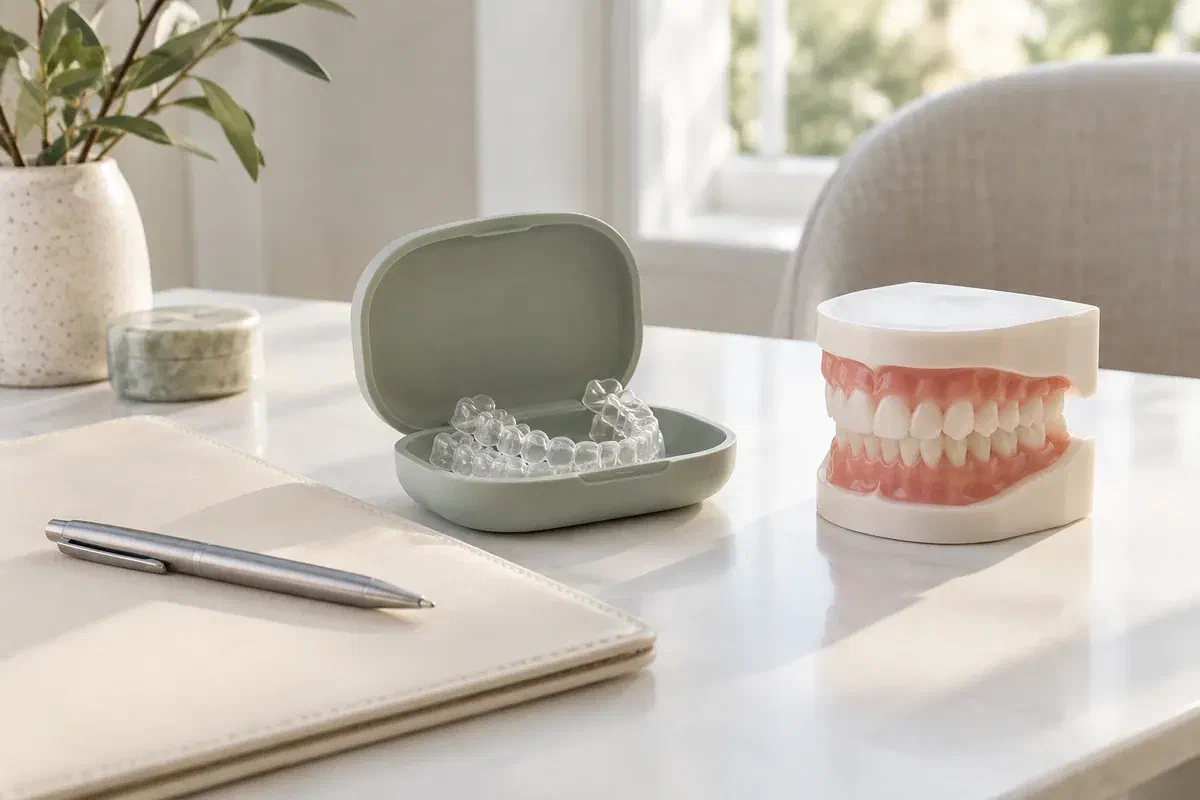
Illustrative consultation folder, pen, clear aligners, protective case, and tooth model
Common sources of uncertainty

Aligners here, veneers there. Now what?

You don't need to decide which is right before you arrive. Explain the options you've heard, what you hope to change, and what you'd like to understand by the end of the conversation.

Orthodontic and restorative plans side by side

One office may favour moving teeth, another reshaping or covering them. Bring each written proposal and ask what it aims to correct and what it leaves alone. Different goals, and different views of the bite, often explain the different advice.

Concerns during aligner treatment

If you've already started aligners and something feels off, note when it began and which tray you were on. Bring current trays if asked. A careful review looks at findings and history together rather than settling on a reason too quickly.

A suggestion to add restorative work

Near the end of aligners, bonding or other cosmetic work may be offered to finish the result. Ask which records would help assess that idea. Be clear whether you want it explained, independently assessed, or discussed alongside a possible change of provider.

Comparing very different recommendations is a reasonable part of choosing treatment. It doesn't mean either clinician has given poor advice.

What a second view brings to the choice

Understand the tradeoffs on both sides.

The most helpful outcome may be a clear sense of what each approach would and wouldn't do for you. A second assessment can identify what's already been explained, where information is missing, and whether an orthodontic specialist or another colleague should weigh in before you commit.

Keep in mind what a review can't do. Commenting on a proposal from another office may require an exam and extra records. An opinion about your present needs doesn't determine fault, resolve a cost disagreement, or guarantee that one route will look better than the other.

Goals compared across approaches

Ask whether aligners and restorations are aiming for the same result. Moving teeth may address alignment and bite, while bonding or veneers mainly change appearance. Knowing what each targets helps you decide which matters most to you.

Clarity on long-term considerations

Ask how each option affects tooth structure, ongoing maintenance and the need for retainers or future replacement. A careful clinician explains these in general terms without promising outcomes, and tells you where more information would help.

Space to decide without pressure

You might go back to one of the original offices with clearer questions, consult a specialist, or consider a combined approach. Ask what each path would involve. The conversation should help you weigh them, not push you toward one.

How the comparison visit works

Lay the options on the table, then examine.

Tell us whether you're still choosing, already wearing aligners, or being offered restorative work to finish treatment. That shapes the appointment and the records worth requesting.

  1. Explain the options you've been given

    When you book, describe each recommendation and any symptoms. Ask whether the visit will be a discussion, an exam or a fuller assessment. Check the cost and what can be covered in the time available.

  2. Collect proposals and supporting records

    Written plans, X-rays, photographs and any treatment notes can help. Request copies from each office, or authorise direct sharing with your consent. Bring a list of questions and your current trays, if you're wearing them and we ask.

  3. Review your goals and examine your teeth

    Talk through what you'd like to change and any treatment so far. The clinician considers the proposals alongside today's examination. If the records leave important gaps, further information may be needed before a fair comparison is possible.

  4. Discuss the comparison and responsibilities

    Ask what the review suggests, what remains uncertain and whether specialist input is advisable. Agree on how findings might be shared with your treating clinician. Confirm who leads any current care and whether starting a different approach would be a separate decision.

Taking time to choose

Two approaches deserve a careful decision.

Two unlike options can leave you with more to think about, not less. Be clear about what each recommendation involves before agreeing to anything or changing your current treatment.

Write down what each approach involves

List the tradeoffs you now understand and any questions still open. Where advice differs, ask whether it's about diagnosis, goals, scope or method. You can ask the clinicians involved to compare their reasoning directly.

Keep any aligner routine unchanged for now

If you're mid-treatment, your supervising clinician still decides which tray you wear and when you return. Don't pause or switch trays based on a comparison alone. If a new concern makes wear difficult, get in touch with them.

Treat a change of approach as a new agreement

Switching to a different treatment or provider means agreeing on who takes it on, which records move, responsibilities, costs and the plan. A consultation doesn't begin treatment. Ask how care would stay coordinated and who to call with an urgent question.

After the comparison

Choose the route that fits your goals.

The sensible next step depends on findings and what matters to you. Ask which parts of the recommendation are clinical and which come down to preference.

When the original approach still makes sense

Continue with the plan already underway

Understanding why one approach was chosen may be enough to go ahead with confidence. Take any questions back to the treating team, and mention any finding from the review that seems relevant to them.

When the choice needs more expertise

Seek specialist or further restorative advice

Some situations call for an orthodontist's view or a more detailed restorative assessment. Ask what that consultation would aim to clarify. Make sure you know who supervises any active care while you wait.

When another route suits you better

Pursue a different approach or provider

Ask whether another clinician could take on the treatment you prefer and what it would require. Review records, costs and responsibilities before agreeing. Any change should be planned for continuity, not assumed after one appointment.

Aligners versus restorations

Questions from Puslinch about choosing between approaches

Bring each proposal and a clear sense of what you want to change. Let us know about current treatment when you call.

(905) 876-4488
Can veneers or bonding be an alternative to Invisalign?
For some cosmetic concerns, restorative options may be discussed. They change the shape or surface of teeth rather than moving them, which involves different tradeoffs. A clinician can explain whether either suits your situation after an assessment.
Is it better to move teeth or reshape them?
There’s no single answer. It depends on your goals, your bite, the health of your teeth and how you weigh time, maintenance and tooth structure. A second opinion can explain the tradeoffs in your case.
Why would one dentist suggest aligners and another suggest veneers?
Clinicians may focus on different goals or weigh tradeoffs differently. One might prioritise bite and alignment, another a faster cosmetic change. Ask each to explain the reasoning behind their recommendation.
Can aligners and cosmetic bonding be combined?
Sometimes treatment includes both, for example aligning teeth first and refining shape afterward. Whether that suits you depends on findings and goals. Ask how the stages would be sequenced and coordinated.
Will I still need retainers if I choose a restorative option instead?
Retainers relate to keeping teeth in a position achieved by orthodontic treatment. If teeth aren’t moved, retention may not apply in the same way. Ask the clinician to explain the maintenance involved in each option.
Can I plan a comparison visit from Puslinch around farm or work hours?
Our regular hours are Monday to Thursday, 11am to 7pm, with Friday to Sunday by appointment only. Ask about visit length and whether records can be sent ahead to make the most of one trip.
Comparison visits for Puslinch

Two very different suggestions? Let's sort through them.

Contact our Bronte Street practice to book a second-opinion appointment. Tell us which options you've been given, and we'll explain the records, what the visit covers and how to approach the decision.

A comparison visit can't guarantee a particular recommendation or that we'll take on your treatment. Ask about fees and records when booking.

Visit Milton Dental Clinic
Unit 1, 342 Bronte St. S, Milton, ON L9T 5B7
Get directions Clinic hours
Monday–Thursday
11am–7pm
Friday–Sunday
By appointment only

Areas we serve

  • Milton
  • Oakville
  • Mississauga
  • Georgetown
  • Halton Hills
  • Acton
  • Campbellville
  • Brampton
  • Burlington
  • Puslinch
  • Rockwood
  • Erin
  • Caledon
  • Etobicoke
  • Old Milton
  • Bronte Meadows
  • Timberlea
  • Dorset Park
  • Dempsey
  • Clarke
  • Beaty
  • Coates
  • Harrison
  • Scott
  • Willmott
  • Ford
  • Bowes
  • Cobden
  • Walker
  • Mountain View
  • Milton Heights
  • Hawthorne Village
  • Valley View
  • Fallingbrook
  • Nassagaweya
  • Trafalgar
  • Esquesing
  • Nelson
  • Brookville
  • Moffat
  • Glen Williams
  • Norval
  • Limehouse
  • Stewarttown
  • Ashgrove
  • Hornby
  • Silver Creek
  • Speyside
  • Scotch Block
  • North Oakville
  • River Oaks
  • Glen Abbey
  • West Oak Trails
  • Palermo
  • Bronte Creek
  • College Park
  • Joshua Creek
  • Uptown Core
  • Preserve
  • Iroquois Ridge
  • Lisgar
  • Meadowvale
  • Meadowvale Village
  • Churchill Meadows
  • Erin Mills
  • Central Erin Mills
  • Streetsville
  • East Credit
  • Creditview
  • Heartland
  • Sheridan
  • Mount Pleasant
  • Credit Valley
  • Huttonville
  • Churchville
  • Springbrook
  • Northwest Brampton
  • Bram West
  • Fletcher's Meadow
  • Fletcher's Creek South
  • Alton Village
  • Orchard
  • Millcroft
  • Headon Forest
  • Tansley
  • Brant Hills
  • Tyandaga
  • Kilbride
  • Lowville
  • Aberfoyle
  • Morriston
  • Arkell
  • Hillsburgh
  • Freelton
  • Carlisle
  • Waterdown
  • Flamborough
  • Mountsberg

How can we help?

Milton Dental Clinic

Have a question about your smile? Choose the option that works best for you.

For urgent dental concerns, please call.
Messages are reviewed during clinic hours.