

Illustrative patient discussing a small alignment concern with a dental clinician
Cosmetic Dentistry

Minor Tooth Movement in Mississauga

Ads for at-home aligners make moving one tooth sound like a simple order. From Mississauga, you can have the tooth, gums and bite examined in person first, then compare a limited plan with the alternatives before committing to anything.

Before you order anything

A photo of your smile cannot show what is under the gum.

The pitch is appealing: send some pictures, receive trays, fix the tooth that bugs you. Minor tooth movement is a real orthodontic category, but it means a limited goal, not a product. Different appliances can reach that kind of goal, and the right one depends on what an examination finds.

Much of what decides suitability is hidden. Root position, bone levels, gum health, existing fillings and the way the opposite teeth land all affect whether a tooth should move and how. Photos show the crown of a tooth. A clinical exam, and sometimes radiographs, show what supports it.

If you are weighing options in Mississauga, an in-person visit is a way to get those answers before you spend money or time. Point out the tooth you want changed, and we can explain what a limited plan would include, when a fuller orthodontic opinion is wiser, and what else might help.

Have a small alignment concern examined
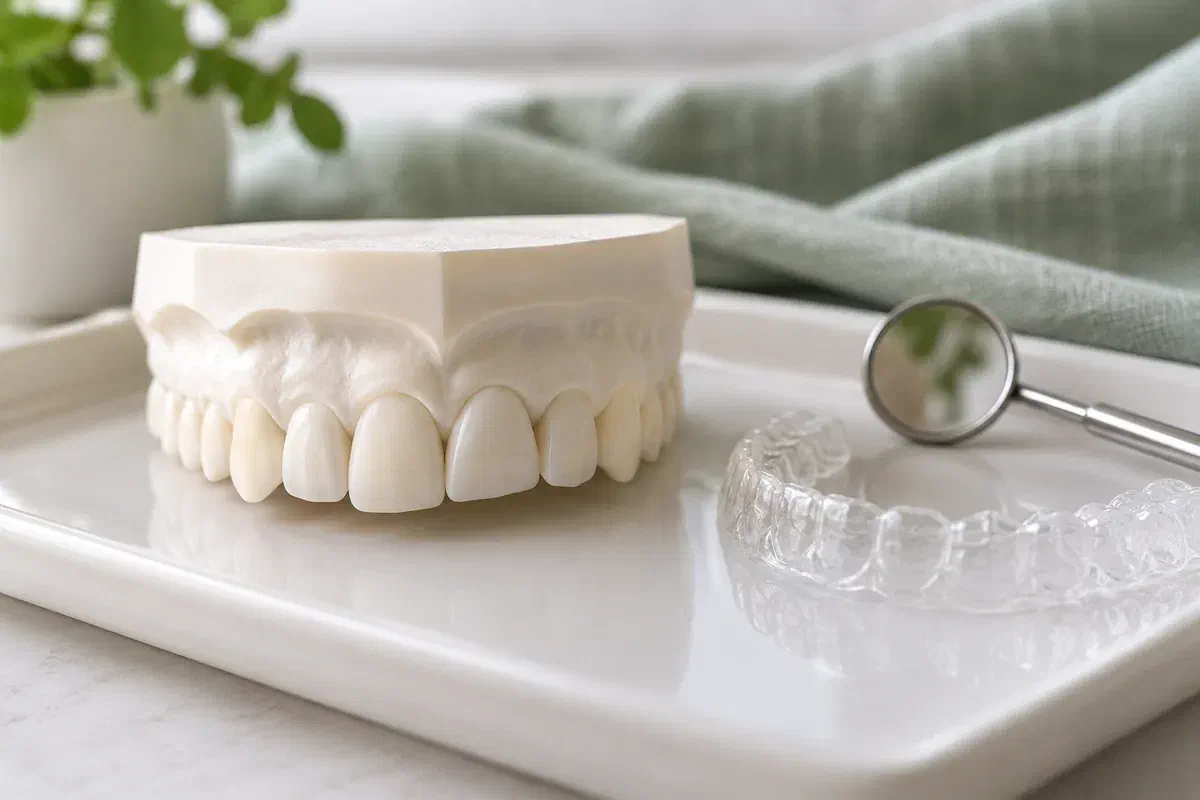
Illustrative upper-teeth model with a subtly rotated tooth beside a clear appliance
Details worth mentioning

What you see, and what a clinician checks

Tell us when the change appeared, whether it is getting worse and whether it affects chewing or comfort. Those facts frame the problem treatment would need to solve.

An overlapping or rotated tooth

Show the tooth and mention whether its position changed recently. Ask what surrounding movement would be needed to make room. One tooth out of line may still involve its neighbours, so the count you notice is not the count a plan needs.

A space that affects future dental work

Tell the clinician if a crown, bridge, bonding or tooth replacement has come up. Ask whether moving a tooth first would help that work and who would coordinate it. All clinicians involved need the same target before treatment starts.

A shift after orthodontics you already had

Earlier treatment records and your retainer, if requested, can be useful. Explain whether the change is long-standing or recent. A past course of braces does not guarantee a simple top-up; the present situation still has to be reviewed.

An alignment concern is different from a loose tooth. Sudden looseness, swelling, pain or a tooth moving quickly should be examined as a dental problem first. No aligner should be started over an untreated issue.

What an in-person plan adds

Supervision, a defined goal, and someone checking along the way

A limited plan may be appropriate once the concern has been examined and its boundaries are understood. You should hear why the movement suits your mouth and what it intentionally does not change. Picking a narrow scope works best as an informed decision rather than a response to an ad.

An exam also separates position from shape. Moving a tooth alters where it sits. Bonding or enamel reshaping alters its outline. The underlying cause of the look you dislike determines which discussion is worth having.

Patient information: British Orthodontic Society — limited treatment objectives and alternatives

A goal described in plain terms

Ask exactly what the plan is aiming for. Is the concern how the tooth looks, the room needed for other care, or how it contacts its neighbour? A defined target makes the advice easier to evaluate and the end result easier to review.

Limits explained before you start

A focused approach may leave some bite features unchanged. You can ask which ones and whether that is acceptable for you. Alternatives, including a broader assessment when the findings support it, should be explained before you agree.

Follow-up that is part of the plan

Reviews, retention and any restorative work are part of the treatment, not optional extras. Ask when they happen and who provides them, and settle the sequence before movement begins. A small change is only worth having if it holds.

What happens when you come in

Examine, explain, compare, then decide

The point of the first visit is to see whether your concern suits a limited scope at all. An appliance is chosen only after the needed movement and your oral health have been assessed.

  1. Tell us the goal in your own words

    Describe what bothers you and why. Mention past orthodontics, injuries, any retainer, and dental work you have planned. If you have already looked into at-home options, say so, and bring any questions those raised.

  2. Have the teeth, gums and bite checked

    The clinician examines the relevant areas and decides which records would help. Ask what photos, radiographs or scans add that a selfie cannot. Decay, gum disease or another problem may need attention before any movement.

  3. Line up the options side by side

    Review what each route would change and leave alone, its risks, what it asks of you, and the estimate. Ask whether aligners, a different appliance or specialist care suits the movement. If a broader plan is advised, ask what finding prompts it.

  4. Agree on reviews and a clear finish

    Confirm who supervises, how check-ins are scheduled and what would lead to a reassessment. Discuss retention and any later restorative work. Completion should be defined by the agreed goal rather than by a number of trays.

Once treatment is underway

Small plans still need follow-through.

Instructions vary with the appliance and the movements involved. Keep them where you can find them, and ask the team about anything that does not make sense.

Stick to the wear and review plan

Wear the appliance, clean it and attend reviews as scheduled. If the routine is hard to keep or something breaks, tell us. Do not trim trays, add elastics or change the sequence based on online forums or videos.

Let every dentist know what is going on

Keep attending regular dental visits and tell the treating clinician about any other procedures. A new restoration can change how an appliance fits, so check the order of appointments instead of assuming they don't interact.

Arrange retention before the end

Ask about the retainer, how long to wear it and how it will be reviewed before active movement finishes. If more dental work is due, confirm how the position will be held in the meantime. Keep a way to reach the clinic about later fit problems.

Comparing approaches

Which kind of care fits the concern?

Ask each time what a recommendation alters and what it leaves as it is. Findings, priorities and the commitment you can make should guide the choice.

When an examined, narrow goal is suitable

Supervised limited movement

Worth considering when the required movement and the accepted limits are appropriate for you. Talk through appliance options, reviews and retention. A narrow goal carries the usual orthodontic risks and no guarantee of a short course.

When the wider bite is part of it

Full orthodontic assessment

A more complete plan or specialist opinion may be the better advice if moving only the visible tooth would create an unsuitable result. Ask which bite relationships are involved and how the plan would expand. Decide once the reasoning is clear.

When position is not the real cause

Shape changes, monitoring, or no elective care

Where the outline of a tooth, or some other finding, accounts for your concern, a different conversation may help more. Think about what adding or removing tooth material involves, and remember you can defer elective care. Underlying dental problems still need a plan.

Mississauga questions

Answers before you commit to an aligner

The word minor describes how much change is intended. It does not settle diagnosis, the best appliance, or what you will be responsible for after treatment.

(905) 876-4488
Why not just use an aligner kit ordered online?
An in-person exam can find decay, gum problems or bite issues that photos may miss, and those can affect whether movement is safe. Ask the clinician what an examination would check in your case so you can make an informed comparison.
What happens at reviews during a limited plan?
The clinician checks how teeth are responding, how the appliance fits and whether the gums are healthy. Reviews are a chance to adjust the plan if needed. Ask how often they are expected and what they will involve.
Will moving one tooth affect the way I bite?
It can. A tooth meets teeth in the opposite arch, so shifting it may change contacts. Ask how the plan accounts for your bite and what would be monitored, rather than looking at the front view alone.
Do I need an orthodontist rather than a general dentist?
It depends on the movement needed and the findings. Some limited goals may be managed in general practice, while others warrant specialist care. Ask which applies to you and why a referral would or would not be suggested.
Can a gap be closed by reshaping instead of moving teeth?
Sometimes bonding or other shape changes are part of the answer, but they work differently from orthodontics. Ask which feature causes the gap and what each option would involve before deciding, and avoid choosing from a photo alone.
What if my aligners stop fitting partway through?
Get in touch rather than forcing them or skipping ahead. A poor fit can mean teeth are not tracking as planned. The clinician can check the cause and adjust the plan if needed.
Starting from Mississauga

An exam before the order form

Book a consultation at our Bronte Street practice about the tooth that bothers you. We will explain the assessment needed, the options that may suit you, and how the change would fit with your wider dental care.

Scope, appliance and any referral are confirmed after assessment. A small visible problem does not guarantee treatment will be simple or quick.

Visit Milton Dental Clinic
Unit 1, 342 Bronte St. S, Milton, ON L9T 5B7
Get directions Clinic hours
Monday–Thursday
11am–7pm
Friday–Sunday
By appointment only

Areas we serve

  • Milton
  • Oakville
  • Mississauga
  • Georgetown
  • Halton Hills
  • Acton
  • Campbellville
  • Brampton
  • Burlington
  • Puslinch
  • Rockwood
  • Erin
  • Caledon
  • Etobicoke
  • Old Milton
  • Bronte Meadows
  • Timberlea
  • Dorset Park
  • Dempsey
  • Clarke
  • Beaty
  • Coates
  • Harrison
  • Scott
  • Willmott
  • Ford
  • Bowes
  • Cobden
  • Walker
  • Mountain View
  • Milton Heights
  • Hawthorne Village
  • Valley View
  • Fallingbrook
  • Nassagaweya
  • Trafalgar
  • Esquesing
  • Nelson
  • Brookville
  • Moffat
  • Glen Williams
  • Norval
  • Limehouse
  • Stewarttown
  • Ashgrove
  • Hornby
  • Silver Creek
  • Speyside
  • Scotch Block
  • North Oakville
  • River Oaks
  • Glen Abbey
  • West Oak Trails
  • Palermo
  • Bronte Creek
  • College Park
  • Joshua Creek
  • Uptown Core
  • Preserve
  • Iroquois Ridge
  • Lisgar
  • Meadowvale
  • Meadowvale Village
  • Churchill Meadows
  • Erin Mills
  • Central Erin Mills
  • Streetsville
  • East Credit
  • Creditview
  • Heartland
  • Sheridan
  • Mount Pleasant
  • Credit Valley
  • Huttonville
  • Churchville
  • Springbrook
  • Northwest Brampton
  • Bram West
  • Fletcher's Meadow
  • Fletcher's Creek South
  • Alton Village
  • Orchard
  • Millcroft
  • Headon Forest
  • Tansley
  • Brant Hills
  • Tyandaga
  • Kilbride
  • Lowville
  • Aberfoyle
  • Morriston
  • Arkell
  • Hillsburgh
  • Freelton
  • Carlisle
  • Waterdown
  • Flamborough
  • Mountsberg

How can we help?

Milton Dental Clinic

Have a question about your smile? Choose the option that works best for you.

For urgent dental concerns, please call.
Messages are reviewed during clinic hours.