

Illustrative patient discussing a small alignment concern with a dental clinician
Cosmetic Dentistry

Minor Tooth Movement in Oakville

Sometimes a tooth needs to shift a little before a crown, bridge or implant can be planned well. If you are coming from Oakville, we can explain when limited movement helps that sequence, when it does not, and who coordinates each stage.

Making room first

When the space has to be right before the tooth can be restored

A missing tooth, an uneven gap or a neighbour that has tipped into an empty space can make restorative work harder to plan. In some cases a limited orthodontic step comes first. Minor tooth movement is the term for that kind of narrow goal; it is not tied to one appliance.

The gap itself is only one measurement. Root angles, bone and gum support, the teeth on either side, and how the opposing teeth bite into that area all affect whether moving anything is wise. A limited plan should follow an assessment that explains both the intended change and what it will not address.

From Oakville, it is worth bringing any treatment plan or notes you already have from another dentist. We can talk about what information is missing, whether movement would genuinely help the restoration, and when a broader orthodontic opinion makes more sense. The appliance decision comes later.

Ask about preparing space for a restoration
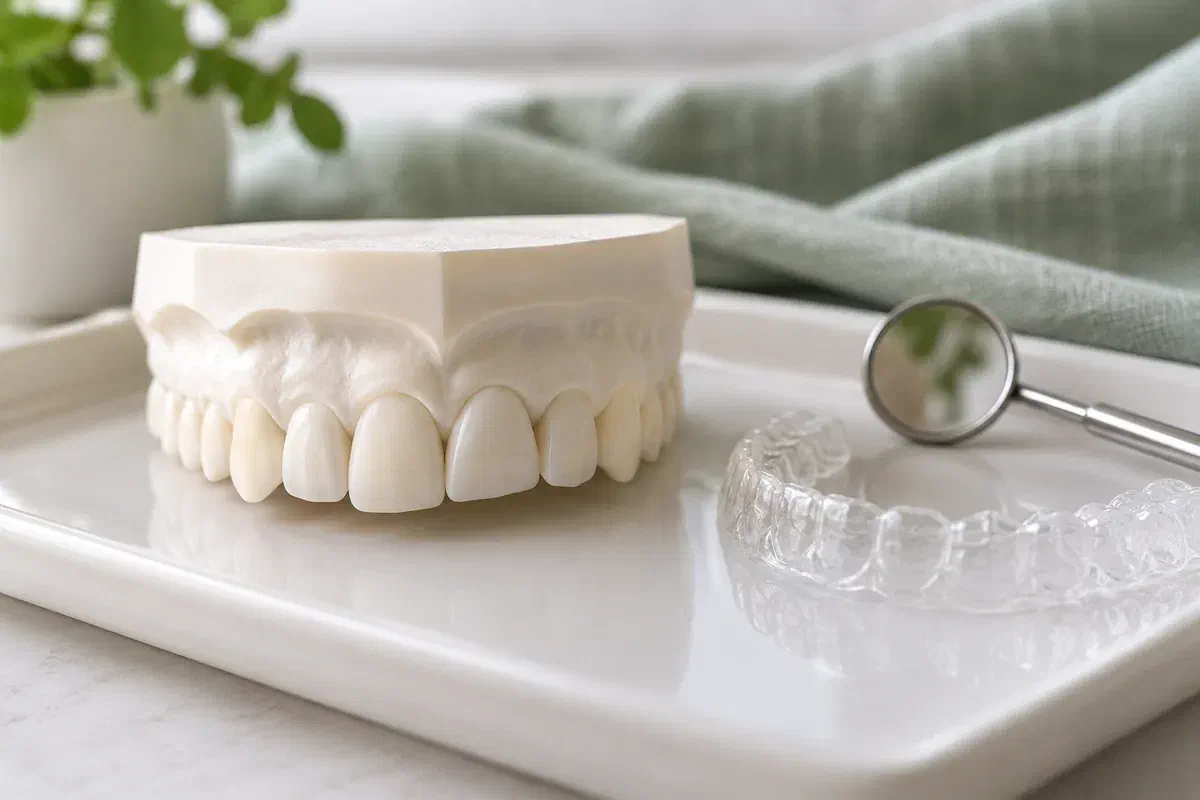
Illustrative upper-teeth model with a subtly rotated tooth beside a clear appliance
Situations that raise the question

The space, the tilt, the plan that depends on them

Explain what has been proposed, what you have noticed, and whether chewing on that side has changed. Those details help clarify what a movement step would actually be expected to achieve.

A neighbour leaning into a gap

Teeth beside a long-standing space can tip or drift. Ask how far the tooth has moved and whether uprighting it would make sense. The tooth that looks out of place may not be the only one a careful plan needs to consider.

Uneven room for a crown, bridge or implant

Share any restorative proposal you have been given. Ask whether adjusting a position would improve it, and who will oversee each stage. When more than one clinician is involved, all of them should agree on the space being created before anything begins.

Spacing changes after earlier orthodontics

If you wore braces before, bring what records you can, and your retainer if asked. Mention whether the gap reopened recently or slowly. Earlier treatment does not make a new adjustment simple by default; the present findings still guide the decision.

Preparing space is different from dealing with a loose or painful tooth. Looseness, swelling, pain or a tooth moving quickly needs a dental assessment in its own right, not an assumption that alignment is the answer.

What coordination can achieve

A clear purpose keeps the orthodontic and restorative steps aligned

When a limited plan suits the findings, it can give the later restoration a better starting point. Ask what the movement is intended to do and what it will deliberately leave as it is. A narrower scope should be chosen because it fits, not because it looks like the quickest route.

Position and shape are separate questions. Moving a tooth relocates it. A crown, veneer or bonding changes its form. Sometimes both play a part, and the order matters, so ask how the two would be combined in your case.

Patient information: British Orthodontic Society — limited treatment objectives and alternatives

A measurable aim

Ask for the goal in specific terms: the space to be gained or closed, or the contact to be improved. Knowing whether the aim is cosmetic, restorative or both makes the recommendation easier to understand and the endpoint easier to confirm.

A straightforward account of limits

A small movement may leave other bite features unchanged. Ask which ones, and whether that compromise is reasonable for the restoration planned. Hear the alternatives first; where the findings call for it, that list should include a fuller orthodontic opinion.

A timeline linking both stages

Ask how long the space needs to be held, when the restoration can follow, and who provides each part. Settle that sequence before movement begins, because the benefit of shifting a tooth depends on the restorative step that comes after.

How a combined plan comes together

Review the proposal. Examine the area. Agree who does what.

The first goal is to learn whether a limited movement can responsibly support the wider plan. Which appliance to use is a later question, answered once the movement and your oral health are understood.

  1. Describe the restoration you are considering

    Tell us what has been suggested, by whom, and what matters most to you about the result. Mention earlier orthodontics, injuries and retainers. If there is a timing constraint, raise it early so expectations can be set realistically.

  2. Assess the teeth, gums and bite around the space

    The clinician examines the area and identifies which records are needed. Ask what radiographs, photographs or scans would show. Any gum disease, decay or bone concern may need to be dealt with before movement is considered.

  3. Compare movement with restoring things as they are

    Discuss the planned change, its limits and risks, your responsibilities and the estimate. Ask whether aligners, another appliance or a specialist referral fits. If restoring without movement is reasonable, ask what difference the extra step would make.

  4. Set the handover between stages

    Confirm who supervises the movement, how reviews are booked, and what would prompt a rethink. Agree how the space will be held until the restoration is placed. The plan should say how completion is judged, not just give an estimated duration.

Between movement and restoration

Hold the space you worked for.

What you do during and after movement depends on the appliance and the plan. Keep your instructions somewhere easy to find, and ask about anything that seems unclear before you carry on.

Keep to the appliance routine

Wear, clean and attend reviews as scheduled. Let the team know if something cracks or the routine is getting hard to manage. Don't adjust wires, add bands or change the order of aligners based on online advice.

Keep both treating teams informed

If your restorative dentist is elsewhere, make sure each side knows what the other is doing. A temporary restoration or new filling can affect how an appliance fits, so confirm the order of appointments rather than assuming they are independent.

Ask how the position is held

Retention may be needed while you wait for the crown, bridge or implant, and afterward. Ask about the type, how long to wear it and how it will be reviewed. Keep a way to contact the clinic if the fit changes.

Possible routes

Move, restore, refer, or wait?

For each recommendation, ask what it changes and what it does not touch. Your examination, priorities and the commitment involved should shape the choice.

When a narrow, assessed step helps

Limited movement before restoring

This can be considered when the needed change and its accepted limits are appropriate. Discuss the appliance, reviews and retention. A limited step does not remove orthodontic risks and does not guarantee a short timeline.

When the wider bite affects the space

A comprehensive orthodontic opinion

A broader plan or specialist view may be advised if moving only the nearby tooth would leave an unsuitable compromise. Ask which relationships need attention and how the scope would change. Understand the reasoning before you decide.

When moving teeth adds little

Restoring as is, monitoring, or no elective change

If the restoration can be designed for the existing space, movement may not be needed. Review what adding or removing tooth material would mean, and the option of deferring elective care. Any underlying dental problem should still be treated appropriately.

Planning questions

Questions about moving a tooth before restorative work

Minor describes how much movement is intended. It does not answer every question about diagnosis, the appliance, or what is needed between stages.

(905) 876-4488
Can a dental implant be moved with orthodontics?
No. Implants are fixed in the bone and do not move the way natural teeth do. That is one reason the position of nearby teeth is often considered before an implant is placed. Ask how the timing would work in your plan.
What happens to the gap while teeth are being moved?
It depends on the appliance and the plan. Sometimes a temporary tooth can be added for appearance. Ask how the space will look and be maintained during treatment, and what to do if anything comes loose.
Who leads the plan if my restorative dentist is somewhere else?
That should be agreed at the outset. Ask which clinician sets the target space, who supervises movement and who signs off before the restoration. Clear responsibilities help avoid gaps in communication between offices.
How soon after movement can the crown or bridge go on?
There is no single answer. The position usually needs to be stable and retained first. Ask the clinicians how they will judge readiness and how the space will be held until the restorative appointment.
Do I need clear aligners for this kind of movement?
Not necessarily. Minor movement is a goal, and different appliances can be used to reach it. The clinician can explain which suits your required movement and whether a specialist should be involved.
How can visits from Oakville be planned across two stages?
Ask for an outline of the likely reviews and the restorative appointments at the start. Grouping visits where it is clinically sensible can help. Call before setting out if something breaks, so we can advise whether you need to come in.
Oakville to Bronte Street

Bring your restorative plan and your questions

Arrange a discussion at our Bronte Street practice about whether a small movement would help your planned work. We can explain the assessment, the realistic options and how each stage connects with your wider dental care.

Whether movement is appropriate, which appliance and any referral all depend on assessment. A small gap does not guarantee simple or quick treatment.

Visit Milton Dental Clinic
Unit 1, 342 Bronte St. S, Milton, ON L9T 5B7
Get directions Clinic hours
Monday–Thursday
11am–7pm
Friday–Sunday
By appointment only

Areas we serve

  • Milton
  • Oakville
  • Mississauga
  • Georgetown
  • Halton Hills
  • Acton
  • Campbellville
  • Brampton
  • Burlington
  • Puslinch
  • Rockwood
  • Erin
  • Caledon
  • Etobicoke
  • Old Milton
  • Bronte Meadows
  • Timberlea
  • Dorset Park
  • Dempsey
  • Clarke
  • Beaty
  • Coates
  • Harrison
  • Scott
  • Willmott
  • Ford
  • Bowes
  • Cobden
  • Walker
  • Mountain View
  • Milton Heights
  • Hawthorne Village
  • Valley View
  • Fallingbrook
  • Nassagaweya
  • Trafalgar
  • Esquesing
  • Nelson
  • Brookville
  • Moffat
  • Glen Williams
  • Norval
  • Limehouse
  • Stewarttown
  • Ashgrove
  • Hornby
  • Silver Creek
  • Speyside
  • Scotch Block
  • North Oakville
  • River Oaks
  • Glen Abbey
  • West Oak Trails
  • Palermo
  • Bronte Creek
  • College Park
  • Joshua Creek
  • Uptown Core
  • Preserve
  • Iroquois Ridge
  • Lisgar
  • Meadowvale
  • Meadowvale Village
  • Churchill Meadows
  • Erin Mills
  • Central Erin Mills
  • Streetsville
  • East Credit
  • Creditview
  • Heartland
  • Sheridan
  • Mount Pleasant
  • Credit Valley
  • Huttonville
  • Churchville
  • Springbrook
  • Northwest Brampton
  • Bram West
  • Fletcher's Meadow
  • Fletcher's Creek South
  • Alton Village
  • Orchard
  • Millcroft
  • Headon Forest
  • Tansley
  • Brant Hills
  • Tyandaga
  • Kilbride
  • Lowville
  • Aberfoyle
  • Morriston
  • Arkell
  • Hillsburgh
  • Freelton
  • Carlisle
  • Waterdown
  • Flamborough
  • Mountsberg

How can we help?

Milton Dental Clinic

Have a question about your smile? Choose the option that works best for you.

For urgent dental concerns, please call.
Messages are reviewed during clinic hours.