

Illustrative patient discussing a small alignment concern with a dental clinician
Cosmetic Dentistry

Minor Tooth Movement in Old Milton

Teeth that were straightened years ago can slowly creep back. For anyone in Old Milton noticing that drift, we explain how a limited correction is assessed, where its boundaries lie, and why holding the result matters as much as the move.

Old Milton, and old orthodontics

Braces at sixteen, a crowded lower tooth decades later

It is a familiar story. Teeth were straightened in high school, the retainer went missing somewhere along the way, and now one lower incisor leans in front of its neighbour. Minor tooth movement describes a limited orthodontic goal for situations like this one, rather than any particular appliance.

Teeth keep responding to pressure throughout life, so a change after many years is not unusual. Still, the tooth you see is linked to the space available, the position of its root, the gum and bone around it, and how it meets the opposing teeth. All of that is weighed before a narrow plan is proposed.

Living in Old Milton, you are a short trip from our Bronte Street practice, which makes an unhurried first conversation easy to arrange. Bring the detail that bothers you, plus whatever you remember about your earlier treatment. Nobody expects you to know which appliance you want beforehand.

Talk about teeth that have drifted
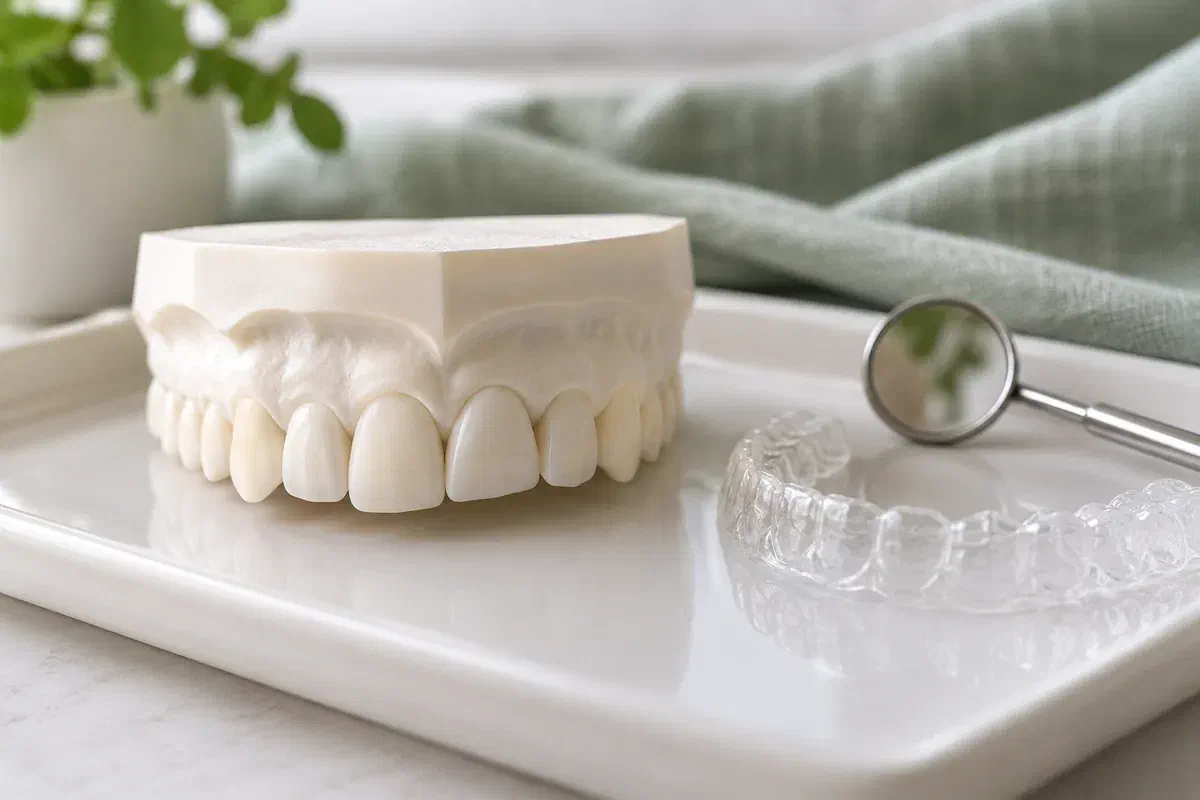
Illustrative upper-teeth model with a subtly rotated tooth beside a clear appliance
Changes people notice over time

Something moved. The question is what, and why.

Note when the change began, whether it seems to be progressing, and whether biting or cleaning feels different. Those observations shape the question any treatment would have to answer.

One tooth stepping out of the row

Point to the tooth and say whether it moved recently or gradually over years. Ask how much room the neighbouring teeth would need to give. The single tooth you notice is not a reliable count of how many a responsible plan may involve.

Space that matters for a crown or bridge

Older restorations sometimes need replacing, and the available room can affect how that goes. Ask whether repositioning a tooth would help and who would oversee the sequence. Any dentists involved should agree on the target space before work starts.

Relapse after earlier braces

Any records, photos or an old retainer can be useful, so bring them if you have them. Describe whether the shift is steady or seemed to happen quickly. Past orthodontics does not guarantee an easy touch-up; the current examination sets the plan.

Drifting over years is different from a tooth that has become loose. Looseness, soreness, swelling or a sudden change in position should be assessed as a dental concern first, before any thought of cosmetic alignment.

The value of a defined scope

A small correction works best with a clearly stated purpose

When the findings support it, a limited plan can be a sensible way to address a specific concern. It helps to hear why the suggested movement fits and what it purposely does not touch. Settling on a narrower scope should be a choice made with full information, not a shortcut.

It also sorts out position from shape. Over decades, edges can wear or chip, which may look like crowding. Moving a tooth changes its place; bonding or reshaping changes its outline. The cause of what you see decides which conversation is useful.

Patient information: British Orthodontic Society — limited treatment objectives and alternatives

A target both of you can name

Ask the clinician to describe the end point in everyday terms. Is it about how the front teeth look, about creating room for a restoration, or about one particular contact? Naming it clearly makes the advice easier to follow and the outcome easier to check.

A frank list of trade-offs

A limited approach will not necessarily correct every feature of your bite. Find out which concerns would remain and whether that is reasonable for you. Understand the other routes, including a broader assessment, before agreeing to that limit.

A sequence that includes what comes next

If a crown, bonding or retainer is part of the bigger plan, ask when each step happens and who does it. Agree on the order before teeth begin to move, since a small change only stays useful when the follow-up is arranged.

From first visit to a decision

Four steps before anything moves

This stage is about finding out whether your concern suits a limited scope at all. The appliance question is answered afterward, once the necessary movement and the health of your mouth are clear.

  1. Share the history behind the change

    Explain what you notice, how long it has been happening, and why it matters to you. Mention past braces, any knocks to the teeth, retainers you still have, and dental work on the horizon. Practical limits on your time are worth raising too.

  2. Look at gums, bone and bite

    The clinician examines the area and decides which records would be informative. Ask what photos, radiographs or scans would add. Gum problems are worth ruling out with adult relapse, because supporting tissue health may need attention before movement is considered.

  3. Set a limited plan beside the alternatives

    Review what would change, what would not, the risks, your responsibilities, and the estimate. Ask whether aligners, another appliance or a specialist referral is appropriate. If a broader plan is recommended, ask exactly which finding drives that advice.

  4. Confirm supervision and how success is measured

    Agree on who supervises treatment, how reviews are scheduled, and what would lead to a reassessment. Talk about retention and any restorative visit to follow. The plan should describe how completion will be judged, rather than lean on a projected timeline.

Keeping it straight this time

The retainer is part of the treatment, not an extra.

Your instructions depend on the appliance and on the movement being made. Keep them where you will see them, and ask about any step you are unsure of rather than guessing.

Follow the wear and cleaning routine

Keep to the schedule for wearing, cleaning and reviews that was set for you. Tell the team if the routine becomes difficult or the appliance gets damaged. Don't trim, bend or add elastics to anything based on something you read online.

Tell everyone treating you what is happening

Keep up regular dental visits and mention any other procedures being planned. A new crown or filling can change how an appliance seats. Ask how to order those appointments instead of assuming each can go ahead on its own.

Protect the result for the long run

Discuss retention well before active movement finishes: the type of retainer, how often you wear it, and when it gets checked. If more dental work follows, confirm how the tooth will be held in the meantime. Keep the clinic's contact details for any later fit problem.

Options to compare

Not every drift calls for the same answer.

Ask what each suggestion would alter and what it would leave as it is. Your exam results, your own priorities and the time you can commit should guide the decision.

When a narrow, assessed goal suits

Focused orthodontic movement

This may be considered when the required change and the accepted limits are appropriate. Discuss appliance types, reviews and retention. A smaller goal still involves orthodontic risks and comes with no promise of a brief treatment period.

When the whole bite is involved

A broader orthodontic review

A fuller plan or a specialist's view may be advised if moving only the visible tooth would leave an unsuitable compromise. Ask which relationships need attention and how the scope would differ. Make sure the reasoning is clear before you choose.

When wear or shape is part of it

Restorative work, monitoring, or no elective care

If worn edges or another finding explain what you see, a separate discussion may be more helpful. Consider what adding or removing tooth material would mean, and remember that deferring elective treatment is a valid choice. Any underlying issue still needs a plan.

Common questions

What adults ask about moving a tooth again

Minor refers to the intended scope of treatment. It does not by itself answer questions about diagnosis, which appliance to use, or your responsibilities once movement is done.

(905) 876-4488
Why have my teeth shifted so many years after braces?
Teeth respond to everyday forces from chewing, the tongue and lips throughout life, and changes without retention are common. The reason in your case is worth assessing. Ask whether gum health, missing teeth or bite contacts play a part.
Can my old retainer push my teeth back into place?
Please don’t force an old retainer back in. If it no longer fits comfortably, it could put uncontrolled pressure on teeth. Bring it to the appointment instead, and ask whether a new assessment or a fresh retainer is appropriate.
Does gum recession affect whether a tooth can be moved?
It can be part of the discussion. Movement depends on healthy supporting tissues, so the clinician will look at the gums and bone around the tooth. Ask how your gum findings affect the options and whether anything needs treatment first.
Would only the crooked tooth need to move?
Not necessarily. A tooth’s position depends on the space beside it, the neighbouring teeth and the opposite arch. Ask how those relationships affect the plan, since one visible problem may still require looking at several teeth.
Will a touch-up correct everything that changed since my braces?
A limited plan may leave some features as they are. Ask which goals are included and which fall outside the scope. The clinician should explain whether accepting those limits is reasonable and how a fuller plan would compare.
Is reshaping a tooth an alternative to moving it?
Sometimes, but they do different things. Reshaping removes a little enamel to change outline, while orthodontic movement changes position. Ask which feature is behind your concern and what each would involve before choosing either.
Near the historic downtown

Bring the old story and the new change.

Arrange a conversation at our Bronte Street practice, close to Old Milton's historic downtown, about teeth that have shifted. We can explain the assessment involved, the realistic options, and how any change would fit with the rest of your care.

Scope, appliance and any referral are confirmed only after assessment. A small visible change is not a promise of quick or simple treatment.

Visit Milton Dental Clinic
Unit 1, 342 Bronte St. S, Milton, ON L9T 5B7
Get directions Clinic hours
Monday–Thursday
11am–7pm
Friday–Sunday
By appointment only

Areas we serve

  • Milton
  • Oakville
  • Mississauga
  • Georgetown
  • Halton Hills
  • Acton
  • Campbellville
  • Brampton
  • Burlington
  • Puslinch
  • Rockwood
  • Erin
  • Caledon
  • Etobicoke
  • Old Milton
  • Bronte Meadows
  • Timberlea
  • Dorset Park
  • Dempsey
  • Clarke
  • Beaty
  • Coates
  • Harrison
  • Scott
  • Willmott
  • Ford
  • Bowes
  • Cobden
  • Walker
  • Mountain View
  • Milton Heights
  • Hawthorne Village
  • Valley View
  • Fallingbrook
  • Nassagaweya
  • Trafalgar
  • Esquesing
  • Nelson
  • Brookville
  • Moffat
  • Glen Williams
  • Norval
  • Limehouse
  • Stewarttown
  • Ashgrove
  • Hornby
  • Silver Creek
  • Speyside
  • Scotch Block
  • North Oakville
  • River Oaks
  • Glen Abbey
  • West Oak Trails
  • Palermo
  • Bronte Creek
  • College Park
  • Joshua Creek
  • Uptown Core
  • Preserve
  • Iroquois Ridge
  • Lisgar
  • Meadowvale
  • Meadowvale Village
  • Churchill Meadows
  • Erin Mills
  • Central Erin Mills
  • Streetsville
  • East Credit
  • Creditview
  • Heartland
  • Sheridan
  • Mount Pleasant
  • Credit Valley
  • Huttonville
  • Churchville
  • Springbrook
  • Northwest Brampton
  • Bram West
  • Fletcher's Meadow
  • Fletcher's Creek South
  • Alton Village
  • Orchard
  • Millcroft
  • Headon Forest
  • Tansley
  • Brant Hills
  • Tyandaga
  • Kilbride
  • Lowville
  • Aberfoyle
  • Morriston
  • Arkell
  • Hillsburgh
  • Freelton
  • Carlisle
  • Waterdown
  • Flamborough
  • Mountsberg

How can we help?

Milton Dental Clinic

Have a question about your smile? Choose the option that works best for you.

For urgent dental concerns, please call.
Messages are reviewed during clinic hours.