

Illustrative adult patient discussing tooth movement after earlier orthodontic care
Cosmetic Dentistry

Orthodontic Relapse Treatment in Brampton

The braces came off not long ago, the retainer has already gone missing twice, and a front tooth looks different. For families in Brampton, a relapse visit checks how your teen's teeth have moved and what kind of retention will realistically work at home.

Brampton · Teens, retainers and movement

Braces off, retainer lost, teeth on the move

Retainers left on cafeteria trays, chewed by the dog, or forgotten at a sleepover: it happens in most households at some point. When teeth then start to shift after treatment, the change is called orthodontic relapse. The useful response is a calm look at the teeth as they are, not a lecture and not an assumption that braces must go back on.

Young mouths are still changing, so movement after treatment can happen even with fairly good wear. A broken or ill-fitting appliance may also play a role, and occasionally a dental or gum issue needs attention. Assessment weighs these together.

Bring whatever retainer pieces you have, the case, and any paperwork from the orthodontic office that treated your child. Tell us what your teen notices and what they hope for, since their view matters too. We can talk about the assessment and whether the treating orthodontist or another specialist should be involved.

Book a relapse visit for your teen
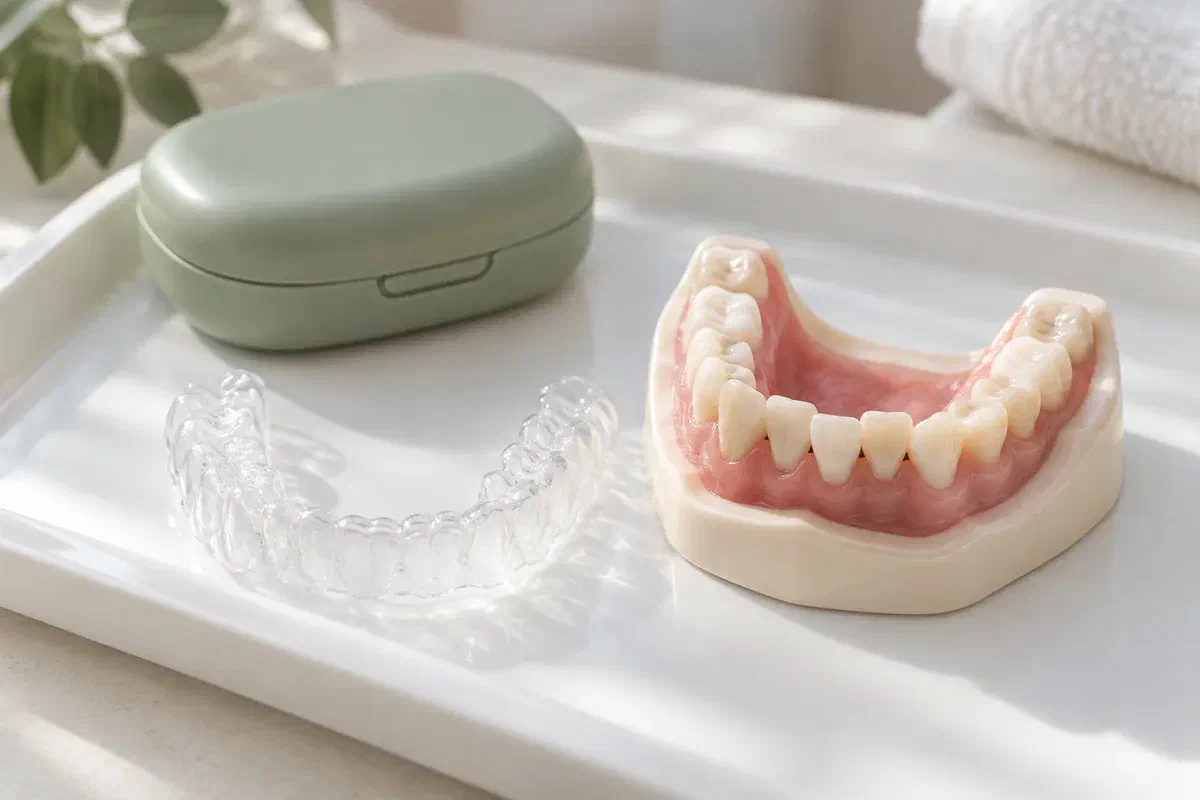
Illustrative lower-teeth model with mild crowding beside a removable retainer and case
What helps at the appointment

Bring the story of the retainer, broken bits and all.

Knowing what moved, when it was noticed, and what has happened to the appliance helps separate a retainer problem from a change in the teeth. Mention any soreness even if the main concern is looks.

A clear or plastic retainer that doesn't fit now

Describe whether it hurts, lifts off, or won't go in. A retainer left in a hot car or chewed can lose its shape. If wearing it causes pain, don't make your teen push it in; bring it along and ask what they should do in the meantime.

A wire behind the teeth with a gap beside it

Fixed retainers can lose a bond during sports, chewing, or ordinary wear. Point out a new space, a rough spot, or a tooth that has moved. Ask your teen not to play with the wire, and have the bonds and nearby teeth checked.

Change in an older sibling or parent, too

Adults in the household who had braces years ago may notice their own shifting. Those concerns are worth raising as well. Share dental work or gum changes since treatment ended; older photos help the history, but today's examination guides advice.

Sudden movement with pain, swelling, bleeding, or a very loose tooth, especially after a knock during sport, is not ordinary relapse. Call promptly so it can be assessed.

Why it pays to check early

A replacement retainer and more treatment are not the same decision.

When a teen's retainer is lost soon after braces, families often wonder whether a new one will undo any movement. Holding teeth where they now sit and moving them back are different goals. The visit should make clear which applies, whether the issue is mainly the appliance, and what order things should happen in.

Your teen's feelings about their smile count. Ask what is achievable now, what the alternatives are, and how much ongoing wear each choice would mean for a busy schedule. A small shift does not have to lead straight to another round of treatment.

Patient information: American Association of Orthodontists — movement after orthodontic treatment

A straightforward explanation

You should hear which teeth have changed and whether the bite or gums need care. If the treating office can share records, those may be compared with today's findings. Facts that were seen should be kept apart from guesses about why.

A plan your teen agrees with

Some teens want the tooth straightened again; others are happy as long as it doesn't get worse. Let them say so. Then ask what each option would involve and whether the current position is acceptable to keep before choosing an appliance.

Retention that survives real life

Talk honestly about why the retainer kept going missing: sports, sleepovers, shared bathrooms, or simply forgetting. A routine that fits the household is more likely to last. Ask who reviews the appliance after any treatment and what to do if it breaks again.

How we approach the visit

First the history. Then the exam. Then choices.

How much is involved depends on how far the teeth have moved. Ask what the visit includes, and whether new records or a conversation with the treating orthodontist should come before a recommendation.

  1. Work out the treatment and retainer timeline

    Share when braces came off, which retainer was given, how often it has been lost or broken, and when the change appeared. Bring appliances and any records. Mention dental work, health changes, or new activities since then.

  2. Look at alignment, bite, and the appliance

    The clinician examines your teen's teeth, gums, and supporting tissues and checks any retainer you bring. Scans or images may be recommended. Ask whether a cavity, gum issue, or other concern should be treated before the orthodontic question.

  3. Talk about holding versus moving

    We explain what a new or fixed-up retainer could do and whether further movement makes sense. If realignment is raised, ask about scope, risks, alternatives, monitoring, and estimate. The treating orthodontist or another specialist may be the right person to involve.

  4. Agree on tonight's plan and the next appointment

    Before leaving, know what your teen should wear, if anything, and what to do if fit or comfort changes. Ask when to expect records, an appliance, or a review. Grouping family appointments in Brampton calendars is easier once the next steps are clear.

At home afterward

Stick to the plan, even when the old retainer turns up again

The next step could be retention, treatment, or further assessment. Keep everyone clear on its purpose and call if anything changes.

Only the recommended appliance

If an old retainer resurfaces from under a bed, check with the team before using it, and never force it to move teeth back. Ask which appliance suits the current position. If one is set aside as damaged, confirm what replaces it and when.

Keep the review on the calendar

Bring the appliance and mention anything new. If active treatment begins, it needs to be worn as prescribed rather than when convenient. Report fit problems or lost pieces quickly so the plan can be adjusted.

Make retention part of the household routine

Ask for wear and cleaning instructions everyone can follow and a sense of review timing. Keep a labelled case in a set spot, and a spare for sleepovers if suitable. Raise camps, tournaments, or trips ahead of time.

Where things can go from here

Retain, realign, or refer, depending on what we find

Ask what each route is for. Any new appliance should have a stated purpose, and further movement should be based on current information.

When the current position is fine to keep

Replace or repair the retainer

If the teeth look acceptable and the problem is a missing or damaged appliance, a new or repaired retainer may be the main step. Ask what records are needed. Remember that a retainer made for today's position is designed to hold it, not reverse earlier movement.

When your teen wants and needs realignment

Consider further orthodontic treatment

Depending on the change, a limited or broader course may be discussed. Ask why that scope fits and what retention would follow. Having worn braces before does not guarantee a short course will fix everything.

When the history needs more explaining

Look into other causes or involve a specialist

Gum findings, bite changes, or complex movement may need further assessment before appliances change. Ask what a referral would clarify and who handles any immediate issue while the longer plan is decided.

Parents ask

Retainers, teenagers, and teeth that won't stay put

A visit can show whether the issue is the appliance, the retention routine, or a need for more active treatment.

(905) 876-4488
My teen lost their retainer a month after braces came off. What now?
Call to arrange a check soon. The clinician can look at whether teeth have moved and discuss a replacement or other next step. Bring any case or pieces you still have.
Can teeth really shift that quickly after braces?
Teeth can move after treatment, and retention is meant to help hold them. How much change has happened, if any, needs an examination rather than a guess.
Should we go back to the orthodontist who did the braces?
If your teen is still under that office’s care, they are often the first call for retainer issues. We can also assess the teeth and appliance and discuss whether to involve the treating orthodontist or another specialist.
Is a fixed retainer a better idea for a teen who keeps losing removable ones?
It may be worth discussing, but it depends on the teeth, gums, cleaning habits, and other factors. Ask about the pros and cons of each type for your teen’s situation.
Will a replacement retainer push the teeth back where they were?
Don’t assume it will. A retainer made for current positions is generally meant to hold them. Moving teeth back is a separate decision that needs its own assessment.
My teen is fine with a small change. Do we have to treat it?
Not necessarily. If the bite and gums look healthy, holding the present position may be perfectly reasonable. The clinician will explain, and you, your teen, and the team can settle on retention together.
Relapse visits for Brampton households

Book a check before the next retainer goes missing.

Arrange a visit at our Bronte Street practice to look at movement after your teen's or your own earlier orthodontic care. We will explain the findings, retention options, and choices for further review or treatment.

Our advice depends on examining the teeth and reviewing any records. If a retainer vanishes, snaps, or starts to hurt, ring us soon instead of waiting for the next school break.

Visit Milton Dental Clinic
Unit 1, 342 Bronte St. S, Milton, ON L9T 5B7
Get directions Clinic hours
Monday–Thursday
11am–7pm
Friday–Sunday
By appointment only

Areas we serve

  • Milton
  • Oakville
  • Mississauga
  • Georgetown
  • Halton Hills
  • Acton
  • Campbellville
  • Brampton
  • Burlington
  • Puslinch
  • Rockwood
  • Erin
  • Caledon
  • Etobicoke
  • Old Milton
  • Bronte Meadows
  • Timberlea
  • Dorset Park
  • Dempsey
  • Clarke
  • Beaty
  • Coates
  • Harrison
  • Scott
  • Willmott
  • Ford
  • Bowes
  • Cobden
  • Walker
  • Mountain View
  • Milton Heights
  • Hawthorne Village
  • Valley View
  • Fallingbrook
  • Nassagaweya
  • Trafalgar
  • Esquesing
  • Nelson
  • Brookville
  • Moffat
  • Glen Williams
  • Norval
  • Limehouse
  • Stewarttown
  • Ashgrove
  • Hornby
  • Silver Creek
  • Speyside
  • Scotch Block
  • North Oakville
  • River Oaks
  • Glen Abbey
  • West Oak Trails
  • Palermo
  • Bronte Creek
  • College Park
  • Joshua Creek
  • Uptown Core
  • Preserve
  • Iroquois Ridge
  • Lisgar
  • Meadowvale
  • Meadowvale Village
  • Churchill Meadows
  • Erin Mills
  • Central Erin Mills
  • Streetsville
  • East Credit
  • Creditview
  • Heartland
  • Sheridan
  • Mount Pleasant
  • Credit Valley
  • Huttonville
  • Churchville
  • Springbrook
  • Northwest Brampton
  • Bram West
  • Fletcher's Meadow
  • Fletcher's Creek South
  • Alton Village
  • Orchard
  • Millcroft
  • Headon Forest
  • Tansley
  • Brant Hills
  • Tyandaga
  • Kilbride
  • Lowville
  • Aberfoyle
  • Morriston
  • Arkell
  • Hillsburgh
  • Freelton
  • Carlisle
  • Waterdown
  • Flamborough
  • Mountsberg

How can we help?

Milton Dental Clinic

Have a question about your smile? Choose the option that works best for you.

For urgent dental concerns, please call.
Messages are reviewed during clinic hours.