

Illustrative adult patient discussing tooth movement after earlier orthodontic care
Cosmetic Dentistry

Orthodontic Relapse Treatment in Burlington

Your tongue keeps finding a rough edge behind your lower teeth, and one of them seems to be turning. From Burlington, you can have the bonded retainer, your alignment, and your gums checked, then talk through whether to hold the present position or correct it.

Fixed retainers and shifting teeth

Your tongue noticed it before the mirror did.

A thin wire glued behind the front teeth is easy to forget about. Then one day there is a sharp spot, a bit of food that catches, or a lower tooth sitting slightly forward. Movement away from the alignment earlier treatment produced is called orthodontic relapse, and a bonded retainer does not make it impossible.

Bonds can loosen while the wire stays put, letting a single tooth wander. Teeth and gums also keep changing over the years, and dental work or gum problems may add to the picture. Each of those is worth considering, so an assessment should not jump to one explanation.

From Burlington, it is worth calling before you come so we know a fixed wire is involved and can plan the visit around it. Tell us if you also have a removable retainer, and whether you want the tooth brought back into line or just kept from moving further. Specialist orthodontic input can be discussed when it would add something.

Book a retainer and relapse check
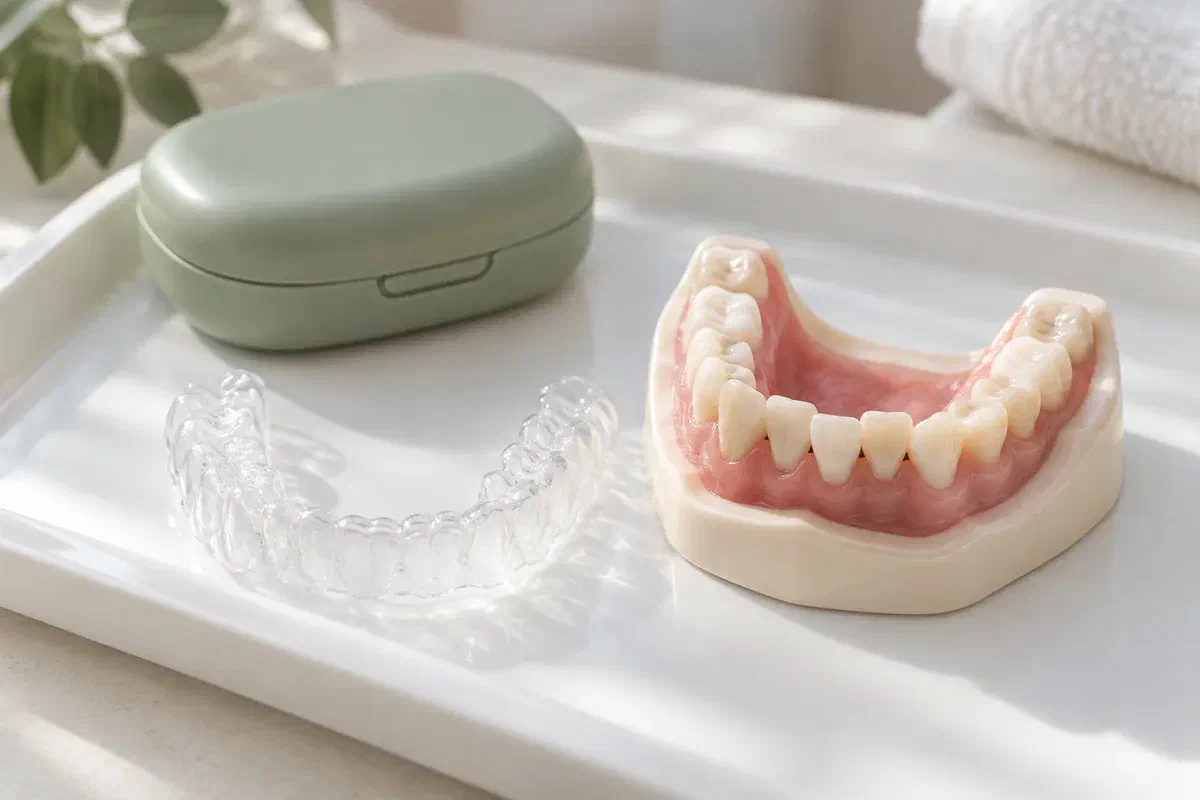
Illustrative lower-teeth model with mild crowding beside a removable retainer and case
Signs to describe

Where is the rough spot, and what has moved since?

Those details point toward an appliance issue or a change in the teeth and gums. Tell us about soreness or food trapping as well as appearance.

A removable retainer with a changed fit

If you wear one alongside the wire, say whether it pinches, rides up, or no longer clicks into place. Mention any cracks or heat damage and any pause in wear. Please avoid forcing it on if it hurts; bring it with you and ask for interim advice.

A bonded wire with a loose attachment

Point out where you feel roughness, a gap, or a tooth that has turned. A wire that still looks attached can have lost a bond on one tooth. Resist the urge to press it back with a finger or fingernail, and ask for the wire and surrounding teeth to be examined.

Change that built up over years

Slow movement since your braces ended is still worth reviewing. Tell us about new fillings, crowns, gum care, or a different feel to your bite. Photographs from the end of treatment may help with the history, but the examination today drives the advice.

Sudden shifting with pain, swelling, bleeding, or a tooth that feels very loose is not the same as routine relapse. Call us so the symptom can be properly assessed.

What the review sorts out

Fix the wire, move the tooth, or both?

Rebonding or replacing a retainer and repositioning a tooth that has moved are not one job. The assessment should tell you which is being suggested, whether the priority is to hold an acceptable position, solve an appliance problem, or plan realignment, and why that order makes sense.

It is fine if your priorities have changed since your first treatment. Ask what is achievable now, what other routes there are, and what keeping the result would involve over time. A tooth that has moved a little does not commit you to another course.

Patient information: American Association of Orthodontists — movement after orthodontic treatment

A precise description of the change

Ask which tooth or teeth have shifted and whether the gums or bite need attention. Old records, if you have them, can be compared with today's findings. The explanation should separate what has been seen from what is only suspected.

Options aimed at what you want

You may want the turned tooth corrected, or you may only want the wire made secure. Make that clear. Ask what each approach requires and whether holding the current position is appropriate before deciding on an appliance or how much treatment to do.

Retention that holds up in daily life

If the wire kept breaking or a removable retainer was hard to keep up with, say so. Discuss eating habits, cleaning around the wire, and anything else that made retention difficult. Ask who will monitor the retainer afterward and how a future loose bond would be handled.

Inside a relapse appointment

Talk, look, explain, then plan the interval

The depth of the review depends on how much has changed. When booking from Burlington, ask what this visit covers and whether more records or a specialist opinion are likely before a recommendation.

  1. Outline what happened after treatment

    Let us know when your braces or aligners came off, what kind of retention was placed, and when you first felt or saw a change. Bring any removable appliance and records you have. Mention restorations, health changes, or new habits since.

  2. Inspect the wire, the teeth, and the bite

    Each bond is checked, along with your alignment, gums, and how your teeth meet. Images or scans may be recommended to understand the shift or plan movement. Ask whether a gum or tooth problem needs care before the orthodontic question is settled.

  3. Separate retainer work from tooth movement

    You will hear what repairing or replacing the retainer would accomplish and whether moving the tooth again is reasonable. For realignment, discuss scope, risks, alternatives, monitoring, and estimate. Involved cases may benefit from a specialist's opinion.

  4. Leave knowing what to do next

    Confirm whether to wear anything before the next visit and what to do if the wire comes looser or something feels sharp. Ask when to expect records, an appliance, or a review. There should be clear guidance for the weeks in between.

After the check

Leave the wire and the tooth to the plan.

Next steps might include rebonding, a new retainer, treatment, or further assessment. Keep the reason for each clear, and tell us if anything changes.

Wear what was prescribed and nothing else

Avoid adjusting the wire or reaching for old aligners in the hope of nudging a tooth back. Ask which appliance suits the current position. If something is set aside because it is damaged, clarify what replaces it and when.

Book and keep the review

Bring any appliance and mention changes since the assessment. During active treatment, follow the schedule rather than treating it as a casual adjustment. Call soon about a loose bond, a lost attachment, or a poor fit.

Keep retention practical

Ask how to clean around a fixed wire and how to wear and store any removable retainer. Keep its case where you take it out. Mention future travel or a move now so the arrangement can account for it.

Next-step options

Secure the retainer, realign, or look deeper

Ask what each choice is meant to do. A new or repaired appliance needs a clear reason, and further movement should be planned from up-to-date findings.

When your current alignment is acceptable

Repair or replace the retention

If the teeth sit well enough and the wire or removable retainer is the issue, retention may be the main task. Ask whether rebonding, repair, or a new appliance is reasonable and which records are needed. A fresh retainer holds teeth; it is not designed to undo past movement.

When correction is wanted and appropriate

Move teeth back with further treatment

Depending on the change, limited or broader treatment may be considered. Ask how the scope was chosen and what retention will follow. Past orthodontics does not ensure that a short course will resolve every concern.

When something else may be involved

Investigate or refer

Gum findings, bite changes, or complicated movement may need more assessment before any appliance is changed. Ask what a referral would answer and who manages the immediate concern, such as a loose wire, while the longer plan is worked out.

Fixed retainer questions

When the wire behind your teeth stops doing its job

A check can show whether you need retainer repair, a decision about maintenance, or further active treatment.

(905) 876-4488
Can teeth move even though my bonded retainer is still glued on?
Yes. A wire can stay in place while one bond has come loose, which may allow a tooth to shift. Ask for the wire and the teeth around it to be examined, and don’t try to bend it back yourself.
Is a loose bond on my fixed retainer an emergency?
Usually it is a reason to call soon rather than an emergency. If the wire is sharp, injuring your mouth, or you have significant pain or swelling, mention that when you call so you can be advised promptly.
Can a loose bond simply be reattached?
Sometimes. It depends on the condition of the wire and whether the tooth has moved. If it has, rebonding in the new position would hold that position, so it is worth discussing the alignment first.
How should I clean around a fixed retainer?
Ask the team to show you a method that suits your mouth, such as threaders or small brushes. Food and plaque can collect around the wire, so cleaning there is part of keeping both the retainer and gums healthy.
Will a new retainer move my turned tooth back?
Not as a rule. A retainer made for the present position is generally meant to hold it. Moving a tooth back is a separate decision that needs its own assessment and plan.
Can I keep the tooth as it is and just secure the wire?
Yes, that is a common request. If the clinician agrees the tooth’s new position is healthy to keep, the wire can be dealt with on that basis, and you can talk about the retention that suits you.
Coming from Burlington

Have the wire checked before more teeth follow.

Book an appointment at our Bronte Street practice to look at movement and retainer problems after earlier orthodontic care. We will explain the findings, answer retention questions, and set out options for further review or treatment.

Recommendations depend on examination and relevant records. A wire that pops free, a sharp end, or a removable retainer that stops fitting all justify an early call.

Visit Milton Dental Clinic
Unit 1, 342 Bronte St. S, Milton, ON L9T 5B7
Get directions Clinic hours
Monday–Thursday
11am–7pm
Friday–Sunday
By appointment only

Areas we serve

  • Milton
  • Oakville
  • Mississauga
  • Georgetown
  • Halton Hills
  • Acton
  • Campbellville
  • Brampton
  • Burlington
  • Puslinch
  • Rockwood
  • Erin
  • Caledon
  • Etobicoke
  • Old Milton
  • Bronte Meadows
  • Timberlea
  • Dorset Park
  • Dempsey
  • Clarke
  • Beaty
  • Coates
  • Harrison
  • Scott
  • Willmott
  • Ford
  • Bowes
  • Cobden
  • Walker
  • Mountain View
  • Milton Heights
  • Hawthorne Village
  • Valley View
  • Fallingbrook
  • Nassagaweya
  • Trafalgar
  • Esquesing
  • Nelson
  • Brookville
  • Moffat
  • Glen Williams
  • Norval
  • Limehouse
  • Stewarttown
  • Ashgrove
  • Hornby
  • Silver Creek
  • Speyside
  • Scotch Block
  • North Oakville
  • River Oaks
  • Glen Abbey
  • West Oak Trails
  • Palermo
  • Bronte Creek
  • College Park
  • Joshua Creek
  • Uptown Core
  • Preserve
  • Iroquois Ridge
  • Lisgar
  • Meadowvale
  • Meadowvale Village
  • Churchill Meadows
  • Erin Mills
  • Central Erin Mills
  • Streetsville
  • East Credit
  • Creditview
  • Heartland
  • Sheridan
  • Mount Pleasant
  • Credit Valley
  • Huttonville
  • Churchville
  • Springbrook
  • Northwest Brampton
  • Bram West
  • Fletcher's Meadow
  • Fletcher's Creek South
  • Alton Village
  • Orchard
  • Millcroft
  • Headon Forest
  • Tansley
  • Brant Hills
  • Tyandaga
  • Kilbride
  • Lowville
  • Aberfoyle
  • Morriston
  • Arkell
  • Hillsburgh
  • Freelton
  • Carlisle
  • Waterdown
  • Flamborough
  • Mountsberg

How can we help?

Milton Dental Clinic

Have a question about your smile? Choose the option that works best for you.

For urgent dental concerns, please call.
Messages are reviewed during clinic hours.